 Upper West Side Hot Chocolate Cafe Crawl on Balloon Eve
Coffee & Dessert
Donut Shop Near Me in the Lower East Side: Doughnut Plant
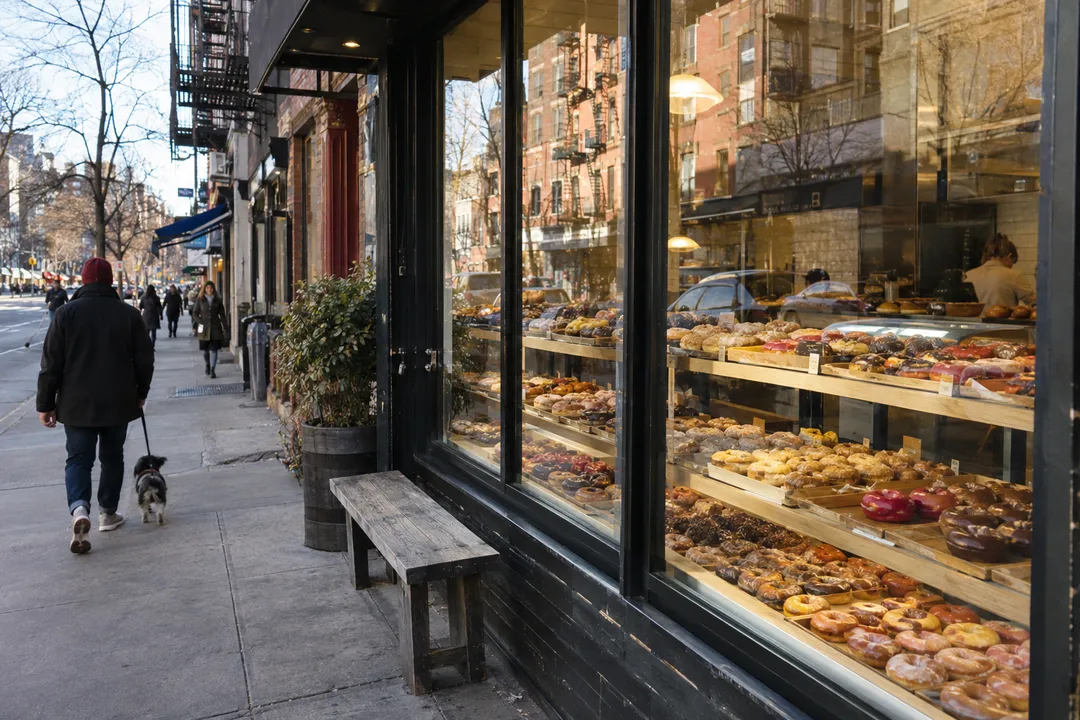
Doughnut Plant is a Lower East Side bakery known for filled squares, seasonal flavors, and a pastry case that treats doughnuts as a craft.
A 'donut shop near me' search on the Lower East Side becomes more interesting at Doughnut Plant on Grand Street. The bakery has helped make the modern New York doughnut feel like a serious pastry category, but the visit is still casual: choose from a case, carry a box, and eat one while walking Orchard Street. The appeal comes from the contrast between familiar bakery comfort and shapes, fillings, and finishes that are clearly designed rather than merely decorated.
The current Lower East Side stop is at 379 Grand Street, close enough to the East Broadway and Delancey Street transit connections for an easy start. Arrive on foot from Seward Park or the Essex Market area and you will see how the bakery fits into a dense neighborhood of food shops, old tenements, and small storefronts. The box is easiest to manage before the route gets crowded. Choose a flat tote and keep filled pieces away from anything that can crush them.
Doughnut Plant is associated with Mark Isreal and with a style of baking that treats the doughnut as a canvas for texture. The case may include square filled pieces, yeast-raised rings, cake doughnuts, fruit glazes, and flavors built around coffee, tea, or chocolate. The menu shifts, so the most useful question is not what the bakery has always made. Ask which item best represents today's production, then compare it with a dependable classic.
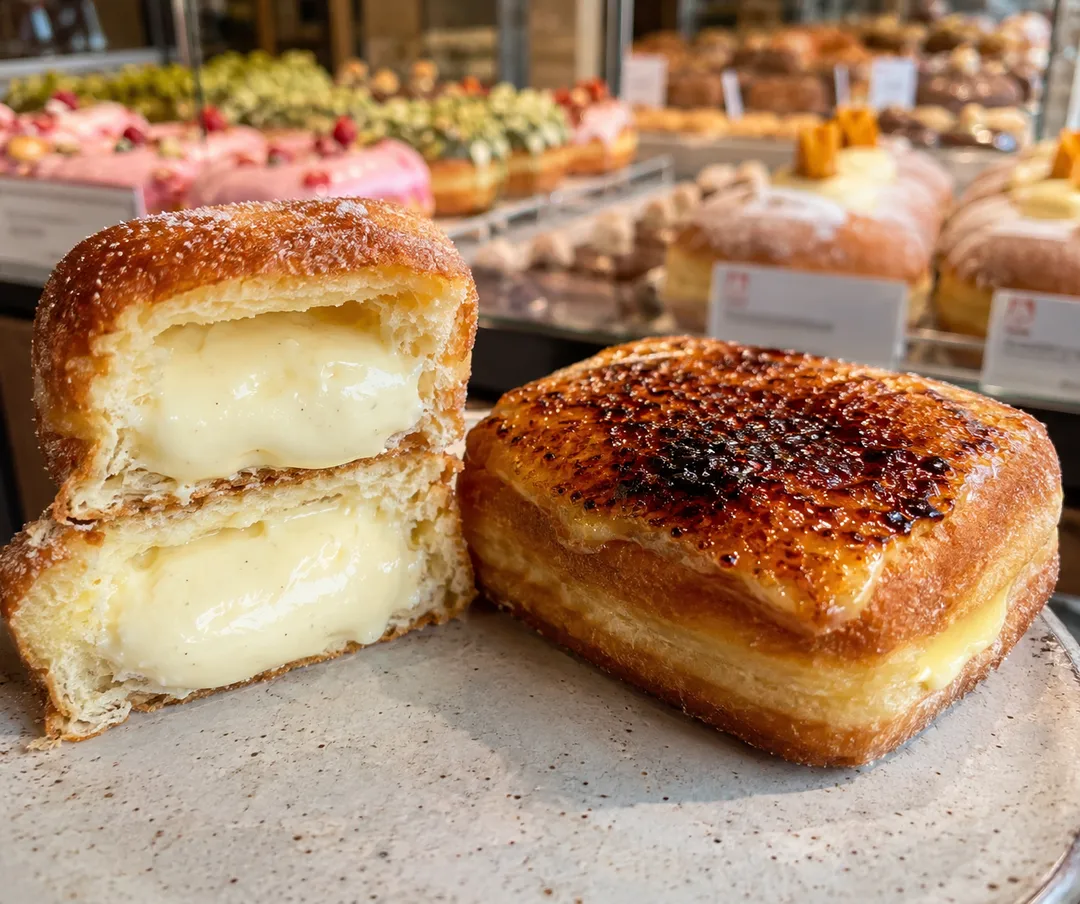
The crème brûlée doughnut is a logical first taste when available because the crackled caramel top gives way to a soft interior. A tres leches style or a filled square shows a different side, with moisture and cream doing more of the work. Prices generally land around $4 to $5.50 each, depending on the format and filling. A pair is enough for one person if you choose unlike textures rather than two equally rich pastries.
The square shape is not only visual. It creates more corners for a crisp edge and more room for a filling to sit inside the dough. Cut one open if you are sharing, but eat at least the first bite intact so the texture is not judged only by the cream. A strong order might be one square, one plain glazed ring, and coffee. That combination tells you more about the bakery than a box selected entirely for color.
The timing rule is simple: morning gives you the broadest choice, while late afternoon gives you a quieter counter and a more edited case. Popular filled flavors can disappear before the day is over, especially when visitors arrive after exploring the neighborhood. Weekdays are easier for a deliberate order. On weekends, accept that the display may guide you. Doughnut Plant is more enjoyable when a sold-out flavor becomes an invitation to taste something you would not have chosen from a list.
Ordering works best if you read the case before joining the final queue. The bakery has enough variety to slow down a first-time visitor, but the staff needs room to pack delicate toppings without a crowd leaning over the counter. Ask about fillings, tell them how many people you are feeding, and keep a fragile caramel top away from the warmest coffee cup. There is no reason to rush, but there is a reason to decide before the register.
The bakery's history gives the stop a sense of continuity. Doughnut Plant helped move the New York conversation beyond the plain glazed versus chocolate frosted argument by treating fillings and shapes as part of the recipe. That does not make the food precious. It makes the bakery useful for both a nostalgic eater and someone who wants a new flavor. The same counter can satisfy a morning commuter and a visitor deliberately planning a pastry walk.
The room is best understood as a launch point. Take the box toward Orchard Street, pass through Seward Park, and continue to Essex Market if you want a food-centered route. The Tenement Museum area works for a longer cultural walk, while the East River is a good reset after a rich breakfast. Eat the most fragile item before the box warms up. The bakery rewards movement because the neighborhood supplies the seating, scenery, and second destination.
Practical Notes: save 379 Grand Street, budget about $4 to $5.50 for an elaborate doughnut, and check current hours before making a special trip. Ask about the day's filled flavors and any ingredient changes at the counter. The shop is better for takeaway than for a long sit-down meal. Bring a level bag, especially if you order crème brûlée or cream-filled pieces, and keep a napkin handy for the first bite.
The strongest reason to return is the rotating logic of the case. Even when a signature item is unavailable, the bakery tends to offer another combination of dough, filling, and finish that makes sense. That keeps the experience from becoming a hunt for one internet-famous pastry. A regular can build a personal map of favorites, while a first-time guest can order by texture. The bakery feels inventive without losing the basic pleasure of a fresh doughnut.
This is a good destination for a pastry-focused afternoon, a small office box, or a visitor who wants one food stop tied to a Lower East Side walk. It is less ideal for someone who wants the cheapest possible breakfast or a large, quiet room. Order fewer items than your eyes suggest, eat the best one first, and save the plainest piece for later. The sweetness feels more balanced when the box has contrast.
Doughnut Plant answers the near-me query with a bakery that has a point of view and a neighborhood route attached. The Grand Street address, filled squares, caramelized tops, and seasonal menu all make the visit more specific than a generic search result. Arrive before lunch for choice, ask what was made most recently, and let one classic keep the more elaborate flavor honest. The best box is curious, varied, and eaten on the same walk that led you there.
In the end, Doughnut Plant earns its place in a donut shop near me search because the visit has a shape: arrive by a useful route, choose from a case with its own logic, eat one item immediately, and let the neighborhood provide the second act. The crème brûlée, tres leches, square filled doughnuts, and fruit or tea flavors that rotate with the calendar make the order memorable, while the shop's setting gives the pastry context. The smartest Doughnut Plant order starts before lunch, then follows the case toward one classic and one filled piece with real contrast.
Ask Karpo for more information.
Keep reading
- Upper West Side Hot Chocolate Cafe Crawl on Balloon Eve
 Park Slope Hot Chocolate Cafe Crawl After a Snow Day Sled
 Upper East Side Hot Chocolate Cafe Crawl With a Grandparent