 Williamsburg Pierogi Lunch Spot Picker for Mixed Diets
Restaurants
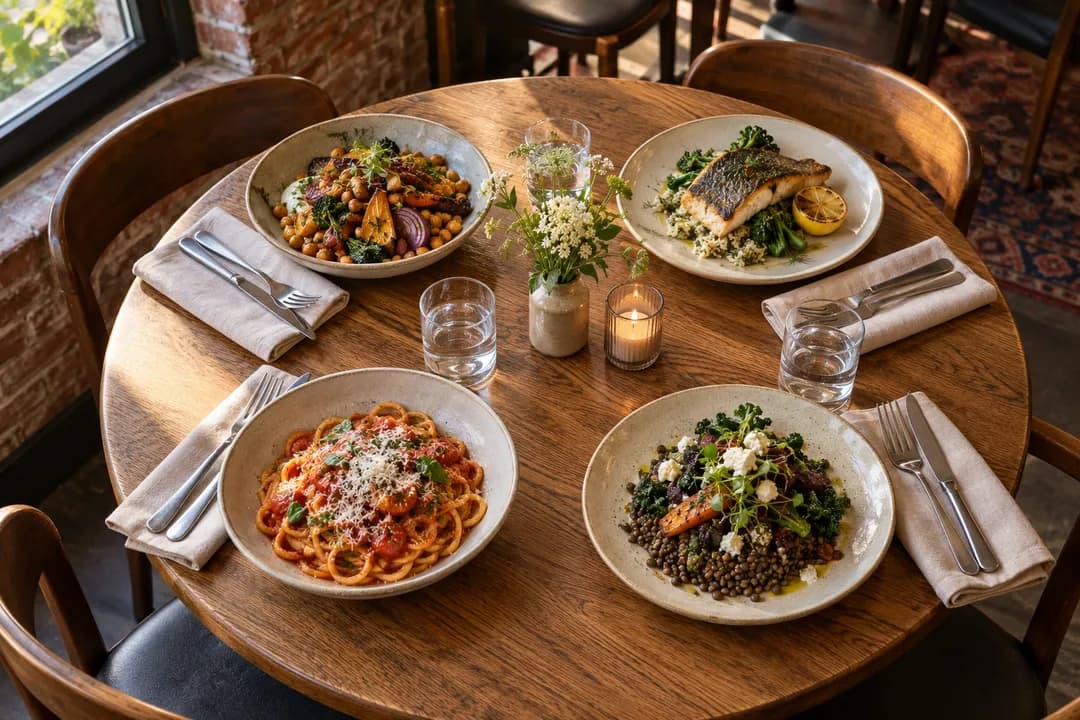
NYC Dinner Shortlist Builder: Four Diets at One Table
A NYC dinner shortlist starts with a satisfying meal for every diner. Separate dietary needs from preferences, then compare three practical choices together.
Four people can agree to have dinner in New York while imagining four incompatible meals. Your vegan friend wants something more substantial than a side salad. Another diner avoids dairy, someone else wants fish, and you would like a meal that does not turn into a negotiation over shared plates. A dinner shortlist builder is useful when it starts with those differences. Open Karpo APP and describe the table before naming a cuisine. Ask for a few dinner ideas around your meeting area, with a clear reason each could suit the people coming.
Write down what each person can actually eat
Start with individual requirements rather than a collective label such as “healthy food.” That phrase could mean vegetables, smaller portions, a particular eating pattern, or simply an early dinner. Write one sentence for each person. For example: one diner eats vegan food, another avoids dairy, a third eats fish but no other meat, and the fourth has no restrictions. These are hypothetical preferences for a planning exercise, not a description of any restaurant's menu. The more specific brief makes possible mismatches easier to see.
Keep food allergies separate from ordinary preferences. An ingredient exclusion does not establish how a kitchen handles shared equipment or cross-contact. If someone has a food allergy, let that person describe the relevant boundary and handle the restaurant conversation about preparation. A recommendation cannot establish that a meal is safe for them. In your comparison, distinguish the information printed on a menu from questions that require a direct answer from the kitchen. That distinction prevents an appealing suggestion from becoming an unsupported assurance.
Decide whether dinner means sharing
A shared spread can be enjoyable when everyone wants the same dishes, but it adds another layer of coordination when the table has different needs. Ask whether each diner wants to order a complete individual meal. Someone who avoids dairy may prefer their own main rather than dividing several dishes and tracking every sauce. This is a useful selection criterion in its own right. It also keeps the person with the narrowest choices from carrying the entire conversation about what everybody else should order.
For this group, a productive request might be: “Dinner in NYC for four people near our meeting point. One vegan, one dairy-free, one pescatarian, one unrestricted. We prefer individual main courses and a place where we can talk. Suggest three candidates, explain the menu evidence for each diet, and mark unanswered ingredient questions.” Add the actual day, intended arrival time and spending limit yourself. The request is a starting brief, with the output still needing a human decision about the particular meals.
Look for a dinner, not a token option
Assess each candidate by asking what every person would eat as a main course. A restaurant with one vegetable side has not necessarily solved dinner for the vegan diner. A fish dish with an unspecified sauce leaves a different question for the person avoiding dairy. Ask for the dish descriptions supporting each proposed match. If the material does not identify a complete meal, keep that candidate provisional. You want a useful choice for each person, rather than one attractive restaurant with three exceptions attached.
Avoid using cuisine as proof of suitability. A broad category can help discover possibilities, but dishes within it can have very different ingredients and preparation methods. Instead, compare actual descriptions and portions when those are available. You might prefer a candidate with straightforward individual mains over a complicated tasting format, simply because fewer substitutions are involved. That is a judgment about this group's preferences. It does not establish that every restaurant using that format will work, or that a kitchen will accommodate changes.
Give geography equal attention
Set the meeting area with everybody's starting point in mind. If one person is leaving work in Midtown and another is coming from Brooklyn, write both into the brief rather than letting the first suggested neighborhood become permanent. Ask for options in an area the group is willing to reach. A neighborhood name alone does not explain the journey to a particular entrance, so attach a specific meeting location once you choose one. Avoid stating travel times you have not actually assessed for that journey.
Make the return trip part of the discussion too. A diner who has a longer journey home might care more about finishing at a predictable time than about finding the most unusual menu. Give the shortlist one geographical boundary, such as a meeting area everybody accepts, and one timing boundary, such as a latest departure. These constraints are examples to adapt. They help the group compare realistic evenings without turning dinner into an exhaustive tour of restaurants across all five boroughs.
Compare three distinct compromises
Three candidates should offer different reasons to choose them. One might appear strongest on complete individual meals, another on the meeting location, and a third on the atmosphere the group wants. Ask for those tradeoffs in ordinary language. A list where every entry says “great for everyone” is difficult to use because it hides the decision. Keep the unresolved point alongside each candidate, such as an unclear sauce or an uncertain ordering format, rather than burying it beneath enthusiastic adjectives.
Then have each diner review the option meant for them. The organizer should not decide that a dish is an adequate dinner for somebody else. Ask a concrete question: “Would you happily order this as your main?” That is easier to answer than “Does this restaurant look okay?” If a person says no, find out whether the problem is the ingredient, portion, cuisine or price. Revise that piece of the brief before replacing the entire shortlist. The objection becomes useful information instead of another circular debate.
Move from a recommendation to an actual plan
Once the table prefers a candidate, establish the next action through the restaurant's own booking or contact channel. A suggested restaurant and a held reservation are different states. Do not tell friends that a table is secured because it appeared in a shortlist. Keep the exact party size, date and intended meal together when arranging the visit. If the chosen venue cannot accommodate the necessary food requirements, use the next suitable candidate rather than relying on an imagined substitution.
Preserve one alternative that suits the same diners and meeting area. It should solve the same problem, even if its atmosphere differs. A fallback that removes the vegan main or asks somebody to travel much farther is effectively a new plan. There is no need to circulate every possibility after a decision. Share the selected restaurant, the agreed meeting details and any remaining question that affects a person's meal. Clear communication matters more than retaining an elaborate ranking of every place considered.
Practical Notes for the mixed table
Before leaving the planning stage, read the brief as if you were the diner with the fewest acceptable meals. Can you identify a main you want, understand the spending expectation and reach the meeting point? If one answer is missing, fix that part first. Keep allergies in the direct preparation discussion and personal taste in the preference discussion. This leaves room for enthusiasm without making anyone's requirements negotiable. Dinner should feel like a shared invitation, including for the person who needed the most careful shortlist.
Use the conversation in Karpo APP to express the whole table's needs in one place, then judge the suggestions against those needs. Bring back a precise correction when the first ideas miss: individual orders rather than sharing, another meeting area, or a more substantial vegan main. The useful outcome is a short set of plausible dinners and an informed choice among them. It is also permission to stop searching when everybody has a meal they want and the arrangements have been made.
Ask Karpo for more information.
Keep reading
- Williamsburg Pierogi Lunch Spot Picker for Mixed Diets
 Brighton Beach Pierogi Lunch Spot Picker for Photographers
 Ridgewood Pierogi Lunch Spot Picker for Apartment Hunters