 Noodle Bar Near Me in Chelsea Market: Very Fresh Noodles' Hand-Torn Bowls
Restaurants
A Saturday Stool at Di Fara's Window in Midwood: Brooklyn's Last Unchanged Counter
Dom DeMarco's pizza counter on Avenue J has operated without concession since 1965. The window stools offer the city's most unvarnished theater: dough, scissors, and the Midwood parade.
The window perch
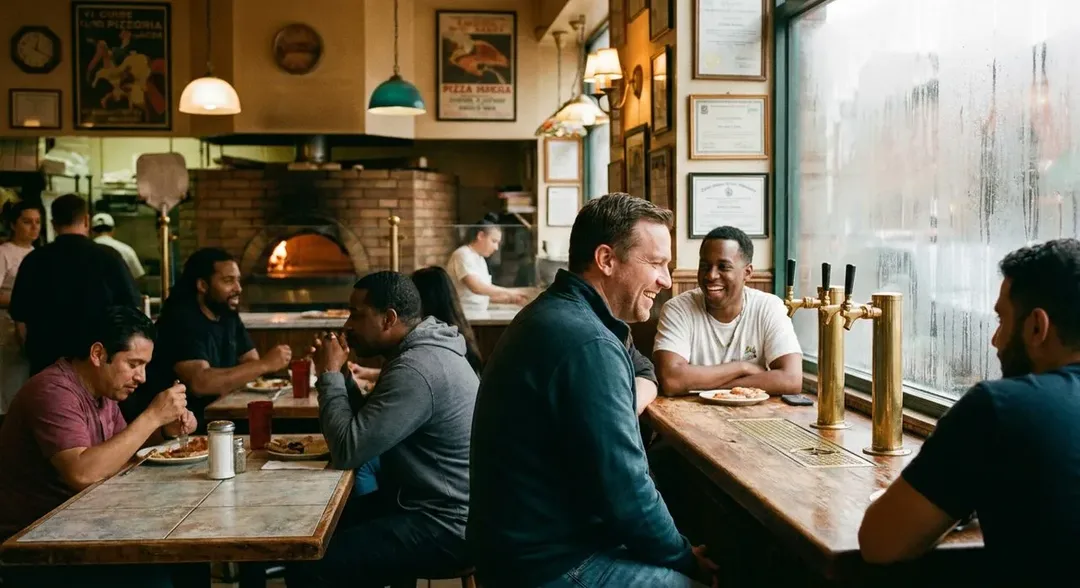
You claim stool three at the Avenue J window—leftmost position, best sightline to both the oven and the sidewalk procession. Di Fara Pizza occupies a corner storefront that hasn't updated its aesthetic in decades. The Formica counter runs the length of the window. Outside, Midwood scrolls past: Orthodox families, high schoolers from Midwood High School two blocks north, delivery cyclists cutting through the J train's shadow. The family continues the methods Domenico "Dom" DeMarco perfected over five decades—the same gestures, the same attention. Scissors in hand, fresh basil cut over each pie with the concentration of a calligrapher. The shop holds maybe fifteen people comfortably. Saturday at one-thirty, it holds more.
The inheritance question
Dom's children work the register and the phone orders now. The operation hasn't franchised beyond a second Manhattan location, hasn't installed systems that would compromise the original method. The handwritten sign above the counter still reads "Cash Preferred" in faded marker. You watch a couple from Manhattan fumble with an ATM receipt, explaining they thought "preferred" meant optional. The response is patient but firm: there's a bodega next door. This intransigence isn't performance—it's structural. The recipe hasn't changed. The suppliers haven't changed. Dom's specifications for tomatoes and flour remain the standard. When you operate at this level of consistency, compromise becomes impossible. The late founder's legacy—he passed in 2022 at eighty-five—lives in every pie that emerges from the oven.
The square versus round taxonomy
The menu offers two formats: round pies and square slices. Regulars know the squares come from pies made earlier—still excellent, less transcendent. You order a round pie, half plain, half mushroom. The wait time quoted is substantial. The oven work follows Dom's template: each dough round stretched by hand, sauce added with a ladle, cheese distributed in handfuls that achieve perfect melt distribution. The mushrooms are sautéed in advance, kept in a steel container near the oven. When the pie emerges, olive oil drizzles from an unlabeled glass bottle, then the scissor work begins. Fresh basil leaves, cut directly over the crust. The precision suggests ritual, not recipe.
The Avenue J context
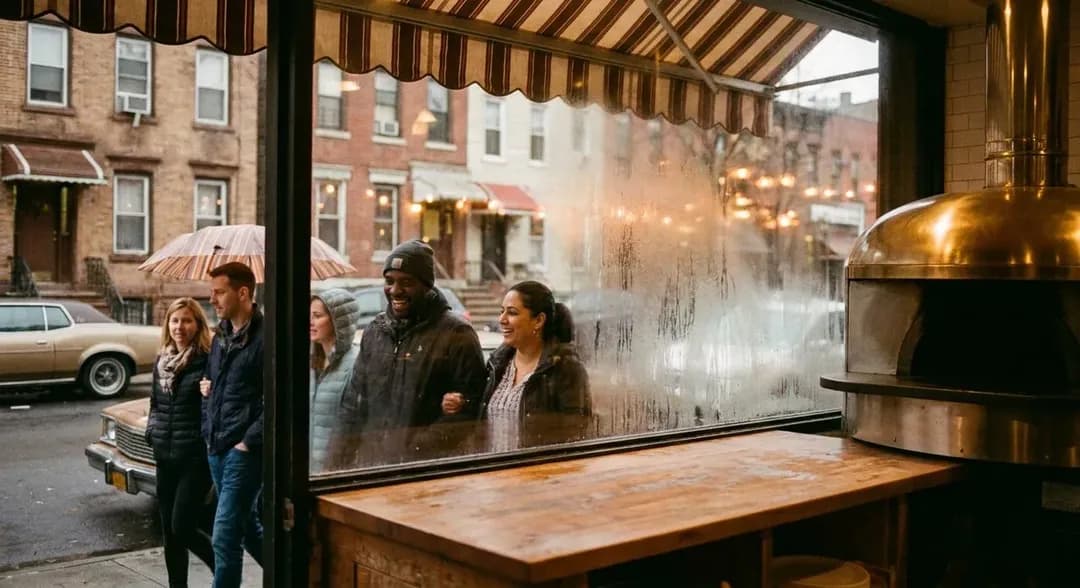
Midwood operates on a different clock than the rest of Brooklyn. Avenue J between East 14th and East 16th Streets holds a density of kosher bakeries, Judaica shops, and family-owned grocers that resists the churn visible blocks west. Di Fara sits at the corner of East 15th, anchoring a block that includes businesses that have held their ground for decades. The neighborhood's Orthodox population keeps Shabbat; Di Fara's Saturday rush begins after sundown prayers end. You notice the demographic shift in the evening—families arrive in clusters, kids still in synagogue clothes. The pace doesn't adjust for crowds. A long line doesn't accelerate production. The pizza takes the time it takes.
The economics of waiting
Prices here haven't tracked with the broader Brooklyn pizza economy. They've tracked with ingredient costs: imported flour, San Marzano tomatoes, specific cheese blends. You overhear a college student complaining to his girlfriend about the wait. She's from Midwood originally. She explains: "You're not paying for speed. You're paying for the fact that they're still doing it the same way." This framing recontextualizes the entire transaction. Di Fara isn't a pizza shop with slow service—it's a commitment to method where duration is essential to the work. The window seat makes you complicit. You watch every step. You can't pretend the pizza materializes from an app.
The taste memory
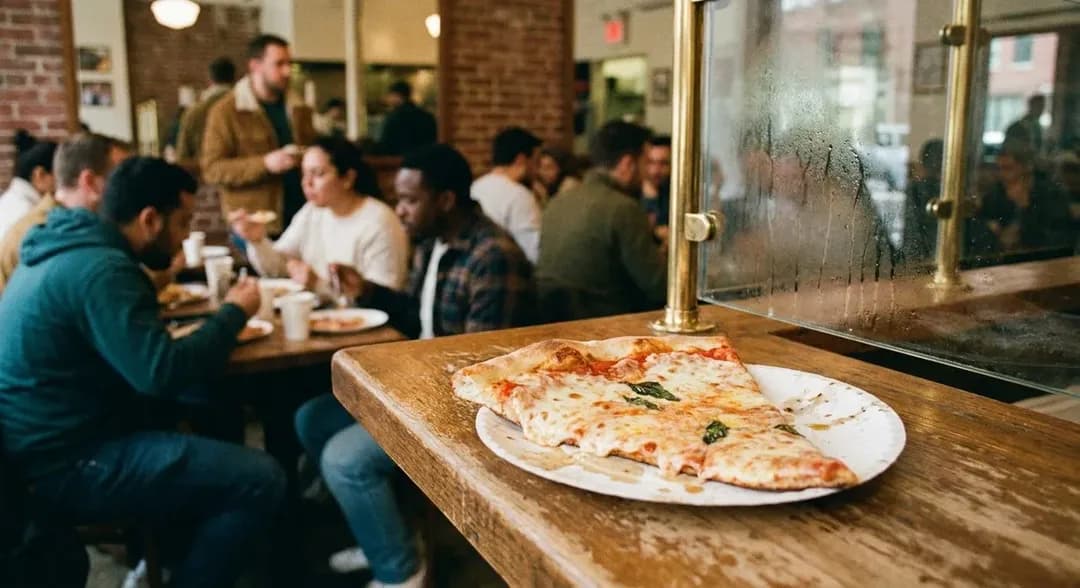
The crust achieves something most New York pizza doesn't attempt: structural integrity and airiness simultaneously. The underside shows leopard spotting from the oven's heat distribution. The cheese pulls in strings when you lift a slice but doesn't grease-slick the paper plate. The basil, cut seconds before serving, hasn't wilted or oxidized. You taste chlorophyll and pepper. The sauce is sweeter than most Brooklyn pies, less aggressive with the oregano. The formula remains what Dom established: quality tomatoes, minimal interference. This is either radical honesty or radical evasion. Likely both.
Practical notes
Address: 1424 Avenue J (corner of East 15th Street), Midwood, Brooklyn Hours: Roughly Monday 12–5 PM, Tuesday–Sunday 12–8 PM (with an afternoon prep break); call ahead to confirm: (718) 258-1367 Price range: Moderate; cash strongly preferred Transit: Q train to Avenue J (two blocks west)
Expect waits of forty-five minutes to ninety minutes on weekends. Square slices are available immediately but represent an earlier baking session. The window counter seats a handful; the leftmost stools offer the best view of the oven work. Bringing your own beverages is common—there's a cooler with canned sodas, but selection is limited. Street parking on Avenue J is metered until evening. The shop occasionally closes for family events without notice.
Tags: #DiFaraPizza #AvenuJ #Midwood #Brooklyn #DomDeMarco #PizzaCounter #NYCPizza #BrooklynEats #MidwoodBrooklyn #WindowSeat #PullUpAChair #ClassicNYC #BrooklynLegacy #CashOnly #SlowFood
Sources consulted: difarapizzany.com (https://difarapizzany.com) · en.wikipedia.org (https://en.wikipedia.org)
All trademarks are the property of their respective owners.
Ask Karpo for more information.
Keep reading
- Noodle Bar Near Me in Chelsea Market: Very Fresh Noodles' Hand-Torn Bowls
 Noodle Bar Near Me on Forsyth Street: Spicy Village's Big Tray Chicken
 Noodle Bar Near Me in Chinatown: Super Taste's Lanzhou Hand-Pulled Noodles