 Chelsea Consignment Shop Crawl Planner for Your First Studio
Hidden Gems & Odd Finds
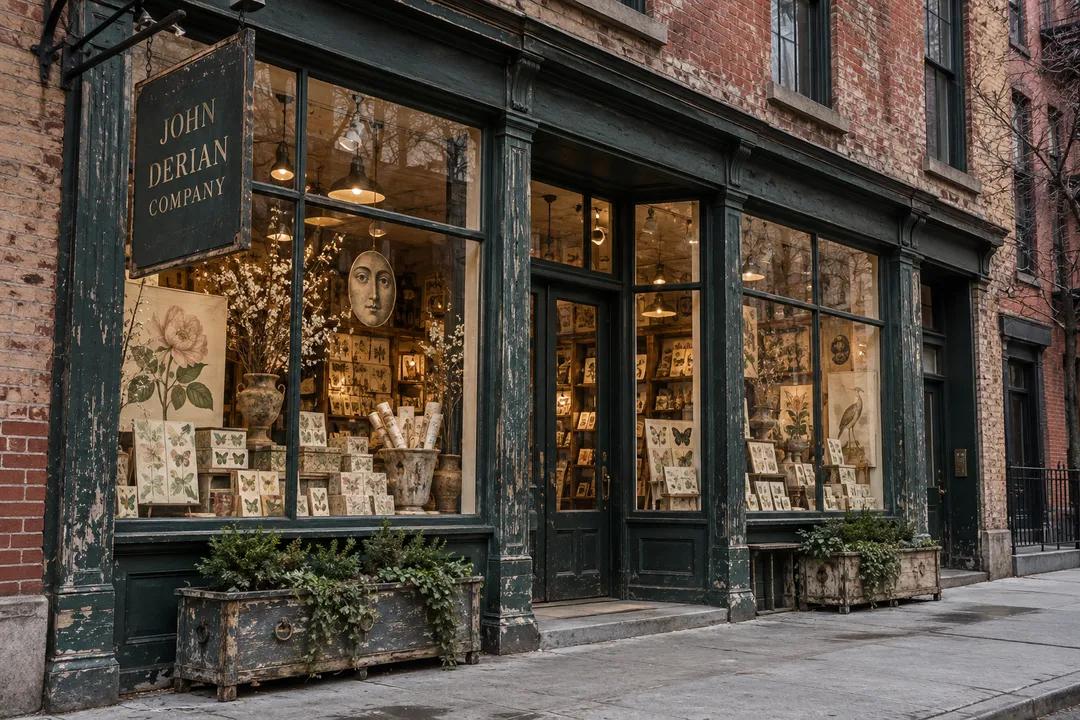
Curiosities Shop Near Me in the East Village: John Derian Company
John Derian Company at 6 East 2nd Street in the East Village has operated since 1989 as a master cabinet of paper oddities, handcrafted 19th-century natural history decoupage, and vintage curiosities.
John Derian Company turns eighteenth-century paper ephemera into collectible glass art. John Derian opened his flagship workshop and curiosity boutique in 1989 at 6 East 2nd Street, tucked into an atmospheric block between Second Avenue and the Bowery in the East Village. For antiquarians searching for a curiosities shop near me that celebrates historic natural history, botanical illustrations, and eccentric paper goods, this long-standing studio houses hundreds of handcrafted decoupage plates, vintage vitrines, and rare European oddities.
The Tripartite Wonder of East Second Street
What began as a single modest storefront has expanded gracefully into three distinct, interconnected spaces along East 2nd Street. Number 6 houses the primary collection of decoupage glass, paperweights, and small tabletop curiosities. Number 8 operates as a dedicated seasonal holiday and ornament parlor filled with hand-blown German glass figures. Number 10 focuses on dry goods, imported French textiles, antique furniture, and Astier de Villatte ceramics. Together, they create an enchanting village compound where brick fireplaces, creaking wooden floorboards, and antique wallpaper patterns transport shoppers into an earlier century. The three connected East 2nd Street doorways allow shoppers to transition seamlessly from delicate paper decoupage into antique German glassware and rustic French country homewares, providing a multi-layered historic shopping journey within a single downtown block.
Handcrafted Decoupage, Paperweights, and Verified Prices
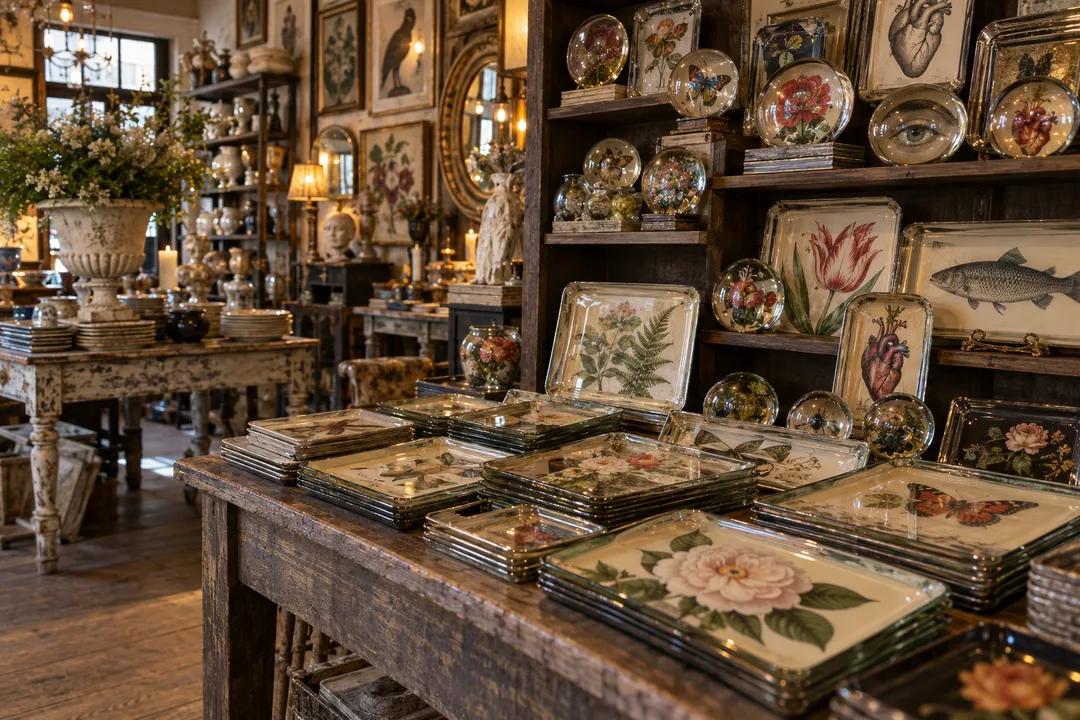
The heart of John Derian's legacy is his mastery of nineteenth-century decoupage techniques. Working with a small team of artisans in his local New York studio, Derian collages reproductions of vintage botanical prints, anatomical charts, and celestial maps beneath hand-blown glass. A small 4-inch round decoupage glass plate costs $95, featuring delicate illustrations of moths, wild mushrooms, or vintage French typography. A substantial glass dome paperweight costs $110, offering a weighty and decorative desktop curiosity. Small rectangular trays sell for $110, while larger letter-sized trays and oval platters range from $132 to $175.
Taxidermy, Antique Relics, and French Ceramics
Beyond decoupage, the shelves at 6 East 2nd Street are packed with curated curiosities gathered from flea markets across France and England. Vintage papier-mâché anatomical models share space with antique iron keys, taxidermy pheasants, and hand-dipped beeswax tapers. The shop serves as the premier New York partner for Parisian ceramic atelier Astier de Villatte, showcasing milky-white glazed terracotta plates, incense burners shaped like smoking chalets, and hand-poured vegetable wax candles. Every surface presents an intricate vignette that balances academic natural history with whimsical nostalgia.
The Art and Craft of Reverse-Glass Collage
The decoupage process practiced in Derian's East Village studio remains entirely manual and labor intensive. Craftspeople use fine curved surgical scissors to cut around the delicate legs of illustrated beetles or the tiny stamens of botanical flowers from archival paper prints. The paper cutouts are carefully glued face-down onto the concave underside of clear hand-blown glass blanks using water-soluble paste. Multiple coats of opaque bone-colored lacquer seal the paper from the back, followed by a glued layer of dark protective felt. This painstaking reverse layering produces a remarkable depth, making the antique illustrations appear suspended directly within the glass. Collectors prize these plates precisely because no two pieces share identical paper placement, turning vintage natural history illustrations into durable decorative heirlooms that grace elegant gallery walls across the globe.
Seasonal Splendors and French Dry Goods
Stepping next door into number 8 and number 10 reveals additional layers of historical collecting. Number 8 transforms every autumn into an old-world festive grotto, draped with thousands of hand-blown figural glass ornaments imported from heritage workshops in Thuringia, Germany, and the Czech Republic. Ornaments depict glass radishes, vintage owls, mechanical airships, and glittering crescent moons. Across the entryway at number 10, rolls of hand-dyed Belgian linen, block-printed indigo tablecloths from Provence, and antique French armoires showcase how nineteenth-century rustic textiles integrate with urban loft interiors.
Browsing Protocol and Handling Fragile Glass
Because thousands of glass plates and paperweights sit stacked on open wooden sideboards, deliberate browsing is essential. The aisles can become snug when more than six customers enter the front room, so carry your bags in front of you. Staff members are attentive and will happily hold a basket for you at the counter while you select various decoupage patterns. The store asks that customers not stack glass pieces without placing felt pads or tissue between them, preventing hairline scratches on the reverse-painted backing.
Navigating the Crowds and Strategic Shopping
Weekends on East 2nd Street attract design enthusiasts, international travelers, and neighborhood regulars, making the narrow rooms bustling between 2:00 pm and 5:00 pm. For a peaceful visit, arrive on a Thursday morning right around 11:30 am when the doors unlock. You can inspect the intricate engraving lines on antique insect prints without jostling elbows. Here is an insider recommendation: skip the bulky decorative pillows if luggage space is tight and instead collect three complementary mini-trays, which pack flat and form an eye-catching wall gallery when hung together.
A Backup Route Through the Bowery
If you encounter a line at the door during the peak autumn shopping season, explore the surrounding Bowery corridor for thirty minutes. Walk half a block west to browse contemporary exhibitions at the New Museum on Bowery, or duck into local culinary supply shops to inspect vintage seltzer siphons. You can also walk one block east to Second Avenue and relax with an iced matcha latte while waiting for the retail flow to ease.
Wandering the Historic East Village and Bowery
The block of East 2nd Street between Second Avenue and Bowery holds deep downtown history, having served as a crossroads for nineteenth-century immigrants and twentieth-century punk legends. After completing your shopping, wander north through the East Village toward St. Mark's Place, passing classic brick tenement buildings, community gardens, and independent record stores. For an afternoon meal, walk three blocks south to Katz's Delicatessen on Houston Street, or turn down Bowery to enjoy wood-fired pizza at nearby neighborhood trattorias.
Store Directory, Operating Hours, and Subway Lines
John Derian Company welcomes shoppers Tuesday through Sunday from 11:30 am to 6:00 pm, remaining closed on Monday. The main curiosity boutique is situated at 6 East 2nd Street, New York, NY 10003, with companion shops at numbers 8 and 10 on the same block. Reaching the shop by public transit is simple: take the F train to the Second Avenue subway station and exit directly at 2nd Street, or take the 6 train to Bleecker Street and walk three short blocks east.
Ask Karpo for more information.
Keep reading
- Chelsea Consignment Shop Crawl Planner for Your First Studio
 East Village Consignment Shop Crawl Planner: Leather Jackets
 Harlem Consignment Shop Crawl Planner for a Jazz Night Look