 Chelsea Consignment Shop Crawl Planner for Your First Studio
Hidden Gems & Odd Finds
West Village Curated Secondhand Clothing: 5 Bleecker Lanes
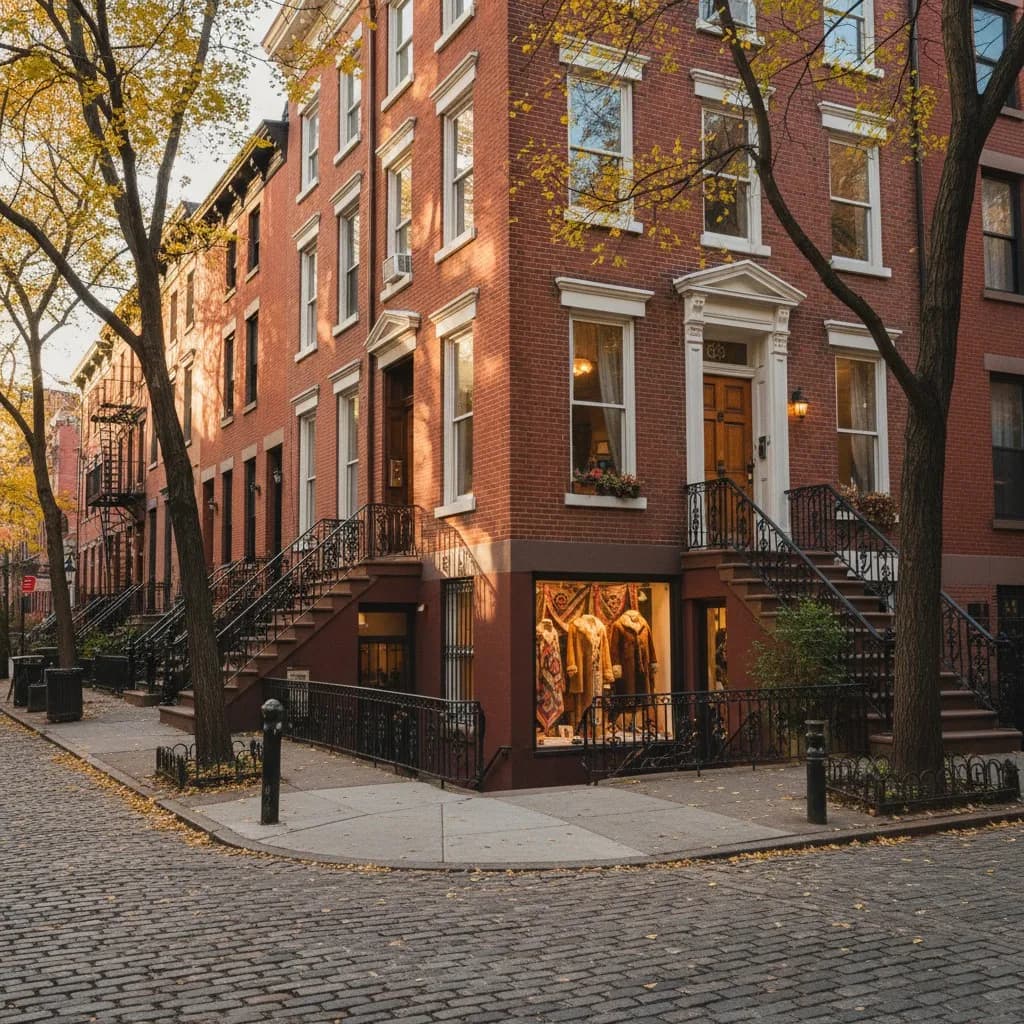
Walk 5 Bleecker Street lanes in the West Village for curated secondhand clothing. Explore garden-level townhouse parlors stocked with vintage cashmere.
Unlike the rigid rectangular avenues imposed north of 14th Street by the Commissioners' Plan of 1811, the West Village retained its eighteenth-century farm lanes and diagonal cow paths, creating a labyrinth where West 4th Street unexpectedly intersects West 10th, West 11th, and West 12th streets. Protected within the Greenwich Village Historic District—designated by the New York City Landmarks Preservation Commission in 1969—these low-rise blocks of Federal-style Flemish-bond brickwork and Greek Revival rowhouses resist big-box retail footprints. For shoppers seeking curated secondhand clothing, that domestic scale translates into intimate garden-level parlors and parlor-floor ateliers tucked just steps off the Bleecker Street spine.
How the Crooked 1811 Grid Exclusion Preserved Intimate Townhouse Boutiques
Following Bleecker Street northwest from Seventh Avenue South toward Abingdon Square reveals five interlocking shopping lanes: the central Bleecker Street corridor between Grove and Bank streets, the bohemian stretch of Christopher Street down toward Hudson Street, the leafy townhouse bend of Charles Street, the quiet literary corners of Perry Street, and the western threshold along Hudson Street. Because each storefront occupies only the footprint of a narrow nineteenth-century rowhouse, buyers edit their racks ruthlessly, favoring tactile natural fibers and timeless silhouettes over high-volume turnover.
Stepping down three brownstone steps under a wrought-iron stoop into a West Village resale parlor feels closer to visiting a private residential dressing room than a commercial department store. Original fireplaces, pressed-tin ceilings, and rear courtyard windows frame small wooden wardrobes where garments are sorted by color story and fabric weight. Dappled sunlight filtering through mature London plane and ginkgo trees along the sidewalk softens the light inside, encouraging a slower, touch-driven browsing rhythm.
What to Look For: Scottish Cashmere, 1970s Shearling, and Estate Silk
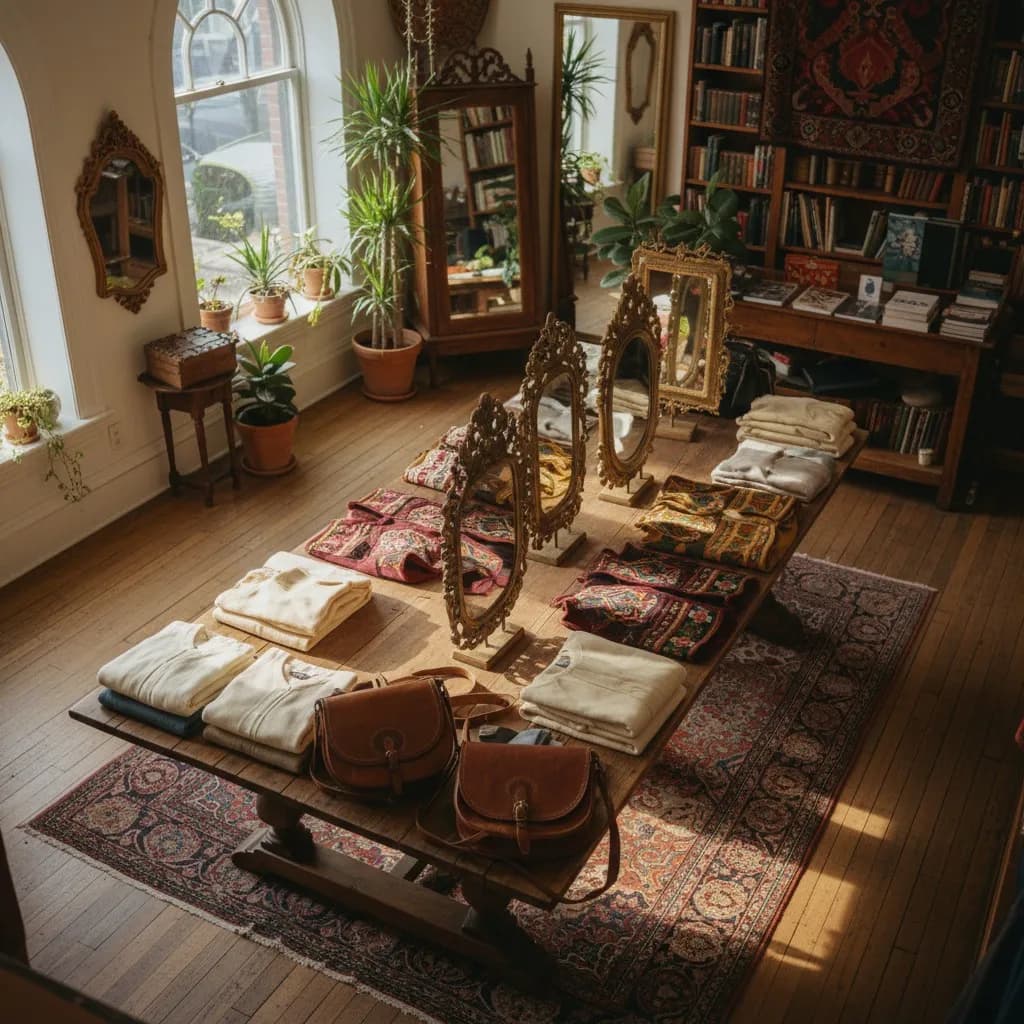
The secondhand wardrobe of the West Village reflects decades of neighborhood life lived by playwrights, stage actors, book editors, and quiet patrons who prize longevity over ostentatious branding. As you comb the racks along Bleecker, Christopher, and Charles streets, pay special attention to mid-century Scottish two-ply cashmere cardigans, British Harris Tweed hacking jackets, and buttery 1970s shearling coats. Unlike synthetic modern knitwear, vintage Hawick-milled cashmere develops a dense, pill-resistant surface hand after gentle washing; hold the knit up against a garden window to check that elbows and cuffs remain uniform in thickness.
Bohemian folk embroidery and equestrian leather accessories form another signature thread across these five lanes. Look on parlor tables and antique armoires for hand-tooled bridle-leather saddle bags, silk twill foulards with hand-rolled and hand-stitched hems, and velvet smoking jackets. When evaluating a vintage silk scarf, pinch the rolled edge between your thumb and forefinger: genuine European luxury silk edges are rolled toward the front face of the print and secured with tiny, even hand stitches rather than flat machine overlocking.
Denim and casual separates in the West Village skew toward broken-in American selvedge, corduroy trousers, and silk crepe blouses that layer effortlessly under trench coats during brisk Hudson River breezes. Before stepping into the curtain-draped fitting corner, inspect brass zippers on vintage trousers to ensure the cloth tape near the bottom stop has not torn, and check horn or mother-of-pearl buttons on wool overcoats for hairline cracks.
Navigating Narrow Parlor Aisles and Dodging Weekend Brunch Queues
Because West Village rowhouse boutiques rarely exceed eighteen feet in width, timing your visit makes all the difference in whether you can comfortably access the full length of the garment rails. Saturday and Sunday afternoons between noon and four o'clock bring heavy pedestrian spillover from neighborhood bakeries and sidewalk brunch tables along Bleecker and Grove streets, turning compact shops into single-file bottlenecks. Plan your circuit instead for a weekday afternoon between one and five o'clock, when local shopkeepers have freshly steamed recent estate drop-offs and the fitting room mirror is entirely yours.
Avoid wearing bulky backpacks or carrying oversized shopping totes when descending into garden-level shops along Christopher and Perry streets. Narrow aisle clearances between antique display tables and hanging silk garments mean a large bag can easily snag delicate beading or vintage lace. Instead, dress in a light base layer—such as a fitted cotton tee and slip-on loafers—so you can test the shoulder pitch of tweed blazers and wool trench coats directly in front of the parlor pier glass when the single fitting stall is occupied.
If Bleecker Street between Seventh Avenue South and West 10th Street feels busier than you prefer, pivot immediately one block west onto Hudson Street or duck along the quiet residential curve of Commerce Street and Barrow Street. Using these parallel tree-lined lanes lets you bypass foot traffic while connecting directly to the boutique clusters near Abingdon Square and Christopher Street.
Transit Anchors, Pocket Parks, and Route Building with the Karpo APP
Getting to the West Village lanes by subway takes only a single $3.00 OMNY tap. The 1 train to Christopher Street–Sheridan Square drops you directly at the intersection of Seventh Avenue South and Christopher Street, right at the eastern gateway to the Bleecker Street loop. Alternatively, ride the A, C, E, B, D, F, or M trains to West 4th Street–Washington Square and walk five minutes west across Sixth Avenue, or take the A, C, E, or L train to 14th Street–Eighth Avenue to start from Abingdon Square at the northern tip and stroll downhill.
Anchor your walking breaks around the neighborhood's historic pocket parks and architectural curiosities. Pause on the benches of Abingdon Square Park—one of Manhattan's oldest public greens, enclosed by cast-iron fencing since 1836—or walk past the remarkably narrow three-story brick house at 75 1/2 Bedford Street, built in 1873 on a former carriage entrance measuring just nine and a half feet wide. Nearby Grove Court's gated federal townhouses and the stone memorials at Christopher Park offer serene resting points between browsing sessions.
When you want to sequence these five West Village lanes around afternoon coffee stops or an early evening jazz set, open the Karpo APP to assemble your personalized walking loop. The Karpo APP helps you organize neighborhood highlights, compare secondhand style pockets across Manhattan, and keep your Bleecker Street discoveries neatly mapped for your next afternoon out.
Ask Karpo for more information.
Keep reading
- Chelsea Consignment Shop Crawl Planner for Your First Studio
 East Village Consignment Shop Crawl Planner: Leather Jackets
 Harlem Consignment Shop Crawl Planner for a Jazz Night Look