 Chelsea Consignment Shop Crawl Planner for Your First Studio
Hidden Gems & Odd Finds
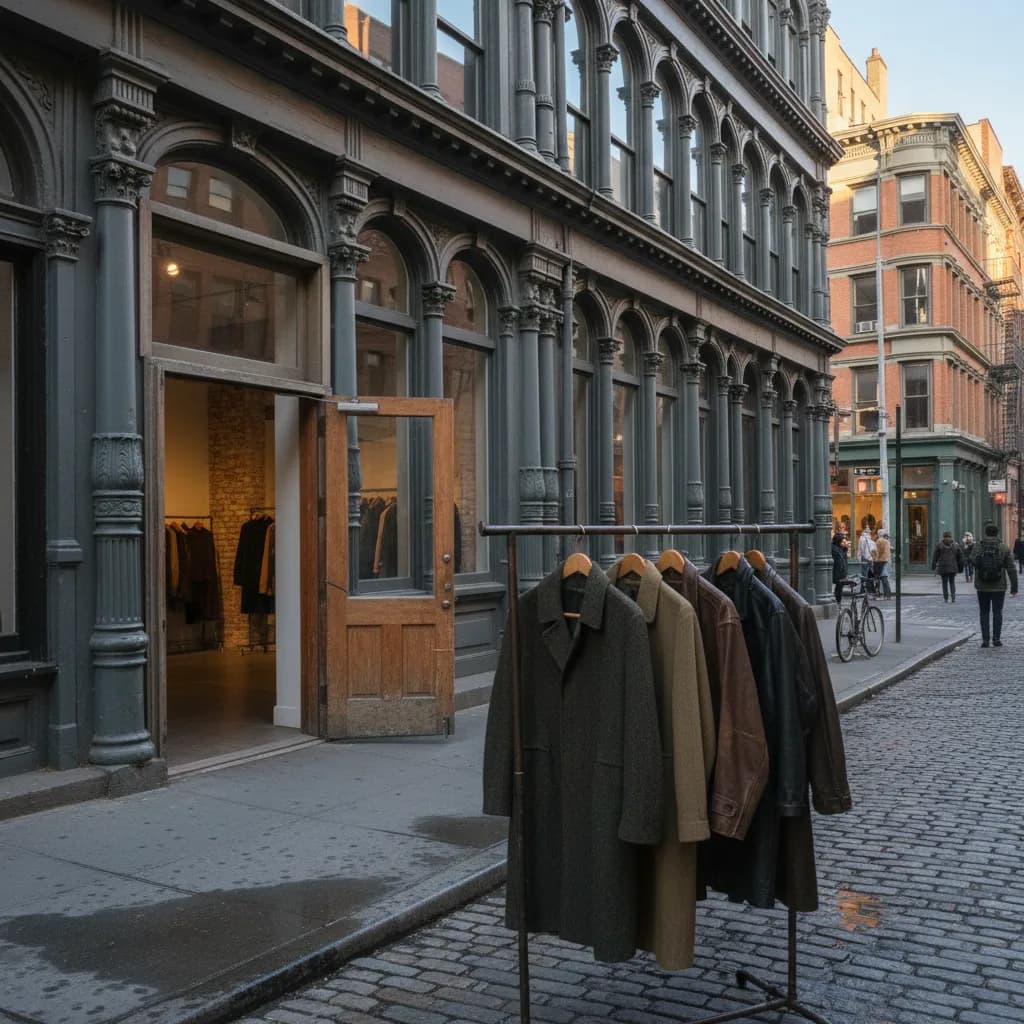
SoHo Curated Secondhand Clothing: 4 Cast-Iron Walks
Browse curated secondhand clothing across SoHo's cast-iron lofts from Greene Street to Mercer Street. Compare archival runway wool in natural skylight.
Between Canal Street and Houston Street, the SoHo-Cast Iron Historic District—designated by the New York City Landmarks Preservation Commission in 1973—houses the largest concentration of nineteenth-century full and partial cast-iron facades in the world. Constructed primarily between the 1850s and 1890s as dry-goods and textile warehouses, these structures along Greene Street, Mercer Street, and Broome Street feature soaring ceilings, slender fluted Corinthian columns, and expansive plate-glass windows designed to flood deep floorplates with daylight. Today, that architectural legacy defines how buyers experience curated secondhand clothing in Lower Manhattan, transforming former mercantile lofts into quiet, gallery-like showrooms where archival garments hang with generous breathing room.
Why the SoHo Cast-Iron Historic District Shapes Archival Merchandising
Rather than cramming hundreds of unsorted hangers onto tightly packed floor racks, the independent dealers and consignment showrooms operating across these Belgian-block streets approach secondhand inventory with the rigor of museum registrars. Walking south from Prince Street toward Grand Street, you encounter four distinct micro-corridors: the parlor-level and second-floor lofts of Greene Street, the quieter cobblestone blocks of Mercer Street, the cross-street ateliers along Broome Street, and the tucked-away industrial alleys of Crosby Street. Each corridor caters to a specific collector profile, from deconstructed Japanese runway tailoring to structured European leather goods and minimal 1990s runway separates.
Because cast-iron construction eliminated the need for thick load-bearing masonry walls on street facades, the window bays along Greene and Wooster streets act as natural lightboxes. When you pull a dark navy wool gabardine coat or an asymmetrical silk dress off a steel rack, you can step directly toward the tall front casements to inspect fabric weave, dye depth, and hand-finished seam work without the distortion of harsh overhead halogen bulbs. Stylists, costume designers, and neighborhood regulars treat this four-corridor loop as a cohesive afternoon study in textile history.
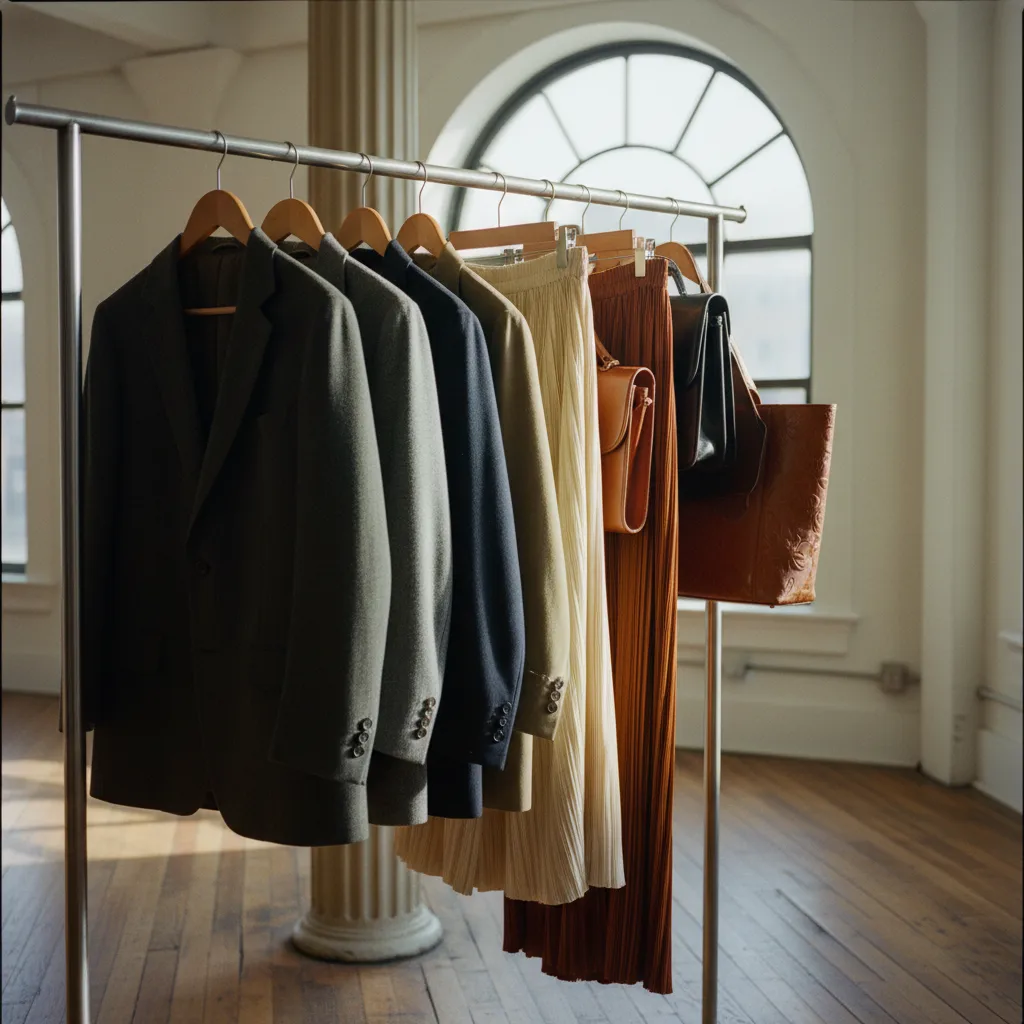
Evaluating Japanese Avant-Garde Wool and European Runway Tailoring
SoHo's resale identity leans heavily toward collector-grade designer archives and architectural silhouettes that mirror the surrounding neighborhood aesthetic. When browsing curated secondhand clothing in the lofts between Spring Street and Broome Street, focus first on late-twentieth-century Japanese avant-garde labels and Belgian conceptual tailoring. Boiled wool coats, bias-cut rayon trousers, and garment-dyed linen jackets appear frequently on these rails because local consignors—often gallery directors, architects, and fashion editors working in nearby studios—rotate pieces that prioritize structural drape over fleeting seasonal logos.
Inspecting high-level archival outerwear requires a systematic hands-on checklist before you head to the fitting room. Start by turning blazer collars and coat lapels inside out to check for intact canvas interlining and unfrayed buttonholes. On structured European tailoring from the 1980s and 1990s, run your fingers along the shoulder pads and sleeve heads to confirm the horsehair or felt batting has not bunched or deteriorated during dry cleaning. Check interior care labels and woven season tags not only for authenticity, but also to understand fiber composition, since vintage virgin wool and raw silk blends react differently to Manhattan humidity than modern synthetic mixes.
Structured leather goods and footwear form the second pillar of SoHo's secondhand ecosystem. Along Mercer and Crosby streets, glass vitrines and open cedar shelves showcase box-calf shoulder bags, equestrian-inspired belt hardware, and Goodyear-welted ankle boots. Pay close attention to piping corners, strap anchor stitching, and brass turnlocks; genuine patinated brass develops a warm, even olive undertone over decades, whereas plated hardware flakes to reveal silvery base metal underneath. When trying on secondhand leather boots, walk across the uncarpeted hardwood loft floors to test heel stability and shank flex before committing.
Timing Weekday Morning Visits and Avoiding Cast-Iron Footfalls
The rhythm of SoHo changes dramatically between weekday mornings and Saturday afternoons. To examine garments without jostling weekend sightseeing crowds along Broadway, begin your route on a Tuesday, Wednesday, or Thursday morning shortly after late-morning showroom openings. During this window, natural eastern light filters across Crosby and Lafayette streets into rear loft windows, and sales associates have time to pull archived sizing from backstock or discuss the provenance of specific runway collections.
Skip the temptation to start your search on the congested commercial stretch of Broadway between Prince and Canal streets, where fast-fashion foot traffic slows down your pace and rarely yields true archival curation. Instead, enter the historic district from the west via Sixth Avenue or Thompson Street and weave eastward across Wooster, Greene, and Mercer streets. Keep in mind that several upstairs consignment lofts operate via buzzer entry next to cast-iron freight doorways; look for brass directory plaques beside the ground-floor entrance rather than assuming every curated showroom has a street-level retail window.
Footwear choice matters for your own walking stamina as much as for your shopping list. Many blocks of Greene Street, Mercer Street, and Crosby Street retain historic Belgian block granite paving alongside original cast-iron vault-light panels embedded in the sidewalks—studded with round purple-tinted glass lenses that once illuminated basement storage vaults. Wearing flat, rubber-soled shoes keeps your footing steady on damp mornings and makes slipping in and out of fitting rooms far quicker across a four-block circuit.
Subway Approaches, Architectural Detours, and Planning with the Karpo APP
Reaching the heart of SoHo's cast-iron lofts by public transit is straightforward from any borough. Ride the C or E train to Spring Street at Sixth Avenue for immediate access to the western edge of the historic district, take the R or W train to Prince Street at Broadway, or use the 6 train to Spring Street at Lafayette Street on the eastern boundary. Each subway fare is $3.00 via OMNY contactless tap, placing you within a three-minute walk of the primary Greene and Mercer street corridors.
Between showroom stops, take ten minutes to admire the neighborhood's landmark facades, including the "King of Greene Street" at 72–76 Greene Street with its grand projecting porch and the "Queen of Greene Street" at 28–30 Greene Street topped by a dramatic mansard roof. If a midday rain shower rolls across Lower Manhattan, duck into the covered atrium or quiet side galleries along Broome Street before continuing east toward Nolita for an afternoon espresso.
To organize your personal walking sequence across these four architectural corridors, open the Karpo APP and ask for a custom Lower Manhattan vintage and design itinerary. You can use the Karpo APP to save favorite neighborhood blocks, compare different style districts across the city, and build a smooth half-day route that pairs SoHo's curated secondhand clothing lofts with nearby contemporary art spaces and quiet courtyards.
Ask Karpo for more information.
Keep reading
- Chelsea Consignment Shop Crawl Planner for Your First Studio
 East Village Consignment Shop Crawl Planner: Leather Jackets
 Harlem Consignment Shop Crawl Planner for a Jazz Night Look