 Chelsea Consignment Shop Crawl Planner for Your First Studio
Hidden Gems & Odd Finds
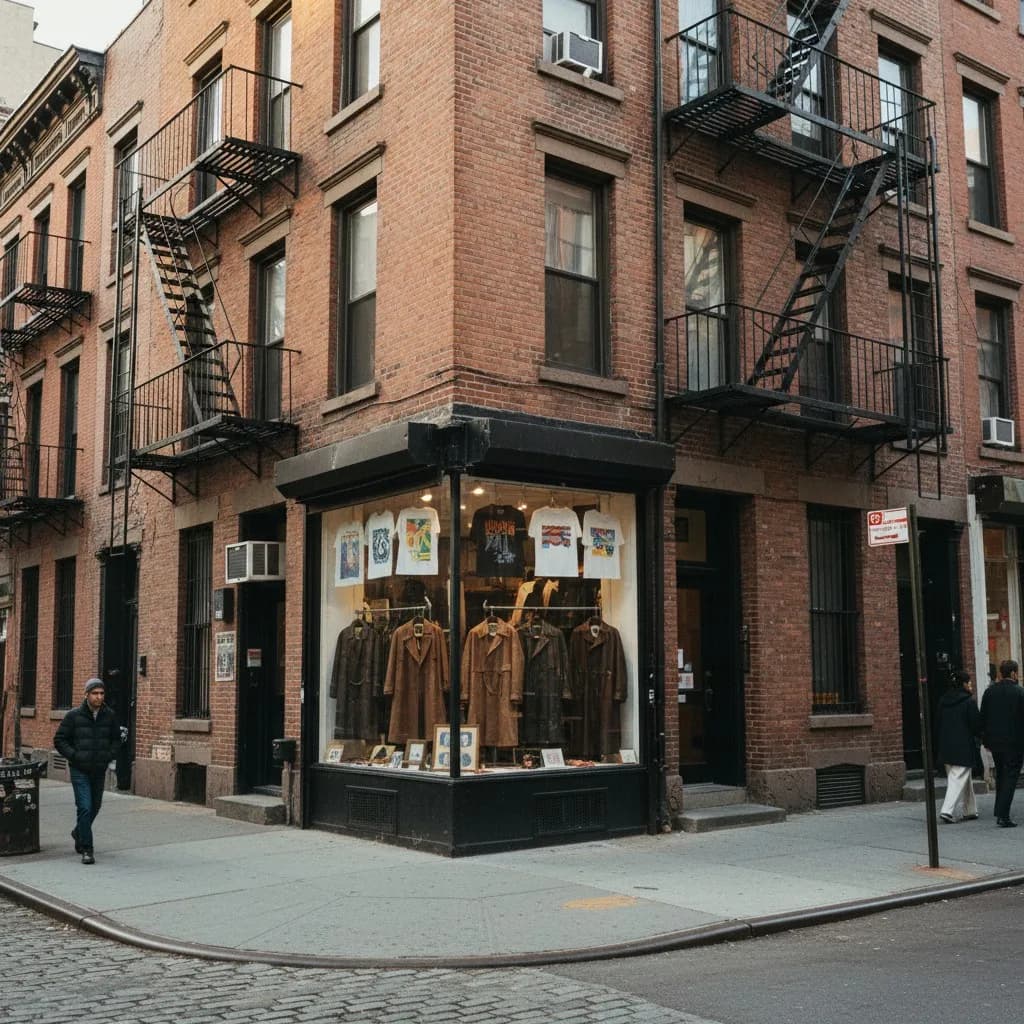
Lower East Side Curated Secondhand Clothing: 4 Orchard Walks
Browse curated secondhand clothing along 4 Lower East Side blocks on Orchard and Ludlow streets. Explore 1990s leather trench coats in historic tenements.
For generations of New Yorkers, Orchard Street between East Houston Street and Canal Street was synonymous with the Lower East Side dry-goods pushcart market and family-run discount hosiery, leather, and coat stalls operating out of five-story nineteenth-century brick tenements. Listed on the National Register of Historic Places as part of the Lower East Side Historic District, these narrow twenty-five-foot-wide masonry buildings still feature ornate cast-iron fire escapes, recessed glass entry transoms, and subterranean cellar bulkhead doors. Today, a new wave of independent buyers and stylists has reclaimed those exact ground-floor tenement bays, turning the historic garment district into Manhattan's liveliest corridor for curated secondhand clothing.
How Orchard Street's Pushcart Garment Heritage Evolved into Archival Curation
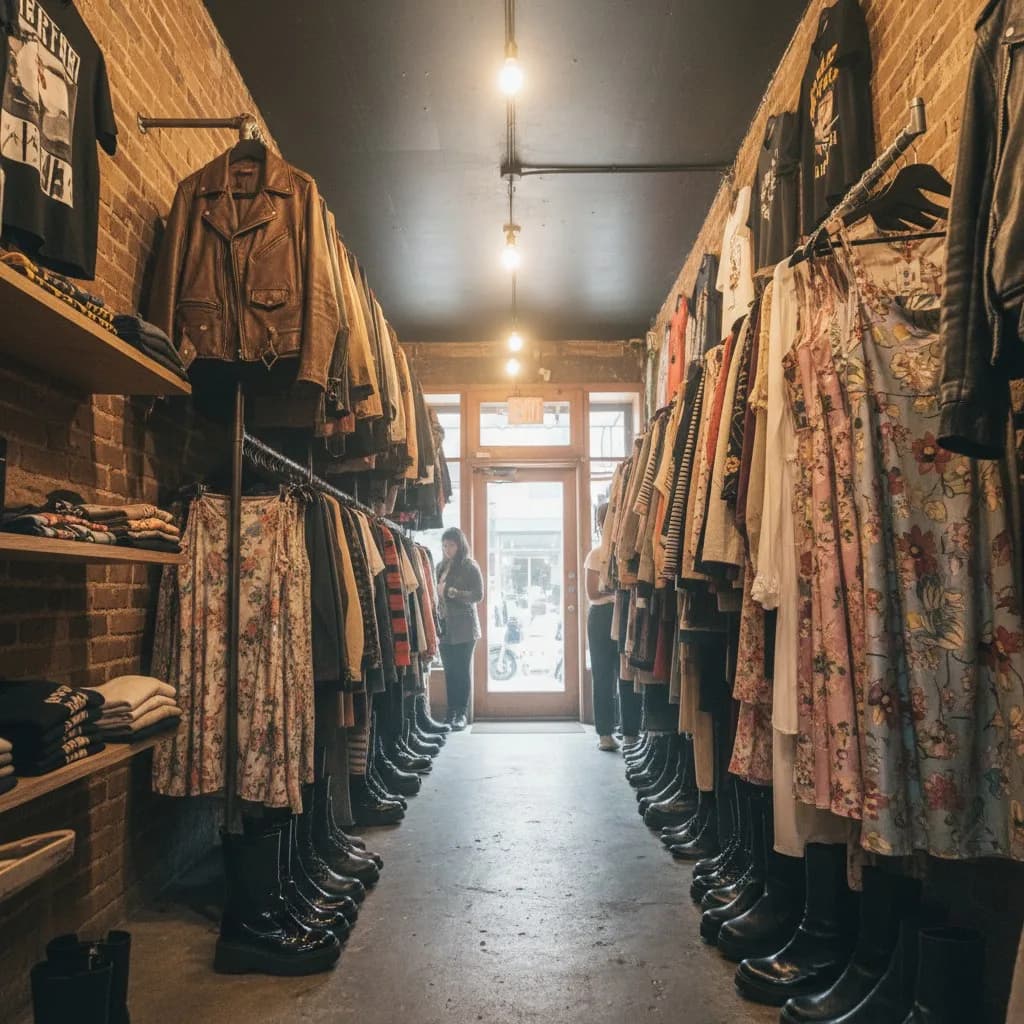
Walking south from East Houston Street across Stanton, Rivington, Delancey, and Broome streets links four distinct downtown style pockets: the pedestrianized blocks of Orchard Street, the indie music and night-life spine of Ludlow Street, the gallery-lined stretch of Allen Street, and the quieter southern cross blocks near Hester Street. Rather than velvet-roped showrooms, Lower East Side storefronts embrace raw exposed brick walls, concrete floors, and hand-lettered window glass that reflect the neighborhood's punk, skate, and contemporary art roots.
Because tenement retail bays run deep and narrow from the street facade toward a rear airshaft window, dealers organize their racks with sharp subcultural focus. One storefront might dedicate an entire wall to distressed 1980s motorcycle leather and faded concert jerseys, while the shop two doors down focuses exclusively on late-1990s European nylon techwear, bias-cut silk slip dresses, and deadstock downtown streetwear. Stepping from door to door lets you trace forty years of New York street style across four continuous blocks.
Spotting Single-Stitch Band Tees, 1990s Leather Trenches, and Y2K Runway Cuts
The Lower East Side stands apart from uptown consignment because its buyers hunt for attitude, graphic rarity, and club-ready silhouettes. When inspecting vintage graphic t-shirts along Ludlow and Orchard streets, start by checking the sleeve cuff and bottom hem for a single line of stitching without a visible zigzag overlock—the classic hallmark of pre-mid-1990s tubular cotton jersey produced before double-needle hems became industry standard. Examine plastisol screenprints against the light for natural hairline cracking that matches the softness of the cotton collar rather than artificial chemical distressing.
Full-length leather trench coats, boxy lambskin bomber jackets, and worn-in steerhide moto vests anchor the outerwear racks between Stanton and Broome streets. Before trying on a vintage leather coat, check the underarm gussets and interior acetate lining for seam separation, and flex the leather along the shoulder seam to ensure the hide remains supple and moisturized rather than dry or brittle. Heavy YKK or Talon metal zippers should glide smoothly from the bottom pin without missing teeth.
On the women's and unisex designer rails, Lower East Side curators excel at sourcing late-1990s and early-2000s archival pieces: asymmetric mesh tops, low-rise tailored wool trousers, micro-pleated skirts, and square-toe Italian leather boots. Because early-2000s stretch fabrics often blended elastane or Lycra with polyamide, gently stretch waistbands and bias seams to confirm the elastic recovery still snaps back cleanly without chalky fiber breakdown. You will also spot rare Japanese magazine collaborations, embroidered souvenir satin jackets, and deadstock nylon messenger bags tucked onto upper wall shelves above the main floor racks.
Timing the Orchard Street Pedestrian Mall and Late-Afternoon Browsing
Unlike morning-oriented neighborhoods, the Lower East Side wakes up later in the day, with many independent secondhand boutiques raising their security gates around noon or one o'clock in the afternoon. For a focused weekday session with zero fitting-room lines, visit on a Wednesday or Thursday between two and six o'clock in the afternoon, when shop owners are on the floor steaming fresh arrivals and happy to pull rare archive pieces from behind the counter.
If you prefer weekend energy, Sunday afternoons transform Orchard Street between East Houston and Delancey streets into a car-free pedestrian promenade under the neighborhood's longstanding Sunday street closure program, echoing the historic pushcart market days when vehicles were barred so shoppers could fill the asphalt from curb to curb. Just remember to start your walk at the northern end near East Houston Street around midday before late-afternoon bar crowds gather along Rivington and Ludlow streets.
Skip cutting directly along the noisy multi-lane traffic of Delancey Street near the Williamsburg Bridge approach ramps when moving between northern and southern stops. Instead, cross Delancey swiftly at the Orchard or Allen Street crosswalks—where the landscaped median malls provide wide pedestrian refuges—and immediately re-enter the calmer tenement blocks south toward Broome and Grand streets.
F, J, M, and Z Subway Stops, Tenement Landmarks, and the Karpo APP
Subway access puts you right on the doorstep of the Orchard and Ludlow corridors for a $3.00 OMNY fare. Take the F train to 2nd Avenue (exiting at the Allen Street and First Avenue stairs at East Houston Street) to start at the top of Orchard Street, or ride the F, M, J, or Z trains to Delancey Street–Essex Street to step out in the exact center of the district. The B and D trains at Grand Street also sit just two blocks west of the southern Orchard Street galleries.
Pair your vintage hunt with the neighborhood's unmistakable cultural landmarks. Walk past the historic 1863 brick tenement at 97 Orchard Street—preserved since 1988 by the Tenement Museum as a living record of immigrant working-class history—or pause beneath the soaring Moorish Revival arches and rose window of the 1887 Eldridge Street Synagogue at 12 Eldridge Street. Across Delancey Street, the modern Essex Market food hall at 88 Essex Street offers a convenient indoor resting spot to grab a cold drink and review your finds.
To map out a seamless afternoon across these four tenement corridors, open the Karpo APP and ask for a Lower East Side vintage and art gallery route. With the Karpo APP, you can organize your favorite Orchard and Ludlow street blocks, compare downtown secondhand styles with neighboring East Village or Chinatown stops, and shape a flexible evening plan.
Ask Karpo for more information.
Keep reading
- Chelsea Consignment Shop Crawl Planner for Your First Studio
 East Village Consignment Shop Crawl Planner: Leather Jackets
 Harlem Consignment Shop Crawl Planner for a Jazz Night Look