New York's Thai food scene spent decades playing nice, dumbing down the chili count for a city that claimed it wanted authenticity but flinched at anything past mild. That era is over. A wave of unapologetic Thai kitchens now treats heat as a feature, not a bug, and they're not interested in your tolerance level—they're interested in cooking the food right. If you've been chasing real nam tok, som tum that actually stings, or the charred, funky glory of crying tiger, these three spots will recalibrate what you thought Thai food could be in this city.
Karpo knows which Thai spots won't baby your palate and can tell you what to order when the menu doesn't translate the heat warnings. Ask before you commit to that extra-spicy som tum.

Somtum Der: Isan specialists who don't bluff
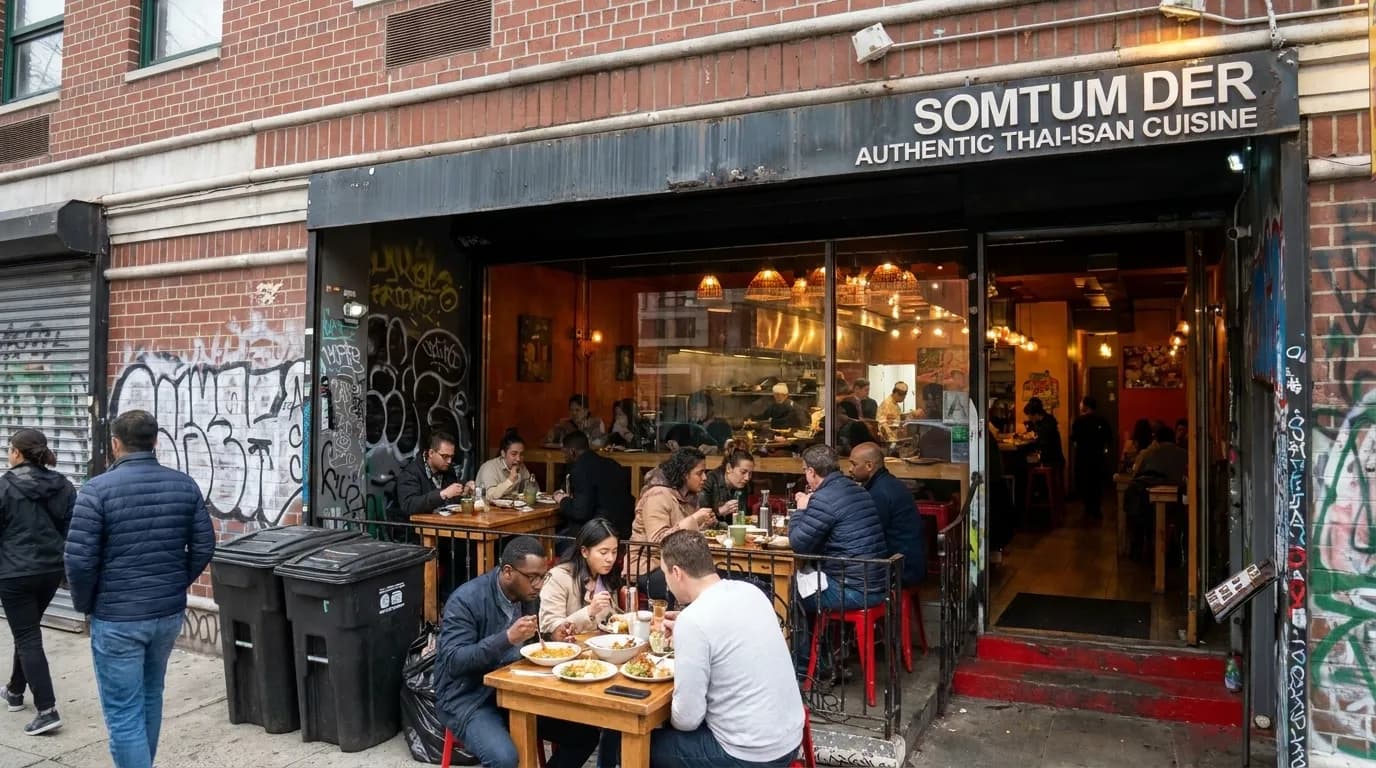
Somtum Der sits on East Village's Avenue A, a narrow space with blonde wood, metal stools, and a no-frills energy that telegraphs what you're in for. This is the New York outpost of a Bangkok mini-chain that built its reputation on Isan cuisine—the spicy, sour, funky food of Thailand's northeast. The menu runs long, but zero in on the papaya salads and grilled meats. The som tum here comes in a dozen styles, from the classic som tum Thai with peanuts and dried shrimp to the more confrontational som tum pla ra, which introduces fermented fish sauce that smells like a dare and tastes like a revelation.
Crying tiger shows up as seua rong hai—grilled marinated beef, sliced thin, served with a tamarind-chili dipping sauce and a basket of sticky rice. The name comes from the idea that the meat is so spicy, even a tiger would cry, though the real punch is in that sauce, a dark, tangy paste loaded with toasted rice powder and enough chili to make your sinuses clear mid-bite. The beef itself is charred on the edges, chewy in the center, and benefits from a squeeze of lime and a heavy dunk. Somtum Der doesn't modulate spice by default; if you want it toned down, you have to ask, and even their medium will test most people. Dinner service fills up fast—arrive before seven or after nine if you'd rather not wait on the sidewalk.
Ugly Baby: Loud, sweaty, uncompromising
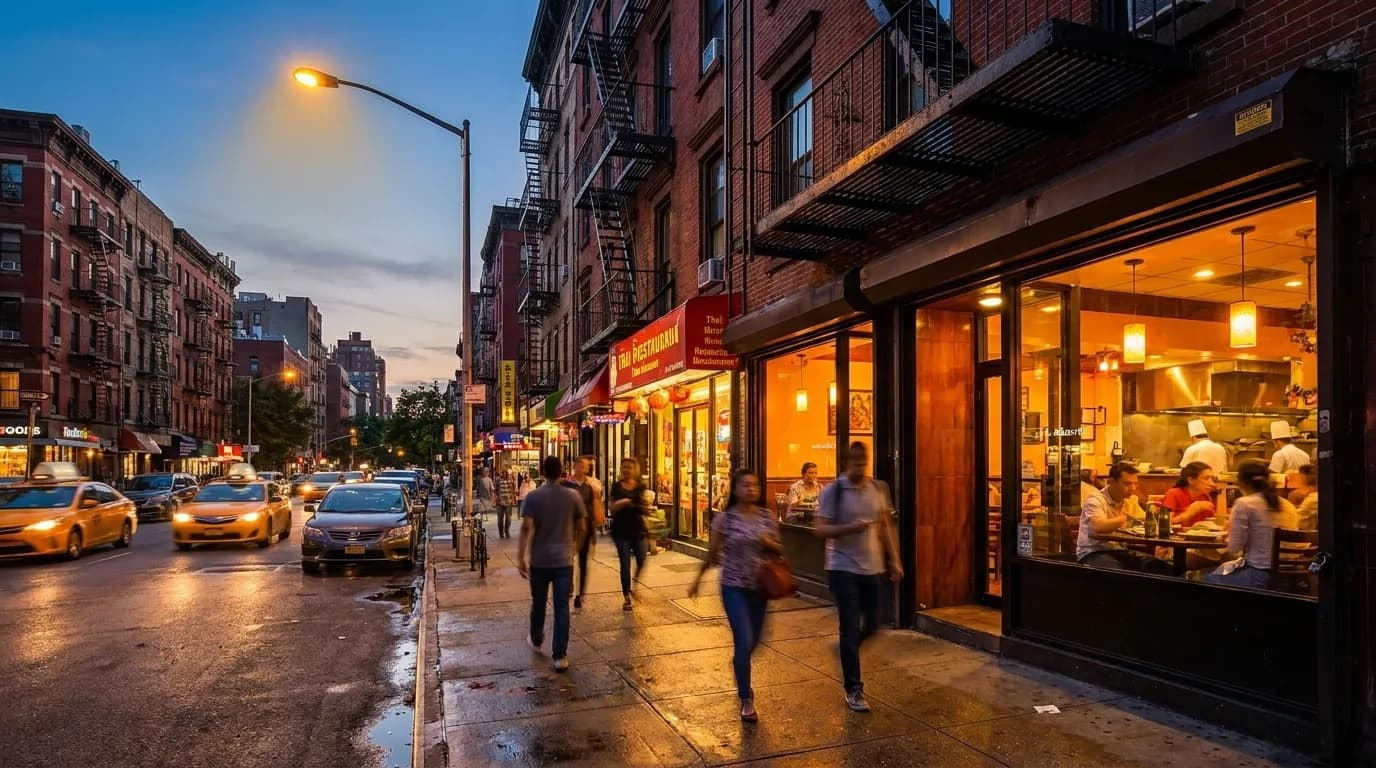
Ugly Baby occupies a corner storefront in Carroll Gardens, and the name is both a term of endearment in Thai culture and a warning about the food inside. This is not date-night Thai. It's loud, cramped, and the air smells like fish sauce and burnt chili before you even sit down. The menu skews toward the regional, rural styles that rarely show up in American Thai restaurants: dishes from the countryside where sugar isn't a crutch and the heat is structural, not decorative.
Start with the duck larb salad, which comes with crispy rice and enough chili to make your lips tingle before you've finished chewing. The khao soi is a northern-style coconut curry noodle soup that balances richness with a serious chili oil float on top. But the real test is the crying tiger beef salad—here it's less about the grill and more about the dressing, a slick of lime, fish sauce, chili powder, and shallots that coats sliced flank steak. It's salty, sour, spicy in equal measure, and pairs with a side of sticky rice that you'll need to tamp down the burn. Ugly Baby's kitchen doesn't adjust spice on request; the menu notes which dishes come extra hot, and they mean it. The dining room runs hot too—both temperature and volume—so dress light and expect to leave smelling like you cooked the meal yourself.
Fish Cheeks: A little polish, same conviction
Fish Cheeks, tucked into a Noho side street, offers a slightly more refined experience without sacrificing authenticity. The space is small, candle-lit, with dark wood and a vibe that splits the difference between date spot and serious Thai restaurant. The menu leans coastal and southern Thai, with an emphasis on seafood and the kind of chili-forward curries that don't show up on most Manhattan Thai menus. The whole fish preparations are the draw—crispy fried sea bass or snapper with a choice of sauces—but don't sleep on the dry curries and salads.
The crying tiger here is a straightforward grilled ribeye, marinated in garlic and coriander root, sliced thick, and served with a jaew dipping sauce that's all tamarind, lime, and ground chili. It's less about theatrics and more about balance—the beef is tender, the char is real, and the sauce has enough acid to cut through the fat. Pair it with the larb gai, a minced chicken salad heavy on toasted rice powder and mint, or the green curry with fish balls if you want something that punches in a different direction. Fish Cheeks takes reservations, which is a mercy given the neighborhood, and the kitchen is more willing to dial back heat if you ask—but you're still better off trusting their judgment and ordering it the way they'd eat it.
What makes crying tiger worth the burn
Crying tiger isn't complicated—it's grilled meat, sticky rice, and a punchy sauce—but it's a litmus test for how seriously a Thai kitchen takes its spice program. The name is half folklore, half marketing, but the dish itself is pure northeastern Thai: meat grilled over charcoal, sliced against the grain, and served with a sauce that's more relish than dip. The tamarind and chili paste, called jaew, is what separates the real from the tame. It should be gritty with toasted rice, sharp with lime, and hot enough that you need the rice to pace yourself. The beef is usually flank or skirt steak, marinated briefly in fish sauce, garlic, and sometimes a little sugar, then cooked fast and hard over high heat.
Each of these three spots interprets it slightly differently—Somtum Der stays closest to the Isan blueprint, Ugly Baby leans into the salad format with more lime and herbs, and Fish Cheeks opts for a thicker cut of beef with a richer char. All three versions assume you're there for the heat, not in spite of it. The sticky rice isn't optional; it's insulation. And if you're ordering Thai iced tea to cut the burn, you're doing it right—these kitchens brew it strong and sweet for exactly that reason.
Practical notes
Somtum Der is walk-in only; dinner waits can stretch to forty minutes on weekends, so off-hours are your friend. Ugly Baby takes limited reservations via Resy, but walk-ins often snag counter seats if you're flexible. Fish Cheeks books up a week out for prime slots; reserve ahead or try for a weeknight. All three are subway-accessible—Somtum Der is closest to 1st Avenue on the L, Ugly Baby is a short walk from Carroll Street on the F/G, and Fish Cheeks is near Broadway-Lafayette on the B/D/F/M. Expect to spend around thirty to fifty dollars per person depending on how much you order. Come hungry, because the dishes are meant to be shared, and pace yourself—Thai spice builds, it doesn't plateau.
Tags: #cryingtiger #thaifoodnnyc #somtumder #uglybaby #fishcheeks #isaancuisine #spicyfood #eastvillage #carrollgardens #noho #thairestaurants #nycfood #heattest
All trademarks are the property of their respective owners.
Ask Karpo first
New York's Thai scene moves fast, and the difference between a tourist trap and the real thing isn't always obvious from the menu. Karpo tracks which kitchens respect the spice, which ones take reservations, and what to order when the staff asks how hot you want it. Next time you're craving something that bites back, ask Karpo—it'll steer you to the table that won't let you down.