 Crown Heights Rainy Day Kids Activity Finder for Toddlers
Weekend Plans
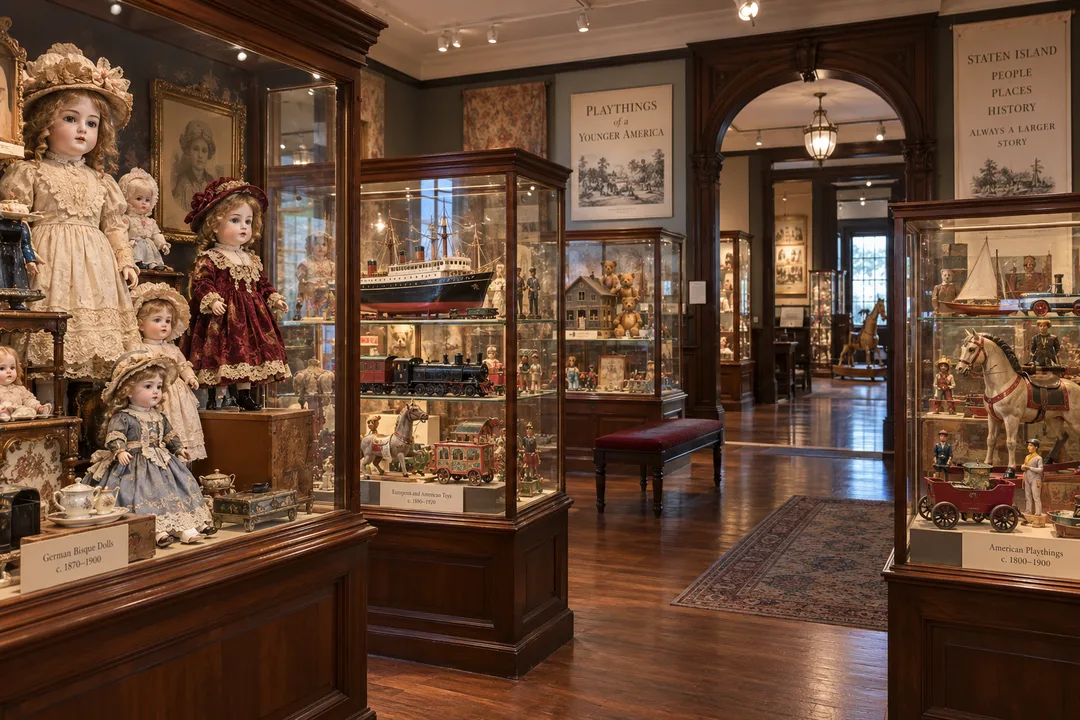
Creepy Doll Museum Near Me on Staten Island: Historic Richmond Town
Historic Richmond Town at 441 Clarke Ave on Staten Island preserves 19th-century German bisque dolls and Victorian toy archives across a 100-acre historic site for $10.
If you are searching for a creepy doll museum near me in New York City, Historic Richmond Town provides a fascinating destination. Located at 441 Clarke Ave, Staten Island, NY 10306, this dedicated collection features historic figures, antique curiosities, and rare exhibits. The venue operates Wednesday to Sunday from 11 am to 5 pm, closed Monday and Tuesday, with adults $10, seniors and students $8, children ages 2 to 11 $5. Visitors can easily reach the site via Staten Island Ferry to St. George Terminal then S74 bus directly to Richmond Town, making it an accessible weekend cultural plan for enthusiasts of antique dolls, folk sculpture, and gothic history.
A Living History Village and Museum Complex on Staten Island
Historic Richmond Town encompasses more than one hundred acres of preserved farmland, colonial structures, and nineteenth-century civic buildings in the geographic heart of Staten Island, nestled beside the forested hills of Latourette Park and the Staten Island Greenbelt. Located at 441 Clarke Avenue, the historical museum building—originally constructed in 1848 as the Richmond County Clerk's Office with sturdy Greek Revival brickwork—houses the extensive material culture archives of the Staten Island Historical Society. Among its most prized and atmospheric holdings is a comprehensive collection of antique dolls, mechanical playthings, and nineteenth-century nursery artifacts.
Visiting from Manhattan begins with a scenic twenty-five-minute crossing on the free Staten Island Ferry from Whitehall Terminal to the St. George Ferry Terminal. From St. George Ramp C, board the MTA S74 bus, which travels directly down Richmond Road and stops at the entrance of Historic Richmond Town in approximately thirty-five minutes. The museum exhibits and historic village grounds are open Wednesday through Sunday from 11 am to 5 pm, with village gates closed on Mondays and Tuesdays.
Nineteenth-Century German Bisque Dolls and Mourning Effigies
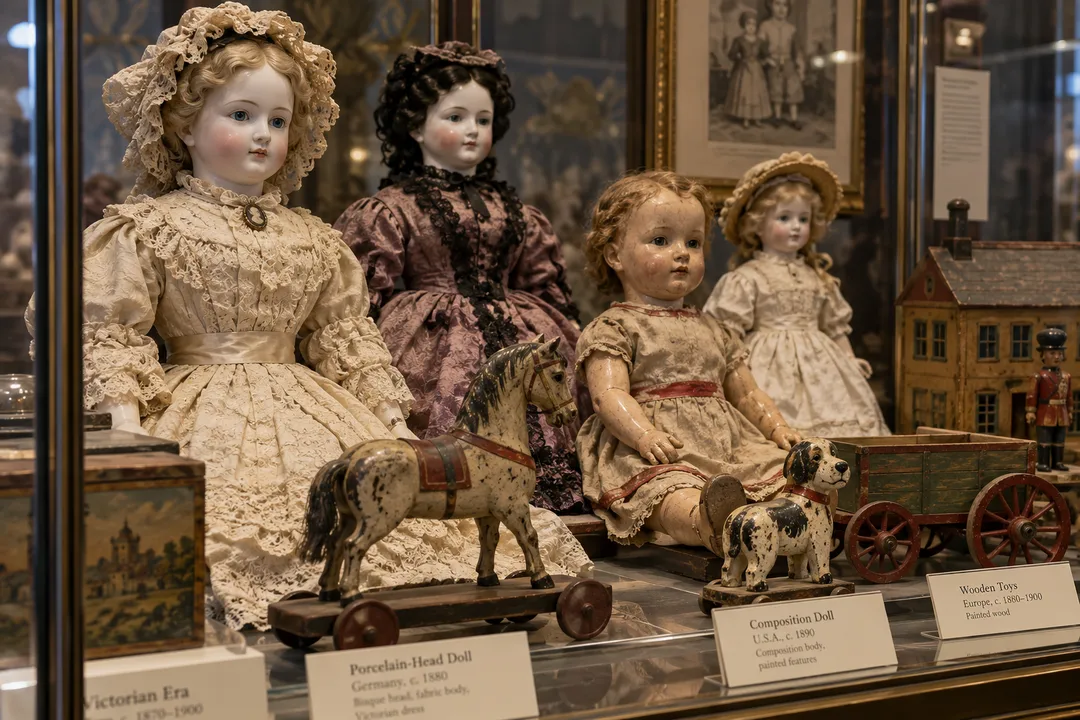
The Historical Museum building features climate-controlled glass cases displaying dozens of nineteenth-century dolls donated by Staten Island families over the past century. Prominently featured are German bisque porcelain dolls produced by renowned Thuringian dollmakers such as Armand Marseille and Kestner between 1870 and 1910. These figures boast unglazed porcelain heads that mimic realistic human skin tones, hand-painted eyelashes, weighted glass sleeping eyes that close when tilted back, and hand-knotted human hair or mohair coiffures.
Alongside the imported bisque figures are domestic American folk dolls crafted during the Civil War era. Visitors can inspect papier-mâché shoulder-head dolls, carved wooden tuck-comb figures, and hand-sewn cloth rag dolls dressed in solemn black mourning garments from the late Victorian period. Because doll ownership in the nineteenth century served as a tool for teaching young girls proper domestic decorum, mourning rituals, and sewing skills, many dolls in the collection carry poignant miniature accessories including black mourning bonnets, tiny bible lockets, and miniature funeral attire.
Several prominent heirloom dolls in the collection carry authenticated provenance tracing back to prominent Staten Island founding families, including the Lake, Tysen, and Disosway households. These dolls are exhibited alongside their original embossed leather travel trunks, which preserve complete wardrobes of hand-stitched silk visiting dresses, flannel petticoats, and miniature kidskin button-up boots crafted by local nineteenth-century shoemakers.
Thuringian Bisque Manufacturing and German Doll Guilds
The prevalence of German bisque dolls at Historic Richmond Town illustrates how nineteenth-century international trade shaped American nurseries. In the Sonneberg and Waltershausen regions of Germany, specialized porcelain factories cast doll heads from fine kaolin clay slip, firing them in wood-burning kilns before applying delicate flesh-toned enamel washes and individual brushstrokes for eyebrows and lips.
Once the fired bisque heads cooled, workers mounted internal counterbalance lead weights to operating glass rocker eyes, allowing the doll eyes to shut automatically when laid flat. Bodies were fashioned from ball-jointed papier-mâché composition or kid leather stuffed with sawdust. Shipped by steamship through the Port of New York, these European dolls became prized heirlooms in prominent Staten Island households, preserved carefully in cedar trunks through generations until entering the museum's permanent accession rolls.
Antique Mechanical Automata and Tin Toy Rarities
In addition to porcelain and cloth figures, the museum showcases early mechanical automata and clockwork toys that operated via intricate internal gear trains. Visitors can examine clockwork dancing figures, hand-cranked tin music boxes with miniature spinning dolls, and cast-iron mechanical banks that demonstrate the industrialization of American toymaking in the late nineteenth century. The wear and patina on these antique playthings reflect decades of genuine childhood use, lending them a dignified, nostalgic, and subtly eerie historical aura.
The museum interpretation emphasizes how these toys reflected contemporary American societal shifts, from rural agrarian craftsmanship to urban factory production. Explanatory gallery panels describe the manufacturing methods behind composition doll bodies made from sawdust and animal glue, the introduction of celluloid heads in the early 1900s, and the preservation techniques museum conservators employ to protect fragile century-old textiles and pigments from degradation.
The archive also preserves nineteenth-century optical parlor amusements, including Victorian brass zoetropes, hand-tinted stereoscopic viewing cards depicting doll pageants, and articulated shadow puppets cut from lacquered calfskin. These historic visual media demonstrate how nineteenth-century families used mechanical illusions and projected figures for domestic entertainment during long winter evenings.
Admission Details, Village Tours, and Practical Visitor Tips
General admission tickets to the Historical Museum and village grounds cost $10 for adults, $8 for seniors aged sixty-five and older as well as students with valid identification, and $5 for children aged two to eleven, while toddlers under two receive free entry. Tickets can be purchased upon arrival at the visitor center in the Third County Courthouse building or booked in advance via historicrichmondtown.org. Self-guided access allows guests to tour the museum galleries at their own pace, while guided historical village walking tours are offered on select weekend afternoons.
Beyond the doll and toy exhibits, Historic Richmond Town preserves more than thirty historic buildings, including the 1695 Voorlezer's House—recognized as the oldest surviving elementary school building in the United States—along with a working colonial tinsmith shop, general store, and county courthouse. Walking through the quiet unpaved village lanes surrounded by centuries-old sycamore trees, historic cemeteries, and working heritage gardens offers an authentic historic retreat from the urban bustle of New York City, immersing visitors in the domestic sights and sounds of nineteenth-century American country life.
Ask Karpo for more information.
Keep reading
- Crown Heights Rainy Day Kids Activity Finder for Toddlers
 Jackson Heights Rainy Day Kids Activity Finder for Siblings
 Lower East Side Rainy Day Kids Activity Finder by Stroller