 Chelsea Consignment Shop Crawl Planner for Your First Studio
Hidden Gems & Odd Finds
NYC Craft Class Shortlist for Friends With Different Skills
Plan a NYC craft session for people with different skills. Use separate needs, adaptable projects and group decisions to make a shortlist everyone can use.
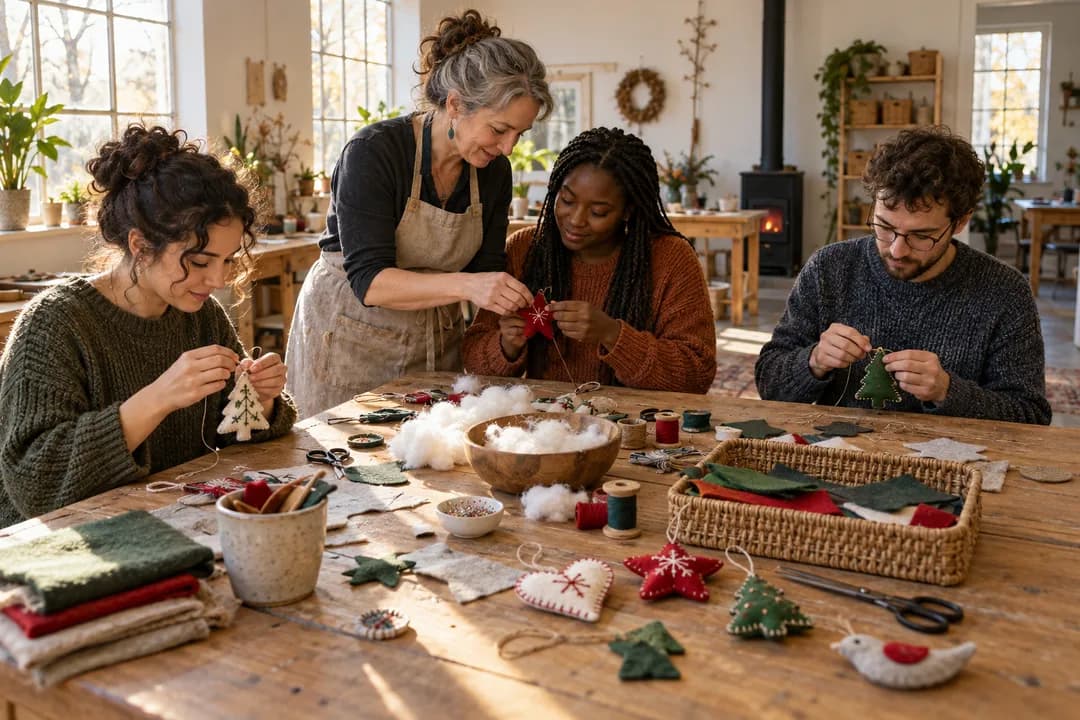
One friend has a shelf full of handmade pieces. Another has never threaded a needle. A third wants an easy afternoon together and is not especially interested in learning a craft. They can still share a good workshop, but choosing by majority vote on a beautiful project may leave someone frustrated. A NYC craft class shortlist for mixed abilities should begin with each person's minimum needs and a project format that gives everyone a meaningful role.
Ask each person for one requirement
Send a short question before searching: what would make this session enjoyable for you? Ask for one requirement and one thing to avoid. The experienced maker might want freedom to make design choices. The newcomer might need every step demonstrated. The social friend might want individual work that leaves room to talk. These answers describe different expectations without turning skill into a ranking of who belongs at the table. Keep them visible while you compare activities.
Separate requirements from preferences. A seated setup or a restriction on a material may determine whether someone can participate at all. A preferred color or neighborhood may allow compromise. Do not ask the person with the strongest access need to negotiate it away because others like the photographs. Start with the conditions that everyone needs, then use preferences to choose among compatible options. This gives the group a clear reason for rejecting an appealing activity when it would exclude someone.
Look for one technique with several possible outcomes
A useful project can have a common starting movement and room for different levels of detail. Think of a basic stitched shape that permits additional decoration, or a paper structure with simple and more elaborate design choices. These are project ideas, not claims about a particular NYC course. The important feature is that beginners can complete a satisfying version while experienced participants have choices. Extra complexity should add interest without changing the shared instructions into separate lessons.
Read candidate descriptions for that flexibility. Does everyone follow an identical design? Is variation invited within a defined project? Is prior experience expected for the optional steps? Avoid deciding that a teacher can simply improvise a harder lesson for one member of the group. The course needs to describe a format that already fits your needs, or the provider needs to explain what it can accommodate. A mixed group works better when the variation is planned instead of left to chance.

Keep experienced friends out of the teacher's chair
A skilled participant may enjoy helping, but the outing should not depend on their unpaid instruction. Give the beginner a route to the actual teacher rather than making a friend responsible for translating every step. That also lets the experienced maker enjoy their own project. In the group brief, specify that some people need instruction from the beginning and others want room to explore. The aim is shared participation, with each person still entitled to the lesson they booked.
Agree that nobody needs to match anyone else's speed or finish. Friendly comparison can become discouraging when one person has years of practice and another is handling the tools for the first time. Set a more useful shared goal, such as everybody trying the central technique and making their own design decision. This gives the group something to discuss afterwards without choosing a winner. It also leaves space for someone to enjoy the process even when their first attempt is visibly uneven.
Choose a booking format that fits the group
Decide whether you want separate places in a public session or a private arrangement. A public course offers the format already described by its provider. A private request may allow discussion of a shared brief, but customization is something to establish with the provider, not an automatic benefit. Compare the actual terms rather than assuming one format is more flexible. Keep group size, instruction, project scope and payment responsibility together so nobody mistakes an informal idea for an agreed arrangement.
Name one organizer and set a decision deadline within the group. Collect preferences before that person spends time narrowing the options. Then share a small number of candidates with the relevant tradeoffs: stronger teaching for beginners, more design freedom or a more convenient meeting location. Ask for a choice among those options rather than reopening the entire search. A clear process matters when the hardest part of the outing is coordinating friends whose calendars and interests are different.
Write a request that includes everyone
Use the Karpo APP to ask for possible formats with the group brief attached. For example: We are four friends planning a NYC craft outing. Two are new to making, one already sews and one mainly wants a relaxed social activity. We need separate projects, instruction from the basics and optional design choices. Please compare craft ideas against those needs and identify anything a course description would need to establish. Add your own location and budget preferences afterwards.
Evaluate the suggestions as a group problem rather than a list of personal favorites. An option that delights one person and leaves two watching is a poor match. An option that meets everyone's essential needs and gives each person one enjoyable feature deserves attention. If nothing fits, change a preference that can move, such as the material or desired finished object. Keep participation requirements intact. This makes the next request more focused without asking the least experienced person to accept an unsuitable lesson.
A fair plan for the actual session
Before payment, settle how cancellations, late arrivals and any group purchase will be handled using the provider's written terms. Do not tell friends that places are reserved until there is an actual booking record. Share only the instructions relevant to the chosen session, including anything participants must bring or wear. The organizer does not need to become a craft expert. Their job is making sure everyone understands the arrangement they are joining and the decisions already made.
After the activity, ask each person a different practical question: was the instruction clear, was there enough freedom, and did the format leave room to enjoy the company? Those answers reveal whether the shared structure worked across the group. Keep the useful details for another outing, rather than assuming everyone now wants a more advanced version. A successful mixed-skill afternoon can simply mean that nobody had to pretend to be more experienced, more sociable or more interested than they actually were.
Ask Karpo for more information.
Keep reading
- Chelsea Consignment Shop Crawl Planner for Your First Studio
 East Village Consignment Shop Crawl Planner: Leather Jackets
 Harlem Consignment Shop Crawl Planner for a Jazz Night Look