 Upper West Side Hot Chocolate Cafe Crawl on Balloon Eve
Coffee & Dessert
SoHo Cozy Coffee Roastery Cafe: Two Counters to Compare
SoHo's two roaster-run cafes on Lafayette Street, La Colombe and La Cabra, brew in opposite styles. Taste both in one cast-iron walk and pick your roast.
SoHo has two roaster-owned cafes on Lafayette Street that sit only a few minutes apart and could hardly be more different, which makes the neighborhood a rare place to taste two coffee philosophies before lunch. La Colombe, the Philadelphia roaster founded in 1994, opened its SoHo shop in 2009. La Cabra, a roaster from Aarhus in Denmark, brought its pale Nordic style to the same street. If you want a cozy coffee roastery cafe with a story behind the beans, start here.
La Colombe: The Counter That Taught New York Draft Lattes
La Colombe began in 1994 when Todd Carmichael and Jean Philippe Iberti opened a cafe in Philadelphia, and the company still roasts its own beans. The SoHo shop on Lafayette Street is one of its older New York counters, a narrow room with a long bar, a few stools and a line that moves quickly because most regulars know their order before they reach the register.
The drink people come for is the draft latte, cold milk and espresso poured from a tap so it arrives with a natural foam, no sugar added. La Colombe pushed coffee on tap into the mainstream around 2016, and the oat milk version is now the counter staple. If you prefer hot coffee, the house espresso blends lean chocolatey and dense, the classic Italian-leaning profile the founders built the brand on.
La Cabra: Nordic Filter and a Bakery Smell
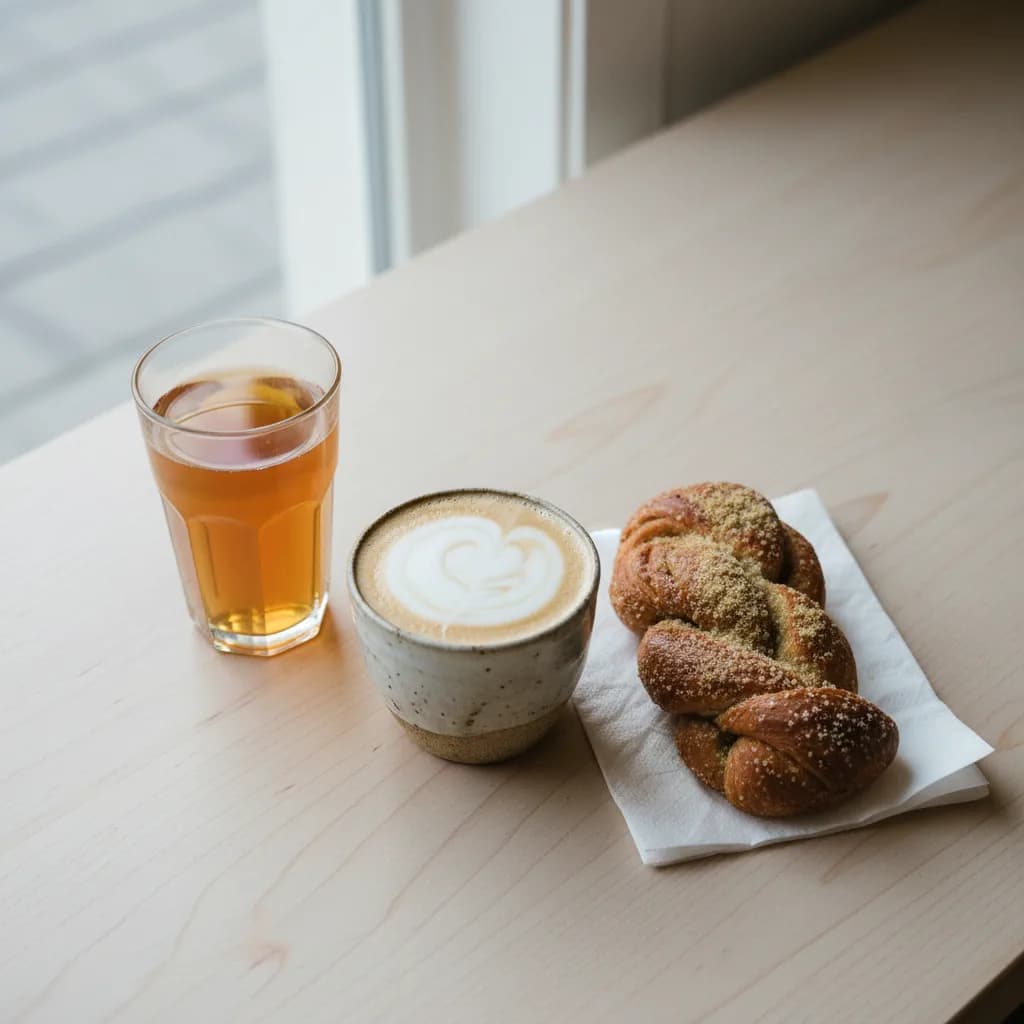
La Cabra was founded in Aarhus, Denmark, in 2012, and it roasts in the light Scandinavian style, which means coffees that taste closer to tea or fruit juice than to chocolate. The SoHo cafe is bright, with pale wood and a big bakery counter, and the room smells of cardamom from the buns that come out of the ovens through the morning. Seating is limited, so it is cozy in the literal sense.
Order a filter coffee rather than a milk drink here, because milk hides exactly the delicate florals and citrus that the roaster works for. Ask the barista which coffee they are most excited about that week. The staff rotate single origins often and are happy to explain why a washed Kenyan tastes sharper than an Ethiopian natural. Pair the cup with a cardamom bun, the item most regulars treat as non-negotiable.
How to Taste Both Without Overdoing the Caffeine
The smart way to compare the two is to order small. Take a single espresso or a short draft at La Colombe, walk the block, then order a filter at La Cabra and drink it slowly. You will notice the contrast immediately: the first leaves a heavy, roasty finish, while the second feels thin and almost sparkling. Neither is better, but most people discover a strong preference within two sips.
Skip the second pastry if you plan to taste both counters. Sugar flattens your palate and makes the lighter coffee read as sour. Water helps more than food. Both cafes will usually give you a cup if you ask, and a sip between coffees resets the tongue. If you came with a friend, split each drink so you can taste four coffees between you without leaving jittery.
A Cast-Iron Walk Between Cups
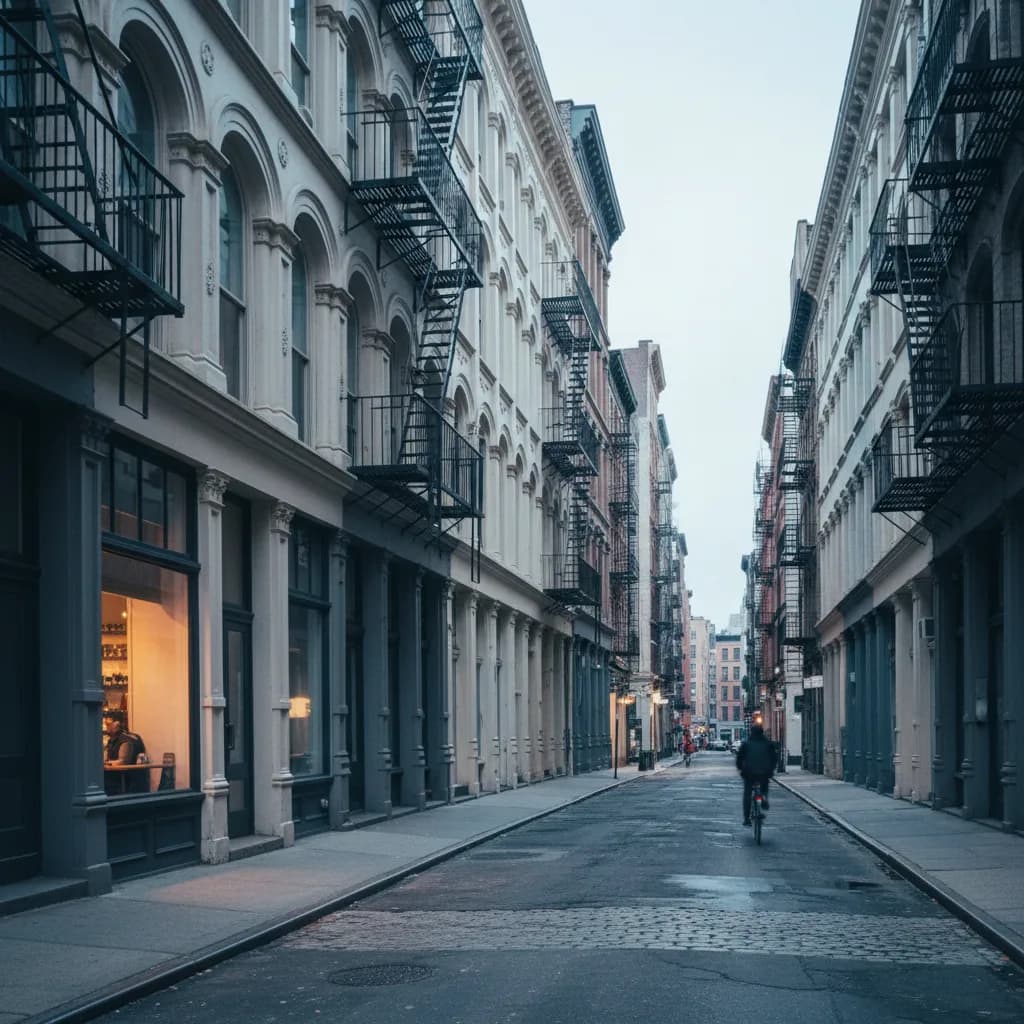
SoHo has one of the largest collections of cast-iron architecture in the world, protected since 1973 as the SoHo-Cast Iron Historic District. From Lafayette, walk west on Broome Street to Broadway and look up at the Haughwout Building on the corner. Built in 1857, it housed the first commercial passenger elevator installed by Elisha Otis, and its Venetian-style facade is the best single example of the district's look.
Continue along Greene Street, where the five-story loft buildings still wear their painted iron columns and loading platforms. Many of these lofts were artist studios in the 1960s and 1970s, before galleries and boutiques took the ground floors. At Spring and Mercer, the Judd Foundation keeps Donald Judd's home and studio at 101 Spring Street as he arranged it, and guided visits are offered by reservation through the foundation.
Who Sits at the Bar Before the Shops Open
Early in the day, SoHo coffee bars belong to people who work in the neighborhood rather than shop in it. Expect retail staff grabbing a drink before opening, architects and designers from Mercer Street studios, and runners finishing a loop from Hudson River Park. They tend to order quickly and leave, so a seat often frees up within a few minutes even when the room looks full.
By late morning the crowd shifts to visitors with shopping bags and people meeting for a casual work chat. That is when tables become scarce and the room gets louder. There is an easy etiquette rule in small SoHo cafes: order first, then look for a seat, and give up your stool when you are done rather than lingering with an empty cup while someone waits behind you.
When to Go and Where to Retreat
Weekday mornings are the calmest window, before the boutiques open and the sidewalks fill. Saturdays are the hardest, especially once Broadway shopping crowds spill onto the side streets. If both counters have a line out the door, take your drink to go and walk a few blocks to the benches of Vesuvio Playground on Thompson Street or Petrosino Square where Lafayette meets Kenmare Street, where you can drink in peace.
Rain changes the plan. On wet days, the Lafayette cafes fill fast because people duck in for shelter, and the line can double. That is a good moment to buy a bag of whole beans instead of a drink and enjoy them at home, which is how many coffee lovers actually learn a roaster. Both shops sell their own roasted coffee on retail shelves near the register.
Using Karpo to Shape Your SoHo Morning
If you want help choosing, open the Karpo APP and describe your plan in plain words, for example a light-roast filter coffee near Spring Street followed by a short architecture walk. Karpo can suggest options to compare and help you order the stops so the walk flows, which is handy when you only have a free hour between meetings or shopping errands.
Practical Notes for the Trip
The nearest subway stations are Spring Street on the 6 train, Prince Street on the R and W, and Broadway-Lafayette on the B, D, F and M. Both cafes are small, so groups larger than three should plan to stand or take drinks outside. Bring a tote if you might buy beans, and carry a reusable cup if you intend to keep walking, since the cast-iron loop between Broome, Greene and Spring is easily done on foot in thirty minutes.
Ask Karpo for more information.
Keep reading
- Upper West Side Hot Chocolate Cafe Crawl on Balloon Eve
 Park Slope Hot Chocolate Cafe Crawl After a Snow Day Sled
 Upper East Side Hot Chocolate Cafe Crawl With a Grandparent