Late May in Manhattan is a social calculus problem. Every sidewalk table is claimed by six-tops nursing Aperol spritzes, the park benches have waiting lists, and hostesses give you that look when you say "just one." But here's the tell: the city's most confident solo diners aren't fighting for patios. They're sliding onto wine-bar counters in Greenwich Village, where a single seat delivers better sight lines, better pours, and the bartender's full attention. These aren't concessions for the lonely—they're the architecture of a perfect evening, built for one.
The natural wine specialists tucked into West Village side streets
Along the quieter blocks west of Seventh Avenue, a handful of small-format wine bars have turned the counter into theater. You're watching someone coax a Georgian orange wine from a cellar you didn't know existed, explaining why it pairs with the anchovy toast you didn't know you wanted. The bottles rotate weekly—natural, low-intervention, often from producers you won't find at the wine shop two avenues over. The light in late May slants through storefront glass just before seven, turning everything amber.
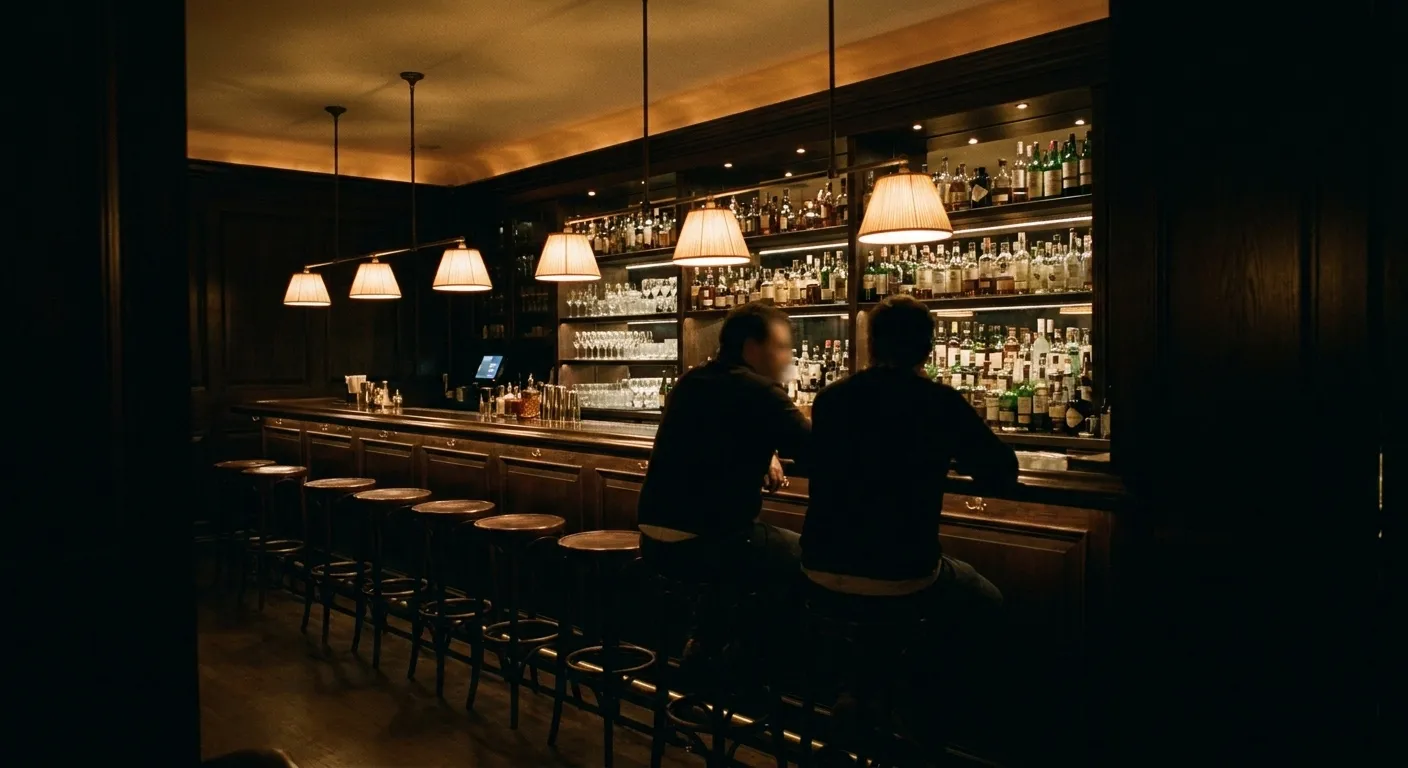
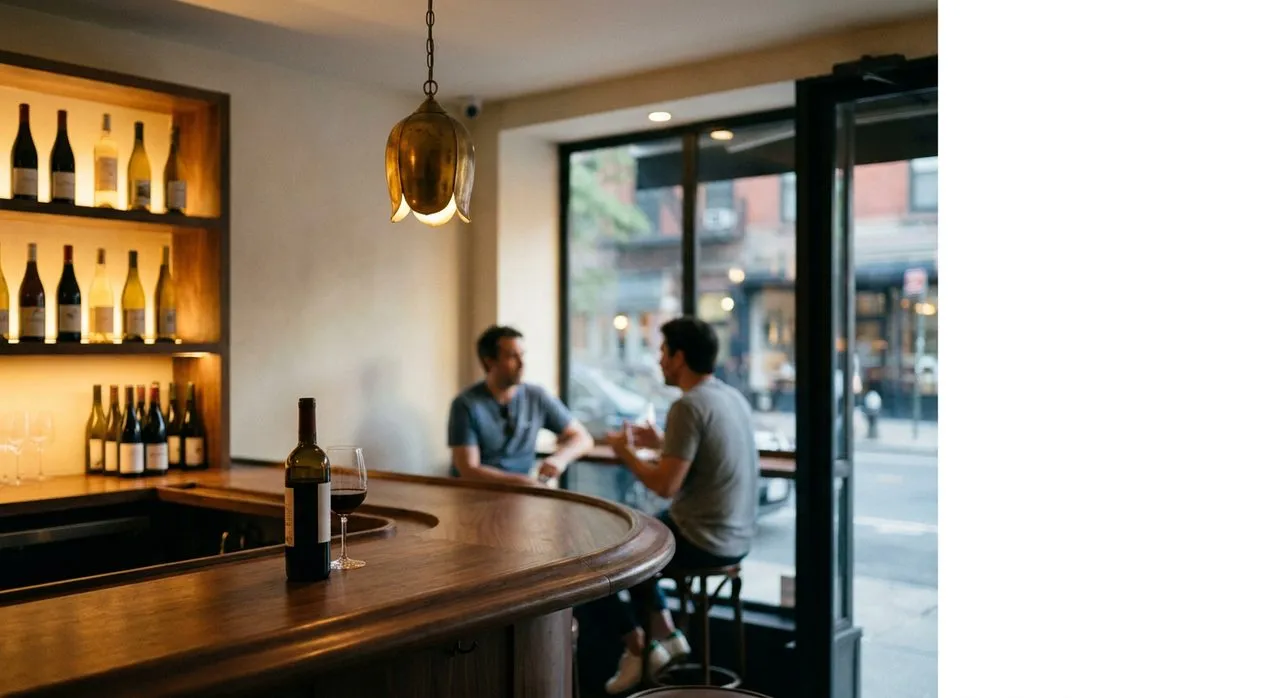
These spots max out at a dozen seats. The counters are reclaimed wood or soapstone, cool under your forearms. Conversations happen laterally, with the person pouring or the regular two stools down, but never forced. You can read a book here without performance; you can also end up in a debate about whether all Beaujolais should be served chilled. Both are correct.
The French zinc bar that feels like a trans-Atlantic commute
One long-running counter near the eastern edge of Greenwich Village imported its zinc bar top from a Paris flea market and built the entire room around it. The effect is less theme-park and more muscle memory—if you've ever leaned against a comptoir in the Marais at eight p.m., your body remembers the angle, the proximity, the unspoken permission to linger. The wine list leans Burgundy and Loire, small producers with hand-drawn labels.
The solo diner's advantage here is positional: you're facing mirrors, bottles, and the prep line for the tartine station. You see your Sancerre poured, watch the butter softened to stripe across bread, catch the bartender's micro-grimace when someone orders the wine "not too dry." It's dinner and documentary. By late May the front windows stay propped open, and the street noise—skateboards on pavement, a dog barking at a cab—becomes the soundtrack.
The Italian enoteca where one chair becomes the best seat
Tucked into a West Village corner where two streets meet at an odd angle, one enoteca designed its counter to wrap around the room's interior like a horseshoe. The effect is communal without being intrusive—everyone's technically solo, even the couples. The wine program skews northern Italian, with a Piedmont selection deep enough that the staff will walk you through Barolo villages if you ask, or pour you a Lambrusco if you don't.
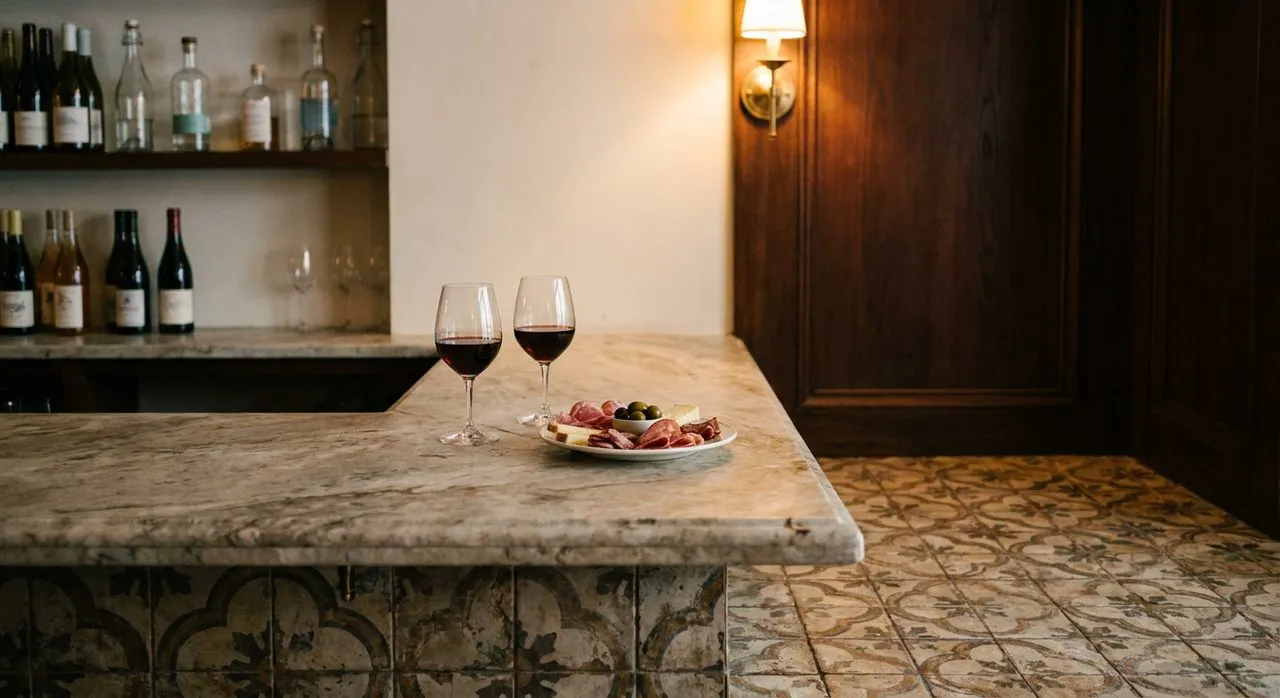
The small plates arrive on mismatched ceramics: burrata with preserved lemon, a tangle of escarole and white beans, prosciutto sliced so thin it dissolves on contact. Portions are calibrated for one appetite, though you'll want three. The marble counter stays cool even when the room heats up, and in late May when the kitchen's wood-burning oven is going, that coolness becomes essential real estate. You order by the glass, then the half-bottle, then you stop checking your watch.
Why counters work when tables don't
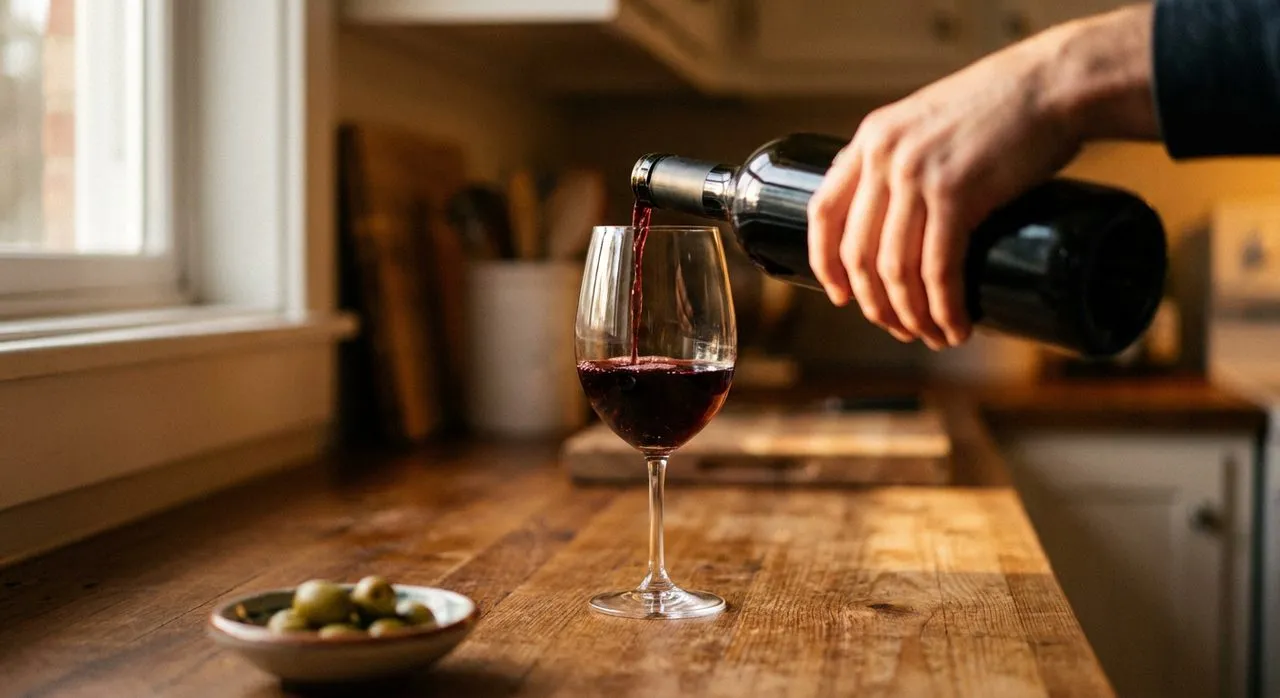
A two-top is a stage. You're on display, performing Solitude or Confidence or I'm Waiting for Someone, Even Though I'm Not. A counter is a perch. You're oriented toward something other than your own hands—the pour, the pass, the rhythm of a room that doesn't care whether you're alone. The bartender becomes your server and sommelier and occasionally your therapist, but only if you want it.
The other advantage is acoustic. At a table, silence is loud. At a counter, you're wrapped in the sound of other people's evenings—the hiss of an espresso machine winding down, the pop of a cork, someone laughing at a joke you didn't hear. You're alone but not isolated. It's the difference between eating dinner and being part of dinner, and once you learn it, patio seating starts to feel like punishment.
What to order when you're buying for one
Start with a glass of something you can't pronounce. Let the bartender translate. If the small-plates menu lists more than six things, you're in the wrong place—these counters thrive on rotation and constraint, not infinite choice. Order two plates, maybe three if one is olives or bread. Resist the urge to fill silence with your phone; the whole point is to let the room happen around you.
Late May is a smart time for whites and chilled reds—anything that tastes better as the city heats up. Ask what just came in. Counter regulars know the best pours aren't always on the printed list; they're the bottle the owner opened for themselves and decided to share. If you're offered a taste of something off-menu, say yes. That's the entry fee to the inner circle, and it's cheaper than you think.
When to claim your spot
Most of these counters don't take reservations, which is both democracy and Darwinism. Arrive at six, before the post-work rush, or after eight-thirty when the first wave has cleared. Late May extends the light, so a six p.m. arrival still feels civilized, not desperate. Weeknights are your best bet—Tuesdays and Wednesdays when the counter is full but not frantic, when the bartender has time to talk you through a region or tell you why the Lambrusco just sold out.
If you find yourself waiting, wait. These rooms are small enough that turnover is quick, and watching the counter from the doorway is its own education. You'll learn which seat has the best sight lines, where the drafts come from, who orders with authority. By the time you sit down, you'll know exactly what you want.
Practical notes
Greenwich Village and West Village wine bars cluster along the side streets in those neighborhoods. Nearest subways include Christopher Street–Sheridan Square, West 4th Street–Washington Square, and 14th Street stations. Street parking is mythical; garage rates vary widely by location and time. Most counters open around 5 p.m. and close by midnight on weeknights, later on weekends—verify hours directly, as late-May schedules can shift. Accessibility varies; many Village spaces involve steps or narrow doorways. Bring cash for smaller spots that don't split checks easily, though most take cards. Dress code: none, but you'll feel better in the one good shirt you didn't think you'd need for a solo Tuesday.
Tags: #PullUpAChair #GreenwichVillage #WestVillage #NYCWineBars #SoloDining #WineCounter #NaturalWine #LateMayNYC #VillageLife #CounterCulture #WineBarSeason #NYCEats #PartyOfOne #ManhattanNights #SoloTravel
Please drink responsibly. Must be of legal drinking age.
Sources consulted: Greenwich Village · Natural Wine · Time Out New York Bars · NYT New York · NYC Official Guide
All trademarks are the property of their respective owners.