 Seafood Market Near Me in Hell's Kitchen: Sea Breeze Fish
Restaurants
A Counter Seat at Atomix Where the Kitchen Becomes the Show
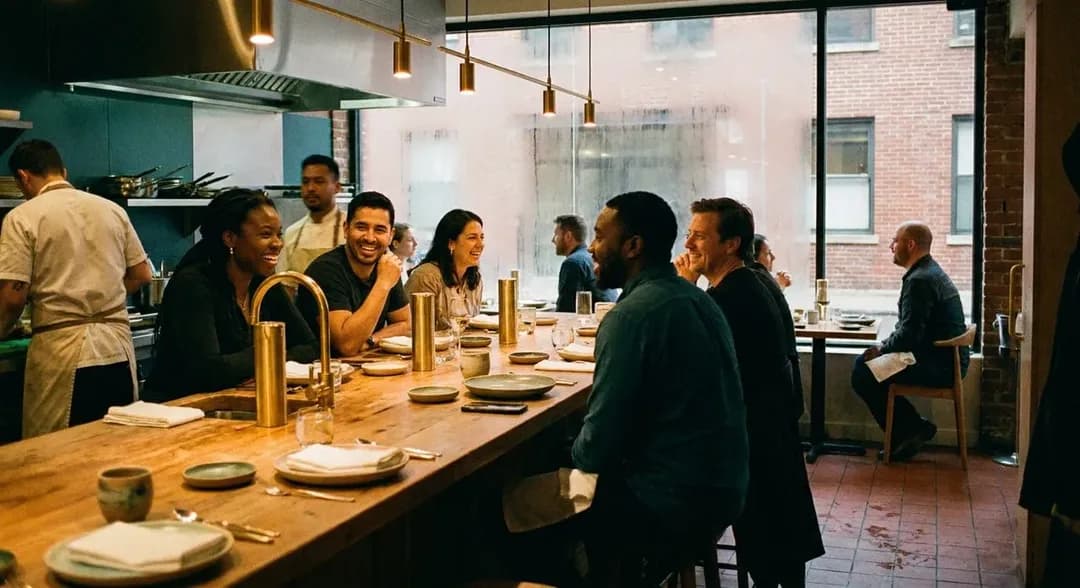
Fifteen counter seats circle the open kitchen at Atomix, where Chef Junghyun Park's two-Michelin-star Korean tasting menu unfolds like a precision ballet. You're not just eating—you're inside the performance.
The reservation game
You set your phone alarm for 11:58 a.m. on the first of the month. At noon sharp, you refresh the Tock page. The counter seats at Atomix disappear in roughly four minutes. Table seats last maybe ten. This isn't hyperbole—the system releases reservations monthly, opening on the first of each month around noon Eastern for the following month's availability. If you're even sixty seconds late, you're looking at the waitlist. Those fifteen counter seats, arranged in a horseshoe around the open kitchen at 104 East 30th Street in Murray Hill, offer something closer to theater than dinner. You're paying around $385 per person before beverages, and you're getting a front-row view of one of the most technically precise kitchens in Manhattan. Chef Junghyun "JP" Park and his team work in near-silence, each movement calibrated, each plate a study in restraint. This is the two-Michelin-star restaurant that has topped North America's 50 Best and sits high on The World's 50 Best—accolades that explain why those counter seats vanish so fast.
The counter geography
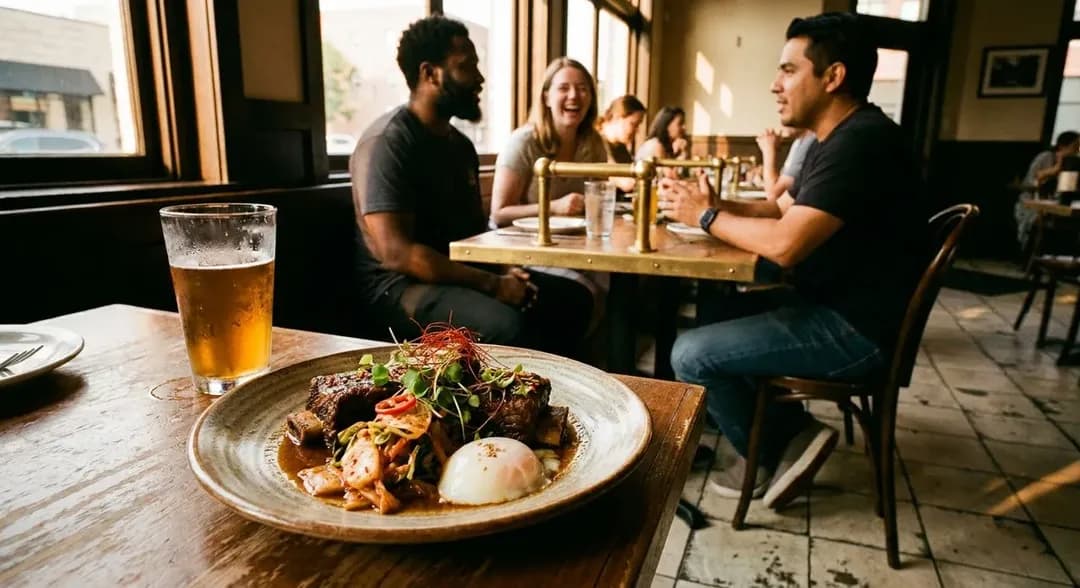
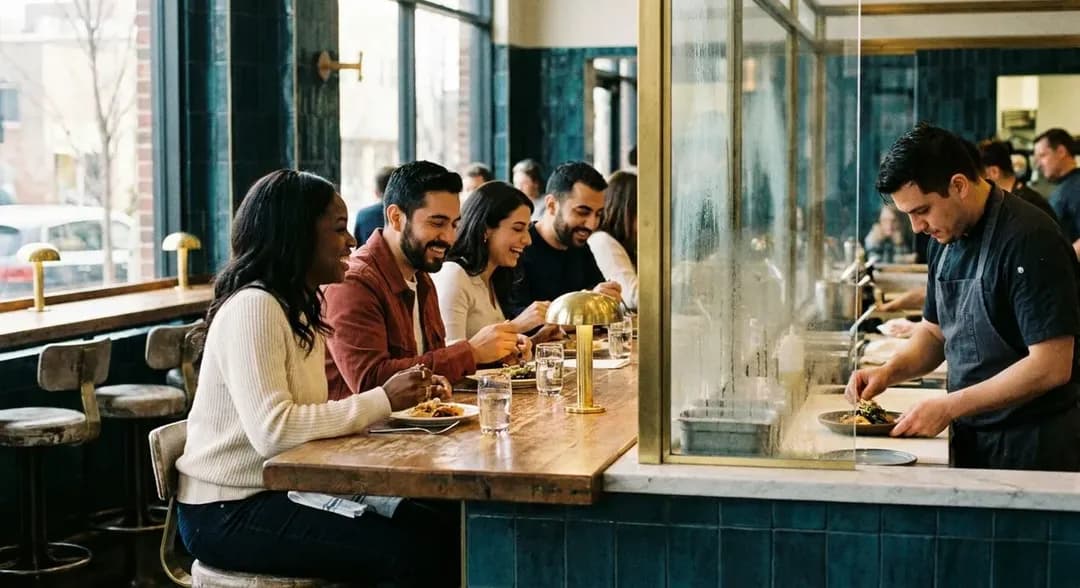
Seats one through four face the cold station, where banchan and raw preparations happen. Seats five through nine—the power positions—look directly at the main cooking line where Park himself often works. Seats ten through fifteen curve around to the plating station. The kitchen sits in the center like a stage, backlit and spotless. You can see every knife stroke, every tweezers placement, every sauce drizzle. The counter itself is blonde wood, smooth and unvarnished, with a single groove cut into the surface to catch condensation from your water glass. No flowers, no candles, no distractions. The lighting is surgical. You notice things: the way a cook wipes the edge of a bowl with a folded towel before passing it forward, the small nod between stations that signals the next course is ready, the rhythm of it all.
The kitchen as choreography
Park presents most courses himself, stepping out from the line to explain each dish in a quiet, deliberate voice. He doesn't perform—there's no showmanship, no flourish. He simply tells you what you're about to eat and why it matters. Course cards arrive at your place setting, detailing each preparation. The specificity matters. You're not getting stories or anecdotes; you're getting information, delivered with the same precision as the food itself. Between courses, you watch the cooks work. They move in patterns, never colliding, never hesitating. One cook handles only sauces. Another only garnishes. The plating cook works with tweezers, positioning each element with the focus of a jeweler.
What the menu actually does
The tasting menu runs multiple courses depending on the season, each one a study in Korean ingredients filtered through French technique. Park trained under Daniel Boulud; his partner Ellia Park, who serves as director, brings her own fine-dining pedigree to the operation. That background shows in the precision, but the food itself is unambiguously Korean. You get jang—fermented sauces and pastes—in many courses, used not as condiments but as foundational flavors. You get namul, seasoned vegetables, treated with the same care as the proteins. Everything is sourced with intent. The beverage pairing costs extra and includes Korean sul—rice wines and distilled spirits—alongside European wines. The sul pairing is the move if you want the full narrative.
The upstairs contrast
Most people don't know that Atomix has a younger sibling downstairs. Atoboy, the more casual spot, opened first in 2016. It's loud, crowded, walk-in friendly, and serves banchan-style small plates. Atomix opened in 2018, occupying the second floor of the same building. The contrast is intentional. Atoboy is where you go with friends after work. Atomix is where you go when you want silence, focus, and a meal that demands your full attention. The staircases don't connect—separate entrances, separate worlds. If you arrive early for your Atomix reservation, don't bother trying to grab a drink downstairs. The timing doesn't work, and the tonal shift is too extreme. Instead, walk a couple blocks to another bar, order a beer, and arrive at Atomix at exactly your reservation time.
The closing sequence
The final courses arrive in quick succession: a soup, usually something broth-based, followed by a rice course—often nurungji, the scorched rice from the bottom of the pot, rehydrated with tea. Then dessert, which might involve rice cakes, fermented grain, or other traditional elements. The kitchen never stops moving, but the pace shifts. By now you've been seated for nearly three hours. Your neck is sore from watching. A cook at the plating station makes eye contact and nods—a small acknowledgment that you've been paying attention. Park comes out one last time to thank you, shaking hands with each guest at the counter. The handshake is firm, brief, professional. Then you're standing, gathering your coat, stepping back onto East 30th Street where the noise and light feel like a shock after the controlled environment upstairs.
Practical notes
Atomix is located at 104 East 30th Street in Murray Hill, between Park and Lexington avenues. Reservations open on the first of each month at noon Eastern via Tock for the following month—set an alarm. The tasting menu is around $385 per person; beverage pairings cost extra. Dinner typically runs two and a half to three hours. The restaurant is open for dinner service. The counter is first-come within your seating time—arrive early if you want the center seats. Closest subway is the 6 train to 33rd Street. Street parking is difficult; take the train or budget for a garage. Dress code is smart casual. The restaurant is accessible via elevator from the ground-floor entrance.
Tags: #Atomix #MichelinStarNYC #KoreanFineDining #ChefJunghyunPark #TastingMenu #CounterSeating #EastMidtown #NYCFineDining #KoreanCuisine #FoodieNYC #ManhattanDining #PullUpAChair #MurrayHill
Sources consulted: atomixnyc.com · exploretock.com · guide.michelin.com
Please drink responsibly. Must be of legal drinking age.
All trademarks are the property of their respective owners.
Ask Karpo for more information.
Keep reading
- Seafood Market Near Me in Hell's Kitchen: Sea Breeze Fish
 Seafood Market Near Me on Upper East Side: Dorian's Seafood
 Seafood Market Near Me in Greenpoint: Greenpoint Fish and Lobster