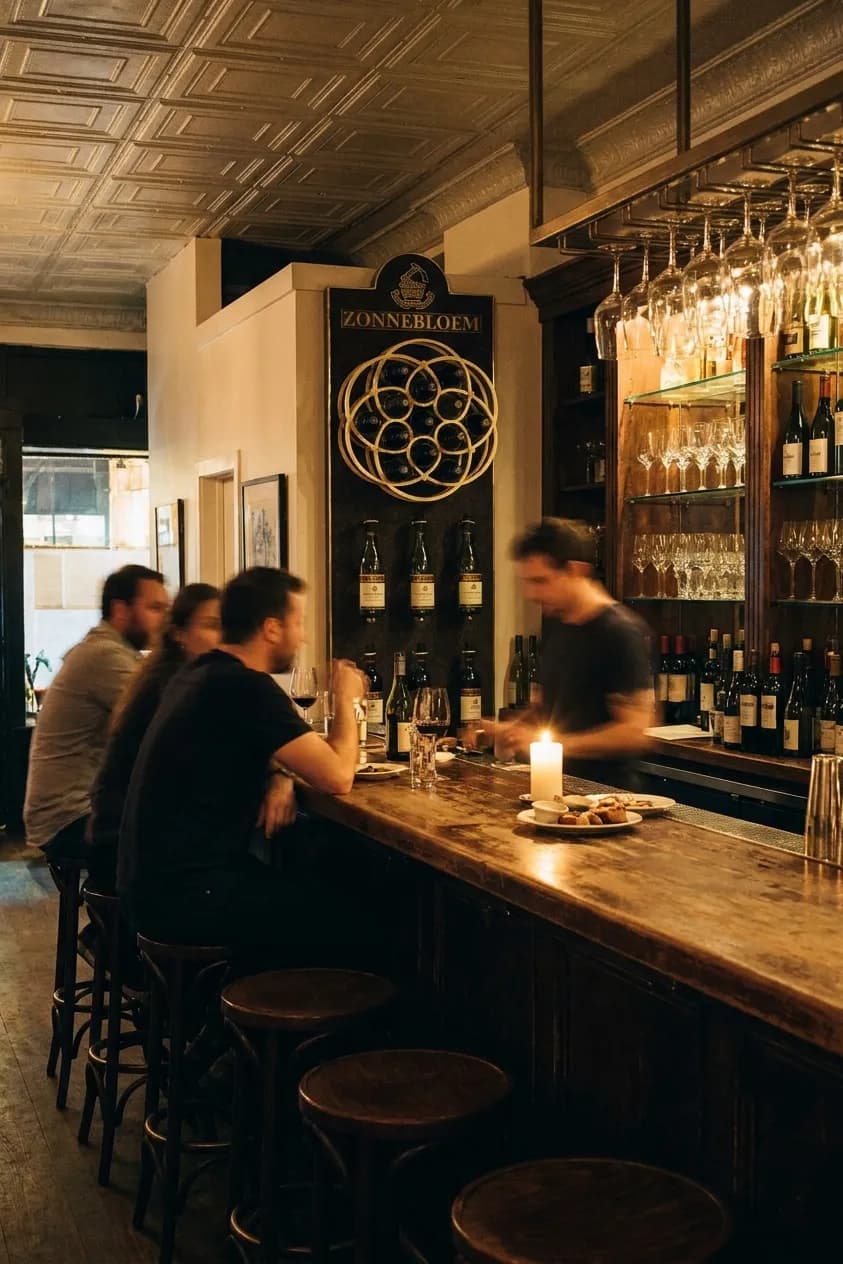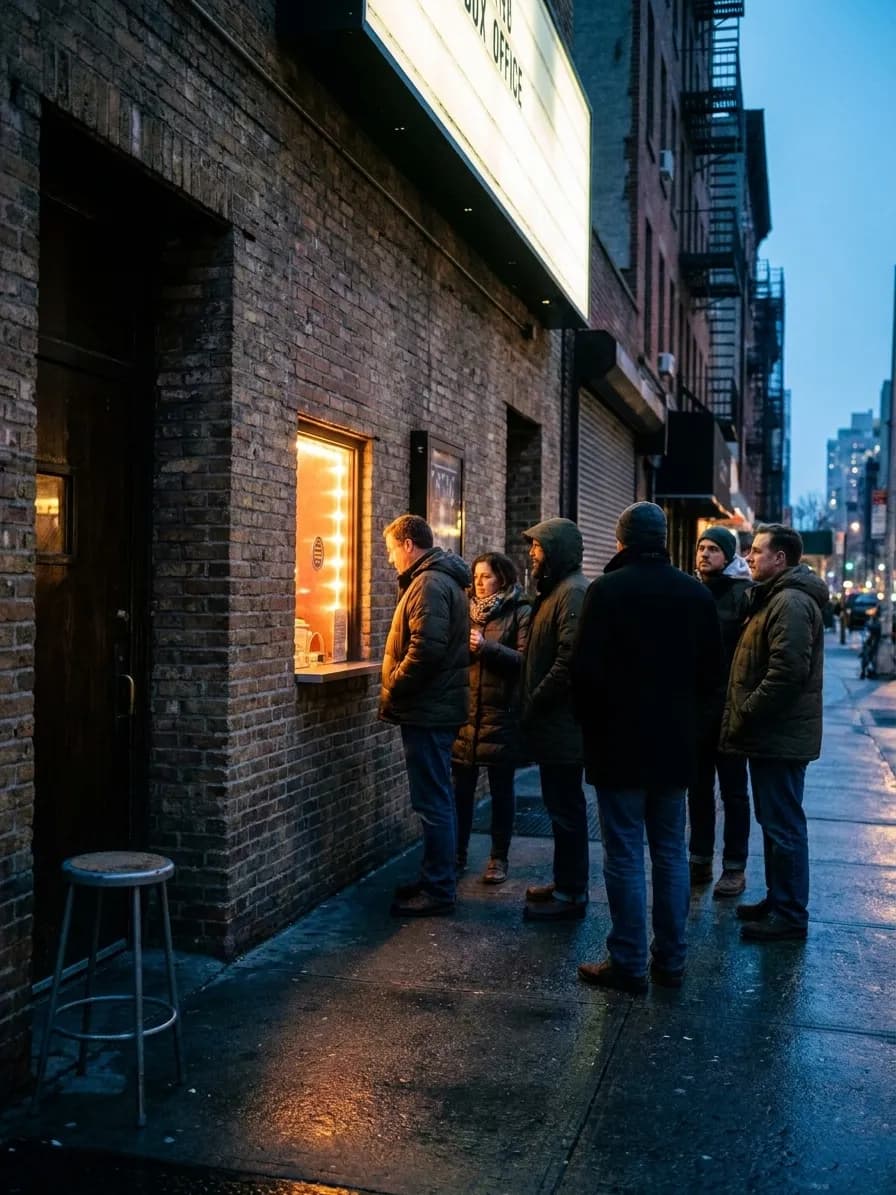
The problem with searching concerts in NYC is that the search box wants an artist name and a Tuesday night does not have one. What you have is an evening, a rough budget and a borough. The city answers that question extremely well, but it answers it by night rather than by name: certain rooms are reliably worth walking into on a Monday, certain doors only make sense on a Thursday, and the rooms that require planning are not the same ones that reward showing up. Here is the week as the people who go out during it actually use it.
Bills change on two days' notice and the good weeknight sets never make it into a search result. Text Karpo for what is playing near you tonight, what the door actually costs, and how late the last set starts.
Monday and Tuesday: the rooms with no door price
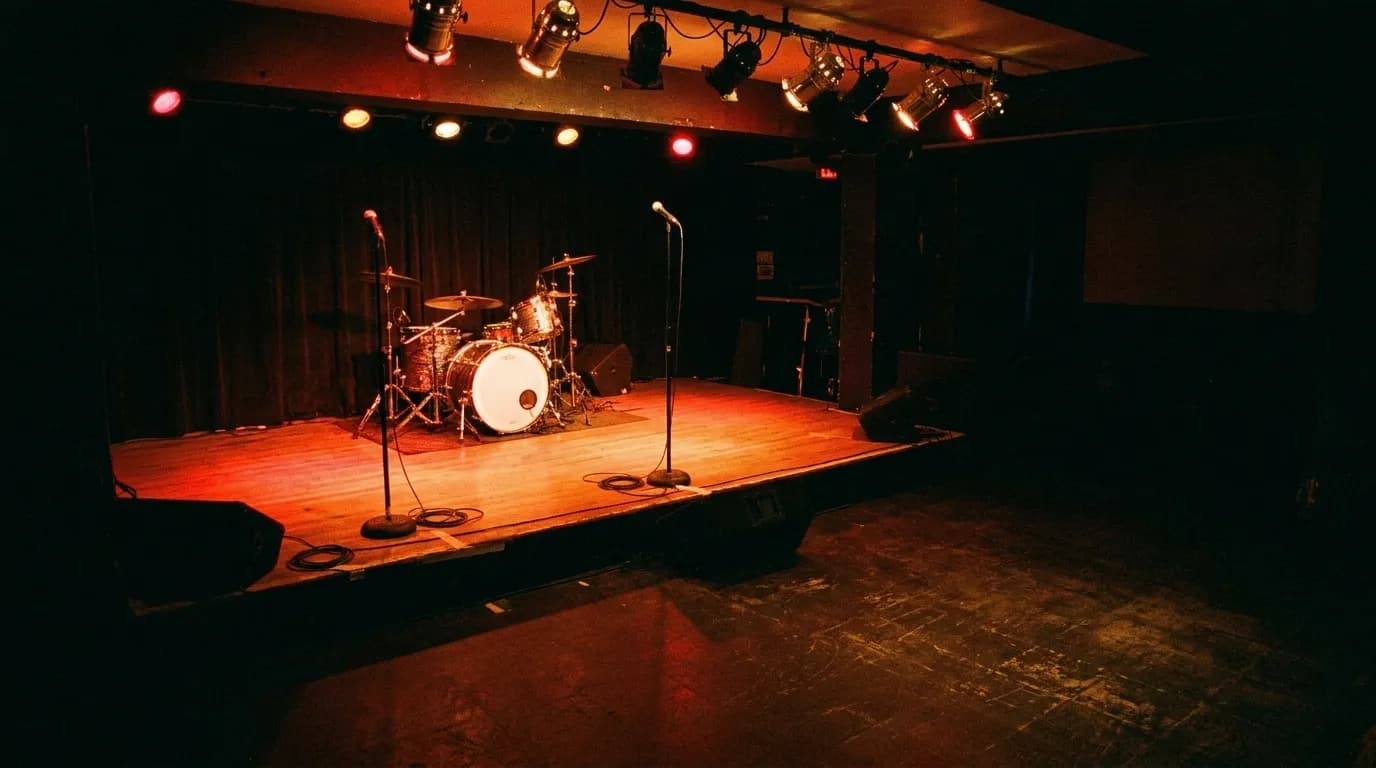
Pete's Candy Store at 709 Lorimer Street in Williamsburg occupies an old general store, and the music happens in a narrow back room with a wooden stage that looks built for vaudeville. Shows are free, with a suggested ten-dollar donation collected in the room — and as with any donation room, that ten dollars is the band's pay for the night rather than a top-up on the venue's margin. It is the lowest-commitment music night in the city: you can walk in at nine, hate it, and be out eleven dollars including a beer.
The other early-week option is Nublu at 151 Avenue C, a compact East Village room with its own record label attached and a booking policy that treats jazz, Turkish psych and Brazilian rhythm sections as the same category of thing. Sets run late here — later than most bars in the neighbourhood keep a stage going — so it also works as the second half of a night rather than the whole of it.
Wednesday: the night to buy, not the night to browse
Midweek is when most of the mid-size rooms put their following month on sale, and it is where the largest amount of money quietly gets lost. Search a room like Bowery Ballroom at 6 Delancey Street by name and the first results are frequently resale listings — 2026 dates commonly show up in the forty-to-seventy-five-dollar band on secondary sites for shows whose face value sits well below that. The fix is mechanical: find the venue's own calendar page, buy from the on-sale link there, and never buy from a page that appeared above the venue in a search result.
Thursday: Bushwick, where the door is still fifteen dollars
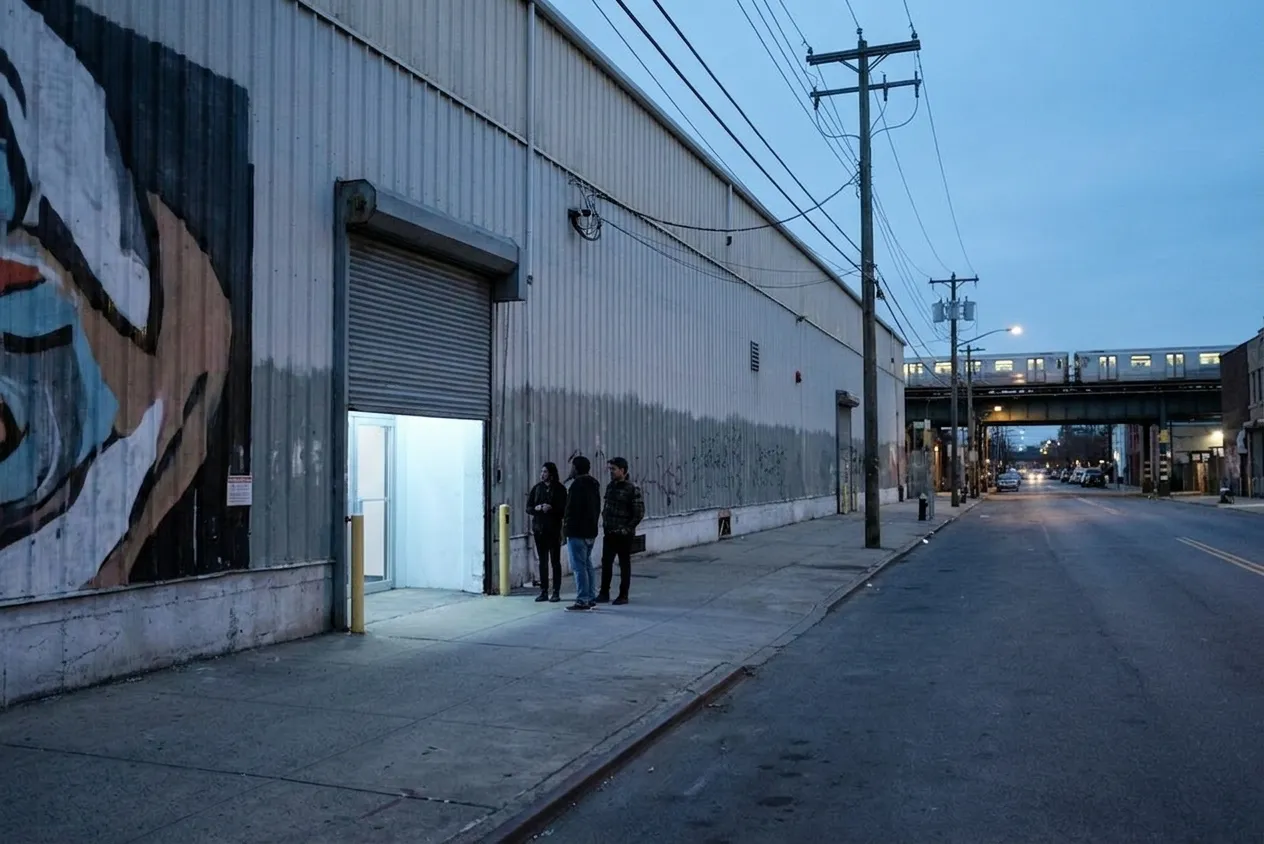
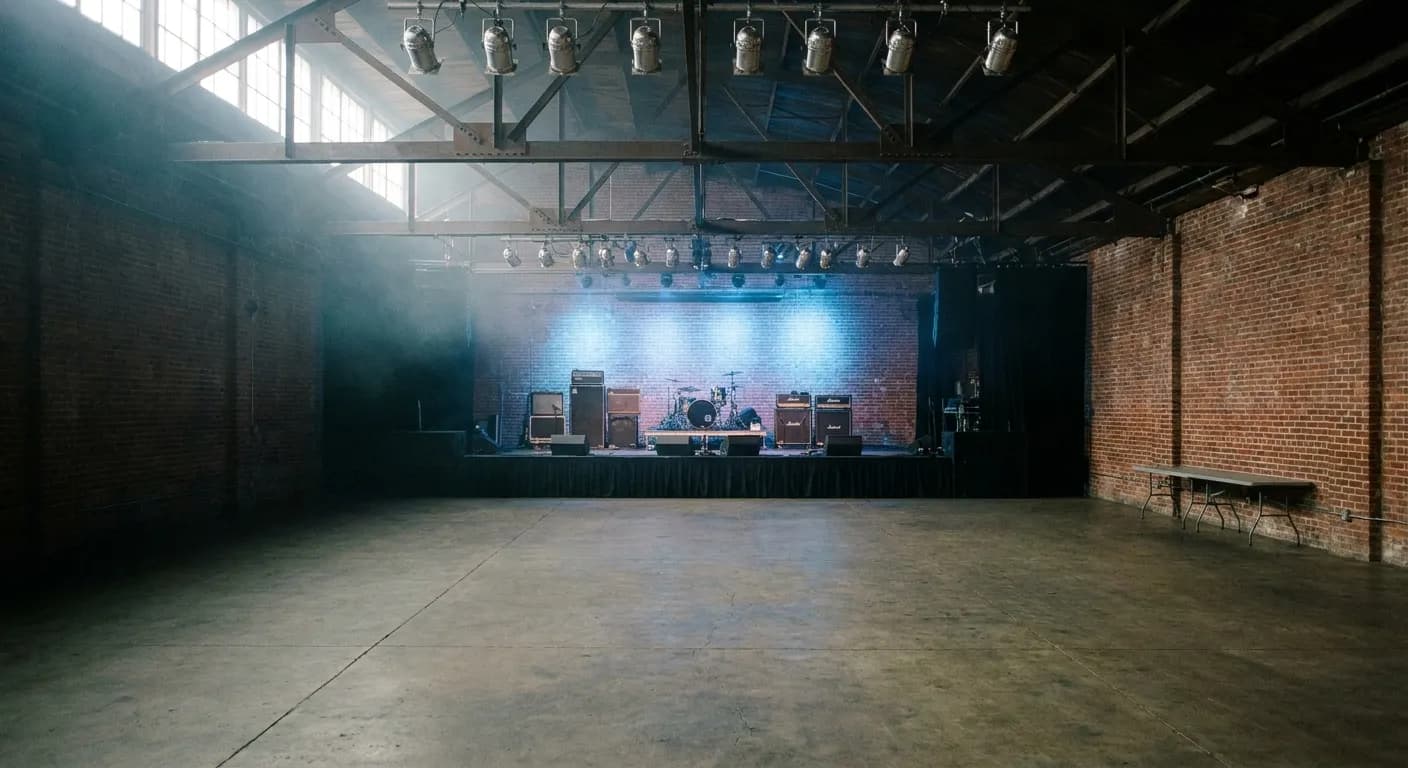
Elsewhere at 599 Johnson Avenue in Bushwick is really four venues stacked in one building — Zone One as the main room, a smaller hall, a loft and a rooftop — and it is the clearest example in the city of price being a function of which door you walk through rather than which night it is. Zone One tickets routinely start around fifteen dollars for local and mid-tier bills, while the rooftop season runs on a different economy entirely and sells out early, at multiples of that. If the rooftop is gone, the same building is still open downstairs for the price of two coffees.
Friday: the seated and the seated-adjacent
Le Poisson Rouge, in the basement at 158 Bleecker Street, is the room to pick when you want the night to have a chair in it. The programming swings from contemporary classical to hip-hop to film scores in a single week, and the layout changes with it — table seating for some bills, floor for others. Check which configuration a show is sold in before you buy, because a general admission ticket to a seated show and a general admission ticket to a standing show are two very different evenings.
In Brooklyn, Public Records at 233 Butler Street plays the same role from the other direction: a purpose-built listening room where the sound system is the reason to go and the bill is often a DJ or a solo set rather than a band. Both are the correct answer to the specific question of where to take someone who does not enjoy standing for three hours.
Sunday: the underrated one
Sunday is the night the city's rooms are cheapest to get into and least full, and it is almost entirely ignored by people planning a week. Donation rooms still run their bills. Mid-size venues discount or under-sell. The tradeoff is start time: a Sunday headliner frequently goes on before ten so the room can close early, which means arriving at eleven gets you the load-out rather than the set. Sunday is the one night where showing up late is the actual mistake.
The three checks before you leave
Check the door time against the set time, because a nine o'clock door on a three-band bill means the act you came for is on at eleven. Check whether the room takes cards at the door — donation and cover rooms often do not, and the nearest cash machine is rarely the nearest thing to the entrance. And check the venue's own calendar rather than a marketplace, every time. Those three habits are the difference between a fifteen-dollar night and a seventy-dollar one, and it is the same show.
Please drink responsibly. Must be of legal drinking age.
Tags: #concertsinnyc #nyclivemusic #bushwick #williamsburg #eastvillage #elsewherebrooklyn #petescandystore #lepoissonrouge #nublu #nycnightlife #gigsthisweek #brooklynmusic #cheapconcerts #nycshows
All trademarks are the property of their respective owners.
Ask Karpo first
New York's week is decided by which rooms announce late and which sell out quietly, and no single calendar carries both. Ask Karpo what is playing tonight within a subway ride of where you are, which doors are free or donation-based, and a two-stop route that does not have you crossing back into Manhattan at 1am.