Buying concert tickets in New York means choosing the room before you choose the seat. Madison Square Garden sells you scale and spectacle, Radio City wraps every show in Art Deco grandeur, Barclays Center gives you Brooklyn ease and modern sightlines, and Forest Hills Stadium turns summer concerts into open-air neighborhood events. The artist matters, but so does whether you want arena energy or intimate acoustics, whether you're taking the 1 train or the LIRR, and whether you care more about legroom or history. Here's how to decide.
Karpo tracks show announcements across all four venues and can tell you which one will give you the best sight lines and subway access for the artist you're chasing.

Madison Square Garden: the arena standard
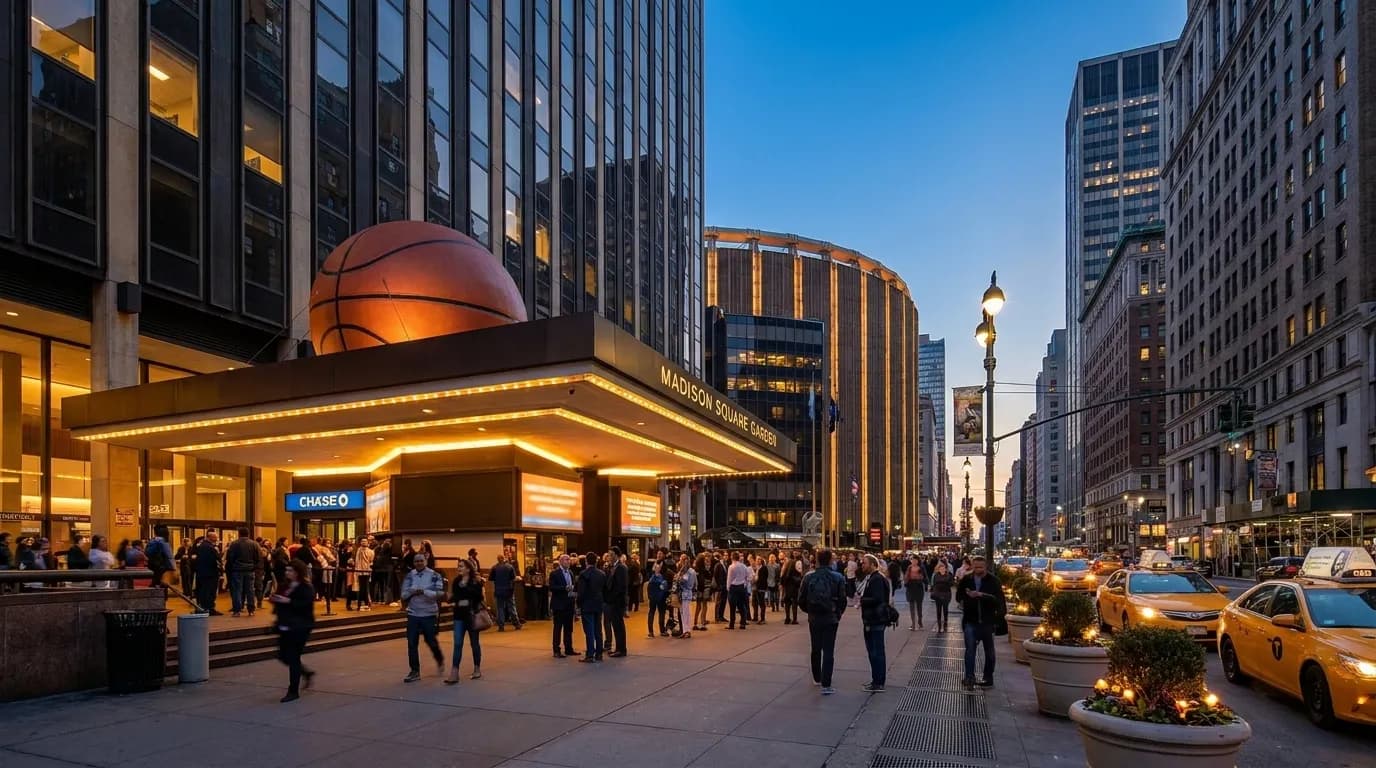
MSG sits above Penn Station at Seventh Avenue and 33rd Street, which makes it the most transit-accessible venue in the city and also the most chaotic on show nights. Every major act plays here eventually—Billy Joel has a residency, Harry Styles sells out in minutes, legacy rock acts treat it like home base. The bowl seats 20,000, and that scale delivers the full arena experience: massive LED screens, pyrotechnics that make sense, crowds that roar on cue. You feel the event, not always the music.
Sightlines vary wildly by section. The 100-level puts you close but often at a severe angle unless you're dead center. The 200-level (the bridge) offers the best balance of view and proximity—rows 1 through 8 let you see the stage without craning. The 400s are nosebleeds in the truest sense, and you'll spend more time watching the screens than the performers. Get in early if you want anything other than a $17 beer and stale pretzels from the concourse; the food options are improving slowly, but this is still an arena. Most locals skip the official merch lines entirely and buy from the knockoff vendors on Eighth Avenue after the show.
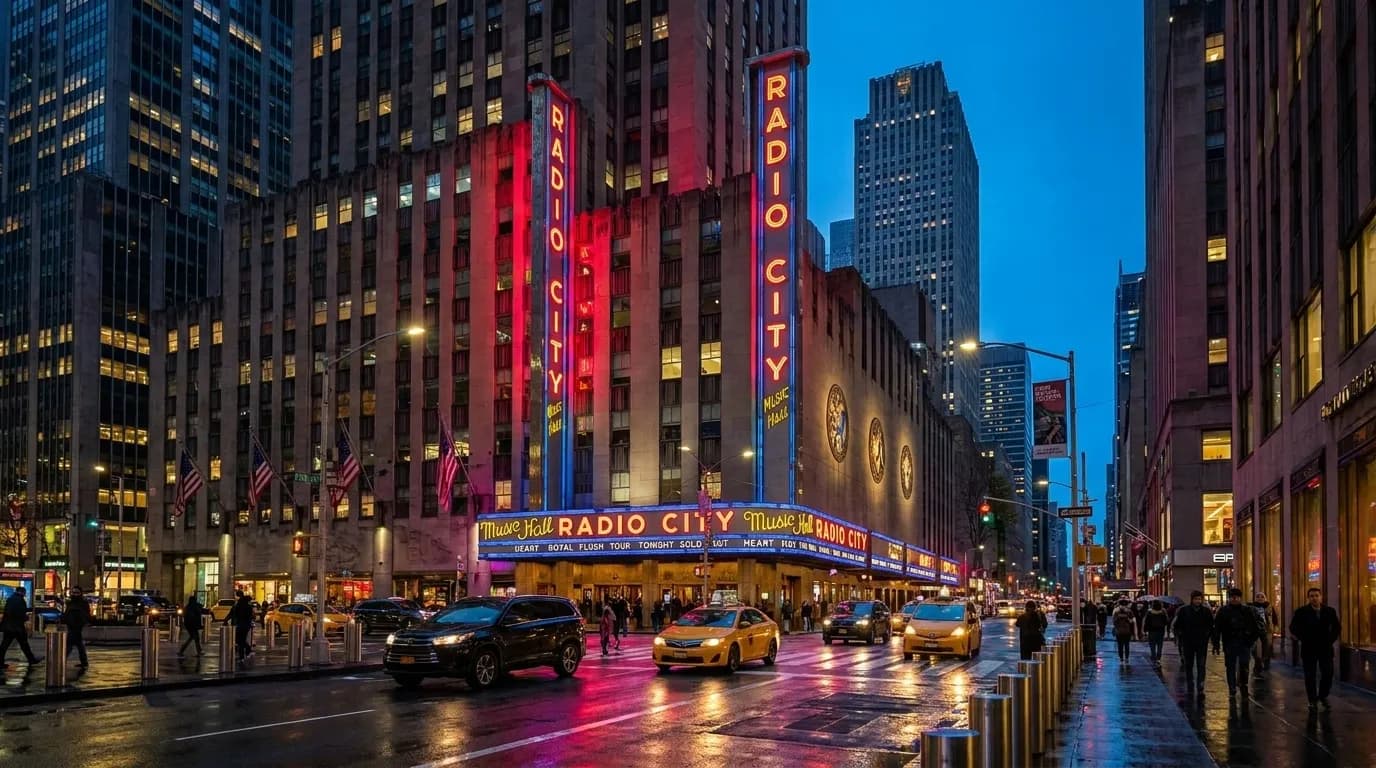
Radio City Music Hall: when the room is the show
Radio City on Sixth Avenue between 50th and 51st is the opposite of MSG—intimate by comparison at 6,000 capacity, acoustically tuned, and so beautiful that even a mediocre show feels special. The Art Deco interiors, the grand chandeliers, the way the gold proscenium frames the stage—it all adds a layer of occasion. Artists who want to be heard, not just seen, choose this room. The Roots, Norah Jones, and comedians like John Mulaney lean into the space's warmth. Even rock acts sound cleaner here.
There's hardly a bad seat. The orchestra level keeps you close, and the mezzanines stack steeply enough that sightlines stay clear even from the back. The first mezzanine, rows A through H, might be the city's best concert value—you're elevated but not distant, and the sound hits perfectly. Avoid the extreme sides of the third mezzanine where the balcony curves; you'll spend the night staring at the side of the stage. The venue's no-standing policy is enforced, so don't expect festival energy. This is a seated, attentive crowd. Get there fifteen minutes early to walk through the lobby and take in the ceilings—it's part of the ticket price.
Barclays Center: Brooklyn's modern answer
Barclays opened in 2012 at the intersection of Atlantic and Flatbush, anchoring downtown Brooklyn with a 19,000-capacity arena that learned from MSG's mistakes. The sightlines are better, the concourses wider, the food options more Brooklyn-appropriate—you'll find Shake Shack, Junior's cheesecake, and actually decent tacos. Jay-Z christened the space, and it still pulls hip-hop, pop, and rock acts that want a newer room with fewer obstructed views. The building's exterior looks like a rusted spaceship, but inside it's clean, navigable, and designed for phone-age crowds.
The seating bowl is steeper than MSG's, so even upper sections feel connected. Sections 9 through 11 on the floor give you center stage without breaking your budget, and the 200-level keeps you close enough to skip the screens. The arena's modular setup means some shows configure as end-stage, others as center-stage; check your ticket's section map before you buy. The Atlantic Terminal transit hub downstairs funnels in every subway line and the LIRR, making it almost as easy to reach as Penn Station but far less miserable. Post-show, the bars along Flatbush and Fifth Avenue fill up fast—most people head to Boerum Hill or Fort Greene instead of lingering.
Forest Hills Stadium: summer in Queens
Forest Hills Stadium is a 14,000-capacity open-air venue tucked into a leafy Queens neighborhood off the Grand Central Parkway, and it only operates May through October. The space dates to 1923, hosted the US Open before it moved to Flushing, and now books jam bands, indie rock, and nostalgia tours that make sense under the stars. The Beatles played here in 1964. These days you're more likely to see The National, Cigarettes After Sex, or a Grateful Dead cover band. The vibe is relaxed, the sound is huge without being punishing, and the open sky makes every show feel like a destination.
General admission on the floor gets rowdy, and the reserved seating in the grandstand offers actual chairs and better acoustics. Rows 10 and up in the lower grandstand put you at an ideal angle; you're elevated enough to see over the crowd, close enough to feel the bass. The venue's BYOB policy for sealed water and snacks is generous by New York standards, but bag checks are thorough. Most attendees take the E or F train to Forest Hills-71st Avenue, then walk fifteen minutes through quiet residential streets. Locals know to grab a drink at Station House or The Nest beforehand—there's nothing around the venue except trees and tennis courts. Shows end by 11 p.m. sharp because of neighborhood noise ordinances, so don't expect encores to run late.
How to choose your venue
Start with the artist's style. Arena pop, hip-hop spectacle, and legacy rock acts justify MSG's scale. Singer-songwriters, jazz, comedy, and anything where lyrics matter belong at Radio City. Barclays suits artists who want arena energy without the Penn Station scrum, and it's the better choice if you're coming from Brooklyn or Long Island. Forest Hills is for warm-weather shows where the open air and slower pace matter as much as the setlist—if the tour routing includes a stop there, take it over an indoor arena.
Transit should be your tiebreaker. MSG and Barclays both sit on top of major hubs, so getting in and out is fast even if it's crowded. Radio City is a short walk from Rockefeller Center and nearly every Midtown subway, making it convenient from anywhere in Manhattan. Forest Hills requires the most planning—you're committed to a Queens round trip, and rideshares surge hard after shows. If you're debating between two venues for the same artist, check the seating chart: Radio City's intimacy beats MSG's upper decks every time, and Barclays' 200-level beats MSG's comparable sections for sightlines. Book early for Radio City and Forest Hills; they sell out faster because capacity is smaller.
Practical notes
Doors typically open an hour before showtime at all four venues, but arrive earlier for Madison Square Garden and Barclays if you want to clear security without missing the opener. Radio City's bag policy is strict—small clutches only. Forest Hills allows small backpacks but checks everything. Most shows start within fifteen minutes of the listed time at Radio City and Forest Hills; MSG and Barclays can run thirty minutes late. Resale tickets are common but verify the seller—Ticketmaster's official resale and StubHub are safer than Craigslist. Avoid buying from scalpers outside MSG; counterfeits are frequent. For summer Forest Hills shows, bring a light jacket—it cools down fast after sunset in Queens. If you're seeing a weeknight show at any venue, plan for late trains and surging rideshare prices.
Please drink responsibly. Must be of legal drinking age.
Tags: #concertsnyc #madisonsquaregarden #radiocitymusichall #barclayscenter #foresthillsstadium #livemusicnyc #nycvenues #concertguide #nycnightlife #musicvenues #nycconcerts #brooklynconcerts #queensmusic #arenashows #nycevents
All trademarks are the property of their respective owners.
Ask Karpo first
Karpo keeps tabs on every show announcement, presale window, and venue quirk across New York so you're not stuck refreshing four different websites. Tell it who you want to see, and it'll tell you which room makes sense, which sections to target, and whether it's worth crossing the bridge for. The best concert tickets go to people who decide fast and choose smart—Karpo makes sure you do both.