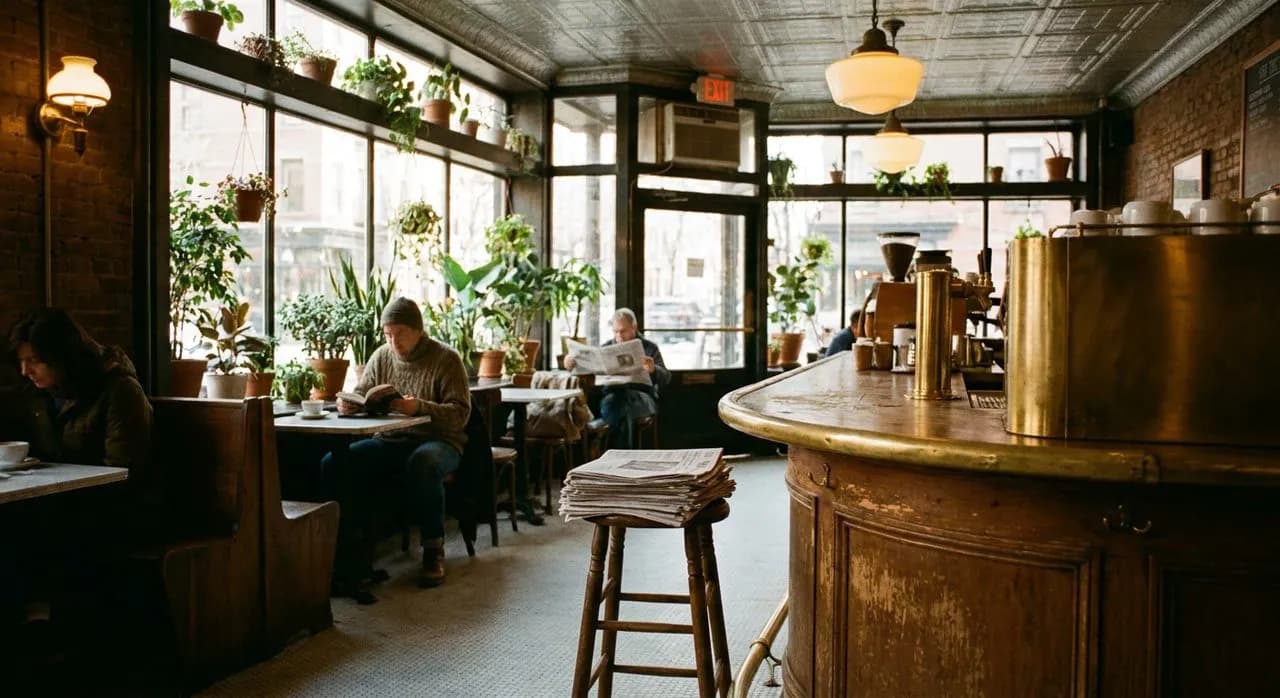
The East Village coffee counter in late spring is a particular kind of generous. Light slants long through the windows by four, the espresso machine hisses companionably, and the pastry case still holds one almond croissant with your name on it. You're not killing time here—you're spending it the way it deserves, with good coffee and nowhere else to be. This is solo afternoon culture at its unhurried best, where the marble or wood or zinc counter becomes your desk, your dining table, your front-row seat to the quiet theater of neighborhood life.
The pour-over bars where patience pays
Along East 7th Street and the numbered avenues, a handful of spare, serious coffee bars treat single-origin pour-over like the ritual it is. You watch the barista's hands—the bloom, the spiral pour, the four-minute wait that feels meditative rather than precious. The counter here is blond wood or smooth concrete, and the stools are backless, which somehow makes you sit up straighter. By late May 2026, these spots have leaned further into the ceremony: glass carafes, hand-thrown ceramic cups, a chalkboard listing farm altitude and processing method.
You don't need to know what washed Ethiopian Guji tastes like to enjoy this. You just need to be willing to sit still while someone makes you something excellent. The light is usually good—north-facing windows, white walls, the occasional potted fern. Bring a paperback. Leave the laptop at home.
Espresso counters with a side of theater
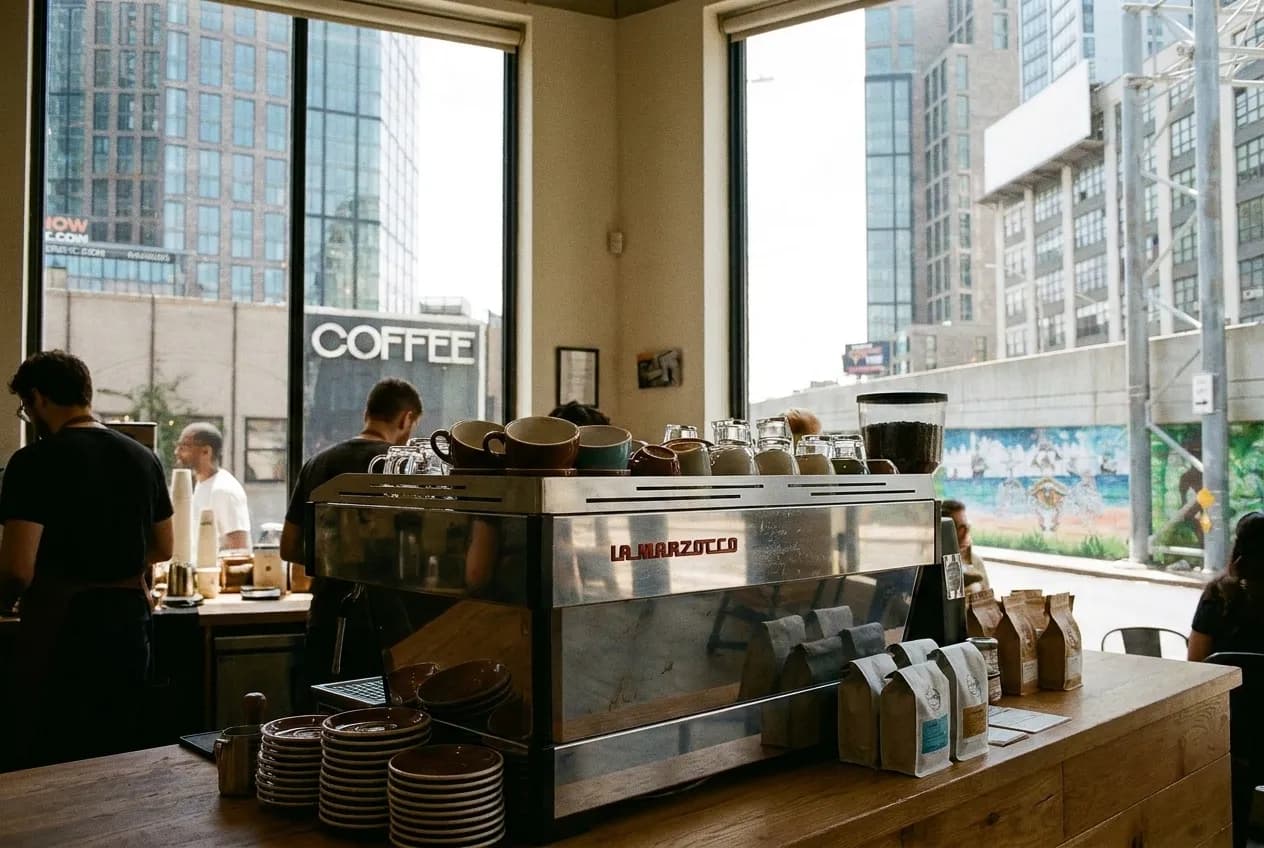
There's a different energy at the espresso-forward counters scattered between Avenue A and First Avenue, where the machine is the altar and the barista's movements are brisk, practiced, borderline choreographic. You pull up a stool, order a macchiato or a cortado, and watch the workflow: knock box, tamp, pull, steam. The sound is metallic and alive. The espresso arrives in a small porcelain cup with a perfect meniscus, and you sip it standing or perched, feeling temporarily Italian.
These counters don't coddle. They're narrow, they're bustling, and they don't offer oat milk without a raised eyebrow. But they're honest, and the coffee is direct and strong, and by your second visit the barista nods at you like you're a regular. In late May the door stays propped open, and the street noise folds into the espresso hiss, and the whole enterprise feels alive in a way that makes you glad you left the apartment.
Pastry-forward cafes where the bake is the point
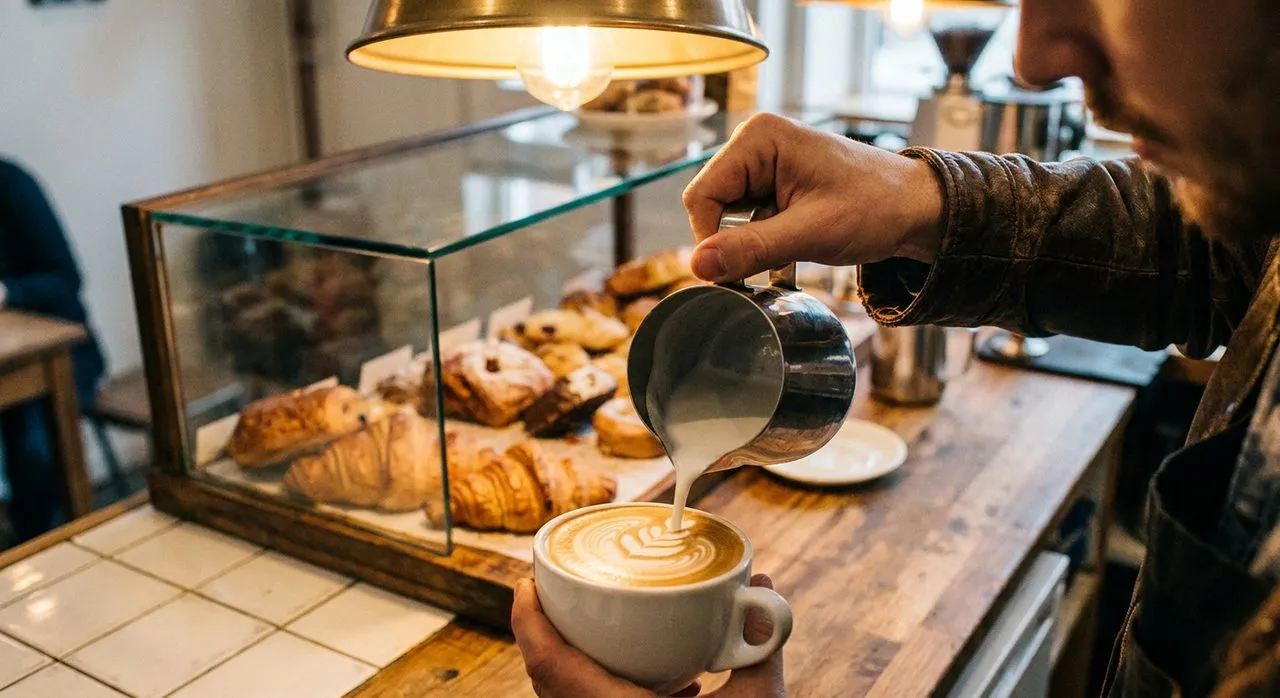
Then there are the pastry counters, where the coffee is excellent but secondary to the laminated dough glistening under the case lights. These spots cluster around East 9th and East 10th Streets, where bakery-cafes have learned the Paris trick: make the croissant so good that people will tolerate mediocre espresso. Fortunately, the espresso here isn't mediocre. It's just not the headline.
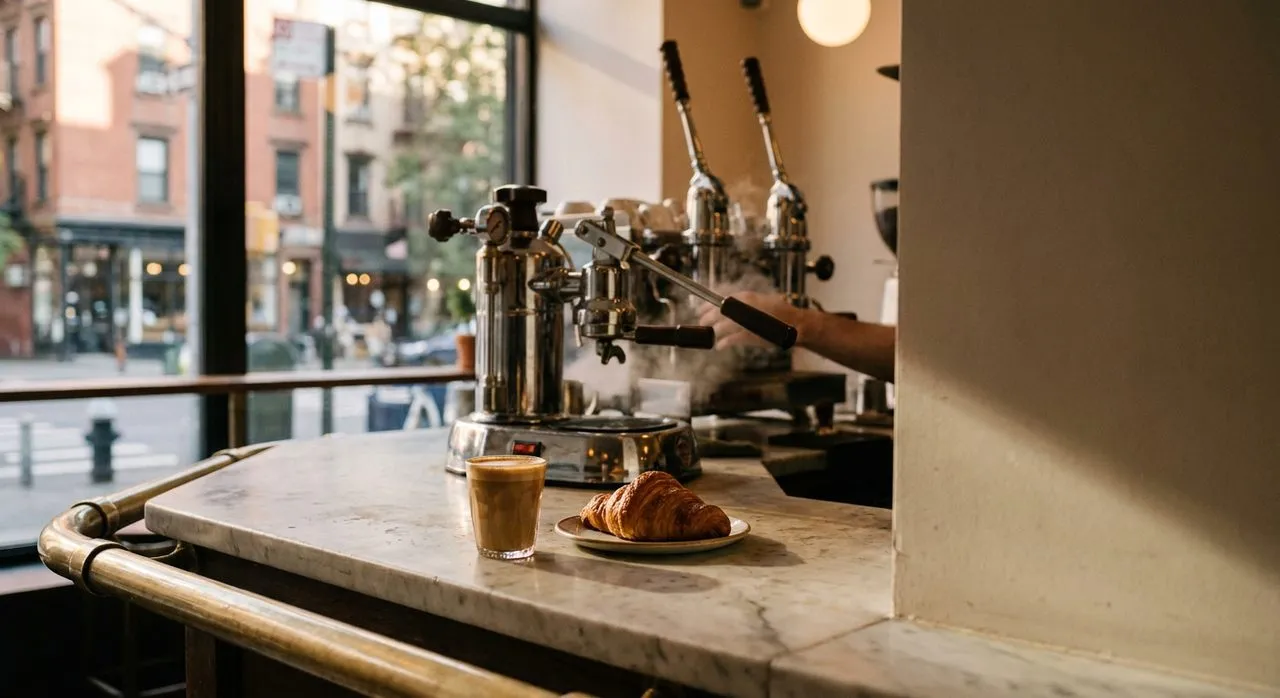
You order a pain au chocolat or a cardamom bun and a flat white, and you claim a corner of the marble counter. The pastry arrives on a small ceramic plate, still warm if you've timed it right, and for the next twenty minutes you're engaged in the private, messy pleasure of eating something buttery with your hands. Crumbs accumulate. You don't care. The counter is cool under your forearms, and the afternoon stretches.
By late spring the fruit tarts are back—apricot, strawberry-rhubarb—and they sit in the case like little edible paintings. You tell yourself you'll just have coffee, and then you see the tart, and the decision makes itself.
The writer's desk: counters made for lingering
Some East Village counters seem designed for the long haul. Wide enough for a notebook and a coffee cup. Well-lit but not harshly so. Populated by other solo sitters who've also figured out that the cafe counter is the best co-working space in the city—no membership fee, no forced networking, just the shared understanding that everyone here is quietly busy with their own thing.
These are the spots where you can nurse a single cappuccino for two hours without anyone side-eyeing you. Where the barista refills your water glass without being asked. Where the stool, against all odds, remains comfortable past the ninety-minute mark. You see the same faces week after week: the guy with the Moleskine, the woman annotating a paperback, the freelancer with the tote bag full of manuscripts.
It's not precious. It's just a good counter in a city that moves fast, offering a few hours where you're allowed to move slowly. The light changes. The pastry case empties. You stay.
Afternoon architecture: light and material
What makes a counter worth an afternoon isn't just the coffee. It's the way the May light hits the marble at three-thirty. The warmth of the wood under your hands. The acoustic balance—espresso machine audible but not overwhelming, conversation a low murmur, the occasional scrape of a chair on tile. The East Village counters understand this, or at least the good ones do. They've thought about materiality, about sight lines, about the small comforts that make you want to stay.
Zinc counters age beautifully, accumulating a soft patina. Marble stays cool even when the afternoon turns warm. Butcher block feels lived-in, companionable. You notice these things when you're sitting still, when you're not rushing to the next meeting or the next subway. The counter becomes a small, temporary territory—yours for as long as you need it.
What to order, what to bring
A cappuccino or a cortado if you're staying a while—enough substance to justify the real estate. A pour-over if you're in a patient mood and the menu lists single origins you've never heard of. Whatever pastry looks best; trust your eyes. Bring a book, a notebook, or nothing at all. Leave the laptop unless you're truly working—these counters reward presence, not productivity theater. A jacket for later, since May evenings in the East Village still carry a chill once the sun dips below the tenement rooflines.
Practical notes
The coffee counters described here span the East Village from Avenue A to First Avenue, between East 7th and East 11th Streets. Nearest subways: L at First Avenue, 6 at Astor Place, F at Second Avenue. Street parking is scarce; arrive by train or on foot. Most counters open by 8 a.m. and close by 6 or 7 p.m.; verify hours directly, as schedules shift seasonally. Accessibility varies—many older cafes have one step at entry, narrow aisles, and counter seating only. Call ahead if you need specific accommodations. Bring cash for smaller spots, though most now take cards. Expect to spend twelve to eighteen dollars for coffee and a pastry. No reservations, no table service—just find a seat and settle in.
Tags: #PullUpAChair #EastVillageCoffee #NYCCafes #SoloAfternoons #CoffeeCounter #PastryAndCoffee #EspressoBar #PourOverCoffee #EastVillageEats #SpringInNYC #CityMoments #SlowAfternoon #CoffeeRitual #NYCNeighborhoods #QuietLuxury
Please drink responsibly. Must be of legal drinking age.
Sources consulted: East Village, Manhattan · Coffeehouse · NYC Landmarks Preservation Commission · Time Out New York Coffee Shops · The New York Times NY Region
All trademarks are the property of their respective owners.