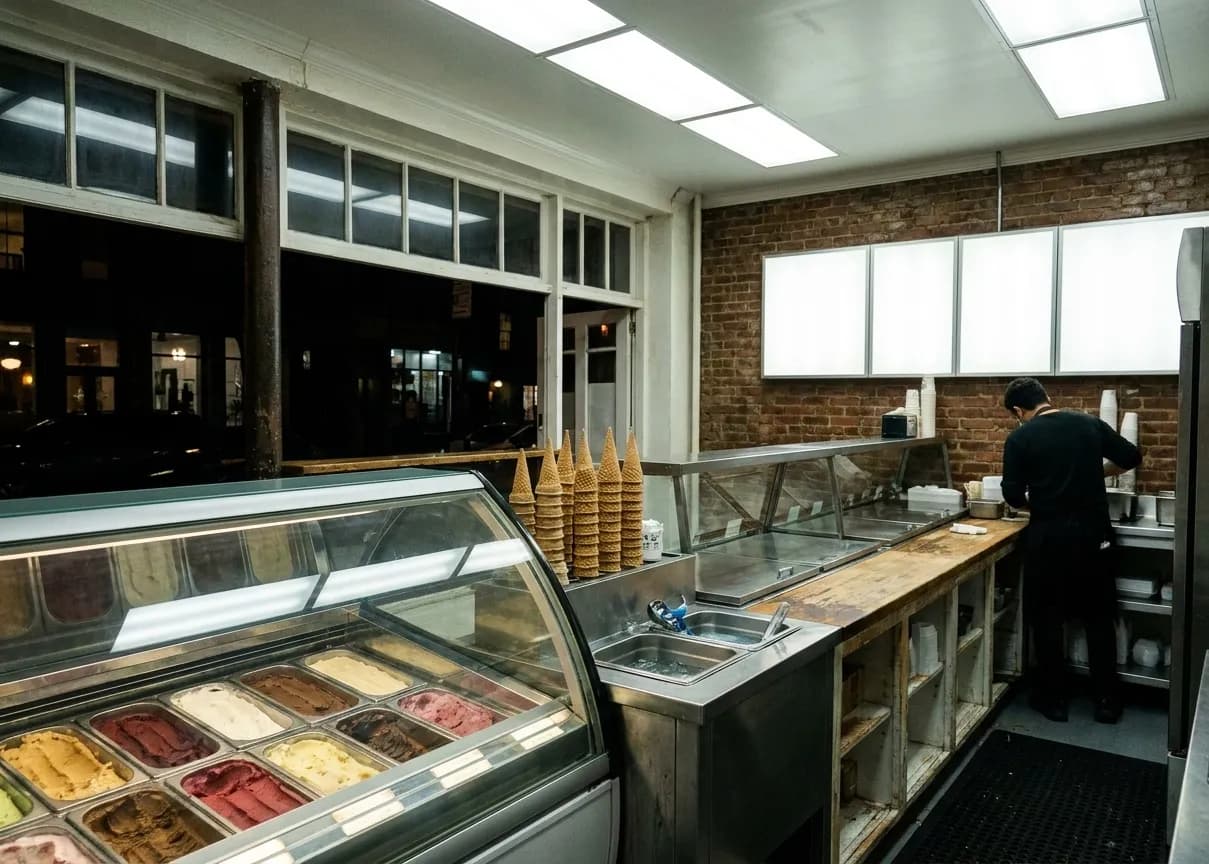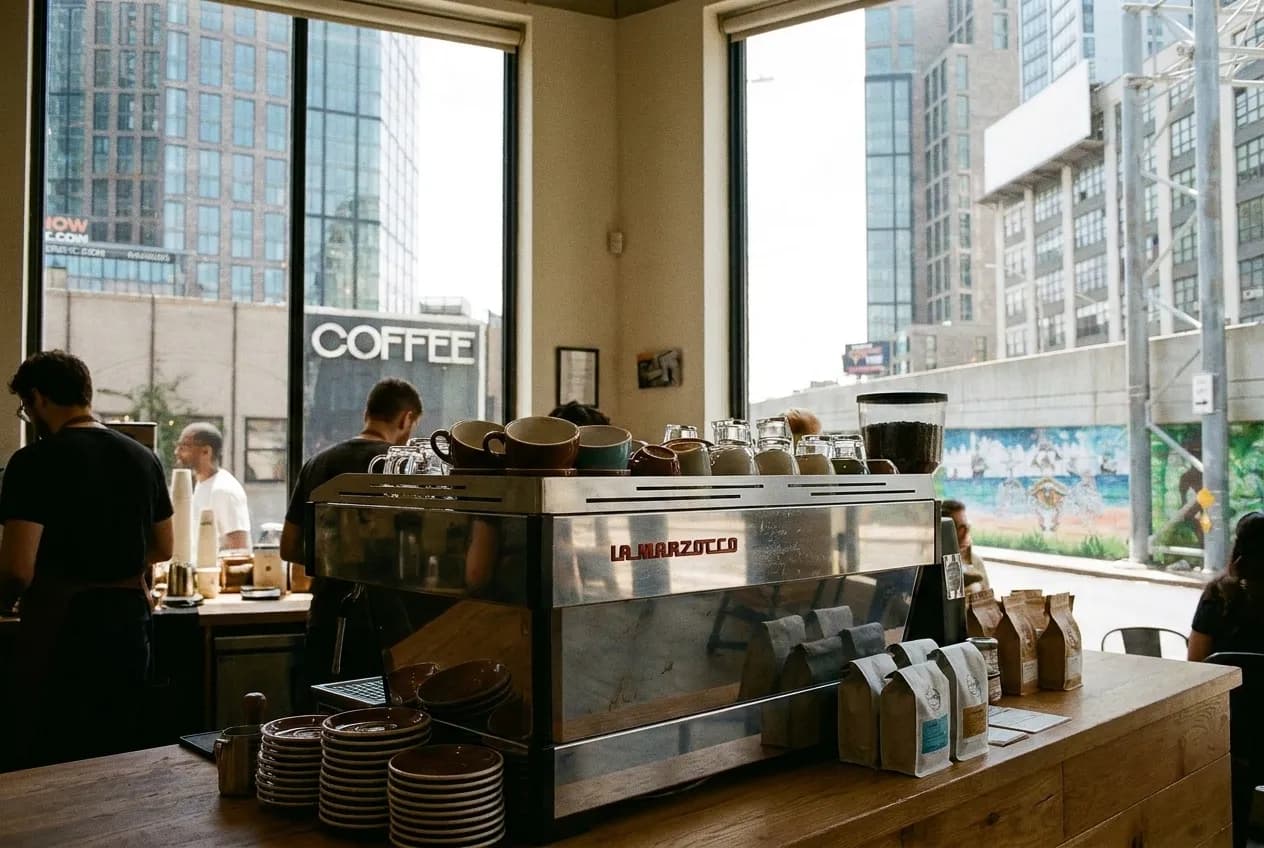
Search coffee near me at half past six in New York and the results are technically correct and practically useless: a long list of places that will not unlock for another ninety minutes. The specialty coffee industry in this city has largely settled on an eight o'clock open, sometimes seven-thirty, because that is when its customers turn up. If you are out before that — early shift, red-eye landing, gym, insomnia — you are shopping in a different and much smaller market, and it has a shape worth knowing.
Six in the morning is when search results lie most confidently. Ask Karpo what is genuinely open near you right now, verified against tonight's hours rather than a listing.
The rule: early coffee follows early work
Nothing opens at 5.30am for the pleasure of it. Early coffee exists where there is an early workforce, and in New York that means four specific kinds of district. Hospital corridors, because shift change is at seven and the people arriving for it want caffeine before, not after. Wholesale market districts, whose day starts in the dark. Transport interchanges with long-distance commuter volume. And industrial or warehouse pockets where trades start at seven on site.
Once you know that, you stop searching by radius and start searching by function. The nearest open coffee is rarely the nearest coffee shop; it is the nearest shop that happens to sit next to somebody else's early shift.
Hospital corridors are the most reliable pattern in Manhattan
The Upper East Side above 68th Street, the stretch of the West Village and Chelsea near the big medical centres, Washington Heights around the medical campus, and the pocket of Midtown East near the hospitals all sustain genuinely early cafés. These are not destination rooms and nobody writes about them. They are competent, fast, and open when nothing else is, which at 6.15am is the only quality that matters.
The tell on a map is a café with disproportionately high review counts and unremarkable review text. That is a place serving a large captive population that has no strong feelings about it — which is precisely the profile of a shop that opens early and stays open.
The market districts start earliest of all
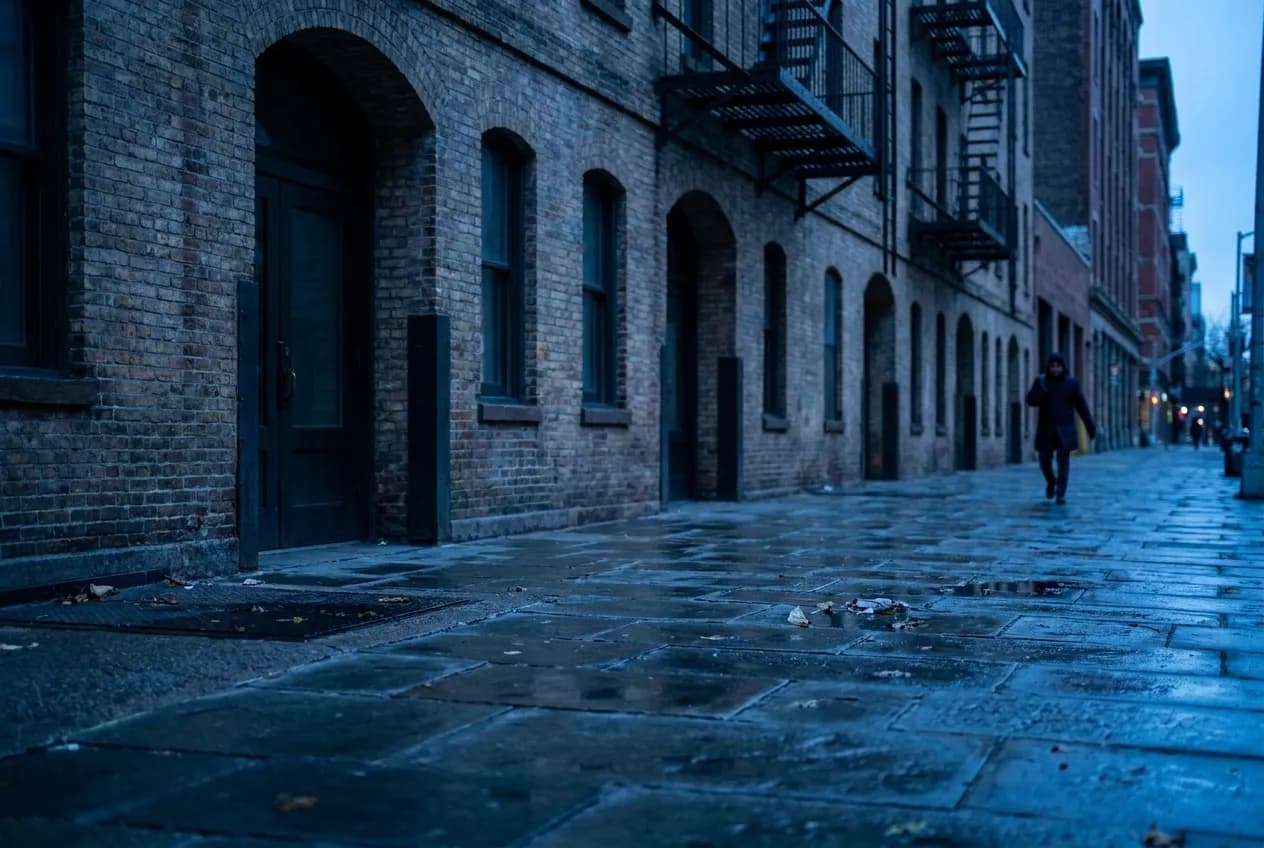
Hunts Point in the Bronx, the remaining wholesale trade around the Brooklyn waterfront, and the flower and produce operations that still run in Manhattan all have working days that begin somewhere between three and five in the morning. Coffee near those operations is not a lifestyle product; it is a utility, sold in a paper cup to someone unloading a truck. It is also frequently excellent, in the specific way that high-turnover coffee is excellent — nothing sits.
You will not get a pour-over. You will get something hot, strong and immediate at an hour when your alternative is a vending machine, which is a trade most people are happy to make.
Commuter interchanges: the trap and the workaround
Grand Central, Penn Station, Port Authority and the Fulton Center all have coffee from very early, and all of them price and pace for a captive audience running for a train. The coffee is fine. The experience is a queue. The workaround known to everyone who does it daily is to walk one or two blocks out of the terminal before buying — the same chains and better independents sit just outside the concourse footprint, open at the same hour, with a fraction of the line.
The two-block rule generalises well. Terminal-adjacent retail is priced by desperation. Two blocks is usually enough distance to leave that market and re-enter the normal one.
Bodegas and the honest baseline
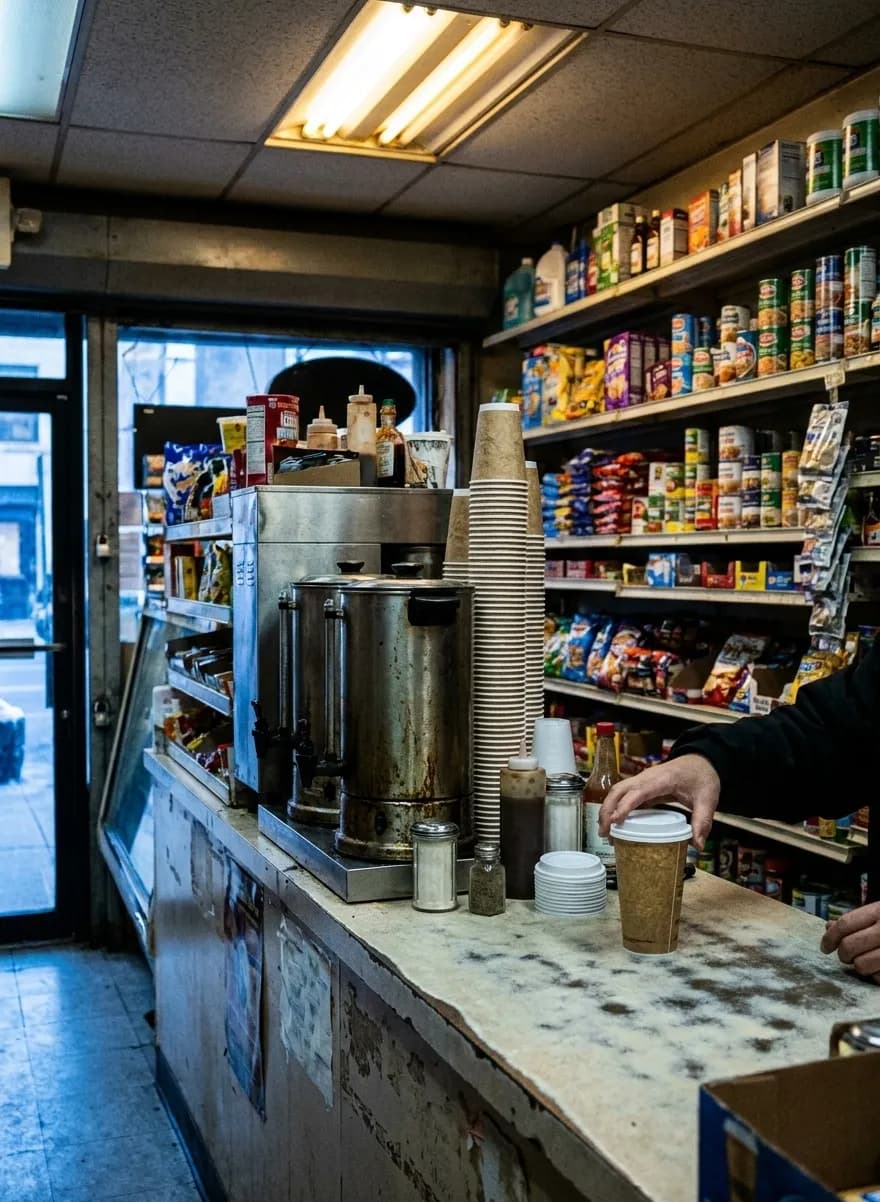
The genuine 24-hour answer in most of New York is the bodega, and it deserves to be named rather than treated as a fallback. A deli coffee is drip, it is cheap, it comes in the blue-and-white cup by reflex if you do not specify, and it is available at four in the morning within a few blocks of almost anywhere residential. It will not be the best cup you drink this month. It will be the only one available at that hour, and it has kept the city functioning for fifty years.
One detail worth knowing: say regular in a New York deli and you will get milk and sugar in it. If you want it black you have to say black. People new to the city discover this at the first sip, every time.
How to actually verify before you walk
Listed opening hours are the least reliable data on the internet, and they are worst at the extremes of the day. Three checks take under a minute. Look at whether the listing shows live activity right now rather than just posted hours. Check whether the most recent photos or reviews are from within the last few weeks, because a stale listing usually means stale hours. And if it is a small independent and it matters, phone — at 6am somebody is there, and they will answer.
The failure mode this avoids is specific and demoralising: a fifteen-minute walk in the cold to a locked door, followed by a second fifteen-minute walk. Two minutes of verification beats half an hour of that.
The short version
Before 7am, search by workforce rather than by rating. Hospitals, markets, terminals and trades keep the early rooms alive. Walk two blocks out of any transport hub before you buy. Treat the bodega as the baseline rather than the compromise. And check live hours rather than posted ones, because at that hour posted hours are close to fiction.
Tags: #CoffeeNearMe #NYCCoffee #EarlyCoffee #NewYorkCity #Bodega #GrandCentral #UpperEastSide #WashingtonHeights #HuntsPoint #MorningRoutine #CoffeeShops #NYCMornings #ShiftWork #CoffeeAndDessert
All trademarks are the property of their respective owners.
Ask Karpo first
Standing on a corner at 6am wondering which direction to walk? Ask Karpo what is open right now within walking distance, whether it is the terminal branch or the quieter one two blocks out, and what the nearest all-night option is if everything else is still shut.