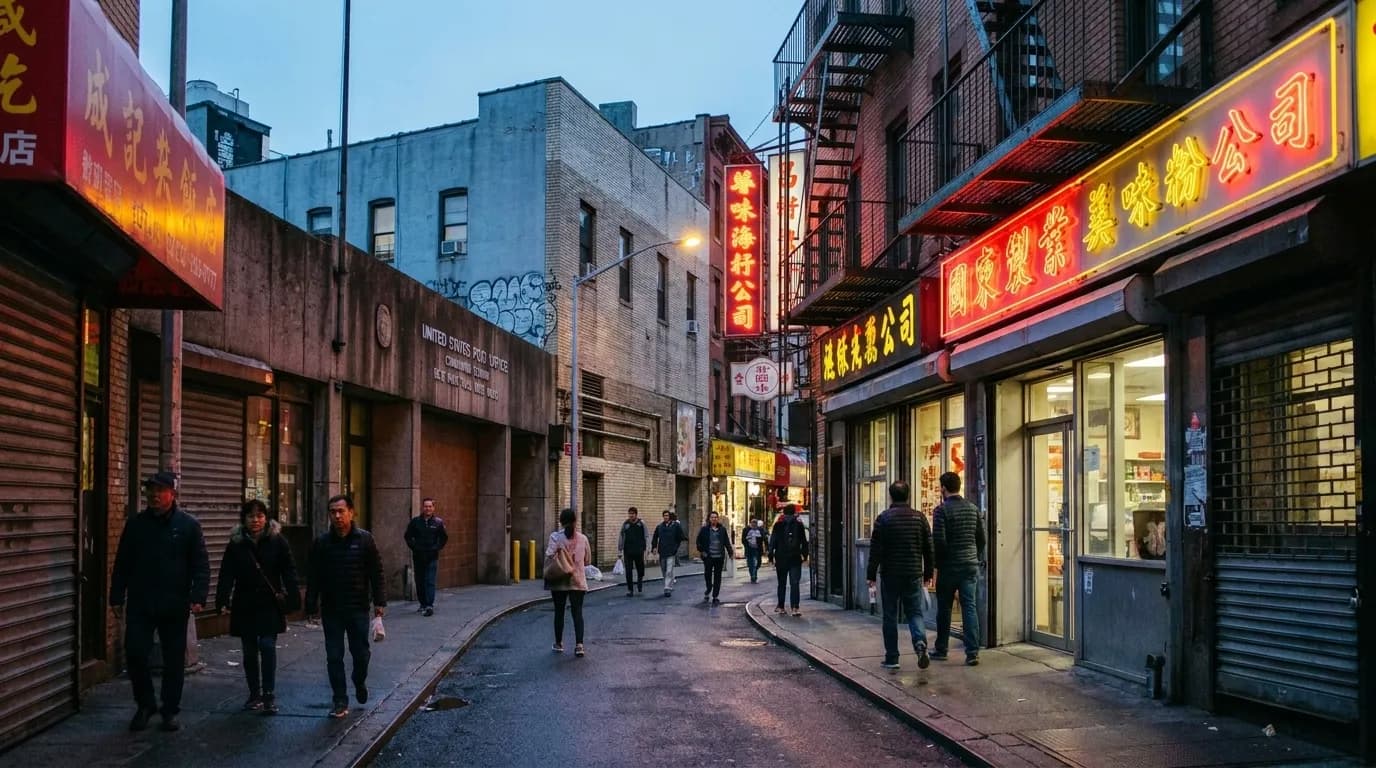
Manhattan's Chinatown has been feeding New York since the 1870s, but most of its oldest restaurants didn't make it past the twenty-first century. The ones that did—a tea parlor from 1920, a bakery that's been flipping roast pork buns since the fifties, a basement noodle house that outlasted three subway expansions—sit within four blocks of each other, connected by Doyers Street's famous bend and the foot traffic of locals who've been coming here for decades. This is a half-day crawl through the neighborhood's most durable kitchens, timed for maximum freshness and minimum wait.
Karpo tracks wait times at Nom Wah, reminds you when Mei Lai Wah's pork buns come out hot, and suggests the next stop based on what's actually open right now.

Start at Nom Wah Tea Parlor before the line forms
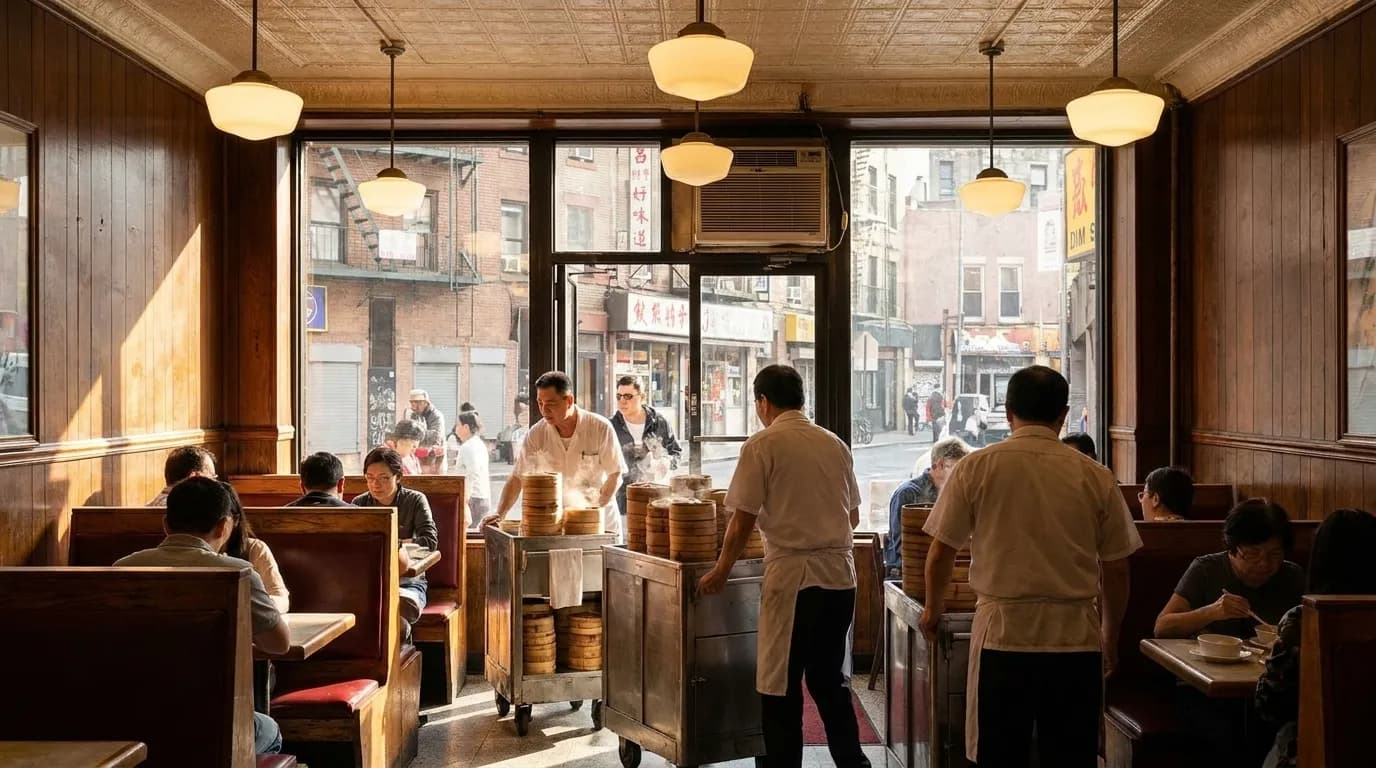
Nom Wah opened in 1920 on Doyers Street and still serves dim sum out of the same narrow space, with wooden booths and a counter that's seen a century of shrimp dumplings. Get here by 10:30 a.m. on a weekday or 9:30 a.m. on weekends—any later and you're looking at a forty-minute sidewalk wait. The menu runs to over forty items, but locals zero in on the scallion pancake roll (an off-menu hybrid that shows up on the paper form if you ask), the pan-fried dumplings with chive, and the original shrimp and snow pea leaf dumplings, which are lighter and more delicate than the XLB everyone orders first.
Skip the rice rolls unless you're committed—they're fine, but Nom Wah's strength is wrappers you can see through and fillings that taste like individual ingredients, not generic pork mush. The space is tight; if you're solo or a pair, ask for a counter seat. You'll be out in under an hour if you order decisively. Tea is oolong or chrysanthemum, poured from metal pots that get refilled without asking. Total damage runs about eighteen to twenty-five dollars per person depending on how many baskets you order, and you will order more than you think.
Walk to Mei Lai Wah for roast pork buns
Two blocks north on Bayard Street, Mei Lai Wah is a Cantonese bakery that does exactly one thing better than anyone else in the neighborhood: baked roast pork buns with a sweet glaze that caramelizes in a deck oven. The buns come out around 11 a.m. and again around 2 p.m., and if you time it right—call ahead or just show up and ask—you'll get one that's still warm, with the top crackly and the interior soft enough to pull apart with your hands. They also make pineapple buns, lotus paste buns, and a version stuffed with char siu that's steamed instead of baked, but the baked pork bun is why people line up.
The shop is tiny, cash-only, and runs out by mid-afternoon on weekends. Grab a number from the dispenser by the door and watch the case—when a fresh tray comes out, the line moves fast. A pork bun costs under two dollars. Get two. Eat one on the sidewalk outside and save one for later, though it probably won't make it past the next block. The bakery also sells egg tarts, which are fine but not transcendent; if you want egg tarts, go to Golden Steamer on Mott Street instead. Mei Lai Wah's lane is the bun.
Save Wo Hop for late or skip lunch entirely
Wo Hop has occupied a basement on Mott Street since 1938, serving Cantonese-American food to night-shift workers, tourists, and anyone who needs chow fun at 3 a.m. It's open twenty-four hours most days, which means you can slot it wherever your appetite dictates—immediately after Mei Lai Wah if you skipped breakfast, or at 10 p.m. after everything else has closed. The menu is enormous and mostly forgettable, but a few dishes justify the descent down the narrow staircase: roast pork egg foo young, beef chow fun with extra char, wonton soup with enough broth to sober you up.
The space is fluorescent-lit, no-frills, and louder than you'd expect for a basement. Locals sit at the long communal tables in the back and order in Cantonese; tourists sit up front and order from the picture menu. Both groups get the same food. A full meal with a beer or soda runs about fifteen to twenty dollars per person, and portions are large enough to split. The roast pork here is lacquered, almost candy-sweet, and pairs well with the bitterness of overbrewed oolong tea. If you're doing this crawl at night, Wo Hop is your anchor—get here by 11 p.m. to avoid the post-bar crowd.
End at Original Chinatown Ice Cream Factory
The last stop is Original Chinatown Ice Cream Factory on Bayard Street, which has been making lychee, black sesame, and red bean ice cream since 1978. The shop is small, with a counter and a few stools, and the flavors rotate based on what the family behind it feels like making. Lychee is the signature—floral, not too sweet, with real fruit bits—but the Thai iced tea and durian flavors have their own followings. If you've never had durian ice cream, this is the place to try it; if you have, you already know whether you're ordering it again.
A single scoop costs around six dollars, a double around nine. The texture is denser than American soft-serve, closer to gelato but not as rich. In summer, the line snakes out the door by 3 p.m.; in winter, you can walk right in. The shop also makes ice cream cakes and pints to go, which keep well if you're staying nearby. Locals get a scoop in a cup, not a cone, because the cones are standard-issue and add nothing. After four stops and three hours of walking, this is the reset—cold, slightly strange, and exactly the right way to close out a Chinatown crawl.
Practical notes
Start at Nom Wah around 10 a.m. on a weekday to avoid the worst of the weekend rush. The full crawl takes three to four hours if you're eating at each stop, two if you're just tasting. The F train to East Broadway or the J/Z to Chambers Street both land you within a five-minute walk of Doyers Street. Mei Lai Wah is cash-only; Nom Wah and Wo Hop take cards. No reservations anywhere—it's all walk-in. If you're doing this on a Sunday, start earlier; the bakery sells out faster and Nom Wah's line stretches past the Doyers Street bend by 11:30. Skip Wo Hop entirely if you're not hungry for a full meal; it's the only stop that requires sitting down. Bring cash, wear comfortable shoes, and don't plan anything after 2 p.m.—you'll want a nap.
Tags: #chinatownfood #nomwahtea #meilaiwah #wohop #originalchinatownicecreamfactory #doyersstreet #dimsumnyc #roastporkbuns #lateniteeats #lycheesoftserve #manhattanchinatown #centuryoldrestaurants #nycfoodcrawl #bayardstreet #mottstreet
All trademarks are the property of their respective owners.
Ask Karpo first
Karpo lives in your iMessage and knows which Chinatown bakeries just pulled buns from the oven, which dim sum parlors have a line right now, and which noodle shops are open past midnight when everything else has shuttered. Before you walk into a tourist trap or wait forty minutes for dumplings that aren't worth it, text Karpo and get a local's take—specific, current, and built for the route you're actually walking today.