 Noodle Bar Near Me in Chelsea Market: Very Fresh Noodles' Hand-Torn Bowls
Restaurants
The 4 PM Sweet Spot at Chelsea Market Before the Dinner Rush
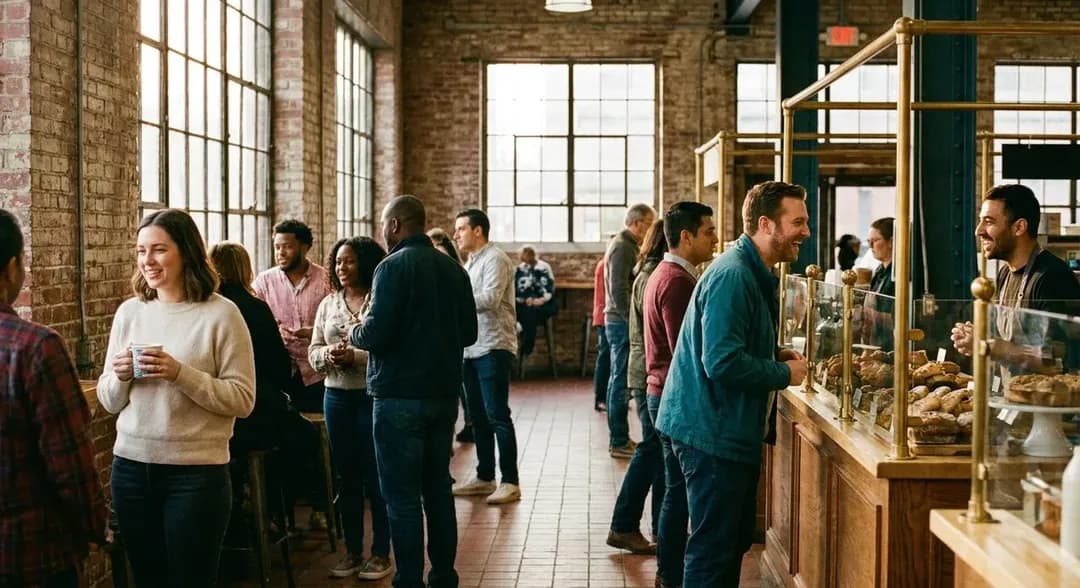
Between 4:00 and 5:30 PM, Chelsea Market exhales. The lunch stampede has cleared, dinner service hasn't begun, and for ninety fleeting minutes, the market belongs to those who know.
The clock and the crowd
You learn the rhythm if you work nearby. The market empties in mid-afternoon like a theater after matinee. Tour groups funnel back onto their coaches. The office lunch crowd has long since returned to their desks. What remains is a different animal entirely: vendors rotating stock, chefs prepping stations, and a handful of people who've figured out that Chelsea Market's best hour isn't during peak service but in the lull before it. Walk in during the mid-afternoon window on a Wednesday and you'll see Los Tacos No. 1 with a fraction of its usual line. By early evening, that same counter will be deep with customers. The window is narrow, specific, and requires you to resist the conventional wisdom that good food requires waiting.
The brick corridors feel wider at this hour. You can actually see the architectural bones—the old Nabisco factory ironwork, the deliberate industrial decay that cost more to preserve than most new construction. Someone's always photographing the overhead pipes, but in mid-afternoon they're not fighting for the angle.
Los Tacos No. 1 without the theater
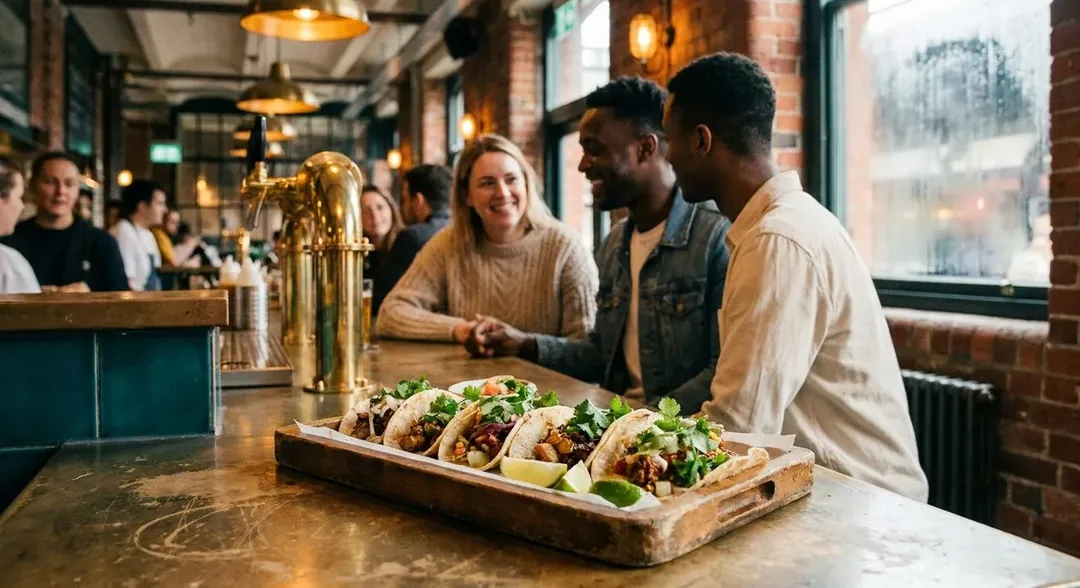
The corner taqueria normally operates like a Broadway show: lines, anticipation, the performance of efficiency. In the afternoon lull, you walk directly to the counter. Order the adobada taco, the one that doesn't make it onto most Instagram carousels because it photographs darker than the others. Ask for it on a handmade tortilla—they'll make it while you watch, which happens at any hour, but now you're not holding up a queue of impatient tourists. The tortilla maker has a rhythm that's worth observing: masa to plate in under a minute.
The high counter stools along the window are all available. Take one with a clear view down to the Tenth Avenue entrance—it catches the afternoon light without glare. You'll finish your tacos before the dinner-rush builds. The staff is relaxed, willing to answer questions about the salsa verde. This is the version of Los Tacos No. 1 that locals actually use—functional, quick, absent of ceremony.
The Lobster Place's second shift
The seafood counter and restaurant operate on two schedules. Lunch service winds down. Dinner prep begins later. In between, the market side restocks while the restaurant side resets. The sushi bar stools—usually claimed during peak hours—sit empty. You can watch the fish cutters work without craning over shoulders. They're breaking down whole fish in the afternoon, and if you're ordering poke or sashimi, you're getting it from fresh breakdown, not from pre-cut morning stock.
The lobster rolls at this hour are made to order because they're not racing against a line. Specify extra tarragon; they'll oblige. A corner stool at the raw bar gives you sight lines to both the cutting station and the door, useful for timing your exit before the evening crowd. Oysters and a beer here in mid-afternoon cost the same as at dinner but feel like a private tasting. The shuckers will tell you what came in that morning—actually tell you, not recite a menu.
Artists & Fleas without the browse traffic
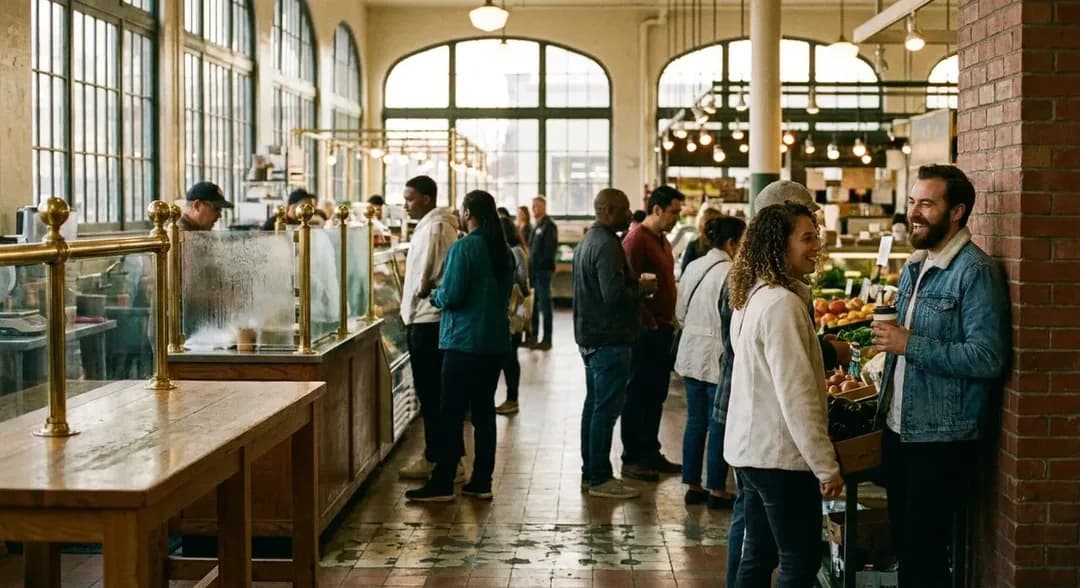
The vendor stalls in the back market section see their heaviest traffic during lunch hours and again in early evening. In the afternoon lull, you can actually speak to the vendors. The sellers will explain their inventory if you ask—the provenance of vintage denim, the story behind estate jewelry. They won't if there are multiple people waiting behind you.
The print vendors price more aggressively at this hour. Not officially, but practically. They're restocking, sorting new inventory, and more willing to negotiate on unframed pieces. The best finds here aren't always on display but in the storage they keep under tables. Ask to see them. During peak hours they're too busy; in the lull they'll pull them out.
The vintage clothing racks are easier to browse without elbows. You can actually examine seams, check labels, try things against your frame without an audience. The market's acoustics change too—less echo, more clarity. You hear conversations instead of crowd noise.
The reset ritual
Every vendor has an afternoon routine. Bakeries rotate displays, moving earlier batches and bringing out fresh inventory for evening service. Wine shops often open new bottles for tasting in mid-afternoon—they want feedback before the dinner crowd arrives and can move through samples efficiently.
Coffee counters switch from lunch to dinner mode: different offerings, different specials, a completely different energy. The baristas working afternoon shifts have their own techniques and rhythms, distinct from the morning crew.
Walk the full length from Ninth to Tenth Avenue and you'll see it: rolling racks being moved, display cases being refreshed, the subtle choreography of a market preparing for its second act. You're watching the mechanism, not the show.
The closing window
By early evening, the dynamic shifts. Dinner service begins at the restaurants. Lines rebuild. Los Tacos No. 1 requires strategy again. The market returns to its public self—still excellent, but no longer yours. The stools fill. The vendors shift into performance mode. The acoustics change back to echo and crowd hum.
You'll know you've stayed too long when you can't move freely down the main corridor, when The Lobster Place starts a waitlist, when the Artists & Fleas vendors stop making eye contact because they're busy with actual sales volume. The afternoon window isn't about avoiding crowds for comfort; it's about accessing a different version of the market entirely. One that's more honest, less curated, closer to what the space actually is when it's not performing for an audience.
The trick is arriving in mid-afternoon and leaving before the first wave of dinner traffic. Use the window well.
Practical notes
Chelsea Market is located on Ninth Avenue between 15th and 16th Streets in the Meatpacking District and Chelsea, occupying the former Nabisco factory building. The market is an indoor food hall featuring Los Tacos No. 1, The Lobster Place, and Artists & Fleas among other vendors. Enter from either Ninth or Tenth Avenue. Individual vendors keep their own hours. The A/C/E trains to 14th Street-Eighth Avenue or the L to Eighth Avenue are the closest subway options. The market's industrial architecture means uneven heating in winter—bring layers.
Tags: #ChelseaMarket #NYCFood #RightOnTime #LosTacosNo1 #TheLobsterPlace #ArtistsAndFleas #MeatpackingDistrict #NYCEats #LocalSecret #FourPM #OffPeakDining #ManhattanFood #NYCInsider #ChelseaEats #MarketLife
Sources consulted: chelseamarket.com
All trademarks are the property of their respective owners.
Ask Karpo for more information.
Keep reading
- Noodle Bar Near Me in Chelsea Market: Very Fresh Noodles' Hand-Torn Bowls
 Noodle Bar Near Me on Forsyth Street: Spicy Village's Big Tray Chicken
 Noodle Bar Near Me in Chinatown: Super Taste's Lanzhou Hand-Pulled Noodles