 Crown Heights Rainy Day Kids Activity Finder for Toddlers
Weekend Plans
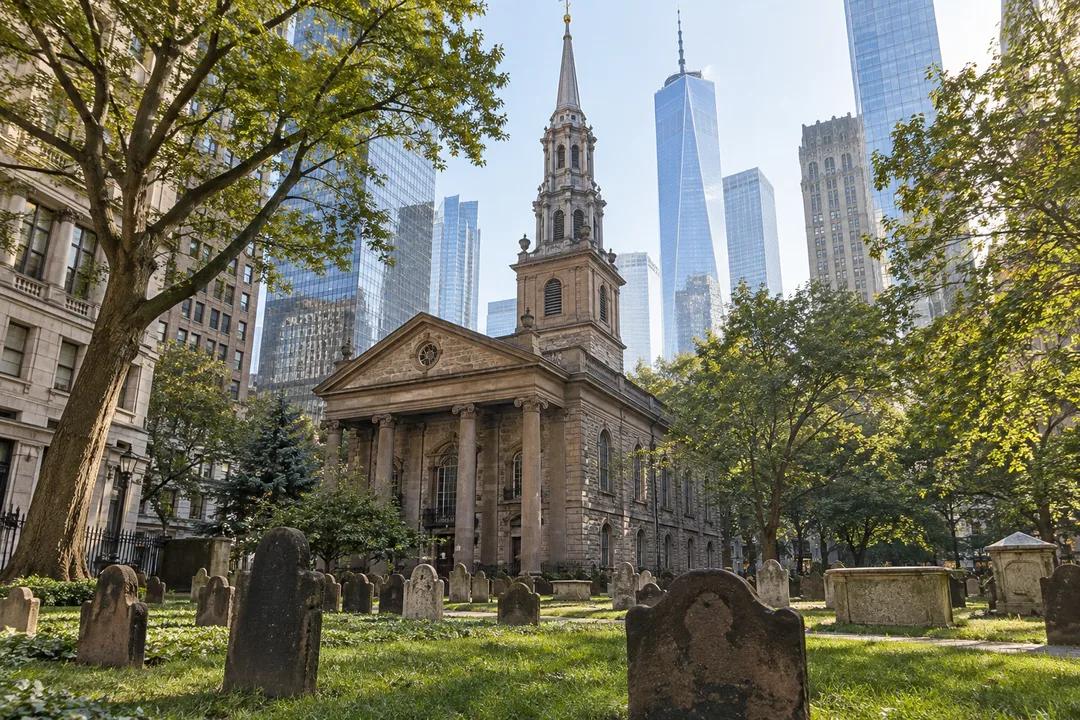
Historic Cemetery Tour at St. Paul's Chapel in Lower Manhattan
A practical guide to taking an authentic cemetery tour at St. Paul's Chapel in Lower Manhattan, exploring colonial burial grounds and Revolutionary War history.
The historic wrought-iron gate of St. Paul's Chapel at 209 Broadway in Lower Manhattan admits visitors to its colonial churchyard, and embarking on a self-guided cemetery tour offers rare direct access to the oldest surviving public building in continuous use in New York City. Consecrated in 1766 after construction between 1764 and 1766 as an auxiliary chapel for the parish of Trinity Church, this sacred Georgian stone edifice and its colonial burial ground survived both the Great Fire of 1776 and the September 11 terrorist attacks. According to official visitor information published by Trinity Church Wall Street (https://trinitywallstreet.org/visit/st-pauls-chapel), the interior chapel building is temporarily closed throughout October 2026 for scheduled preservation work before reopening on November 1, 2026, while the outdoor historic churchyard remains open daily with free public admission ($0.00).
Reaching St. Paul's Chapel is effortless thanks to its central location opposite the World Trade Center transit complex. Visitors can disembark at the Fulton Street subway transit center served by the 4, 5, 2, 3, A, C, J, and Z trains, walking two short blocks westward along Fulton Street directly to the Broadway iron gates. Alternatively, riders taking the R or W train to Cortlandt Street or PATH commuters exiting the World Trade Center Oculus can cross Church Street to enter the chapel's western portico courtyard.
Unlike the expansive romantic garden cemeteries established in outer boroughs during the nineteenth century, St. Paul's is a remarkably preserved eighteenth-century colonial churchyard hemmed in by soaring modern glass skyscrapers. The intimate acre of weathered brownstone and schist markers creates an astonishing oasis of silence amid the intense commercial energy of Lower Manhattan, anchoring early American political and military history directly to original burial ground soil.
Historical highlights within the burial grounds center on pivotal figures of the American Revolution and early national drama. Visitors stand before the grand marble memorial monument of Major General Richard Montgomery, hero of the 1775 Battle of Quebec, commissioned directly by the Continental Congress and sculpted in Paris by French master Jean-Jacques Caffieri. Nearby monuments commemorate prominent early American lawyer John Wells and famous English actor George Frederick Cooke, whose theatrical monument was erected in 1821 by legendary tragedian Edmund Kean.
Trinity Church Wall Street provides complimentary public access to the historic St. Paul's churchyard grounds during regular daylight gate hours with free admission ($0.00). Visitors seeking dedicated professional walking tours of Lower Manhattan's colonial burial grounds can book the Revolutionary New York walking tour with Big Onion Walking Tours, which costs $30 for adults and $20 for seniors and students, exploring the historic gravestones of St. Paul's alongside surrounding colonial streetscapes.
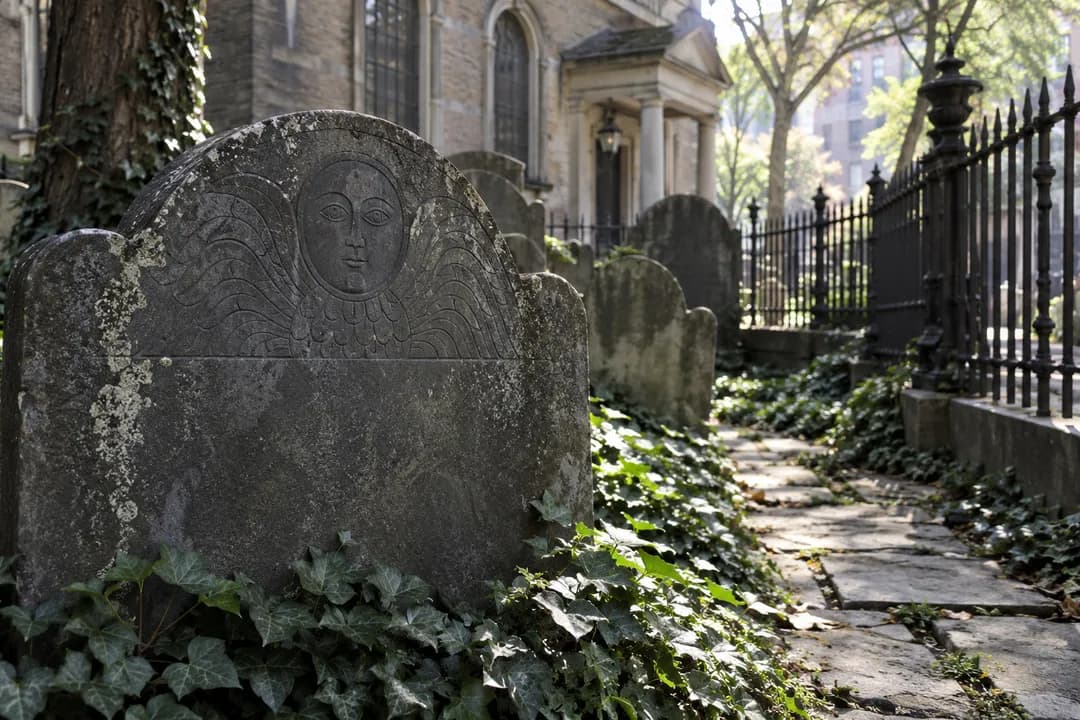
Guided outdoor itineraries focus on the open-air colonial churchyard, where weathered Manhattan schist and brownstone markers date back to the mid-eighteenth century. While indoor viewings of George Washington's presidential pew remain paused during October 2026 due to chapel interior preservation work scheduled through October 31, visitors walk across stone flagstone paths to inspect colonial soul effigies, skull-and-crossbones mortality emblems, and classical Latin epitaphs. The chapel's exterior brownstone quoins and Georgian steeple provide an authentic backdrop for understanding pre-Revolutionary Manhattan.
Morning visits between 9:00 AM and 11:00 AM provide the quietest experience, as early daylight streams between surrounding glass towers and street traffic remains manageable. Autumn afternoons bring steady foot traffic from the neighboring 9/11 Memorial plaza, making morning visits ideal for uncrowded churchyard walkways and unobstructed sightlines for colonial architectural photography.
Access to the outdoor churchyard is open during daylight gate hours without requiring paid admission tickets. Structured walking tour groups organized by heritage operators like Big Onion Walking Tours must be booked online in advance through their official ticketing portal. Independent visitors can enter the iron gates on Broadway without prior reservations, exploring the paved pathways freely at their own pace.
The physical atmosphere offers a tranquil sanctuary framed by mature sycamore trees and blooming ivy beds planted between ancient slate headstones. Sound levels are gently muffled by the church's solid stone masonry and iron perimeter railings, set against the distant hum of Lower Manhattan. The sensory contrast between weathered eighteenth-century gravestones and towering contemporary glass facades is profound.
Constructed between 1764 and 1766 by master builder Thomas McBean following the architectural pattern of London's St Martin-in-the-Fields, St. Paul's Chapel was built from local Manhattan mica-schist with brownstone quoins. Following the tragic events of September 11, 2001, the chapel earned the enduring moniker 'The Little Chapel That Stood' after surviving the collapse of the adjacent twin towers without a single broken pane of glass, subsequently serving as a round-the-clock relief center for recovery workers.
Tour groups regularly include Revolutionary War historians, colonial architecture buffs, visiting international travelers, and Lower Manhattan office workers seeking quiet lunchtime reflection. Preservation decorum is observed throughout: visitors must remain on designated stone pavers, refrain from touching crumbly sandstone markers, and observe respectful quiet during their walk.
If your primary goal is an outdoor park trek through rolling botanical hills, skip St. Paul's in favor of larger rural garden cemeteries like Green-Wood, as this downtown churchyard is compact and closely bounded by city streets. Furthermore, skip unguided visits without knowledgeable historical context, because centuries of atmospheric weathering have eroded many inscriptions, making expert storytelling indispensable for unlocking the stories behind the stones.
After concluding your churchyard tour, walk four blocks south down Broadway to examine Trinity Church at 89 Broadway, where Alexander Hamilton and Robert Fulton are buried in the adjacent historic churchyard. For lunch or artisan refreshments, walk just one to two blocks south and west to Eataly NYC Downtown at 101 Liberty St on the third floor of 4 World Trade Center for wood-fired Neapolitan pizza, fresh pasta, and Italian espresso.
Wear comfortable flat walking shoes, as the historic slate flagstones and brick pathways surrounding the churchyard are uneven and can become slick when wet. Because the chapel building is undergoing maintenance throughout October 2026 as detailed on trinitywallstreet.org, visitors should use nearby public facilities located across Church Street inside the World Trade Center Oculus transit concourse. If scheduled walking tours at St. Paul's are completely filled, your premier immediate Plan B is taking the self-guided walking perimeter around Trinity Churchyard at Wall Street or visiting the historic churchyard of Saint Mark's Church in-the-Bowery on 10th Street.
Ask Karpo for more information.
Keep reading
- Crown Heights Rainy Day Kids Activity Finder for Toddlers
 Jackson Heights Rainy Day Kids Activity Finder for Siblings
 Lower East Side Rainy Day Kids Activity Finder by Stroller