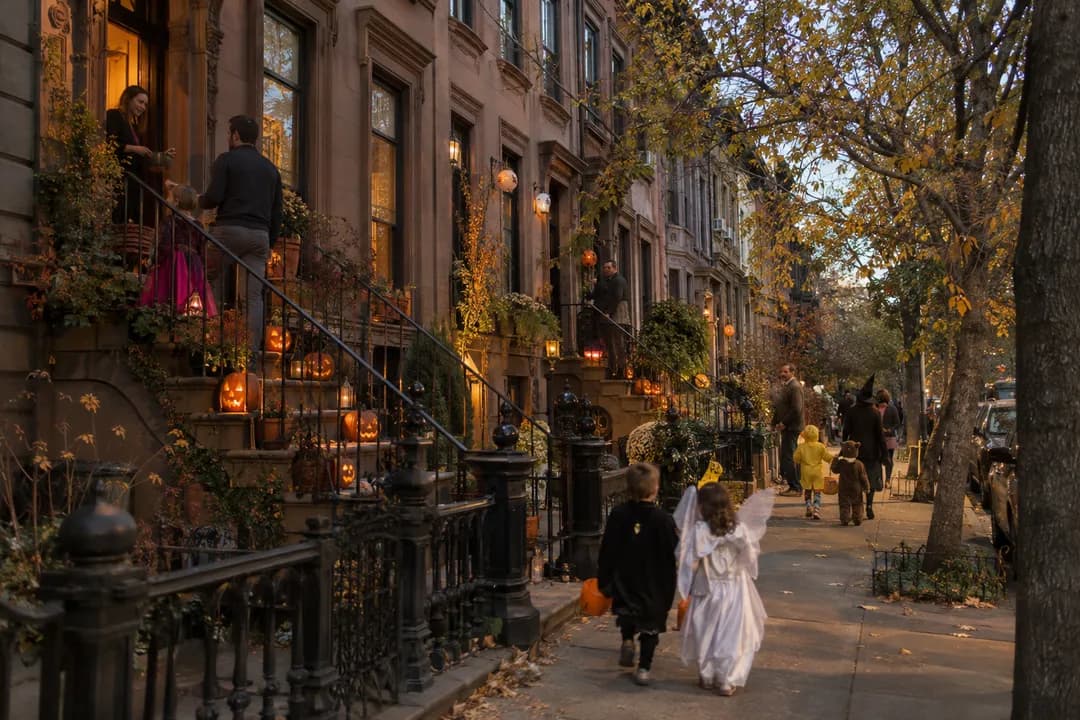
 Best Trick or Treating Neighborhoods Near Me: Park Slope
Neighborhood Guides
The Brooklyn Waterfront Walk: Greenpoint to Sunset Park on Foot
Seven miles of reclaimed shoreline trace Brooklyn's industrial spine, where shipyard cranes give way to pocket parks and the Manhattan skyline scrolls past like a film reel. Only Red Hook refuses the pavement.
The northern starting line
You begin at the northern terminus of Franklin Street in Greenpoint, where the asphalt simply ends at a chain-link gate. Beyond it, WNYC Transmitter Park occupies four acres of former radio transmission site, the skeletal tower still standing as sculpture. Arrive before 8 a.m. on weekdays and you'll share the benches only with the regulars who know the sight lines—the Empire State Building framed perfectly between the tower's legs from bench number three on the north end. The greenway proper starts here, marked by blue wayfinding medallions embedded in the concrete every hundred feet. Most cyclists miss the small connector path that dips under the Pulaski Bridge approach; locals cut through the loading zone behind the Amazon facility instead, emerging at Java Street where the path widens into the proper esplanade.
The Navy Yard passage
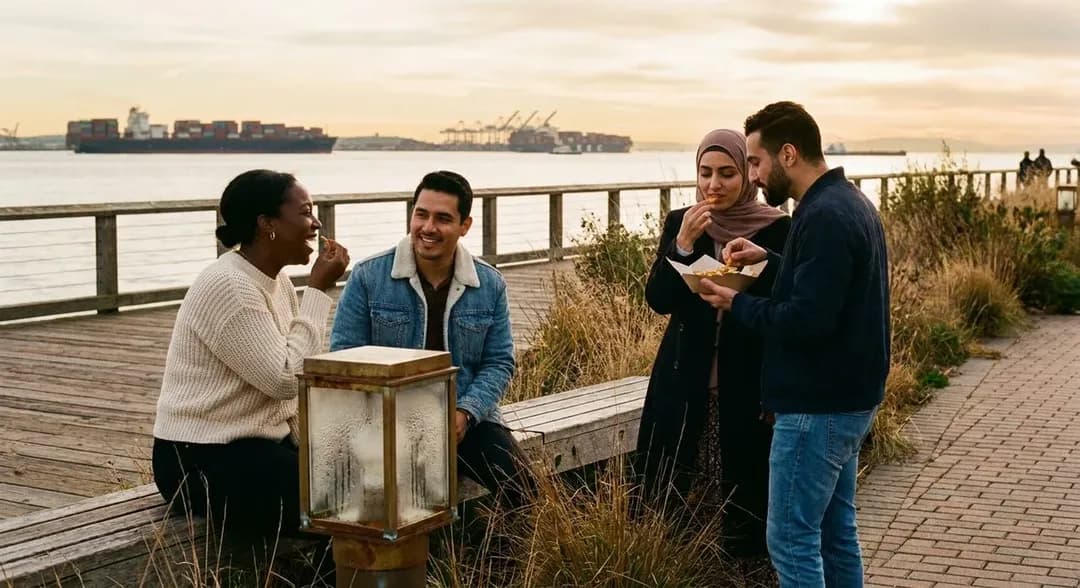
The route hugs the fence line of Brooklyn Navy Yard for nearly two miles, and this is where you understand the walk's peculiar character—you're always adjacent to working industry, never quite separated from it. Through the chain-link, you can watch welders throwing sparks in Dry Dock 4, the same basin that serviced the USS Missouri. The greenway here is barely six feet wide, squeezed between the fence and the street, but there's a rhythm to it. At Building 77's southern end, a small plaque marks the launch site of the ironclad Monitor; stand there at 4:15 p.m. on weekdays and you'll see the shift change, hundreds of workers streaming out in hard hats and hi-vis vests. The path improves dramatically at Brooklyn Bridge Park's northern edge, suddenly widening to twenty feet of smooth pavement with dedicated bike lanes.
Brooklyn Bridge Park's full stretch
From Pier 6 to Pier 1, you're walking through the city's most successful waterfront reclamation project, and it shows in the maintenance—the trash cans are actually emptied, the bathrooms open year-round. But skip the obvious photo ops at the main lawns. Instead, take the granite steps down to the water at Pier 3's eastern edge, where the tide pools form at low water and locals bring kids to catch minnows in nets. The Squibb Park Bridge connector, that bouncing wooden walkway, reopened in 2023 after years of closure; it's still the fastest way up to Brooklyn Heights, but the real secret is the service elevator in the back of Pier 6's building, which maintenance staff will let you use if you're carrying a stroller or heavy bags. They're there weekdays until 5 p.m., and they've seen enough struggling parents to be sympathetic.
The Red Hook interruption
At Atlantic Avenue, the greenway dies. There's no elegant way to say it—the path simply ends at a parking lot, and you're left navigating Columbia Street's truck traffic for the next mile and a half. Red Hook refused the park planners, or perhaps the planners refused Red Hook; either way, you're walking past auto body shops and the back end of the Fairway loading docks. The workaround the locals use: cut down Dikeman Street to Conover, then follow Conover south until it curves into Beard Street. This keeps you closer to the water and away from the heavy trucks, though you're still on regular sidewalks. At the Red Hook Container Terminal fence, the greenway medallions reappear, promising better things ahead. The gap takes about twenty-five minutes to walk, longer if you stop at Sunny's Bar on Conover—the one with the Christmas lights up year-round and the owner who still plays honky-tonk piano on weekend nights.
Sunset Park's industrial revelation
The greenway resumes properly at Bush Terminal Park, and immediately you're back in that liminal space between recreation and industry. The park runs along the water for a mile, but look east and you're staring at massive warehouse complexes, eighteen-wheelers backing into loading bays, the entire logistics apparatus of the city laid bare. The park itself is surprisingly well-designed—a continuous paved path with exercise stations every quarter mile, though the locals ignore the equipment and use the flat stretches for speed training. The best view comes at the southern end, near 43rd Street, where the path curves out onto a small peninsula. From there you can see the Statue of Liberty, the Verrazzano Bridge, and the entire sweep of New York Harbor. Arrive at sunset—the park's name suddenly literal—and you'll find a small community of regulars who've claimed the benches, thermoses of coffee out, watching the container ships navigate the Narrows.
The through-walker's experience
Doing the full seven miles in one push takes about two and a half hours at a steady pace, three if you're stopping for photos. Bring water—there are fountains at Brooklyn Bridge Park and Sunset Park, but nothing reliable in between. The Red Hook gap has no facilities at all unless you count bodega bathrooms. Most people walk north to south to keep the sun at their backs in the afternoon, and to end with Sunset Park's view rather than Greenpoint's industrial vistas. The serious walkers, the ones training for longer distances, do it in reverse to test themselves against the slight elevation gain heading north. Either way, you're stitching together a Brooklyn that doesn't exist in the tourist imagination—a working waterfront that's slowly, unevenly transforming into public space, with all the awkward transitions still visible.
Practical notes
Start at WNYC Transmitter Park (Greenpoint Avenue at Franklin Street, accessible via G train to Greenpoint Avenue). End at Bush Terminal Park (43rd Street at 2nd Avenue, near the D/N/R at 36th Street). The route is entirely free and accessible 24/7, though lighting is poor in the Navy Yard section after dark. Wear proper walking shoes—seven miles is real distance, and the pavement is unforgiving. The Red Hook gap has limited food options; pack snacks or plan a stop at Red Hook Lobster Pound (284 Van Brunt Street) if you're walking on a weekend when they're open. Total elevation gain is minimal—about 150 feet—but the wind off the water can be brutal in winter. Best seasons are April-May and September-October when temperatures are mild and the parks aren't crowded. Allow three to four hours total including stops. No admission fees, no reservations required. Street parking available at both ends, though Greenpoint is notoriously difficult on weekday mornings.
Tags: #BrooklynWaterfront #NYCWalking #GreenpointToSunsetPark #BrooklynGreenway #RedHookGap #BushTerminalPark #NYCHiking #BrooklynNavyYard #BrooklynBridgePark #WaterfrontWalk #TheLongWayHome #NYCExploring #UrbanHiking #SevenMileWalk #BrooklynOnFoot
Sources consulted: MTA · NYC Parks · Time Out New York
All trademarks are the property of their respective owners.
Ask Karpo for more information.
Keep reading
- Best Trick or Treating Neighborhoods Near Me: Park Slope
 Best Trick or Treating Neighborhoods Near Me: Carroll Gardens
 Best Trick or Treating Neighborhoods Near Me: West Village