 Best Trick or Treating Neighborhoods Near Me: Park Slope
Neighborhood Guides
Walking Broadway End to End: Bowling Green to Inwood in a Day
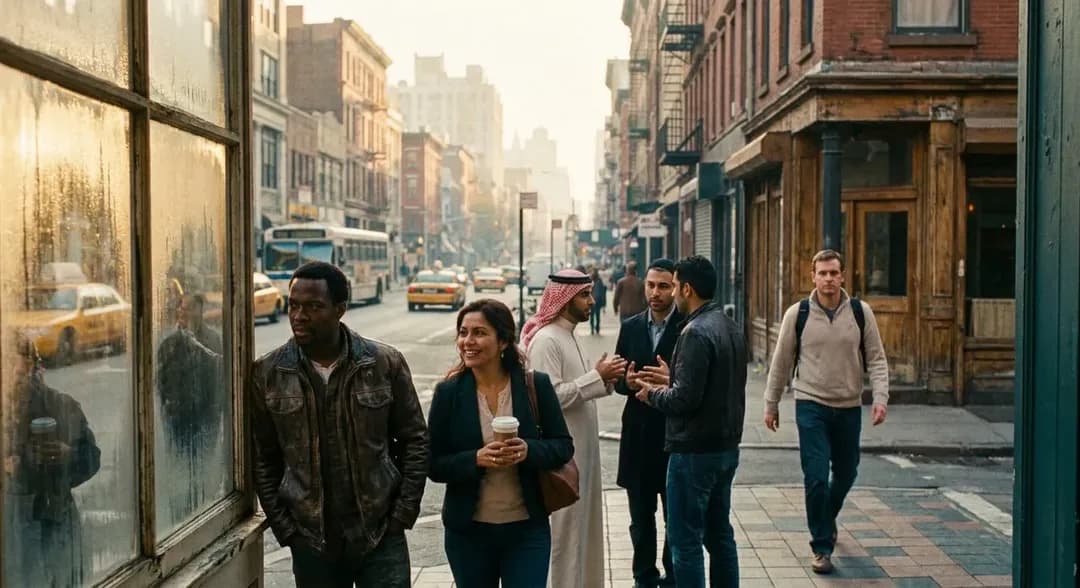
Broadway isn't a street—it's a 13-mile seam stitching Manhattan together, following the Wickquasgeck trail from harbor to forest. Start at first light and you'll watch the city wake in chapters.
The theory of continuous motion
You start at Bowling Green before the financial district shakes itself awake, when the Charging Bull still belongs to pigeons and the occasional insomniac photographer. Broadway begins here as a narrow colonial trace, the kind of street that remembers when it was a path. The Wickquasgeck people walked this route between fishing camps and hunting grounds, and if you squint past the glass towers, the logic holds—water to high ground, following the bedrock spine.
The walk requires no special fitness, just stubbornness and decent shoes. Thirteen miles sounds theoretical until you're in it. Leave at 6:00 a.m. and you'll reach Inwood Hill Park by early evening, assuming you stop to eat every two hours like a sensible person. The rhythm matters more than speed. Broadway never lets you get lost, which frees your attention for the details: the way delivery trucks own Tribeca at dawn, how the pretzel carts appear exactly when you need salt.
The first third: financial ghosts to Union Square
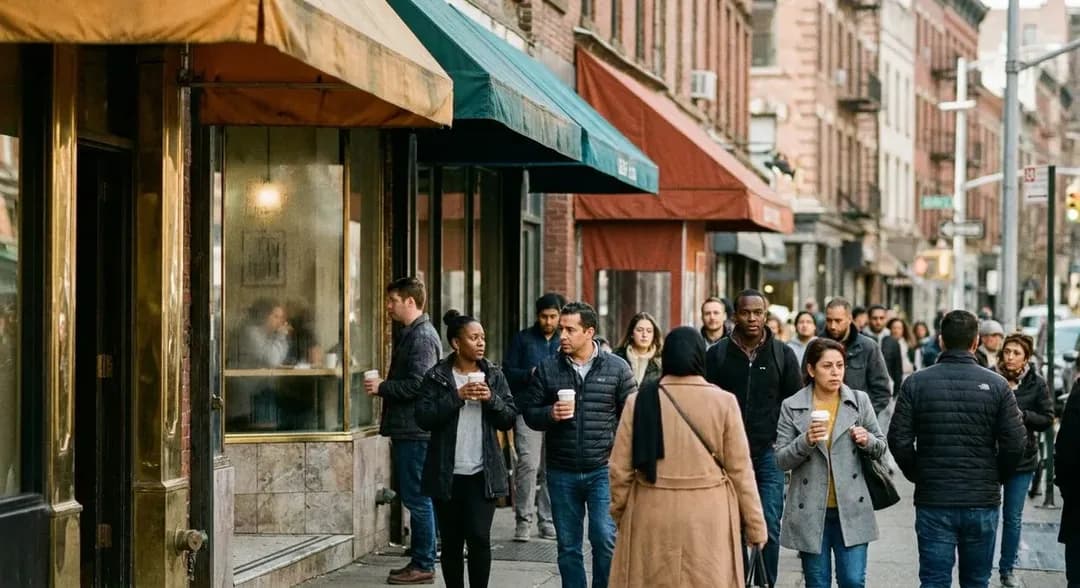
Below Canal, Broadway moves through shadow. The buildings lean in, and even in summer, you're walking through canyons that hold last night's air. Trinity Church at Wall Street marks the first real pause—Alexander Hamilton's grave sits in the northeast corner, visited by exactly three people this early. The churchyard smells like old stone and municipal roses.
By the time you hit City Hall, the light changes. The street widens slightly and food carts begin their morning setup—the halal cart at Chambers and Broadway parks at 6:45 a.m. sharp, same spot for eleven years. Through Soho, the cast-iron buildings glow pink if you time it right, and the loading docks behind Dean & DeLuca release the smell of coffee roasting. At Houston, you cross into a different density. The sidewalk fills with people who look like they've been awake for hours. Tom's Restaurant at 10th Street opens at 7:00 a.m.—counter seat 8 faces the kitchen, best for watching the egg station.
Union Square to Columbus Circle: the long middle
This is where the walk earns its keep. Union Square at 8:00 a.m. on a weekday belongs to the farmers' market setup crews and chess players who never left. Broadway splits around the park, and you want the west side where the morning sun hasn't hit yet. The next two miles through the Flatiron and past Madison Square Park test your commitment—this stretch feels longest because the landmarks space out and you're just walking through expensive ordinary life.
Herald Square briefly jolts you with tourists and Macy's, then Broadway goes quiet again through the Garment District. The real reward comes at Columbus Circle, where the street bends northwest and you can finally see distance. Whole Foods downstairs at the Time Warner Center has clean bathrooms and a coffee bar that doesn't ask questions. The barista with the septum piercing works Tuesday through Saturday, knows the walk, and will refill your water bottle from the good filter in back.
The Upper West Side: where Broadway becomes a neighborhood
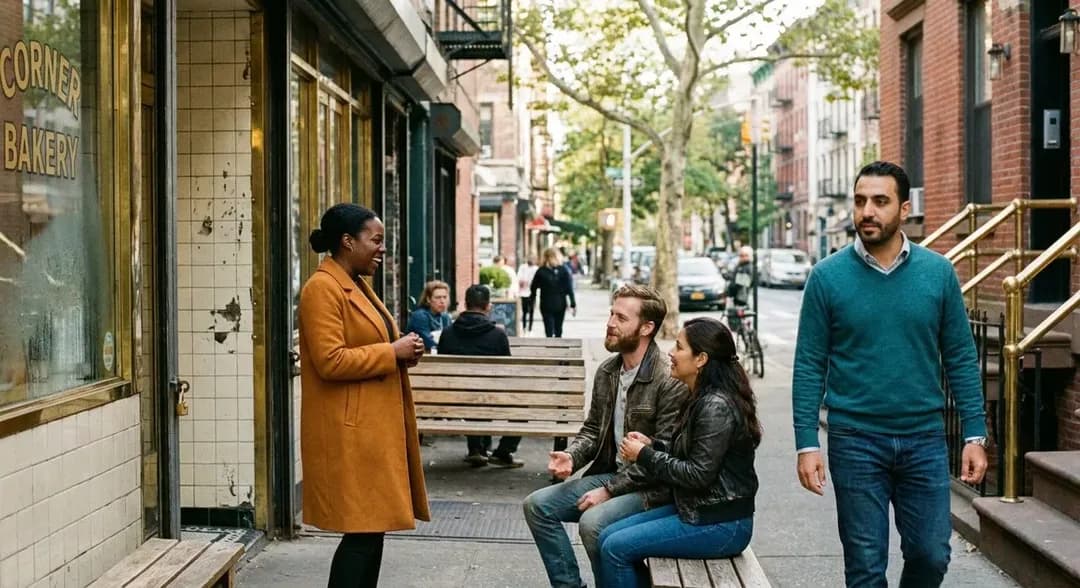
Above 60th, Broadway stops performing and starts living. The street narrows between residential buildings, and the pace changes—people walking dogs, older men in velour tracksuits heading to the same bench they've claimed for decades. Zabar's at 80th opens at 8:00 a.m., but the real move is Absolute Bagels at 108th, where the everything bagels come out of the oven at 9:30 a.m. and sell out by 10:15. Ask for yours scooped if you're worried about the remaining miles.
The 100s blur together pleasantly. You're in the rhythm now, and Broadway feels less like a destination than a condition. Tom's Restaurant—the other one, the Seinfeld exterior—sits at 112th. Don't bother going in; the counter is always full and the coffee's merely fine. Better to keep moving. Columbia University sprawls between 114th and 120th, and the campus gates create a brief canyon effect before Broadway opens up again at 125th, where the street suddenly remembers it's in Harlem.
Harlem to Washington Heights: the shift
The next three miles teach you about transition. Harlem's Broadway carries a different frequency—louder, more music leaking from cars, more people using the street as a living room. The sidewalk widens and narrows unpredictably. Starbucks and McDonald's coexist with botanicas and Dominican lunch counters that don't have signs in English. Around 145th, you notice the hills. Manhattan has topography up here, and Broadway starts climbing.
Washington Heights begins somewhere around 155th, though no one agrees on the exact line. The accent on the street shifts—more Spanish, different Spanish than below 125th. The bakeries change. Try Carrot Top Pastries at 165th for a guava pastelito and a cortadito—the owner's nephew works the counter on weekends and knows everyone's order. Broadway here feels like a village main street that happens to be in New York, which is exactly what it is.
The final push: Inwood and the forest
By 190th Street, you're in Inwood proper, and Broadway has become almost suburban—wider sidewalks, more trees, fewer tourists than you've seen since dawn. Your feet hurt in new places. The street angles northwest toward the Harlem River, and you can smell water and green things. At 204th, Broadway officially ends, though the path continues into Inwood Hill Park.
The park is the point. You've walked the entire commercial spine of Manhattan, and now you're standing in the last old-growth forest on the island, 196th Street entrance on your left. Find the tulip trees near the salt marsh—some are 200 years old, which means they were here when Broadway was still mostly theoretical. Sit on the schist outcropping overlooking the Hudson. Your knees will inform you that you've walked 13 miles, but your brain will insist it was one continuous present tense, which is the trick of the thing.
Practical notes
Start at Bowling Green Station (4/5 trains) at dawn—6:00 a.m. in summer, 7:00 a.m. in winter. Finish at 207th Street Station (A train) or Inwood–215th Street (1 train). The walk takes 7-9 hours depending on stops. Wear broken-in shoes with real arch support; blisters start around mile 8. Bring a water bottle—refill at Whole Foods (Columbus Circle), Columbia University (any campus building), or any Starbucks. Eat every two hours: Tom's Restaurant (10th & Broadway), Absolute Bagels (2788 Broadway), Carrot Top Pastries (3931 Broadway). Bathrooms: Whole Foods, Barnes & Noble Union Square, any Starbucks, Columbia campus. Best seasons: April-May or September-October. Avoid July-August heat and January ice. Free activity except food. Budget $30-40 for meals. No reservations needed. Weekend mornings see less delivery truck chaos below 14th Street.
Tags: #BroadwayWalk #ManhattanHike #NYCWalking #TheLongWayHome #WickquasgeckTrail #BowlingGreen #InwoodPark #WalkingNYC #UrbanHiking #NYCExploration #ManhattanEndToEnd #HiddenNYC #NYCAdventure #WalkThisWay #DiscoverOnFoot
Sources consulted: MTA · NYC Parks · Time Out New York
All trademarks are the property of their respective owners.
Ask Karpo for more information.
Keep reading
- Best Trick or Treating Neighborhoods Near Me: Park Slope
 Best Trick or Treating Neighborhoods Near Me: Carroll Gardens
 Best Trick or Treating Neighborhoods Near Me: West Village