People searching for the blood moon total lunar eclipse often land on the same familiar New York skyline viewpoints. That is where the trouble starts. A rising moon or another low eastern event needs an open horizon to the east, while many of the city's most photographed waterfront parks were designed by geography to look west at Manhattan. The useful question is not which park has the grandest panorama. It is which direction the railing faces.
Message Karpo for the NYC waterfronts that are open, the right arrival window for moonrise, and a live backup route if the first railing is crowded.

Read the shoreline first
The most photographed "unobstructed" waterfront parks in New York - Gantry Plaza, Hunters Point South, Brooklyn Bridge Park - all face west at Manhattan. They are skyline parks, which makes them the wrong side of the river for anything rising in the east. Their openness is real, but it opens toward towers, sunsets and reflected light rather than the eastern horizon needed here.
That distinction matters most while the moon is still low. A broad river view does not help if the event is happening behind the observer. Before choosing a destination, place Manhattan, Queens, Brooklyn and the Atlantic in relation to the viewing edge. For this particular plan, the postcard composition is often the warning sign: if Lower Manhattan or Midtown is centered across the water, the view is probably pointing west.
The Manhattan counter-case
Manhattan's own East River Waterfront Esplanade is the counter-case: two miles of city-owned open space along the island's eastern shore, looking east across the river and New York Harbor rather than back at the towers. It is the straightforward Manhattan answer because the observer remains on the island and faces across the water in the direction from which a rising moon comes.
The esplanade runs from the Battery north along Manhattan's eastern edge. Its two miles of public open space provide more room to adjust than a single pier or lawn. Sweeping views extend across the East River and New York Harbor, so the practical move is to treat the waterfront as a line rather than one exact lookout.
The East River Waterfront Esplanade runs about two miles, so "crowded" there is local rather than total: walking a few hundred metres along it usually finds open railing when the well-known lookouts are full. Arriving before the moonrise window leaves time to make that adjustment without trying to move through a gathered crowd at the critical moment.
Why Long Island City misleads
Gantry Plaza State Park has an open waterfront lawn and pier with unobstructed views across the East River. It is superb for sunrise reflections off the towers, but it faces west at Manhattan. For an eastern rise, that celebrated view points in the wrong direction. The park remains a strong skyline destination; it simply does not solve this compass problem.
Hunters Point South Park creates the same mismatch farther along the Long Island City shoreline. It has one of the most open skyline views in the city and looks directly across the river at Manhattan. Open sky and open water can make it seem like an automatic eclipse choice, yet the Manhattan-facing edge is still westward. Long Island City works when the skyline is the subject, not when the low eastern horizon is.
Dumbo versus the ocean
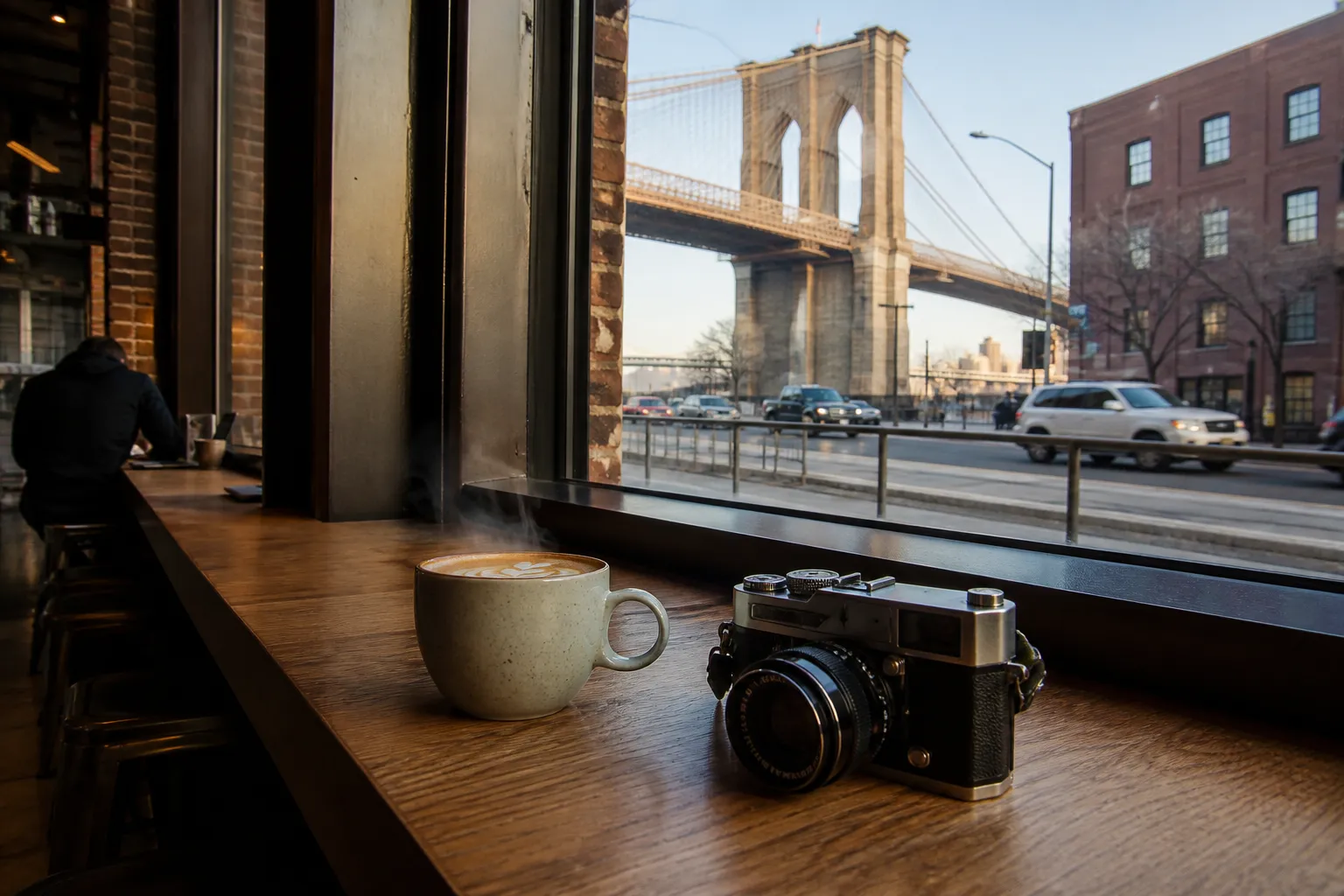
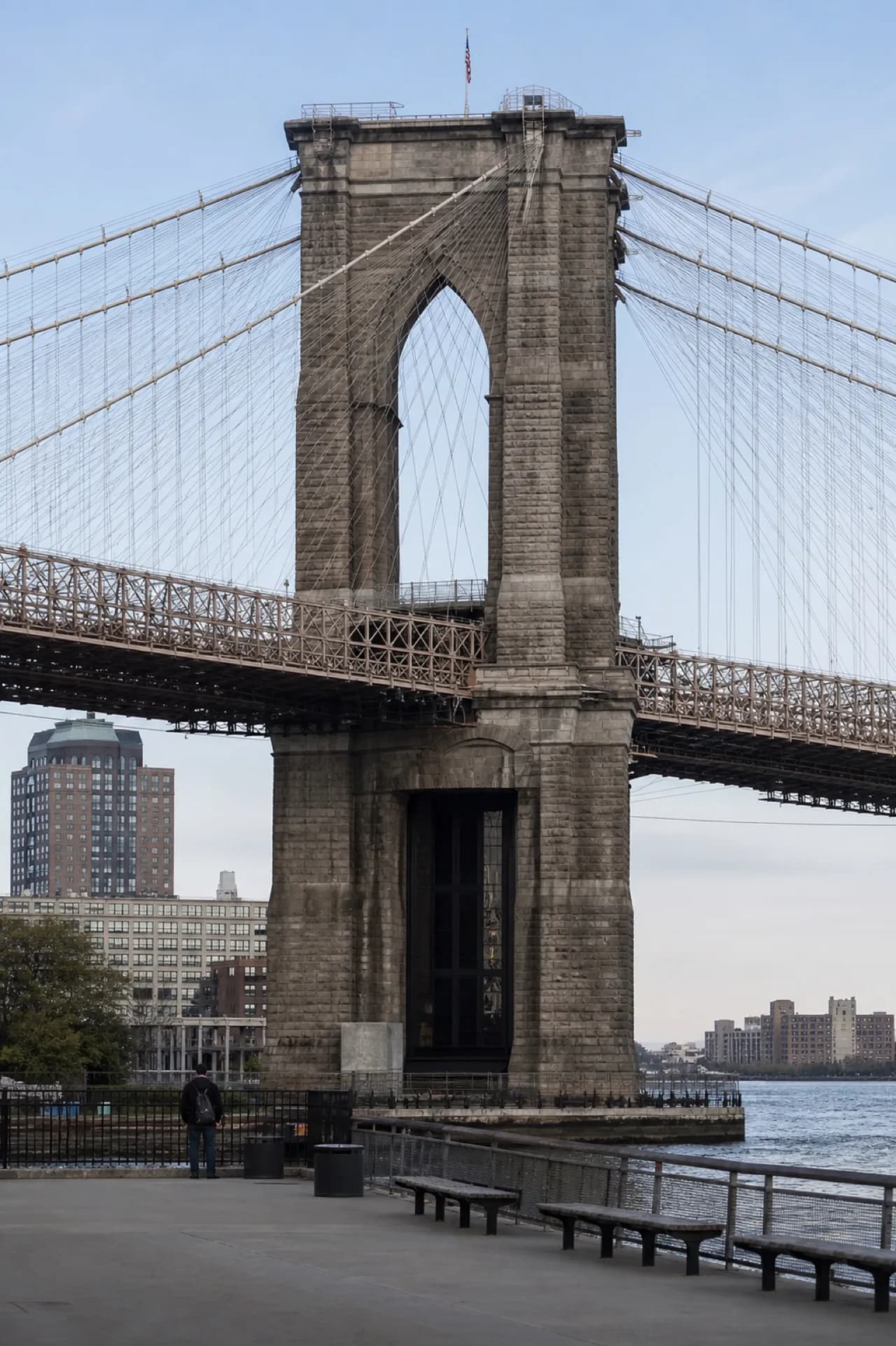
Brooklyn Bridge Park stretches for more than a mile along the Dumbo and Brooklyn waterfront, with riverfront walkways and clear views of the Lower Manhattan skyline. That description also explains its limitation. It is another west-facing stretch: the skyline park, not the horizon park. A clear view of Manhattan is not interchangeable with a clear view toward a rising moon.
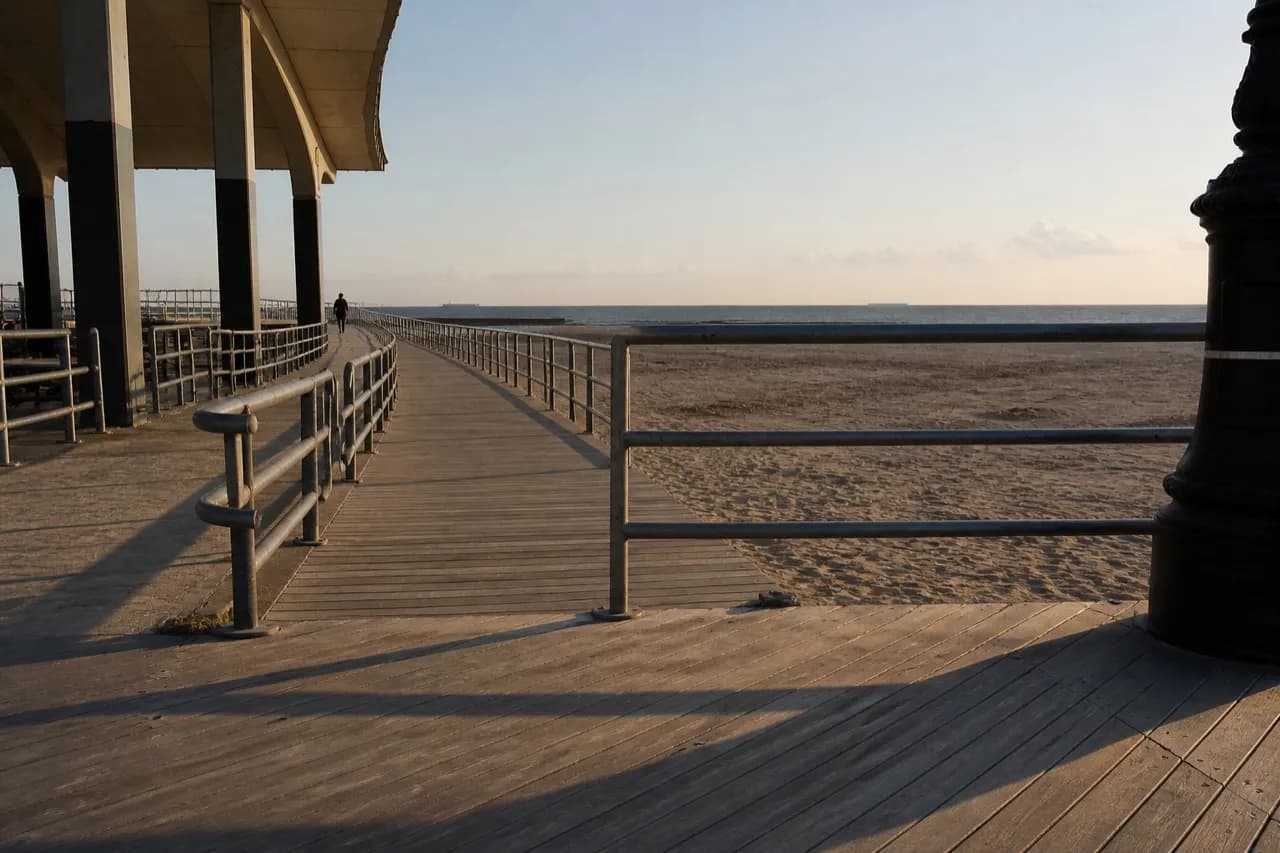
For the cleanest low sightline in the five boroughs, the ocean boardwalks beat the river entirely - Coney Island's Riegelmann Boardwalk and Rockaway Beach have nothing built between the sand and the horizon. Coney Island offers a south-facing open-ocean horizon from a public boardwalk, making it the practical fallback when the East River banks are crowded.
Rockaway Beach has the same open-ocean advantage farther out on the Rockaway peninsula and is usually quieter. It is an Atlantic-facing public beach, so there is no Manhattan skyline competing with the viewing direction. The trade is distance for a cleaner horizon and more room.
Build the backup before leaving
A workable plan starts with the East River Waterfront Esplanade if staying in Manhattan matters. Show up before moonrise, inspect the eastern sightline and keep walking along the two-mile stretch if a familiar lookout has filled. The fallback is not Gantry Plaza, Hunters Point South or Brooklyn Bridge Park, because crossing to those waterfronts reverses the useful direction.
For a lower, less obstructed horizon, start with Coney Island and the Riegelmann Boardwalk or commit to Rockaway Beach. Rockaway is reachable on the subway, which makes an open Atlantic horizon a transit trip rather than a drive - the reason it works as a late plan when the river banks are already three deep. Check the weather and current public access before departure, then choose between the closer river edge and the broader ocean horizon.
Practical notes
- Direction: use Manhattan's East River Waterfront Esplanade for an eastward river view; Gantry Plaza, Hunters Point South and Brooklyn Bridge Park face west at Manhattan.
- Timing: arrive before moonrise so there is time to inspect the horizon and move along the waterfront before the low event begins.
- Cost: the choices here are public parks, public open space, a public boardwalk and a public beach.
- Transit: Rockaway Beach is reachable on the subway, making the Atlantic horizon possible without a drive.
- Crowds: if one East River Esplanade lookout is full, walk a few hundred metres along its roughly two-mile length before abandoning the river.
- Backup: use Coney Island and the Riegelmann Boardwalk or Rockaway Beach when the East River banks are crowded; check weather and current access before setting out.
- Accessibility: check current route and access conditions for the specific esplanade, boardwalk or beach entrance before choosing a viewing point.
Tags: #nyc #newyorkcity #bloodmoon #lunareclipse #moonrise #eastriver #manhattan #longislandcity #dumbo #coneyisland #rockawaybeach #freeinnyc #nycparks #stargazing
Sources consulted: nycgovparks.org · edc.nyc · nycgovparks.org · timeout.com
All trademarks are the property of their respective owners.
Ask Karpo first
Before leaving, message Karpo to check which public spaces - the East River Waterfront Esplanade, the Long Island City and Dumbo parks, the Riegelmann Boardwalk or Rockaway Beach - are actually open to the public that evening. Karpo can work backward from moonrise, identify when to show up, and build a live route around Coney Island or along Manhattan's eastern shore with a second stop ready if the first viewing edge is full.