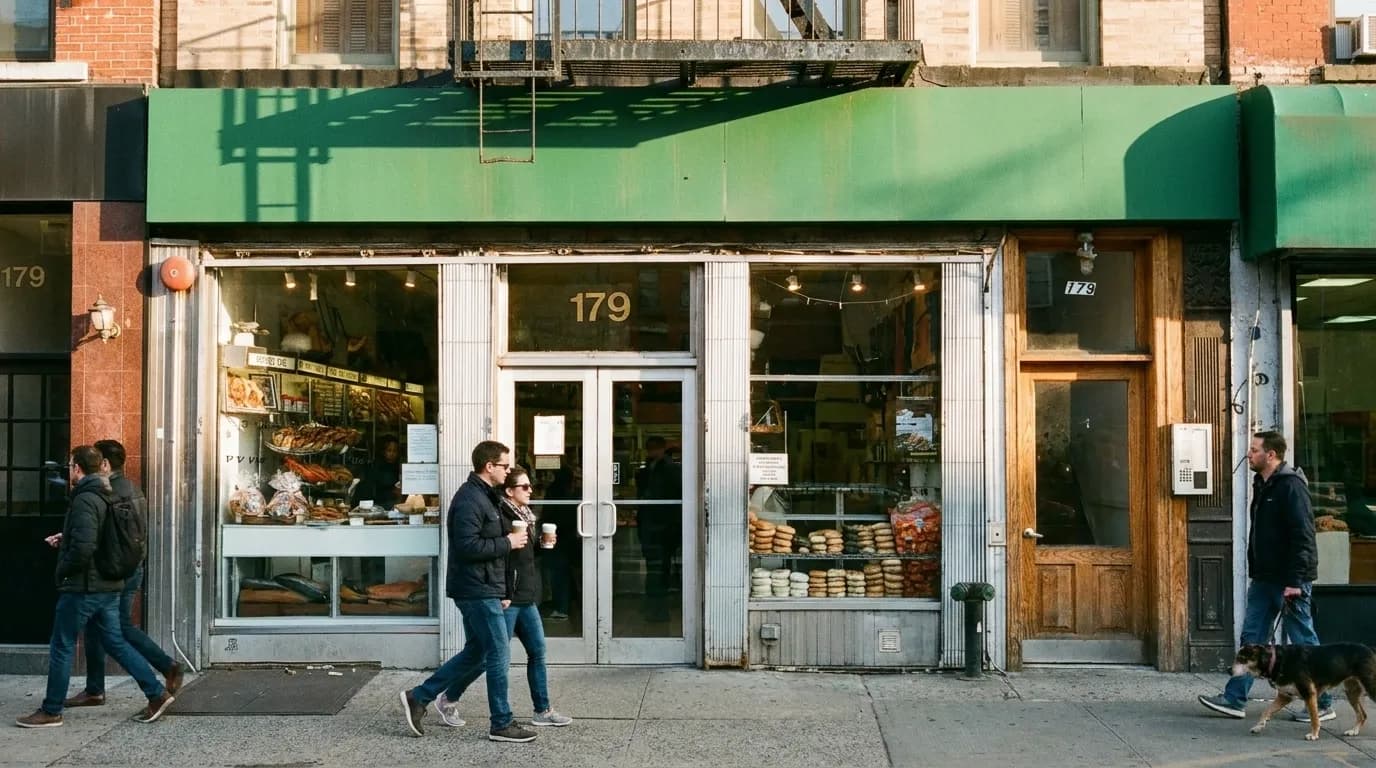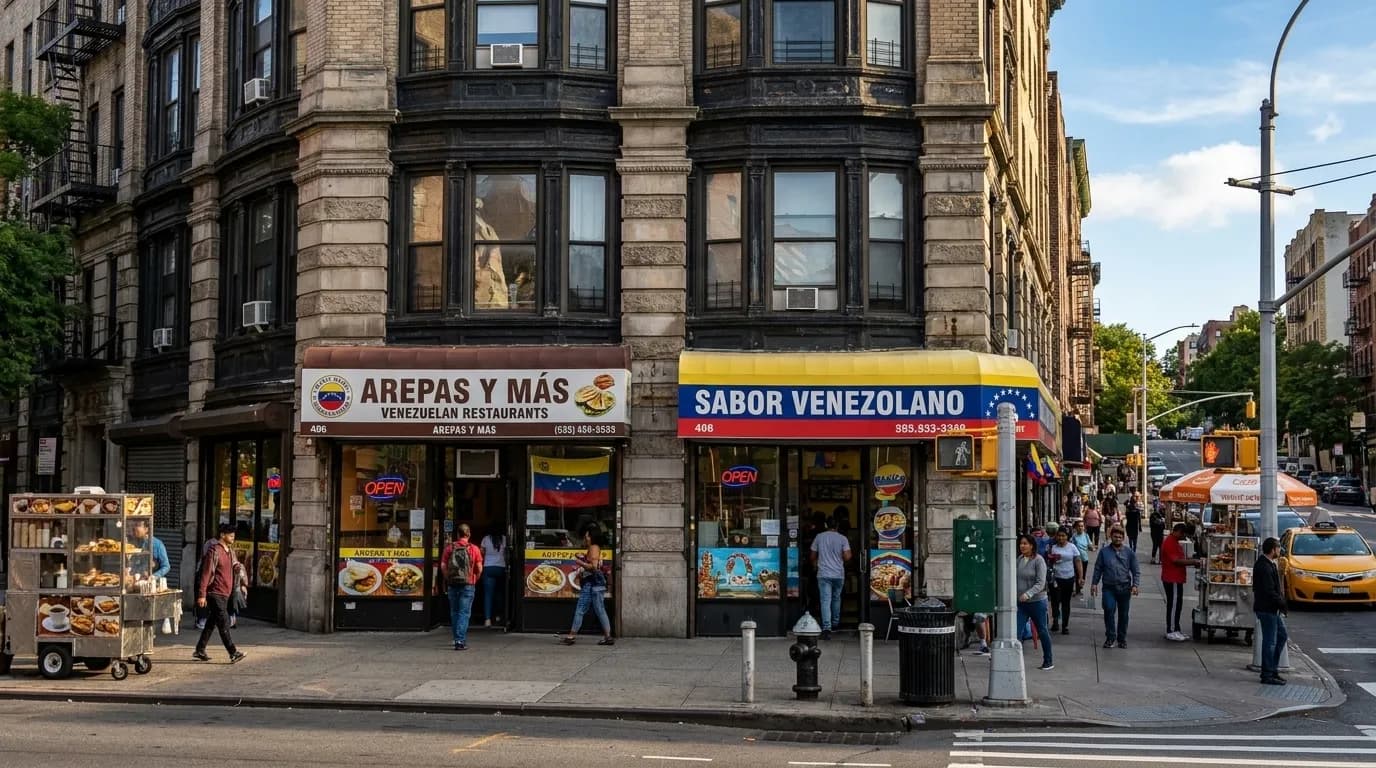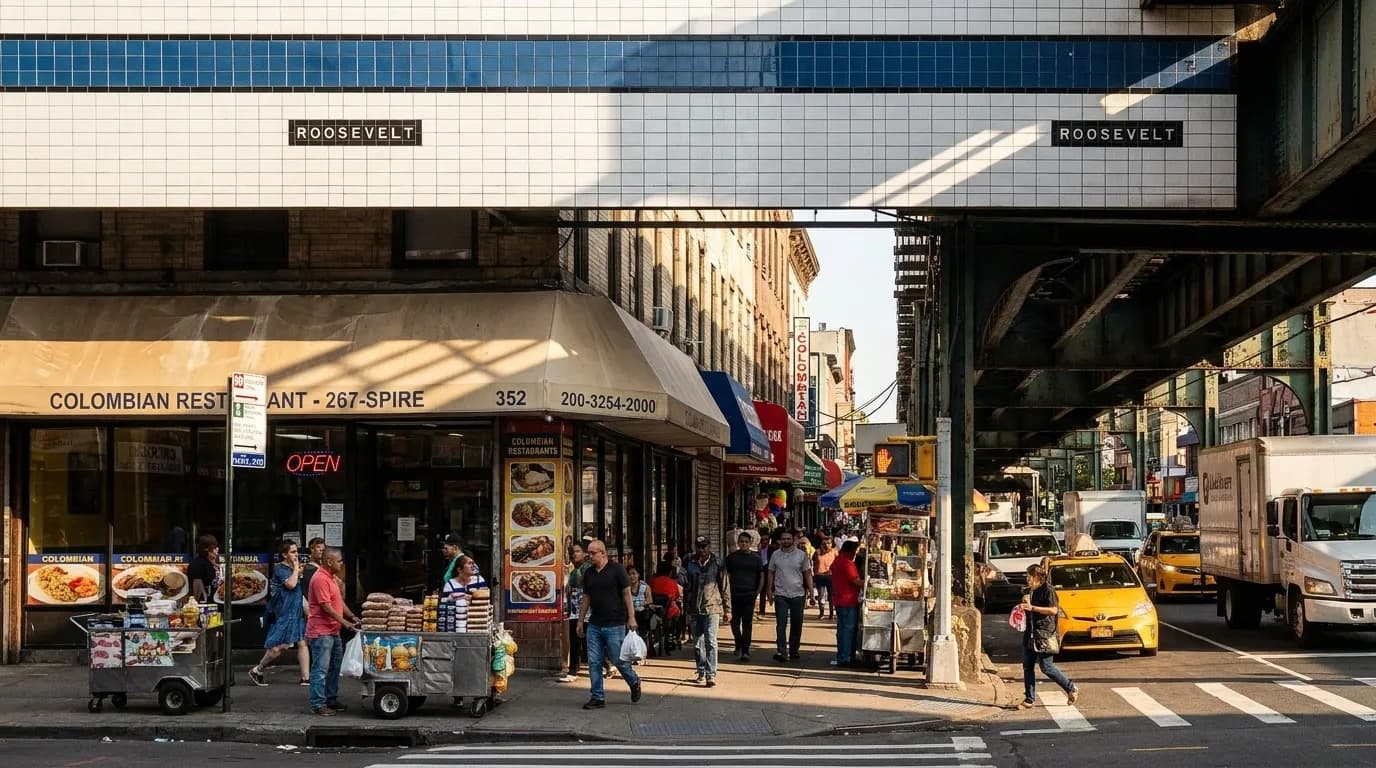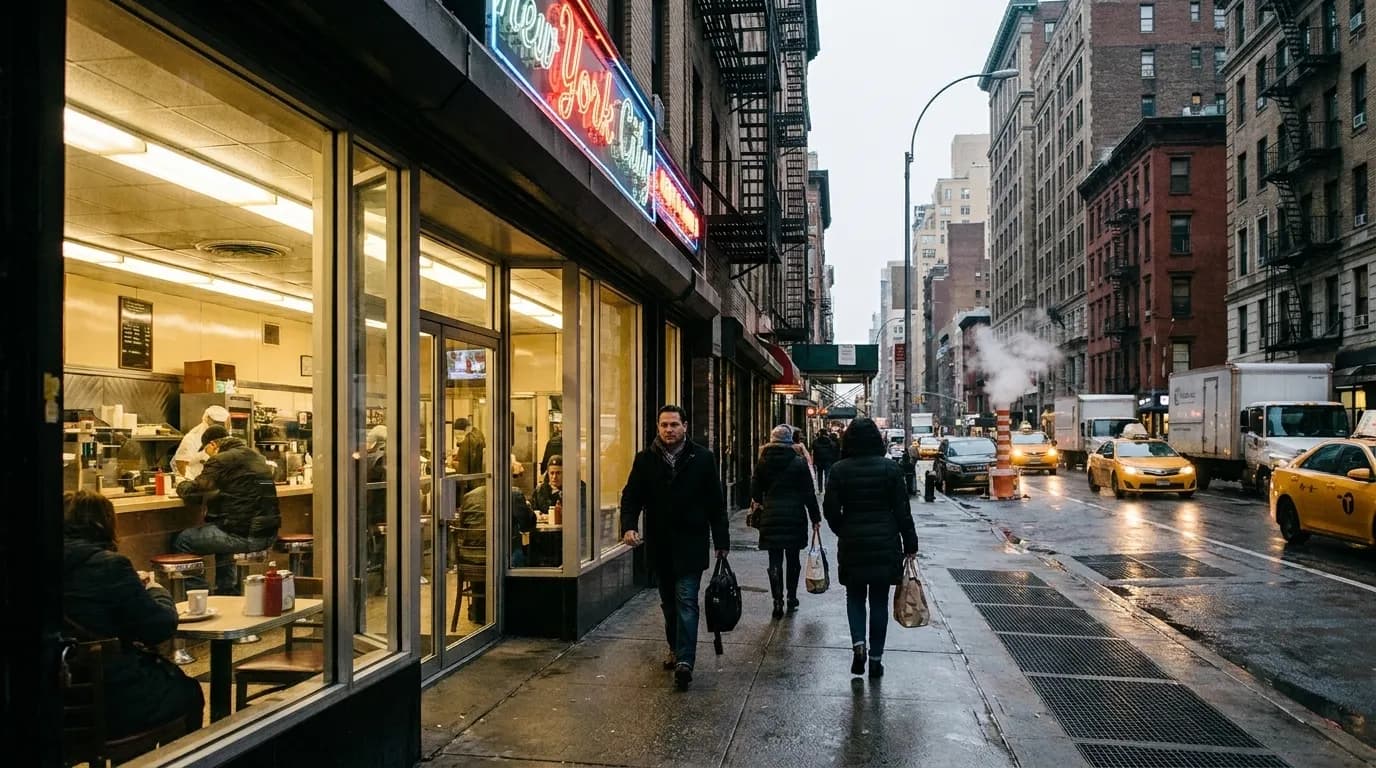
The best vaca frita in New York doesn't come with linen napkins or a wine list. It comes on a styrofoam plate at a lunch counter where the cook calls your number in Spanish and the guy next to you is reading Diario de Cuba over his cafecito. These are the spots where Cuban expats actually eat—places that've been frying shredded beef until it's lacy and crisp since before Nolita was called Nolita.
Karpo knows which counter has the crispiest vaca frita today and what else to order when you get there.

Vaca frita—literally 'fried cow'—is flank steak boiled until tender, shredded by hand, then pan-fried in its own fat with garlic, lime, and onions until the edges turn golden and crunchy. It's the dish that separates tourist traps from the real deal, because you can't fake the texture. Too dry and it's jerky; too wet and it's just shredded beef. The platters below get it right.
Margon: the Midtown time capsule
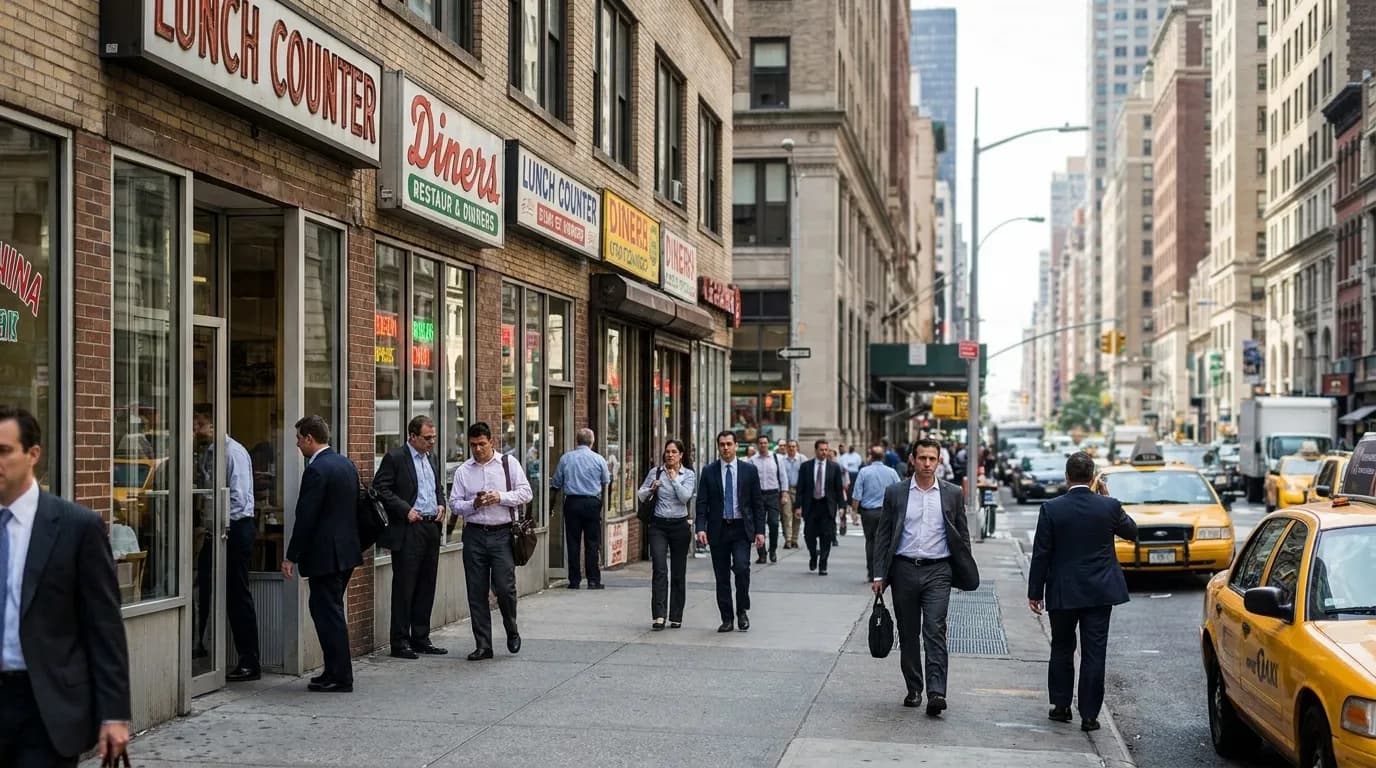
Margon sits on West 46th Street between Sixth and Seventh, a fluorescent-lit counter wedged into the ground floor of an office building. It's been here since 1984, serving construction workers, taxi drivers, and a cross-section of Midtown that you won't find at Le Bernardin two blocks south. The lunch rush starts at 11:30 and by noon there's a line to the door—mostly regulars who know to order in Spanish and grab their own soda from the cooler.
The vaca frita here comes as part of a combo platter, around twelve bucks, piled with yellow rice, black beans, and maduros. The beef is shredded finer than most spots, almost threadlike, with enough crispy bits that every forkful has texture. They don't skimp on the lime or the raw onions on top, which cut through the richness. Locals know to ask for extra tostones instead of maduros if you want something to scoop the beans with. The counter seating faces the griddle, so you can watch them work—pans clanging, steam rising, tickets clipped above the line.
Go before 1 p.m. or after 2 if you want a seat. The space holds maybe twenty people, and turnover is fast but not instant. Margon doesn't take cards for orders under fifteen dollars, so bring cash. The cafecito costs a dollar and comes in those tiny paper cups that you down standing up.
Guantanamera: Theater District with table service
Guantanamera, on Eighth Avenue between 52nd and 53rd, is the closest thing on this list to a sit-down restaurant. It's been around since 2003, designed to look like a Havana social club with exposed brick, vintage posters, and a long bar that pours decent mojitos. Pre-theater crowds pack it between 5 and 7, but the kitchen doesn't phone it in for tourists—plenty of Cuban families show up on weekends, which tells you what you need to know.
The vaca frita here is served on an actual plate, not styrofoam, and it's a slightly wetter preparation than Margon's—more onions, a little more lime juice pooling at the bottom. The shreds are thicker, with big crispy chunks that get caramelized edges. It comes with congri (rice cooked with black beans) instead of plain yellow rice, which adds a earthier flavor. The portion is generous, easily shareable if you're ordering a few things. The lechon asado is also worth getting, especially if you're coming with more than one person.
This is the spot if you want a full meal with a drink and don't want to eat standing up. Reservations help during theater hours, but weekday lunch is walk-in friendly. Expect to pay around twenty dollars for the vaca frita entree, closer to forty if you add an appetizer and a drink. The space gets loud when it's full, which it usually is.
Cafe Habana: the Nolita standard
Cafe Habana on Prince and Elizabeth has been a downtown fixture since 1998, back when this corner was more Puerto Rican than pram-pushing. It's tiny—maybe a dozen tables inside, a handful on the sidewalk—and the line for weekend brunch snakes down the block. But the vaca frita, often overlooked in favor of the grilled corn, is one of the best versions in the city.
Here the beef is shredded into wide ribbons and fried hard, so you get more crisp-to-tender ratio than anywhere else. The seasoning skews garlicky, with just enough citrus to brighten it without making it soupy. It's served with rice, beans, and plantains, but the real move is to order it as a filling in the pressed Cuban sandwich, which isn't on the regular menu but they'll make if you ask. The combination of vaca frita, pickles, mustard, and melted cheese on pressed bread is quietly one of the best sandwiches in Nolita.
Go on a weekday afternoon if you value your time. Weekend waits can hit an hour, and they don't take reservations. Cash only at the counter next door, Cafe Habana To Go, which has the same menu and no wait but nowhere to sit. The full-service side takes cards. Expect to spend around eighteen dollars for the vaca frita platter, a little more if you're drinking.
What makes vaca frita work
The difference between good and great vaca frita comes down to three things: the quality of the flank steak, how long it's boiled, and how hot the pan gets when it's fried. Underseasoned and it's bland; over-fried and it turns to dust. The best versions have a mix of textures—shreds that are crispy on the edges, tender in the middle, and saturated with lime and garlic without being wet. The onions should be raw and sliced thin, adding bite without overpowering the beef.
All three spots on this list nail that balance, but they do it differently. Margon's is the most traditional, a working-class staple that hasn't changed in decades. Guantanamera's is the most refined, good for anyone who wants Cuban food without the counter-service experience. Cafe Habana's is the crispiest, best if you prefer texture over tenderness. You can't go wrong with any of them, but if you only have time for one, Margon is the one locals would choose.
What else to order
At Margon, don't skip the pernil—roasted pork shoulder that's been marinating overnight and comes out falling apart. The ropa vieja is also solid, though vaca frita edges it out for texture. At Guantanamera, the tostones rellenos (fried green plantain cups stuffed with shrimp or ropa vieja) make a good starter, and the flan is custardy and not too sweet. At Cafe Habana, the Mexican grilled corn is famous for a reason, but the cubano sandwich and the shredded pork tacos are just as good and less hyped.
All three serve strong Cuban coffee—order it cortadito style if you want a little steamed milk to temper the espresso. Margon's is the cheapest and comes in the smallest cup; Cafe Habana's is the smoothest and served in a proper mug. Guantanamera does a solid cafecito but also has a full bar, so it's the only spot where you can pair your vaca frita with a mojito and not feel out of place.
Practical notes
Margon is cash-only for small orders and closes around 5 p.m. on weekdays; it's not open on weekends. Take the B, D, or F to 47–50 Streets–Rockefeller Center and walk west. Guantanamera is open daily for lunch and dinner, takes cards, and is a block from the 50th Street C/E stop. Cafe Habana takes cards inside but not at the to-go window; nearest subway is Broadway–Lafayette on the B, D, F, M. All three fill up fast at lunch, so aim for off-peak hours if you hate lines. Skip the pre-made steam-table stuff at any of these places—order the vaca frita fresh and wait the extra five minutes.
Tags: #vacafrita #cubanfood #nycfood #margon #guantanamera #cafehabana #lunchcounter #midtownlunch #nolita #theaterdistrictfood #cubansandwich #authenticcuban #hiddengems #nycclassics #counterservice
All trademarks are the property of their respective owners.
Ask Karpo first
Next time you're craving crispy shredded beef and yellow rice in New York, ask Karpo which counter has the shortest wait and what else to order when you get there. It'll tell you whether Margon still has pernil left, if Cafe Habana's line is around the block, or if Guantanamera has a table open before curtain. Better vaca frita, less wandering.