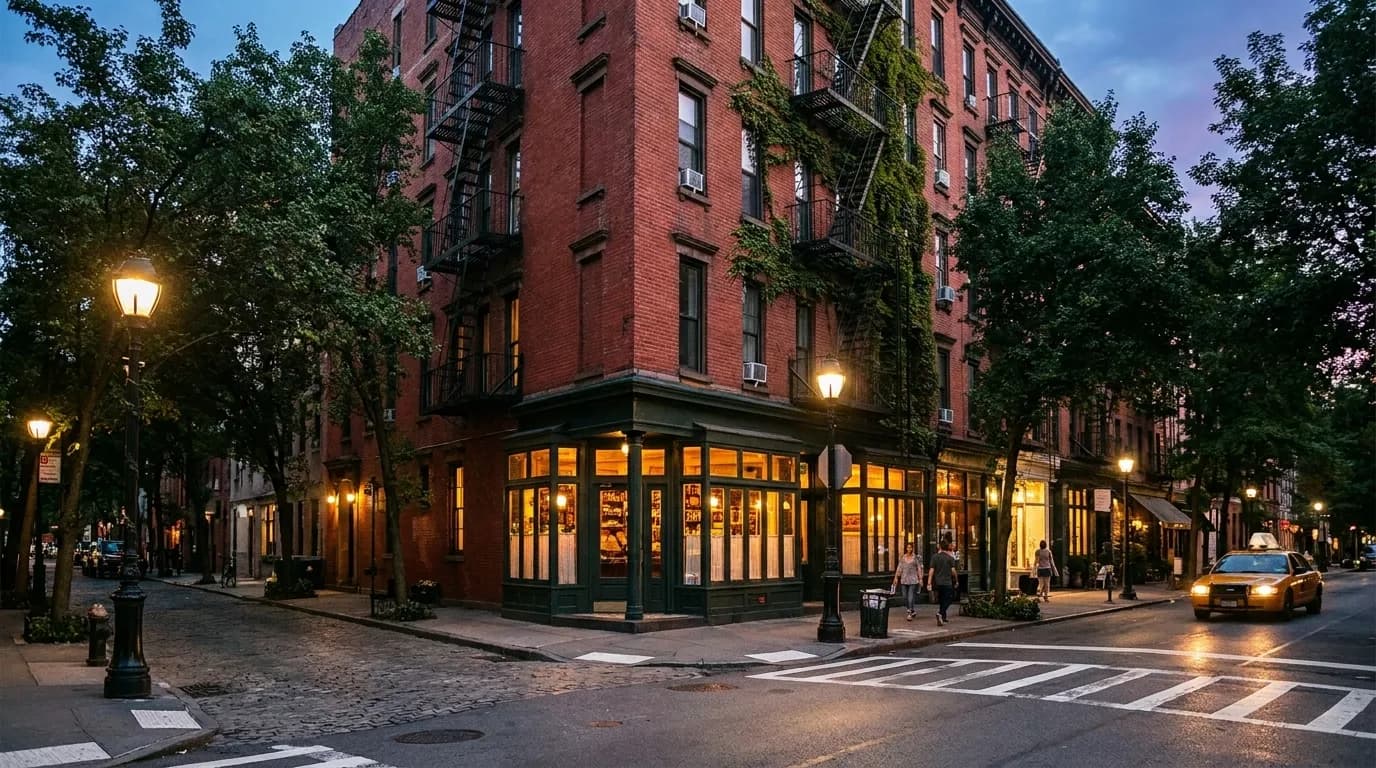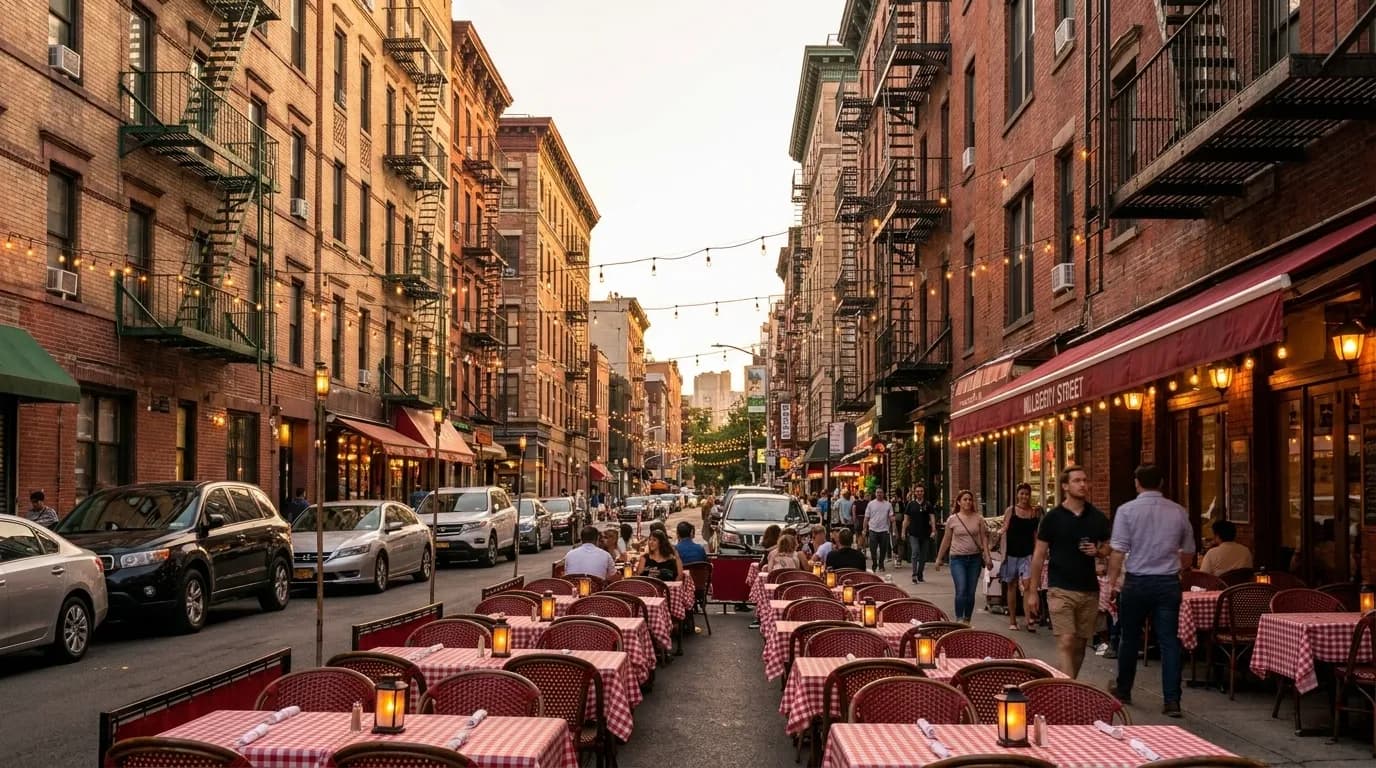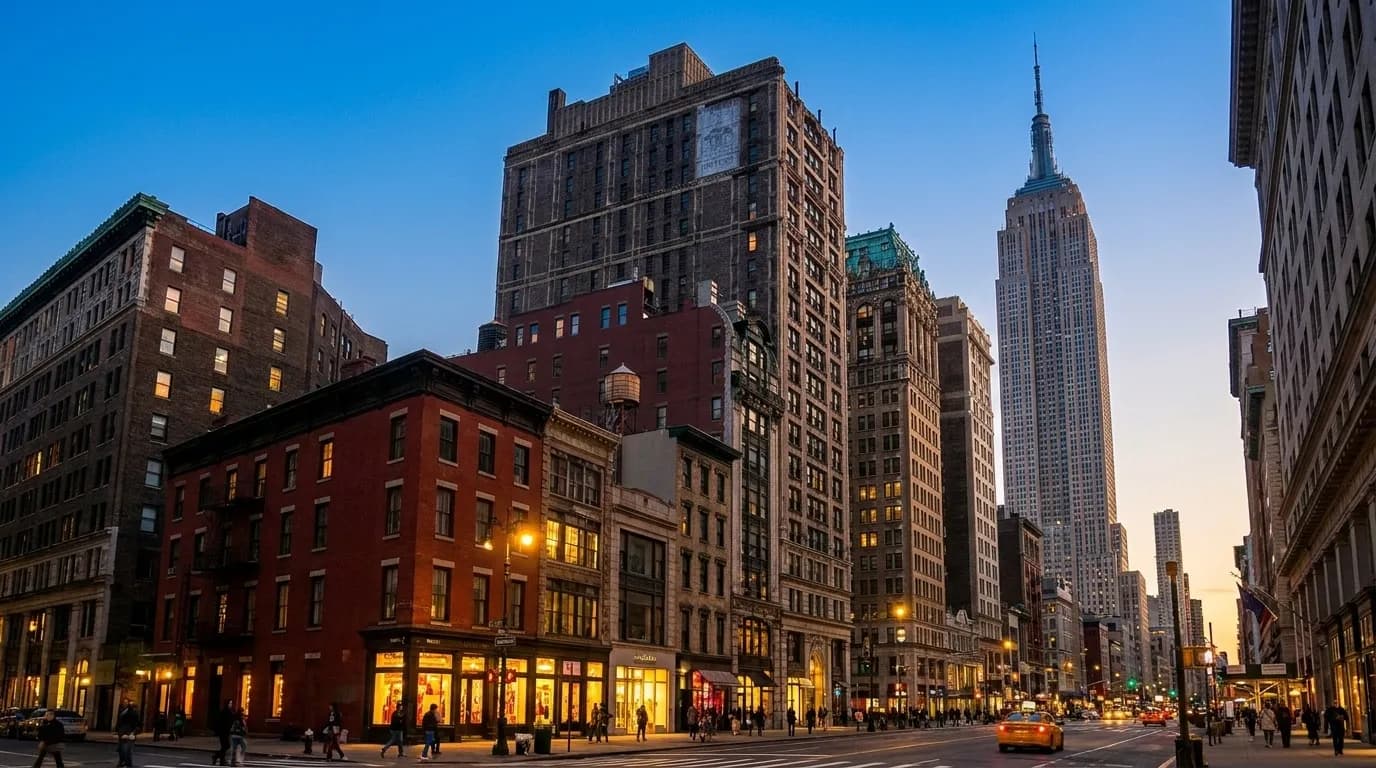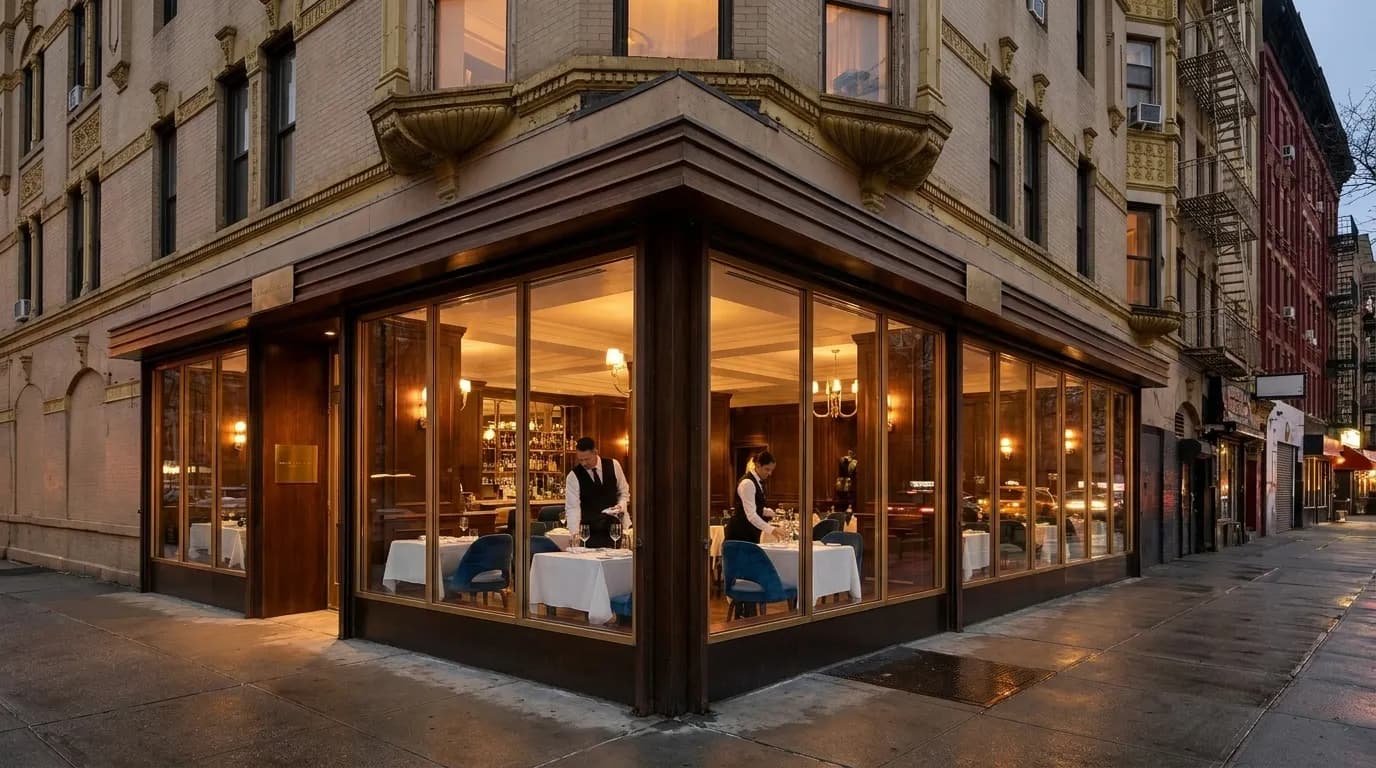
New York doesn't have a single food culture—it has dozens, layered across five boroughs and a century of immigration, ambition, and relentless evolution. The best restaurants here aren't always the most expensive or the hardest to book. They're the ones that do something so well, so consistently, that they become part of the city's identity. They're the places locals defend fiercely and visitors remember for years. These five restaurants represent different corners of that sprawling dining landscape, from white-tablecloth temples to century-old delis, and together they sketch a portrait of what makes eating in New York unlike anywhere else.
Karpo knows which of these restaurants has availability tonight, which ones take walk-ins after 9 PM, and where you should go based on what you're craving right now.

Le Bernardin: the seafood standard
Le Bernardin has held three Michelin stars for longer than most restaurants stay open. Chef Eric Ripert's Midtown flagship treats fish with a reverence that borders on spiritual—barely cooked, precisely seasoned, presented with the kind of quiet confidence that doesn't need to announce itself. The dining room on West 51st Street feels serene even when it's full, all soft grays and blond wood, the kind of space designed to let the food do the talking.
The tasting menu changes seasonally, but the philosophy doesn't: impeccable sourcing, French technique, nothing extraneous. The thinly pounded yellowfin tuna with foie gras and chive oil has been on the menu for decades because it's perfect. Reservations open exactly one month out and disappear within hours. Lunch runs around half the price of dinner and offers nearly the same experience. If you can only afford one splurge meal in New York, this is where your money learns what excellence tastes like.
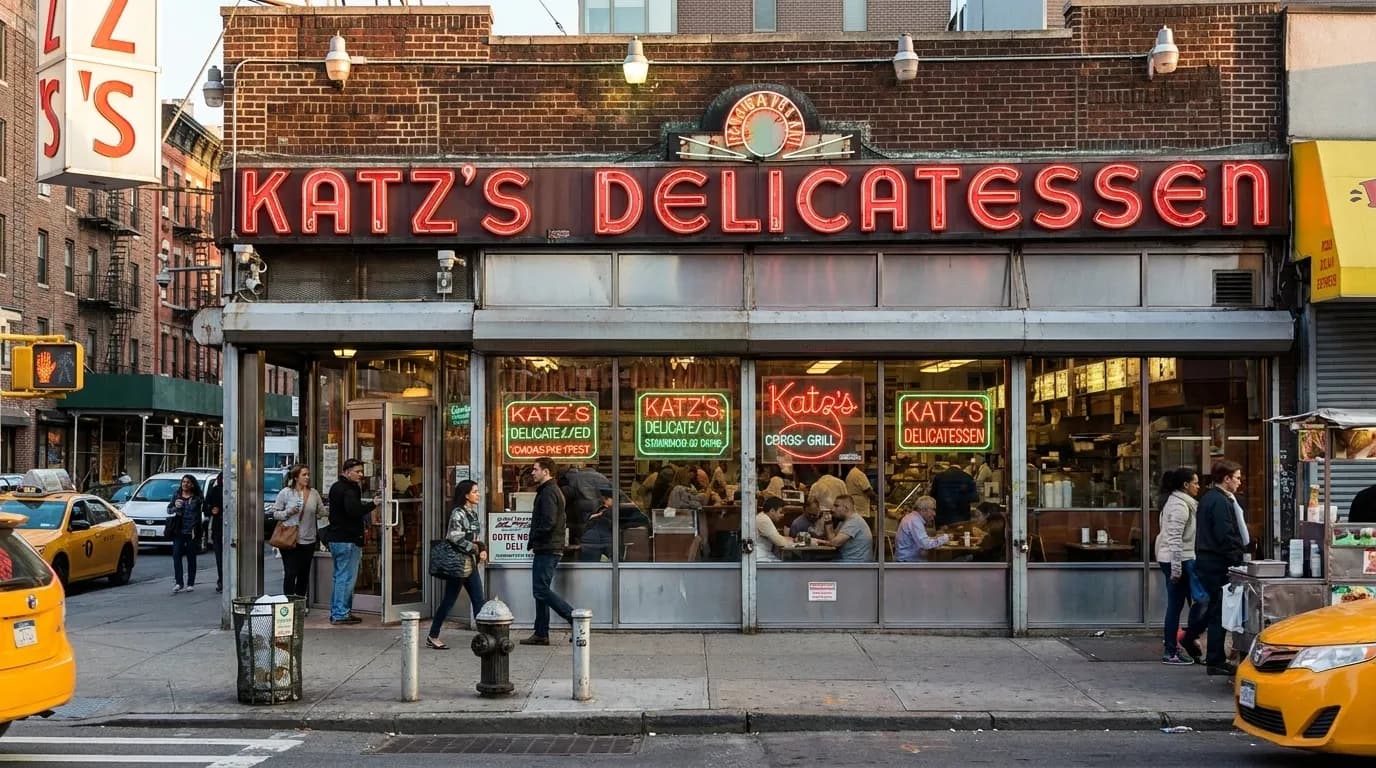
Katz's Delicatessen: pastrami that earned its legend
Katz's has been hand-cutting pastrami on the Lower East Side since 1888, long before the neighborhood became a destination for boutique hotels and craft cocktail bars. The system hasn't changed: you grab a ticket at the door, you tip the slicer a few dollars if you want generous samples while you wait, you guard that ticket like your life depends on it because losing it costs you fifty dollars. The pastrami sandwich arrives on rye with enough meat to feed two people, though you won't want to share.
Go on a weekday before noon or after 2 PM to avoid the worst of the crowds. The weekend brunch line stretches down Houston Street. Sit at one of the long communal tables under the jumble of hanging salami and celebrity photos. Order the pastrami hot, mustard only—no one here respects mayo. The hot dogs are excellent too, snappy-skinned and char-grilled. Katz's ships nationwide now, but the sandwiches taste different when you eat them in that loud, fluorescent-lit room that smells like brine and a hundred years of tradition.
Tatiana by Kwame Onwuachi: Lincoln Center's bold arrival
Kwame Onwuachi brought Afro-Caribbean fine dining to Lincoln Center in 2022, and Tatiana immediately became one of the city's most exciting reservations. The space overlooks the plaza's fountains, but the real drama happens on the plate: jollof rice with squid and Scotch bonnet, oxtail marmalade, curried goat patties that arrive billowing steam. Onwuachi's cooking pulls from his Nigerian and Jamaican roots, his time in the Bronx, his fine-dining training, and his refusal to choose just one identity.
The pre-theater menu offers the best value if you're catching a show, but don't rush—this food deserves your full attention. The weeknight bar scene draws a sharp-dressed crowd that knows how to appreciate both the conch fritters and the wine list. Reservations are tough but not impossible if you check Resy obsessively starting at midnight two weeks out. Onwuachi is rewriting what American fine dining looks like, and he's doing it in a room that used to serve uninspired Continental fare to operagoers who knew better.
Via Carota: the West Village's platonic ideal
Via Carota doesn't take reservations for parties under six, which means the small bar and handful of sidewalk tables fill every night with people willing to wait an hour for cacio e pepe and a glass of Italian red. Chefs Jody Williams and Rita Sodi opened this Grove Street corner spot in 2014, and it instantly felt like it had been there forever—whitewashed brick, mismatched vintage chairs, handwritten menus, the kind of effortless charm that's actually the result of obsessive attention to detail.
Everything here is vegetable-forward without being vegetarian: the insalata verde, a tangle of herbs and greens so good it's become a New York food cliché; the roasted carrots with yogurt and pistachios; the fritto misto that arrives golden and greaseless. Arrive right when they open at 5 PM for the shortest wait, or come after 10 PM when the bar loosens up. Skip the prime weekend dinner hours unless you enjoy standing on cobblestones for ninety minutes. The pasta is made daily, the portions are sized for sharing, and the whole experience feels like dinner at the home of friends with better taste than you.
Peter Luger: the steakhouse all others chase
Peter Luger has been serving porterhouse for two under the Williamsburg Bridge since 1887, and if you suggest they add something trendy to the menu, the waiters—who've worked here for decades and accept only cash or the house charge card—will laugh you out the door. You order the steak for however many people you have. It arrives pre-sliced, sizzling in butter, charred black on the outside and blood-rare within. You eat it with the sliced tomato and onion salad, the German fried potatoes, the harsh lighting, and the certain knowledge that this is the standard against which every other steakhouse in America measures itself.
Reservations are essential and open exactly one month ahead—call at noon when they unlock, or suffer. Lunch is marginally easier to book and runs about thirty percent cheaper. The burger at lunch is one of the city's best-kept secrets: all the trim from those dry-aged porterhouses, ground fresh daily, served with minimal ceremony. Bring cash or get the house account in advance; they really don't take cards, and the ATM inside has a punishing fee. Peter Luger isn't subtle, isn't modern, isn't interested in your dietary restrictions. It does one thing perfectly, and that's been enough for more than a century.
Practical notes
Le Bernardin books through OpenTable one month out; set an alarm. Katz's is walk-in only, cash and cards both work. Tatiana reservations open two weeks ahead on Resy at midnight. Via Carota is walk-in for small parties; patience is mandatory. Peter Luger requires phone reservations exactly 30 days ahead at noon; bring cash or arrange a house account beforehand. Most of these spots are accessible by subway: Le Bernardin is near Rockefeller Center on the B/D/F/M, Katz's is at 2nd Avenue F stop, Tatiana sits above the 66th Street 1 train, Via Carota is a short walk from West 4th on nearly every line, and Peter Luger is ten minutes from the Marcy Avenue J/M/Z. Weekend waits run longer everywhere except the places that take reservations.
Tags: #nycrestaurants #bestrestaurantsnearme #lebemardin #katzsdeli #tatiananyc #viacarota #peterluger #nycfood #finediningnyc #michelinstarnyc #newyorkeats #wheretoeatnyc #nycfoodie #steakhousenyc #westvillagedining
All trademarks are the property of their respective owners.
Ask Karpo first
New York has thousands of restaurants worth your time, and the right one depends on what you're craving, where you are, and what's actually available tonight. Karpo cuts through the noise and tells you where to go now—not based on algorithms or paid placements, but on what's genuinely good and actually bookable. Text Karpo when you're hungry, and it'll point you toward the meal you'll remember.