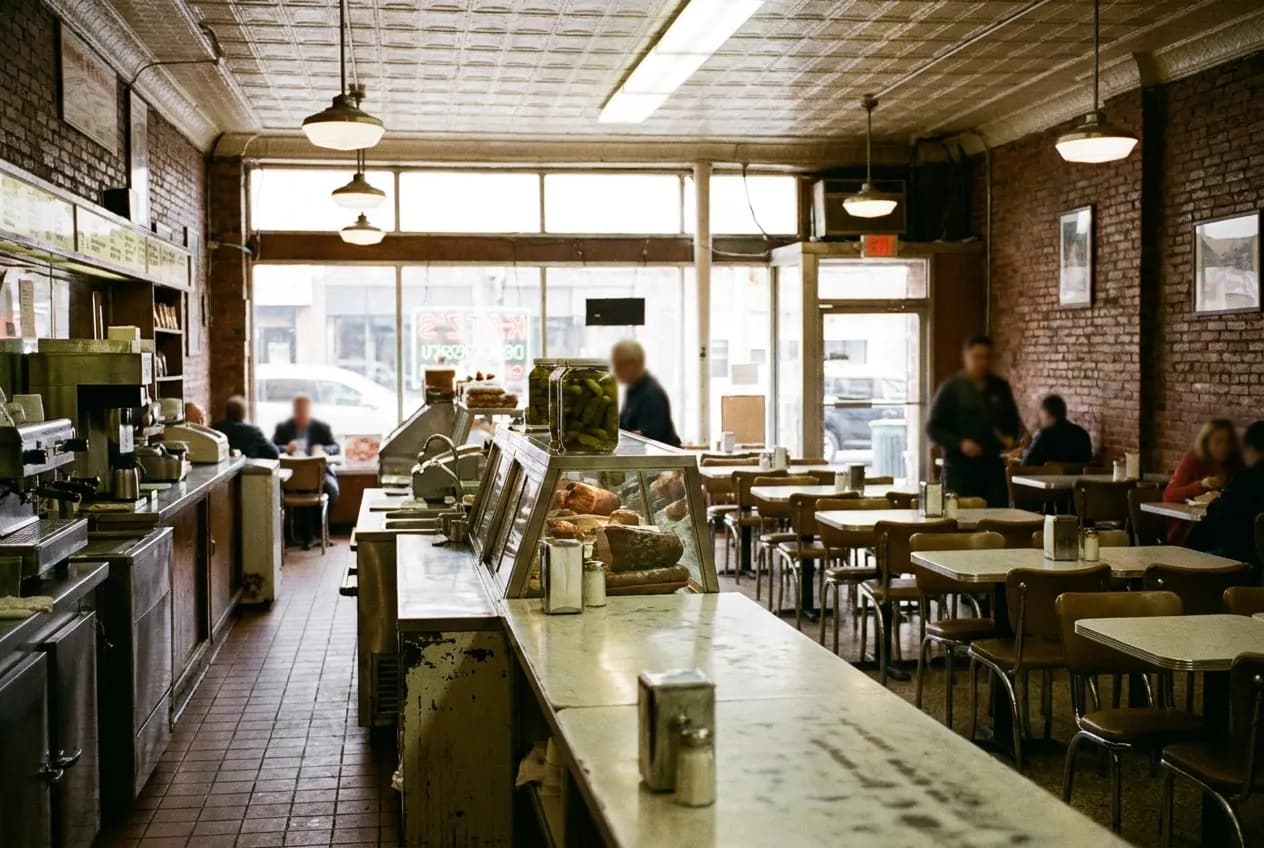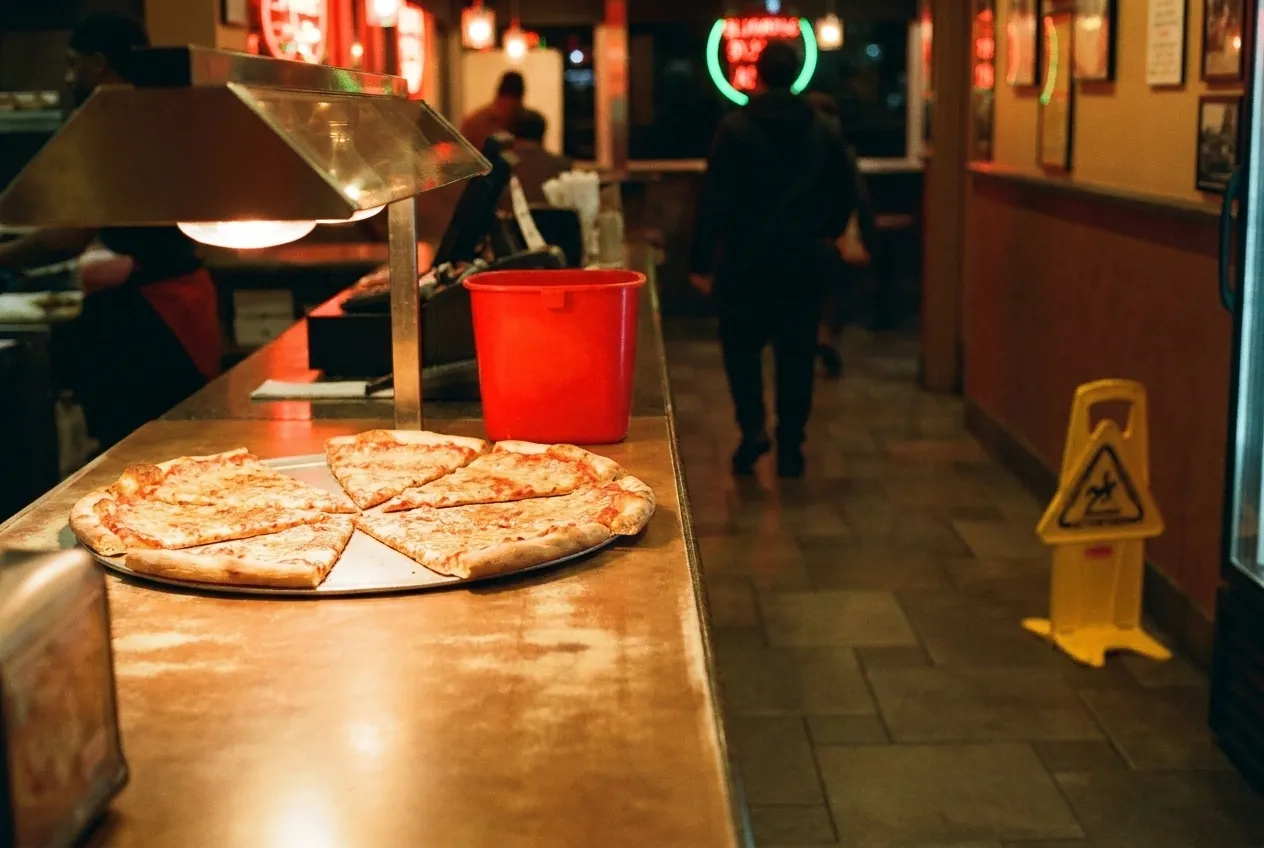
Almost every ranked list of New York pizza makes the same category error: it puts a two-dollar corner slice, a coal-oven whole pie from 1905, a Neapolitan margherita and a Sicilian square on one leaderboard and picks a winner. Those are four different foods with four different criteria. A slice shop that would lose to any of them on a scored list can still be the best thing you eat this week, because you were not buying dinner, you were buying a slice at eleven at night.
The right pizza depends on the format, the hour and how far you are willing to walk. Ask Karpo which of these is nearest to you and whether it is a slice house or a whole-pie house.
Format one: the corner slice
This is the New York institution — a wide, thin, foldable slice sold by the wedge from a counter, reheated to order. It is the only pizza format on this list designed to be eaten standing up and finished in under four minutes. The dollar slice, which sustained a generation of late nights, has been eroded by flour, cheese and rent costs, and the honest situation now is that the sub-two-dollar slice has largely disappeared while a very good slice sits meaningfully above that.
The thing that changed is not really the price, it is what the price signals. When a slice cost a dollar, cheapness was the point and quality was a bonus. In the current bracket the slice shops that survived on price alone are struggling and the ones that survived on quality are doing better than ever, which means the average slice in New York is now better than it was ten years ago even though it feels worse.
Format two: the coal oven, which is a different animal
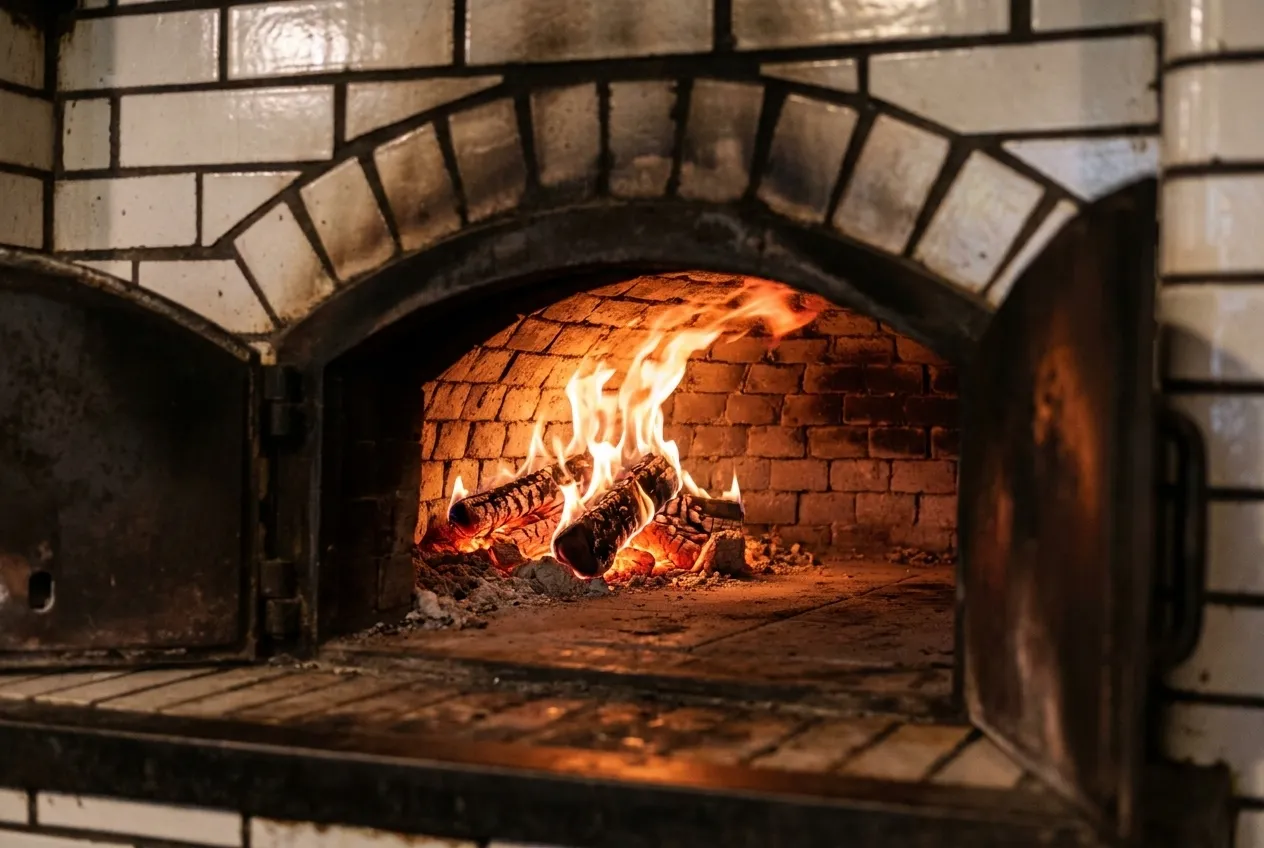
A handful of New York pizzerias still run coal-fired brick ovens, most of them dating to the early twentieth century, and their permits are effectively grandfathered — the city does not issue new ones. Coal burns hotter and drier than gas or wood, which produces a char on the underside and a crust that is crisp rather than pillowy. These places sell whole pies only, they usually do not do slices, and several are cash-preferred out of sheer institutional inertia.
The important consequence is logistical rather than culinary: you cannot use a coal-oven pizzeria as a quick stop. It is a sit-down meal, there is often a wait, and turning up alone at 11pm expecting a slice is a category error. Plan it as dinner.
Format three: Neapolitan, and the puddle question
Neapolitan pizza is cooked very fast in a very hot wood oven, producing a soft, blistered, deliberately floppy centre. The single most common complaint about it from people expecting New York pizza — that the middle is wet and will not hold — is not a flaw. It is the specification. If you want to fold it and walk with it, you have ordered the wrong format, and no amount of quality will fix that mismatch.
The relevant judgement for Neapolitan is the leopard-spotting on the cornicione, whether the base has structure under the softness, and whether the tomato tastes like tomato rather than cooked-down sauce. Those are the criteria. Foldability is not among them.
Format four: Sicilian and the grandma square
The square formats are the most under-rated pizza in New York and the ones that reward a slice buyer most reliably. A proper Sicilian is thick, airy and focaccia-adjacent; a grandma slice is thinner, denser and usually cooked in an oiled pan so the base fries slightly. Both are frequently better than the round slice at the same counter, and both sit under the counter light losing less quality per hour than a round slice does — which matters if you are buying at four in the afternoon.
The corner-shop tell is that a place with an obviously good square is a place that cares. Squares take more labour, more proofing time and more oven space. Nobody makes a good one by accident.
The four things to check before you pay
Look at the undercarriage. Lift the slice and check the base — you want visible browning and some structural rigidity for the first inch behind the tip. A pale, uniform underside means an underworked oven, and no amount of topping fixes it. Second, ask for it reheated and watch what they reheat it in; a deck oven reheat is a different food from a conveyor or a microwave, and any counter that pushes back on a reheat is telling you something about turnover.
Third, look at the cheese-to-sauce ratio at the tip rather than the crust. Slice shops that are cutting costs cut sauce first, because cheese is what customers see. Fourth, watch the turnover — a pie coming out of the oven while you queue is worth more than any rating, because slice quality decays measurably within about twenty minutes under a warmer.
Where the formats actually live
Broadly: the corner slice is everywhere, and is at its densest and most competitive in Manhattan below 96th Street, in central Brooklyn and along the main avenues in Queens. Coal ovens cluster in a few very old locations in lower Manhattan, Brooklyn and the Bronx. Neapolitan skews toward the newer restaurant districts. And the best squares are disproportionately in outer-borough neighbourhood shops with no online presence to speak of, which is exactly why they stay good.
The one-line version: decide the format before you decide the place. Everything else follows from that, and almost every disappointing New York pizza is a format mismatch rather than a bad pizza.
Tags: #BestPizzaNYC #PizzaNearMe #NYCSlice #CoalOvenPizza #GrandmaSlice #SicilianPizza #NeapolitanPizza #NewYorkPizza #DollarSlice #NYCFood #Restaurants #NewYorkCity #SliceShop #PizzaGuide
All trademarks are the property of their respective owners.
Ask Karpo first
Want a slice in the next ten minutes or a whole pie in the next hour? Ask Karpo which format is nearest to you, which counters are still turning pies over at this hour, and which one to walk to if the first has a queue out the door.