Arroz negro stains your teeth, your napkin, and sometimes the collar of anyone leaning too close across the table. It's the most theatrical thing you can order in a Spanish restaurant, and New York has two places that do it well enough to justify the cleanup. One is a buzzy paella bar where the pans come out smoking. The other is a 150-year-old Spanish society that still feels like a members-only secret, even though anyone can walk in off 14th Street.
Karpo tracks which Spanish spots are pouring the good stuff tonight and which paella pans just came off the fire. Ask when the kitchen is least slammed.

Socarrat Paella Bar: the Chelsea anchor
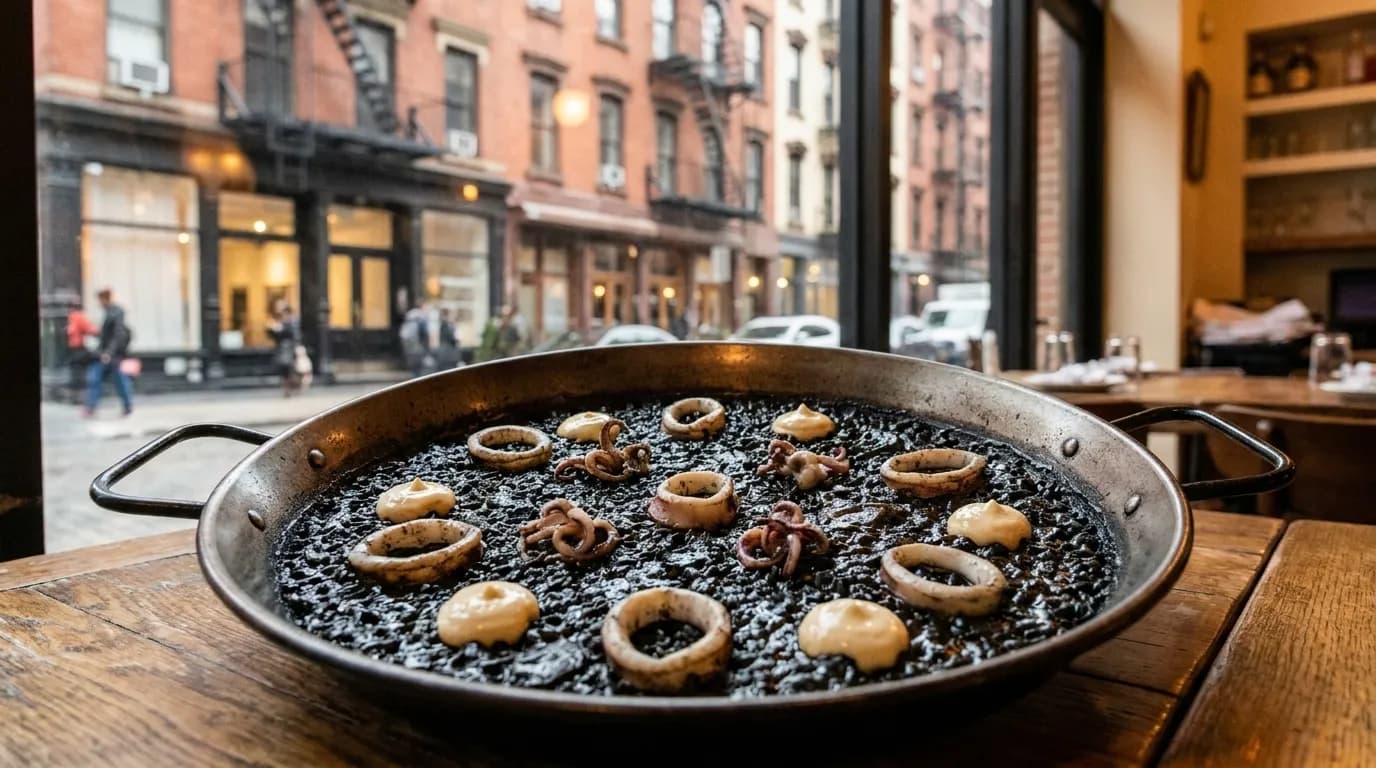
Socarrat has three locations now, but the original Chelsea spot on 19th Street between Sixth and Seventh still pulls the crowd. The dining room is narrow, loud, and runs hot from the open kitchen. You'll smell the saffron and garlic from the sidewalk. The arroz negro here is built on bomba rice cooked in squid ink and fish stock, studded with calamari, and topped with a swoosh of aioli that cuts through the brine. It's rich without being heavy, and the socarrat—the crispy bottom layer that gives the restaurant its name—is consistent. Order it for two and add the pulpo a la gallega if you want something to start that won't fill you up before the rice arrives.
The kitchen runs paella service in waves, so if you arrive at 7:30 on a weekend, expect to wait twenty minutes for your pan. Weekday lunches move faster, and the $25 lunch special sometimes includes a smaller arroz negro option alongside the valenciana and mixta. Sit at the bar if you're solo or want to watch the cooks work the pans. The wine list leans Iberian—Albariño, Godello, Verdejo—and the house vermouth is poured over a fat orange slice, which is the correct way to do it.
La Nacional: the 1868 clubhouse most people walk past
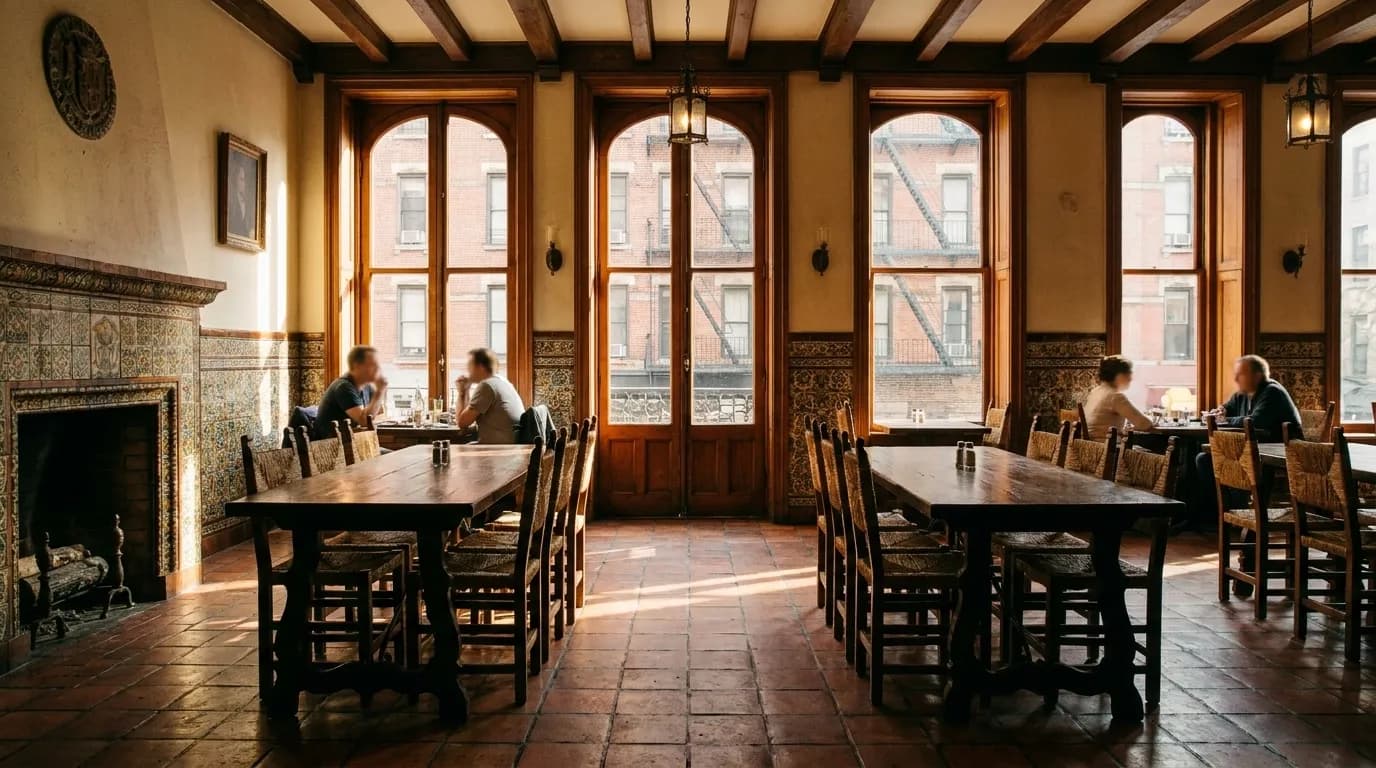
La Nacional sits on 14th Street between Sixth and Seventh, behind a brick facade you'd never guess hides a Spanish social club founded before the Brooklyn Bridge went up. The Benevolent Society bought the building in 1868 to serve Spanish immigrants, and it still functions as a membership organization, though the ground-floor restaurant is open to anyone. Walk through the bar—wood-paneled, tin ceiling, a portrait of King Felipe VI near the doorway—and into the dining room, which feels like someone's formal living room in Madrid circa 1975. Tablecloths, white walls, a small balcony overlooking the room.
The arroz negro here is less about theater and more about getting the fundamentals right. The rice is looser than Socarrat's, almost soupy in the best way, and the squid is tender enough that you don't need a knife. It comes with alioli on the side and enough for two. The menu doesn't change much—this is the kind of place where regulars order the same thing every visit. Gambas al ajillo, croquetas de jamón, tortilla española. If you're here on a Sunday afternoon, you'll see multi-generational Spanish families taking up the big tables near the back. Go early or late; 7 p.m. on Friday means a wait.
What makes good arroz negro worth the mess
Squid ink should taste like the ocean but not like you're drinking seawater. The rice should hold its shape but release starch into the edges, creating a glossy, almost creamy rim around each grain. The seafood should be cooked *in* the rice, not perched on top as an afterthought. Both Socarrat and La Nacional get this right. The difference is mostly atmospheric. Socarrat feels like a date or a Tuesday you're trying to salvage. La Nacional feels like you've been invited to someone's private club, because you basically have.
At Socarrat, you'll taste more saffron and see more smoke. At La Nacional, the cooking skews traditional and a little quieter. If you want the full New York paella-bar experience—energy, noise, a waiter who'll talk you through the menu in rapid English-Spanish—go to Socarrat. If you want to feel like you've stumbled into a piece of the city's immigrant infrastructure that's still standing, go to La Nacional. Both will stain your napkin black.
The rest of the menu matters too
Neither place is a one-trick operation. Socarrat does a solid rossejat, which is paella made with toasted noodles instead of rice, and the pimientos de padrón come blistered and salty. La Nacional's croquetas are some of the best in the city—crisp shell, molten béchamel, real jamón inside. Both kitchens understand that Spanish food is about restraint and timing, not throwing saffron at everything and hoping it lands. If you're going with a group, order a mix. The arroz negro should anchor the meal, but the gambas, the pulpo, the tortilla—they're all part of the same conversation.
At Socarrat, the flan is solid, though not revelatory. At La Nacional, skip dessert and order another glass of Rioja. The wine list there is longer than you'd expect and includes some older reservas that don't show up on many New York menus. If you're drinking Spanish wine, you should be drinking it at a place where the servers know what they're pouring.
Practical notes
Socarrat's Chelsea location is a five-minute walk from the F/M at 23rd or the 1 at 18th. La Nacional is right off the L/F/M/1/2/3 at 14th Street-Union Square. Both take reservations, and you should make one if you're going on a weekend. Socarrat turns tables faster; La Nacional wants you to linger. Budget around $40–$50 per person at Socarrat, a little less at La Nacional. Paella for two at either spot runs $35–$45. Bring cash for La Nacional—they take cards, but the old-school vibe suggests they'd prefer you didn't. If you're doing both in one night, space them a week apart. Your dentist will thank you.
Tags: #arrozonegro #paellanyc #spanishfoodnyc #socarratpaellabar #lanacional #chelseaeats #14thstreet #nycspanish #squidinkrice #nycpaella #spanishrestaurants #madridinnewyork #nycfoodie #authentictapas #spanishsociety
Please drink responsibly. Must be of legal drinking age.
All trademarks are the property of their respective owners.
Ask Karpo first
Karpo knows which paella pan just got pulled at Socarrat and whether La Nacional's upstairs dining room is open tonight. Before you commit to squid-ink teeth, ask which spot has the shorter wait and what else is firing in the kitchen. New York's Spanish food scene runs deeper than two addresses, and Karpo tracks the whole map.