 Chelsea Consignment Shop Crawl Planner for Your First Studio
Hidden Gems & Odd Finds
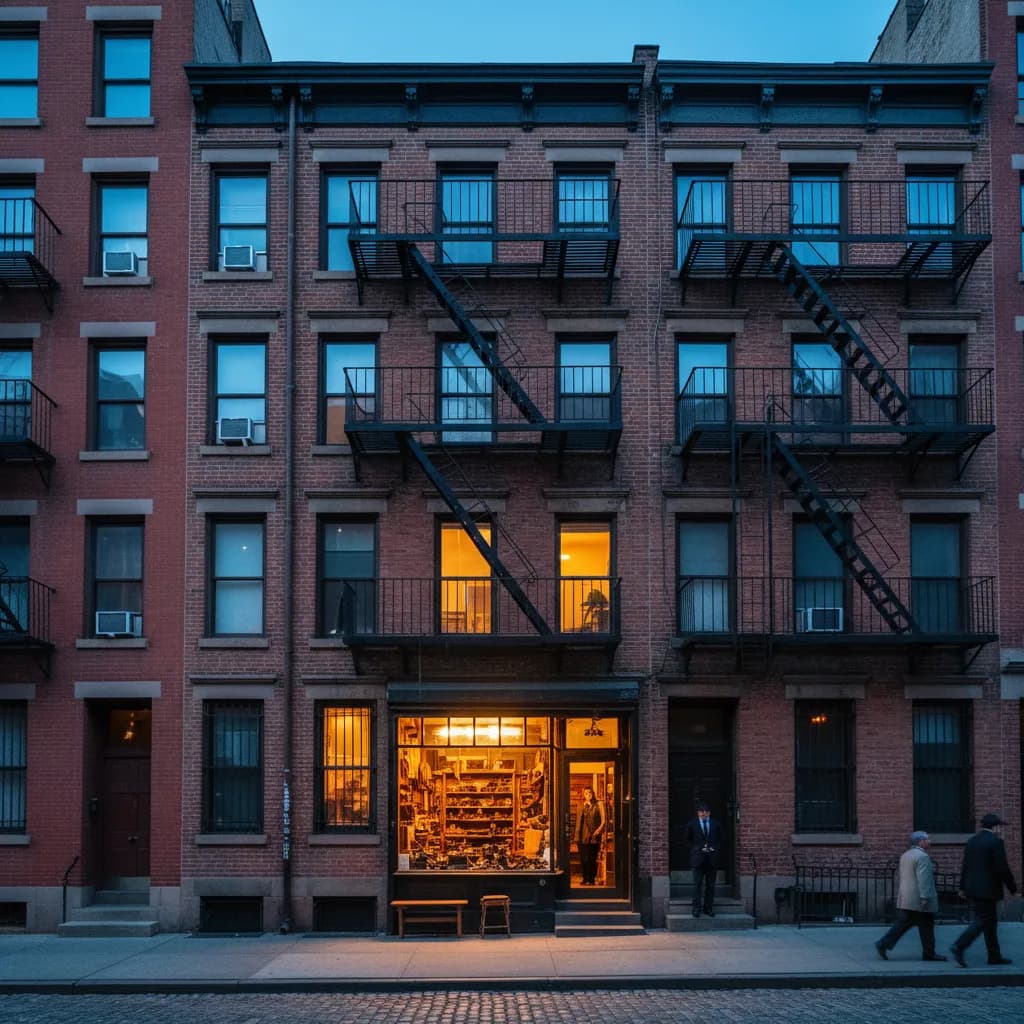
Lower East Side Bespoke Shoemaker: Orchard Walk
Chart a Lower East Side bespoke shoemaker route along Orchard and Ludlow streets in Karpo APP to organize loafer last notes, hide checks, and craft stops.
Generations of small-lot leather cutters, dry-goods merchants, and garment tailors have shaped the narrow brick blocks of the Lower East Side since 1863, leaving behind compact ground-floor storefronts that still reward hands-on craft discovery. Along Orchard Street, Ludlow Street, and Allen Street south of Delancey Street, narrow tenement bays with pressed-tin ceilings and deep rear workrooms host independent makers who approach custom footwear with an emphasis on expressive pattern cutting and unpretentious daily wearability. Before descending into the Delancey Street–Essex Street subway complex, you can use the Karpo APP to organize a block-by-block walking sequence, record your personal loafer or derby fit priorities, and group nearby haberdasheries and quiet cafes along Broome Street.
How Historic Orchard Street Storefronts Shape Independent Shoemaking
Storefront architecture along Orchard Street and Ludlow Street brings the workbench directly to the front window, dissolving the barrier between client consultation and active leathercraft. In contrast to sprawling multi-room showrooms uptown, Lower East Side studios often position the cutting board, skiving knife rack, and wooden last shelves within arm's reach of the fitting chair. That close physical proximity lets visitors smell vegetable tanning extracts, inspect raw linen thread twists, and watch how a maker pares down a leather heel stack while discussing design proportions.
The neighborhood's historical identity as a center for independent tailoring and leather goods also encourages creative freedom in upper pattern design. Walkers exploring the blocks between Canal Street, Hester Street, and Grand Street frequently seek out bespoke footwear that pairs effortlessly with pleated wool trousers, chore coats, and heavyweight knitwear. Discussing those wardrobe pairings in person helps a cordwainer suggest balanced welt widths, subtle brogue perforations, or contrast apron stitching that feels rooted in downtown New York style. Bringing a favorite pair of tailored trousers or denim to the consultation makes it easy to test how the shoe's quarter height interacts with your hem break.
Engineering Custom Loafers Without Heel Slip Or Instep Pinch
Few footwear challenges test a bespoke lastmaker's precision more thoroughly than a lace-free penny loafer, tassel slip-on, or Venetian loafer. Because a slip-on lacks eyelets and laces to cinch the quarters closed, the wooden last must hold the foot solely through anatomical tension between the back curve of the heel cup and the high point of the instep saddle. When an off-the-rack loafer accommodates a wide forefoot, the heel almost inevitably gaps during the push-off phase of walking; conversely, sizing down crushes the toes against the front of the toe box.
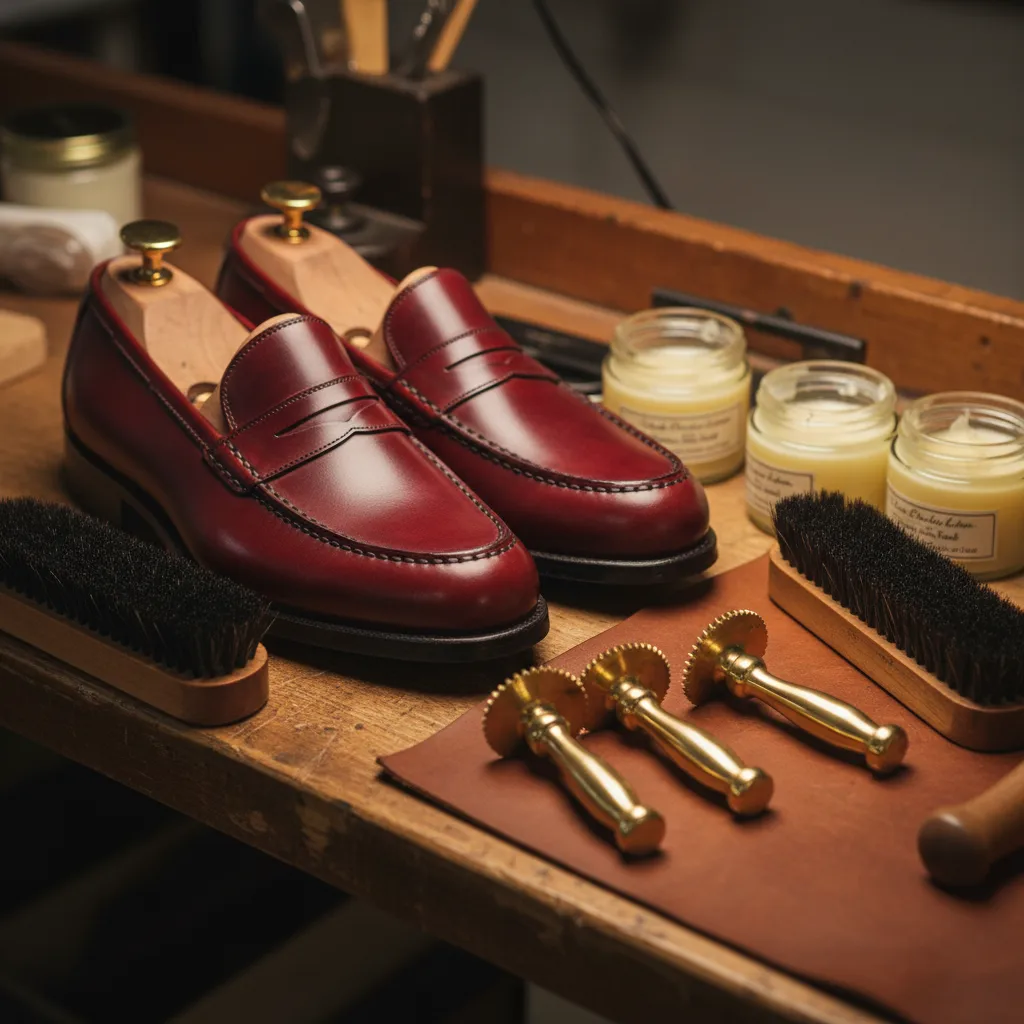
Carving a dedicated loafer last solves this geometry problem by sculpting a narrow, inward-curving heel seat paired with an asymmetric forepart tailored to your exact metatarsal spread. During your measurement session along the Orchard Street corridor, tell the maker whether you intend to wear the finished loafers barefoot in warm weather, with ultra-thin lisle dress socks, or with medium-gauge cashmere rib hosiery. Logging those seasonal sock choices inside the Karpo APP ensures your trial fitting accounts for every millimeter of internal volume. A maker can also adjust the height of the penny strap or tongue vamp so it sits comfortably below a high tarsal ridge without biting into the tendon during brisk walks.
Hand-Sewn Boar-Bristle Aprons, Split-Toe Seams, And Unlined Supple Uppers
Examining the upper stitching on a bespoke loafer or Norwegian split-toe derby reveals hours of specialized needlework that machines cannot replicate. To create a raised lake or pie-crust apron seam along the vamp, the shoemaker pierces only halfway through the thickness of the calfskin using a curved awl and draws waxed linen threads taught from opposing sides—often using traditional boar bristles rather than steel needles to avoid tearing the fine leather fibers. As the leather ages and flexes across the ball of the foot, that hand-sewn ridge gains rich dimensional relief.
Many Lower East Side footwear enthusiasts also explore unlined or French-bound construction for three-season city comfort. By omitting the secondary calfskin quarter lining across the vamp and selecting a slightly plumper full-grain suede or deerskin-lined saddle, the shoe breathes remarkably well during humid Manhattan summers while molding to the foot within days. Structural reinforcement remains concentrated solely in the vegetable-tanned leather toe puff and heel counter, preserving a crisp silhouette without sacrificing slipper-like flexibility.
Sequencing A Sunday Or Weekday Pedestrian Walk From Delancey To Seward Park
Navigating the Lower East Side on foot becomes especially rewarding when you align your walk with the neighborhood's pedestrian-friendly street rhythms. Arriving via the F, J, M, or Z trains at Delancey Street–Essex Street or taking the B and D lines to Grand Street drops you steps away from the heart of Orchard Street between Broome Street and Rivington Street. While Sunday afternoons feature car-free open streets along segments of Orchard Street, weekday mornings between ten and noon provide the quietest environment for focused studio conversations.
After reviewing leather swatches and last profiles along Orchard Street and Ludlow Street, extend your walk south toward Hester Street and the shaded benches of Seward Park—the oldest municipal playground in the United States—or stroll along the wide median of Allen Street. Using the Karpo APP to keep your route notes, leather shade comparisons, and nearby bakery or espresso stops organized in one list makes it easy to pace a two-hour neighborhood exploration without backtracking across busy Houston Street crossings.
Edge Fudging, Patina Burnishing, And Care For Hand-Stitched Slip-Ons
Subtle finishing touches along the welt and sole edge give bespoke downtown footwear its unmistakable visual signature. Look for wheel fudging—crisp, rhythmic impressions pressed into the top surface of the leather welt with a heated brass wheel that frame each hand-pulled outsole stitch. On museum calf or crust leather uppers, makers hand-rub alternating layers of dye and carnauba wax across the toe cap and heel counter, creating a luminous antique depth that shifts from dark mahogany to warm amber under direct sunlight.
Caring for bespoke loafers and split-toe derbies requires extra attention to topline tension and outsole moisture management. Always use a smooth horn or brass shoehorn when stepping into custom slip-ons so the stiff leather heel counter never buckles inward under downward heel pressure. Insert lasted wooden shoe trees immediately after removing the shoes while the leather remains warm from walking along Grand Street or Bowery, allowing the vamp creases to flatten naturally before applying neutral cream polish and a brisk goat-hair buff.
Ask Karpo for more information.
Keep reading
- Chelsea Consignment Shop Crawl Planner for Your First Studio
 East Village Consignment Shop Crawl Planner: Leather Jackets
 Harlem Consignment Shop Crawl Planner for a Jazz Night Look