 Chelsea Consignment Shop Crawl Planner for Your First Studio
Hidden Gems & Odd Finds
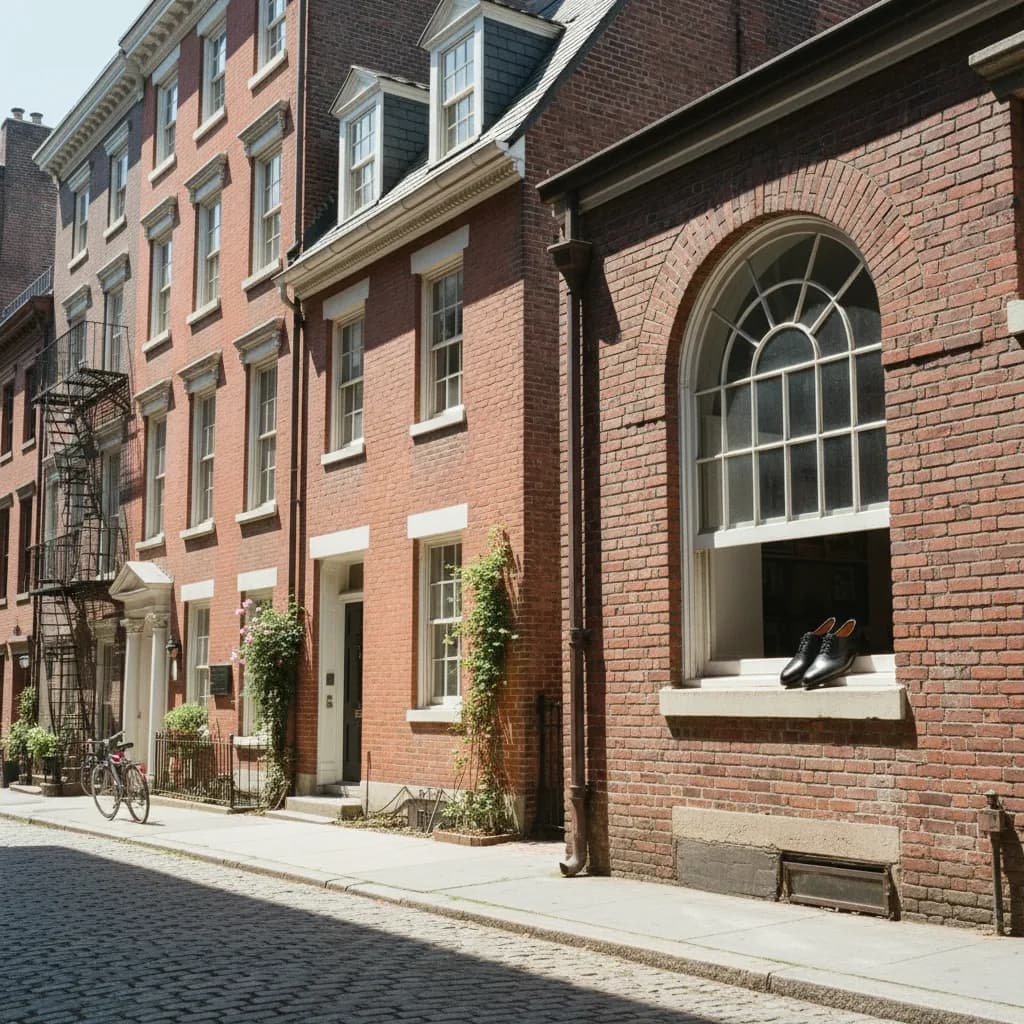
Greenwich Village Bespoke Shoemaker: Square Mews Walks
Organize a Greenwich Village bespoke shoemaker route near Washington Square in Karpo APP to review wholecut oxford lasts, evening calfskin, and mews blocks.
Framed by Greek Revival townhouses and the marble Washington Square Arch erected in 1895, the historic blocks of central Greenwich Village offer one of Manhattan's most composed settings for exploring formal bespoke shoemaking. Just steps from Washington Square North, private cobbled lanes such as Washington Mews and MacDougal Alley preserve nineteenth-century carriage houses that originally served neighborhood estates and later became quiet artists' studios and craft ateliers. By planning your walking loop inside the Karpo APP before exiting the West 4th Street–Washington Square subway station, you can organize formal dress-shoe specification notes, compare classic oxford silhouettes, and connect quiet mews corridors between Fifth Avenue and University Place.
Carriage-House Mews And Formal Cordwaining Around Washington Square
Architecture around Washington Square North and Waverly Place sets a refined tone that naturally complements classical dress shoemaking. Behind the continuous red-brick rowhouse facades known as The Row, gated cobblestone mews and quiet side streets off University Place insulate interior workrooms from cross-town traffic noise. In these calm, library-like rooms, clients and pattern cutters can focus entirely on subtle geometric decisions—such as the curve of a swan-neck facing, the placement of a medallion punch, or the precise angle of a heel breast—without urban interruption. Natural northern light reflecting off pale limestone lintels and broad park pathways makes it easy to evaluate deep espresso, burgundy, and jet-black box calf skins before a pattern is cut.
Walking the perimeter of Washington Square Park also highlights why traditional formal footwear benefits from anatomical customization. Standard ready-to-wear dress oxfords often force wearers to choose between a sleek, narrow toe box that pinches the forefoot and a boxy round last that looks heavy beneath worsted evening trousers. A bespoke maker working from a custom-carved wood last reconciles those goals by fitting the ball, instep, and heel snugly while extending an elegant, sculptural toe extension slightly beyond the toes.
Wholecut Oxfords, Adelaide Quarters, And Seamless Blocking Mastery
Among formal commissions discussed in Greenwich Village ateliers, the seamless wholecut oxford stands as the ultimate test of upper clicking and hand-lasting skill. Unlike a cap-toe or wingtip oxford assembled from multiple panels that can be stretched independently, a wholecut is clicked from a single flawless expanse of baby box calf with only one discreet vertical seam at the back of the heel—or none at all in a true seamless build. Because no stitching lines interrupt the vamp, the skin must be completely free of growth marks, vein traces, or neck wrinkles.
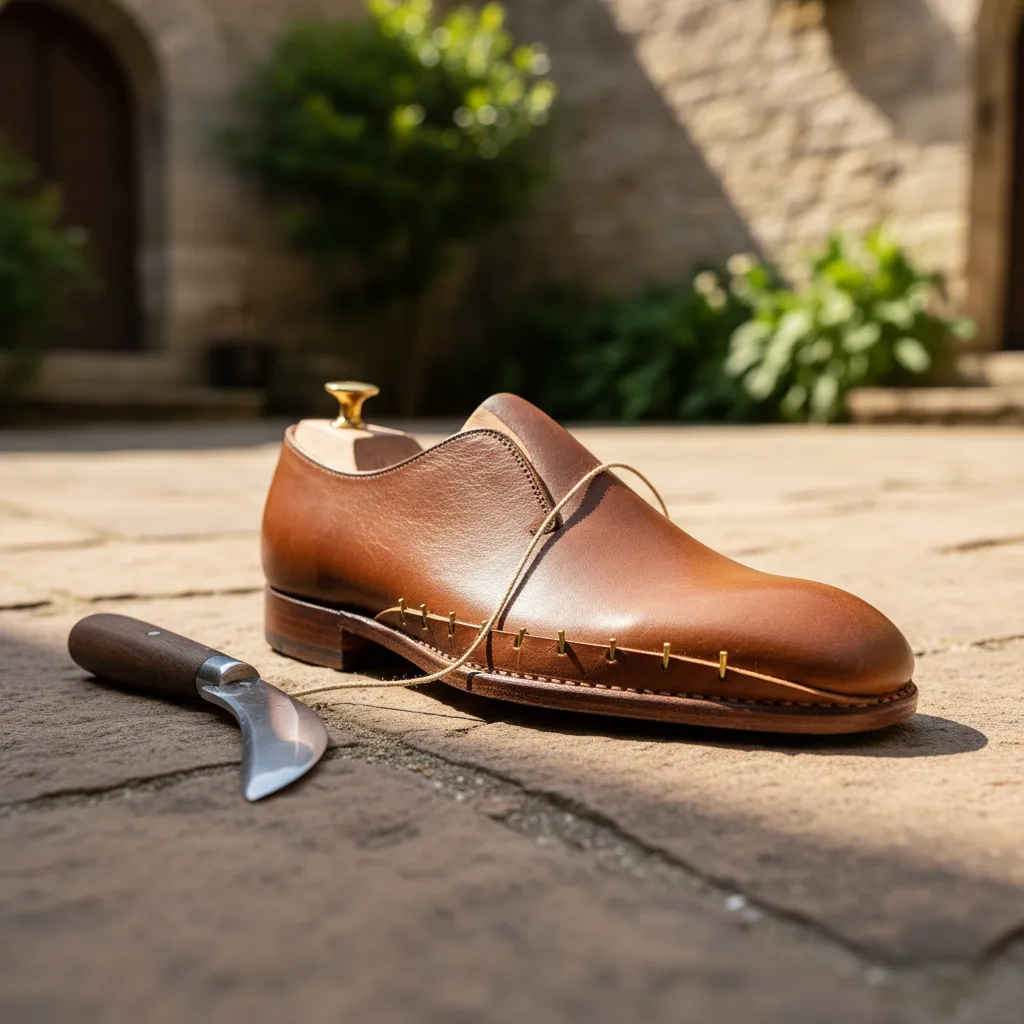
Blocking that single sheet of moistened calfskin over a three-dimensional wooden last requires patient, incremental tensioning with hand pincers over several days so the leather fibers stretch evenly around the instep and arch. For clients who appreciate subtle linear structure on formal daywear shoes, an Adelaide oxford—featuring a U-shaped throat panel bordered by fine gimping and micro-brogue perforations—provides crisp visual framing around the laces. Saving your thoughts on wholecut versus Adelaide patterns, eyelet counts, and toe-cap proportions in the Karpo APP keeps your commission notes structured.
Fiddleback Waists, Blind Welts, And Formal Outsole Proportion
Turning a bespoke dress oxford over in your hands reveals the sculptural underside craftsmanship that distinguishes high cordwaining. On formal commissions, makers often shape a fiddleback or beveled waist—tapering the middle section of the outsole so narrowly between the heel and forepart that the welt stitches disappear from side view in a blind-welt construction. Beneath the arch, a pronounced central ridge rises like the back of a violin, pared by hand with curved shoemaker knives and scraped smooth with broken glass before being dyed and burnished with heated irons.
Heel construction on formal Greenwich Village dress shoes receives equal architectural care. Each lift of dense vegetable-tanned bend leather is stacked, pegged with brass or wooden pins, and tapered slightly inward toward the top-lift to create a pitched profile that visually lengthens the shoe. When discussing your formal wardrobe needs, let the maker know whether the shoes will tread primarily on carpeted lecture halls, polished parquet rooms around Fifth Avenue, or wet city stone so the sole thickness and recessed metal toe taps can be specified appropriately.
Designing A Midday Walking Circuit From West 4th Street To University Place
Coordinating your Greenwich Village visit around midday light and transit access ensures a smooth, unhurried experience across the neighborhood. Arriving at the West 4th Street–Washington Square station on the A, C, E, B, D, F, or M subway lines or taking the N and R trains to 8th Street–New York University places you within a five-minute walk of MacDougal Street, Waverly Place, and Washington Square North. Late mornings on weekdays allow you to stroll through the park's central fountain plaza when sunlight illuminates the surrounding brick facades.
Between studio stops and leather swatch reviews, take ten minutes to walk the quiet length of Washington Mews between Fifth Avenue and University Place or pause beside the historic iron gates of MacDougal Alley. Keeping your walking sequence, architectural stops, and nearby espresso bars or rare bookshops along University Place and Greenwich Avenue organized in the Karpo APP turns a focused footwear trip into a restorative cultural afternoon across lower Fifth Avenue.
Mirror-Shine Bulling, Box Calf Hydration, And Evening Dress Care
Maintaining the deep, glass-like finish of black or dark espresso box calf oxfords relies on proper layering of nourishing cream and hard carnauba wax. Soft cream polish rich in cedarwood oil or beeswax should be massaged into the flexing zones of the vamp where the foot bends, keeping the fibers supple without cracking. Hard solvent wax belongs strictly on the rigid, non-flexing areas supported by the internal leather toe puff and heel counter, where thin coats of wax and single droplets of cold water can be buffed with a chamois cloth into a high-gloss mirror shine.
After an evening event or a full day of meetings around Washington Square, give your formal oxfords disciplined post-wear recovery before storing them in cotton flannel dust bags. Slip bespoke hollowed wood trees into the uppers immediately to hold the waist arch taut while perspiration evaporates from the vegetable-tanned lining. If a sudden rain shower catches you walking toward the subway along Waverly Place, wipe the upper dry with a soft linen cloth and rest the shoes away from direct heat before re-polishing the sole edges and toe cap.
Ask Karpo for more information.
Keep reading
- Chelsea Consignment Shop Crawl Planner for Your First Studio
 East Village Consignment Shop Crawl Planner: Leather Jackets
 Harlem Consignment Shop Crawl Planner for a Jazz Night Look