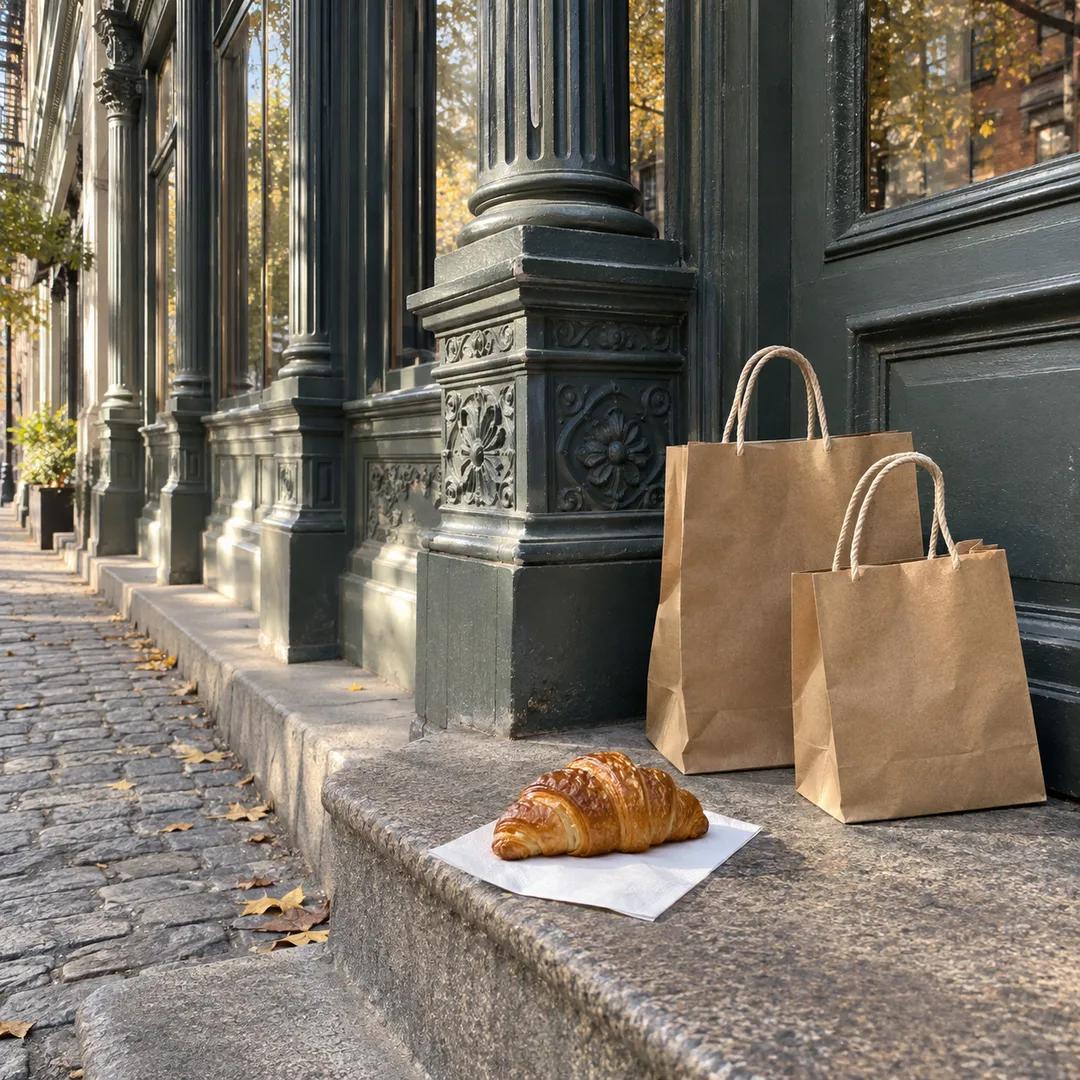
 SoHo Croissant Bakery Crawl Planner Between Shopping Stops
Coffee & Dessert
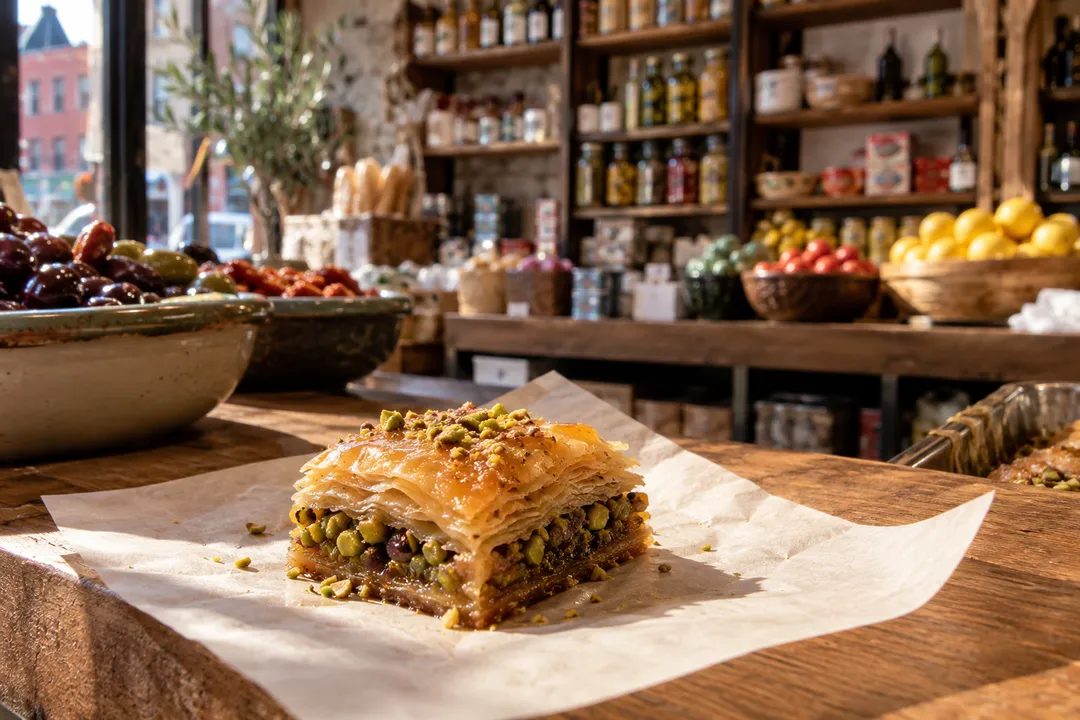
Persepolis Baklava: Persian Pantry Break on Second Avenue
Persepolis on Second Avenue is a Persian market and café where baklava fits naturally into a grocery browse, coffee break, or Upper East Side walk.
Persepolis is the kind of Upper East Side stop that rewards curiosity more than a strict meal plan. At 1589 Second Avenue, the Persian market and café puts baklava in a setting full of pantry goods, prepared foods, and the small discoveries that make a neighborhood grocery memorable. You can come for a sweet, but you should leave time to browse. The pastry makes sense here because it sits between grocery and café culture: a piece for now, a box for home, or a reason to pause after picking up ingredients. The visit feels less like a dessert pilgrimage and more like finding a good edible detail inside an everyday errand. Persepolis has served the Upper East Side since at least 2010, a longevity that fits the market's neighborhood feel and its role as a dependable pantry stop.
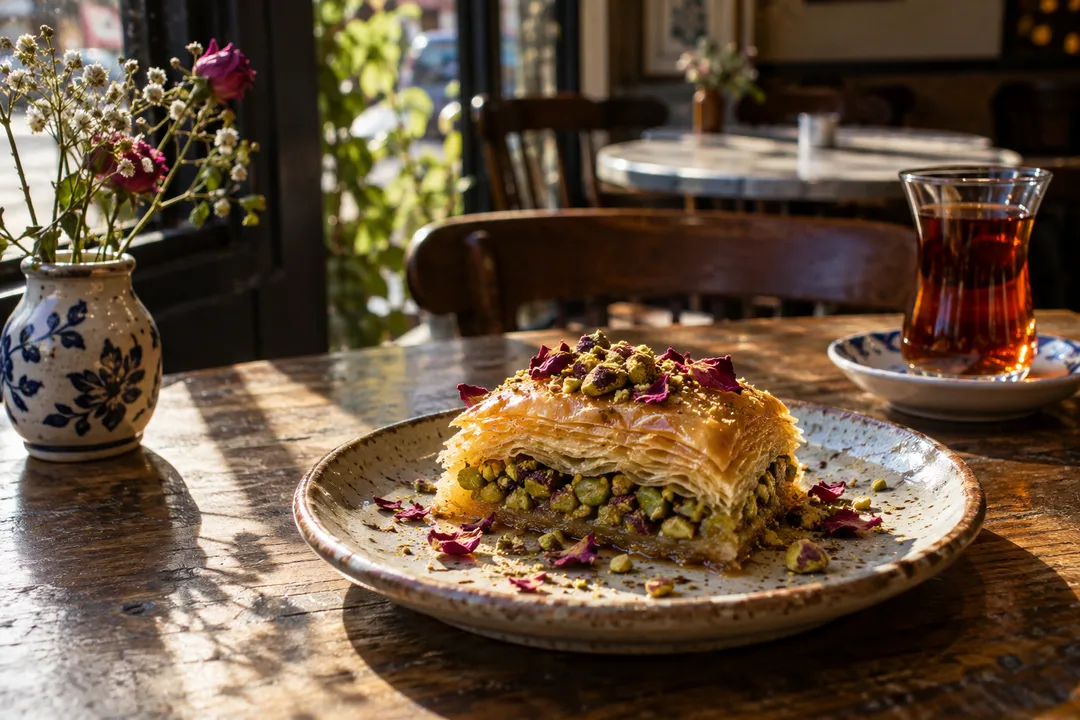
Baklava Inside a Persian Market
The first decision is whether you are eating immediately or carrying the pastry home. For the counter, choose a piece that looks crisp and compact, then pair it with coffee or tea if available. For takeout, buy enough variety to make the box useful: pistachio for aromatic freshness, walnut for a toastier profile, and any smaller specialty shape that catches your eye. The market environment encourages improvisation. You may arrive intending to buy one dessert and leave with pantry staples, olives, cheese, or a prepared dish. That is not a failure of discipline; it is the correct Persepolis experience.
Choose for Now or Take Home
Baklava is especially good at a market because it can be evaluated without ceremony. Look at the phyllo, check that the nuts are visible, and avoid pieces that look submerged in syrup. The best bite has stages: crisp top, buttery layers, nuts, then a measured sweetness. If the pastry is being shared, cut it into small pieces rather than asking one large square to carry the whole conversation. A hot drink makes the finish cleaner, while fruit or yogurt from home can turn a purchased piece into a more complete dessert. The point is not to make the pastry fancy. It is to let the ingredients stay legible.
What the Layers Should Do
Persepolis works well as the middle stop of an Upper East Side walk. Browse Second Avenue, take a detour toward the park, and return to the market with a little appetite rather than a full brunch agenda. The neighborhood's museum and residential blocks give you plenty of ways to stretch the outing without forcing a second destination. Carry the pastry carefully, especially if you are buying groceries at the same time. Put the box on top, not underneath a bag of cans. This is a tiny logistical choice, but it protects the flaky layers and prevents the most common form of dessert regret.
Make It a Second Avenue Walk
There is also a social advantage to buying baklava at Persepolis. A restaurant dessert disappears at the table; a market pastry can travel. Bring a small assortment to a dinner, set it beside tea, and let people compare the pieces without turning the moment into a formal tasting. The shop's broader Persian food identity gives the dessert context, but the pastry remains approachable to anyone who simply likes nuts and crisp dough. If you are introducing a friend to Persian flavors, this is a gentle entry point: browse first, ask questions, and choose one sweet before you commit to a larger haul.
Why the Market Setting Works
Persepolis is at 1589 Second Avenue, New York, NY 10028. The market's official contact listing gives the phone as (212) 327-1968 and presents the store as a Persian grocery and café on the Upper East Side. The business publishes long daily service hours, with the weekend schedule extending into the evening. For the calmest browse, go in the morning or midafternoon rather than during the after-work grocery rush. Keep the pastry box flat, and if you are buying several items, ask staff to separate fragile sweets from heavier groceries.
Practical Notes for Persepolis
Persepolis is not trying to be a single-purpose dessert counter, and that is its strength. The baklava becomes more memorable because it is connected to a real shopping rhythm: choosing ingredients, noticing unfamiliar labels, and deciding what deserves a place at home. Eat one piece on the day, save another for later, and see how the texture changes. A good market visit leaves you with more than a sugar rush. It gives you a new route through the neighborhood and a small reason to return the next time you need dinner supplies—or simply want a better afternoon snack. The market format also makes Persepolis useful for people who are still learning what they like. You can compare a nut-heavy pastry with a more delicate one, ask a practical question, and leave without committing to a formal dessert course. The grocery shelves supply the context: Persian flavors are not confined to one plated dish, and a sweet can sit naturally beside pantry ingredients, tea, and prepared food. If you are planning a dinner, pick up baklava last so the box stays undisturbed. If you are only browsing, buy one piece and eat it outside after the walk. Either way, the shop turns a simple craving into a small act of exploration. If the goal is a dinner-party dessert, buy the pastry after you have finished the rest of the market shopping. Ask for a box that can travel flat, then carry it separately from anything warm or strongly scented. At home, plate the pieces at room temperature and add tea rather than another sweet. A market pastry does not need decoration. It needs a clean surface and enough space for people to see the layers. This is also a good way to taste the difference between a piece eaten immediately and one shared later. The first is about crispness and aroma. The second is about how the nuts and syrup settle into a more rounded flavor. Both are useful, and neither requires a formal dessert course. The simplest plan is often the best one. Buy the pastry, make the walk, and eat it while the city is still giving you new details.
Ask Karpo for more information.
Keep reading
- SoHo Croissant Bakery Crawl Planner Between Shopping Stops
 SoHo Tea Room Afternoon Picker: A Shopping Day Rest Stop
 Williamsburg Croissant Bakery Crawl Planner by Bike