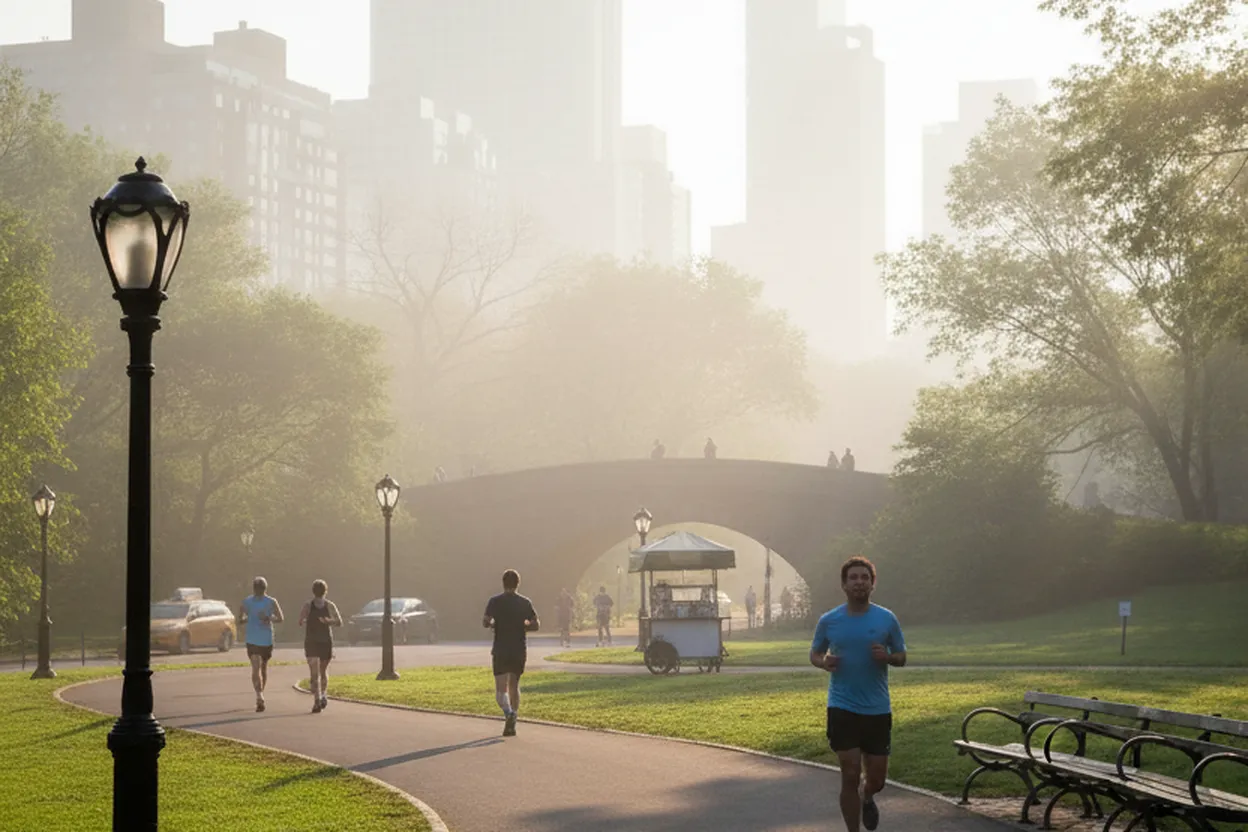
On Wednesday, July 29, 2026, the badwater 135 is finishing in California while New York City runners are dealing with their own summer-training problem: how to build serious endurance without pretending Central Park is Death Valley. The useful answer is not to copy the race. It is to borrow its demands: long time on feet, heat discipline, climbing substitutes, fueling practice, and decision-making under fatigue. Central Park gives solo morning runners a controlled place to stack repeatable miles, but today’s warm, humid, storm-prone pattern makes verification part of the workout. This guide turns the park’s known loops and NYC’s current safety resources into a challenging, city-specific training frame.
Want a smarter Central Park ultra session before you lace up? Text Karpo for route checks, weather pivots, and nearby recovery options tied to NYC running conditions today.
Central Park Reservoir Track Sets the First Control Loop
Start with the Stephanie and Fred Shuman Running Track around the Reservoir, mid-park between 86th and 96th Streets, because it lets you repeat effort without inventing distance on the fly. The Conservancy identifies the Reservoir as one of Central Park’s most popular running destinations, and the loop’s familiar rhythm helps when you are testing fueling, cadence, or heat response. For a Badwater-style build, the goal is controlled repetition, not proving toughness in the first hour.
The tradeoff is crowding and no restroom directly at the Reservoir, so use it for focused blocks rather than an unsupported epic. A strong solo morning plan is three to five steady loops, then a short walk break to log fluids, shoes, and perceived effort. If humidity spikes or puddling makes the surface messy, end the set early and treat that decision as training. Ultra performance depends on judgment before it depends on volume.
Bridle Path Dirt and Gravel Reduce Impact Without Removing Work
The Central Park Conservancy lists the Bridle Path loop around the Reservoir area at 1.66 miles, with dirt and gravel underfoot and a quieter feel than the paved drives. That matters for runners increasing weekly volume toward ultra demands. Softer surfaces can reduce pounding, but they also ask more from ankles, hips, and attention. Use the path for relaxed aerobic time, not fast blind cornering through walkers, dogs, and uneven spots.
Bicycles are not permitted on the Bridle Path under the park rules and Conservancy guidance, but that does not make it empty or private. Dogs may be present, and morning off-leash rules elsewhere in the park can change how crowded approaches feel. Keep headphones low, pass plainly, and avoid running shoulder-to-shoulder with anyone you meet. If the surface is slick after rain, move to paved drives or cut the session to drills and mobility.
Harlem Hill Repeats Stand In for Western Climbs
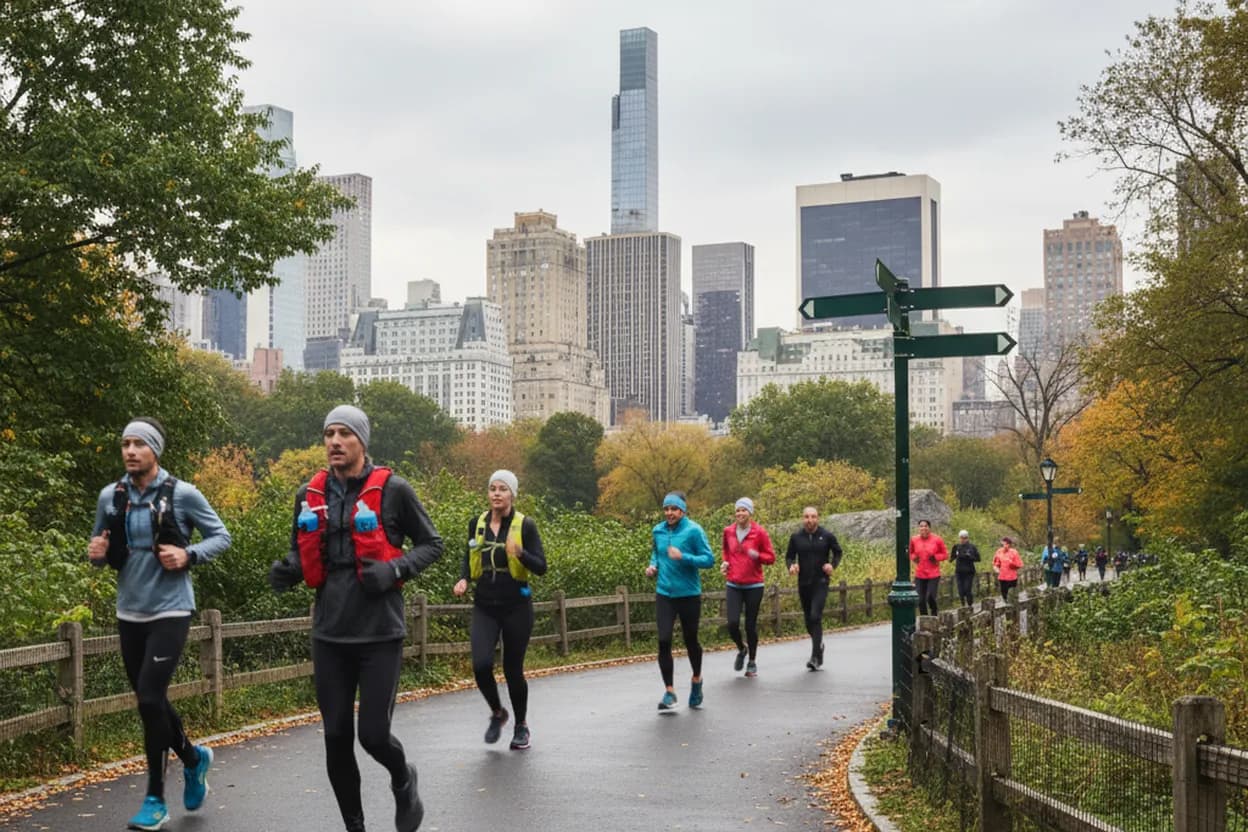
Badwater’s official course description points to three major ascents and a total 14,600 feet of climbing, which NYC cannot reproduce directly. Harlem Hill is the practical substitute: repeatable, accessible, and steep enough to expose pacing errors. Run it by effort instead of ego. A useful morning block is controlled uphill running, easy downhill recovery, and a stop after each set to check breathing, salt, and whether your form is getting sloppy.
The failure mode is turning hill repeats into a race against your watch. That teaches the wrong lesson for long desert-style racing, where restraint is an asset. If your calves tighten, stride shortens, or you stop drinking because the bottle feels annoying, switch to hiking repeats. Power hiking is not a downgrade; it is part of mountain-ultra execution. Use the East Drive descent only when pedestrian and cycling flow gives you enough room to move predictably.
Columbus Circle and NYRR Coaching Add External Feedback
NYRR’s current Group Training page lists sessions for local runners, including Central Park-related locations, one-hour classes, warm-ups, drills, intervals, tempo work, and strength-and-flexibility finishes. That structure is useful if you are motivated but solo, because it gives you feedback before bad habits harden. A coach can spot when your ultra ambition is really turning into overstriding, skipped recovery, or workouts that are too similar to produce adaptation.
The drawback is that group training is not a custom Badwater qualification plan, and registration windows or class availability can change. Treat it as one tool: speed maintenance, form checks, accountability, and RPE calibration. Keep the long, heat-aware, fueling-specific work separate unless a coach explicitly programs it. Before paying or showing up, verify the current NYRR session dates, location notes, bag-check status, and whether the workout matches your level that week.
MTA Stop Choices Keep the Morning Plan Reversible
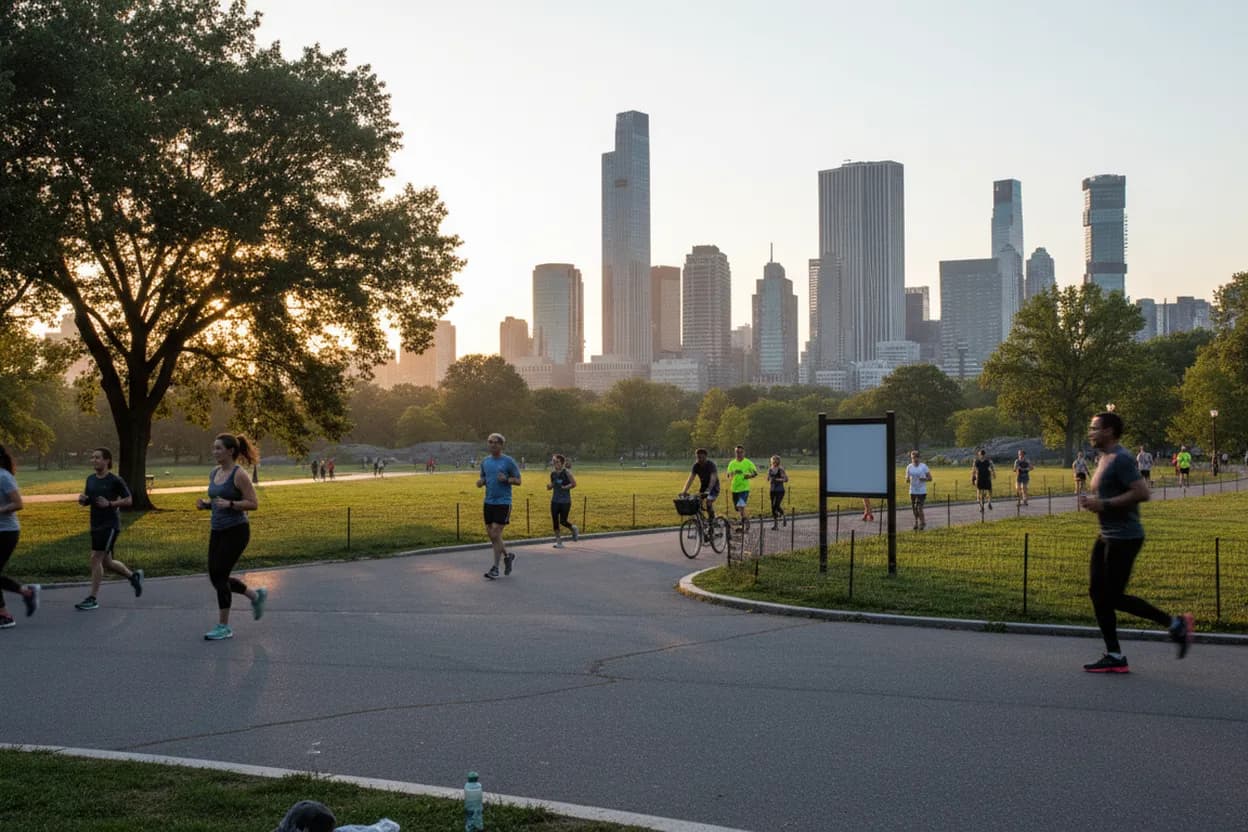
A serious Central Park workout should include an exit plan before the first mile. For the Reservoir and Bridle Path, common approaches include subway access on the East Side near 86th or 96th Streets and West Side approaches near Central Park West. Do not assume weekend-style service patterns on a Wednesday morning. Check MTA status shortly before leaving, especially after heavy rain, because delayed transit can turn a controlled session into a rushed, under-fueled one.
Build the route so bailing out is easy: carry fare access, ID, a charged phone, and enough fluid to walk to transit without needing a store immediately. If a train issue appears, choose a shorter loop near your entry point instead of stretching the run across the park. Ultra training rewards flexibility. The point is to practice decisions that keep tomorrow possible, not to strand yourself because the original route looked better on a map.
NYC Heat Resources Belong in the Training Decision
NYC Emergency Management activated heat-response measures earlier this summer, including cooling centers and public guidance to use 311 or city heat resources during dangerous conditions. Even when a specific heat emergency is not active, July humidity changes the cost of pace. A motivated runner can feel fine for forty minutes and then fade abruptly. Start earlier, carry more than you expect to drink, and set a non-negotiable turnaround if dizziness, chills, or confusion appears.
Accessibility matters here. Central Park’s paths vary by surface, grade, crowding, and restroom proximity, so runners managing disability, injury, asthma, heat sensitivity, or medication effects should choose the most reversible segment first. A support contact does not need to run with you, but someone should know your planned loop and finish window on challenging days. If cooling-center status, air quality, lightning, or flood alerts are unclear, verify first and move the hard workout indoors.
Check Badwater, Central Park, MTA, and Weather Before You Start
The final action is verification, not inspiration. Open the Badwater race page if your goal includes future qualification, because application standards, race dates, rules, and permits are specific and change by year. Open the Central Park Conservancy running map before picking loops. Open NYRR if you want coached work. Open MTA before transit. Then check today’s NYC weather alerts, because a warm, humid morning can become unsafe when storms, flooding, or heat advisories overlap.
If one source conflicts with another, default to the most immediate authority for the decision: weather alerts for outdoor safety, MTA for travel, Central Park rules for park use, and Badwater for race eligibility. Your backup plan can be simple: Reservoir loops become Bridle Path time, hills become walking repeats, outdoor miles become treadmill heat-free endurance, and pace targets become RPE. The strongest New York ultra plan is the one you can repeat after today.
Tags: #NYCRunning #CentralPark #MarathonTraining #UltraRunning #Badwater135 #EnduranceTraining #RunningNYC #MorningRun #HeatSafety #NYRR #MTA #HiddenGemsOddFinds #AskKarpo #BeforeYouGo
Sources consulted: Source 1: badwater.com · Source 2: centralparknyc.org · Source 3: centralparknyc.org · Source 4: organizations.nyrr.org · Source 5: nyc.gov · Source 6: codelibrary.amlegal.com
All trademarks are the property of their respective owners.
Ask Karpo first
Tell Karpo your date, group size, budget, and starting point. We’ll check current access, timing, transit, and the cleanest New York City plan for Central Park running paths before you head out.


