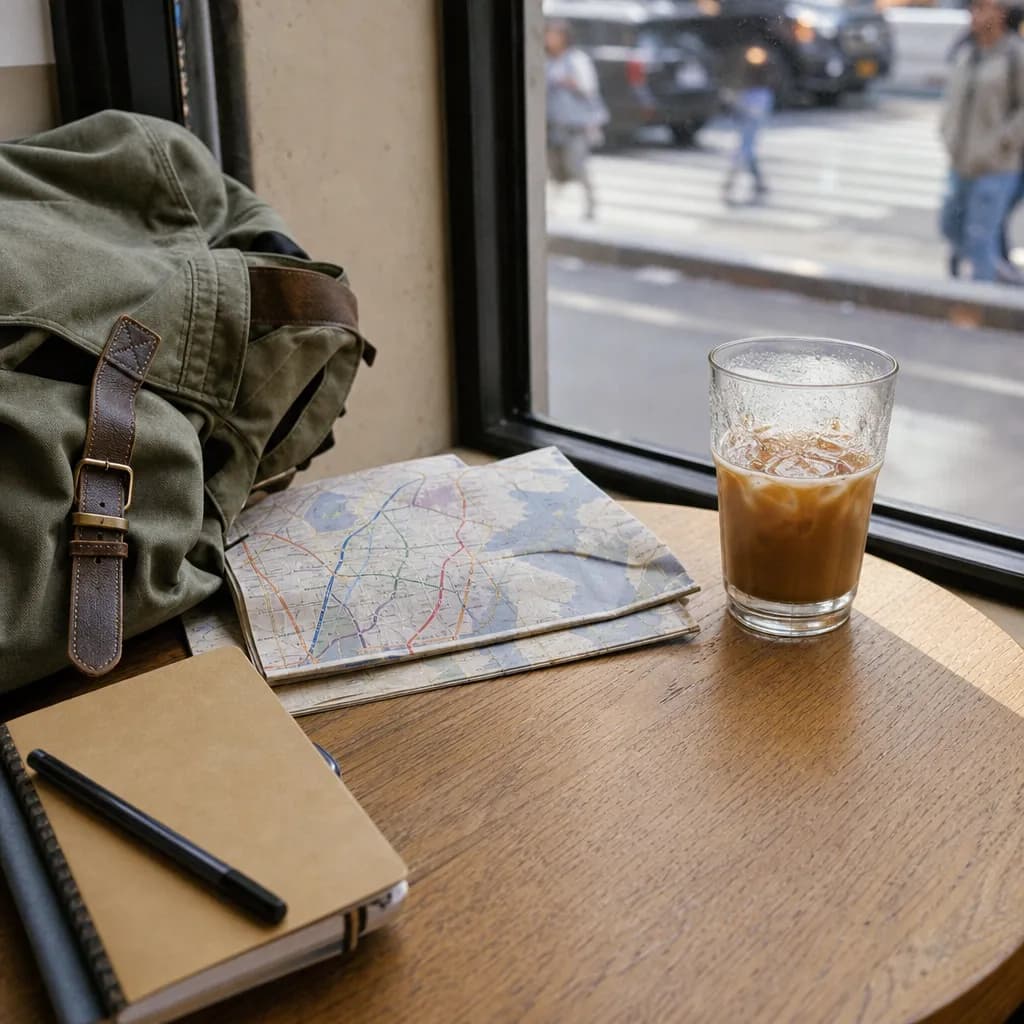
Why one campus visit is not enough
A Back to School guide to New York should not pretend that one campus represents the city. NYU, Columbia, and CUNY teach three different versions of student life. NYU is downtown and porous. Columbia is uptown and campus-shaped. CUNY is distributed, commuter-smart, and deeply tied to where students actually live.
That is why the best orientation route is not a tour in the admissions sense. It is a day-long city lesson. You start at Washington Square, move north to Morningside Heights, then end with a CUNY stop that reminds you New York education is not just ivy walls and freshman lawns. It is train timing, borough identity, work schedules, and food in a paper bag between classes.
Stop one: NYU and the public-campus blur
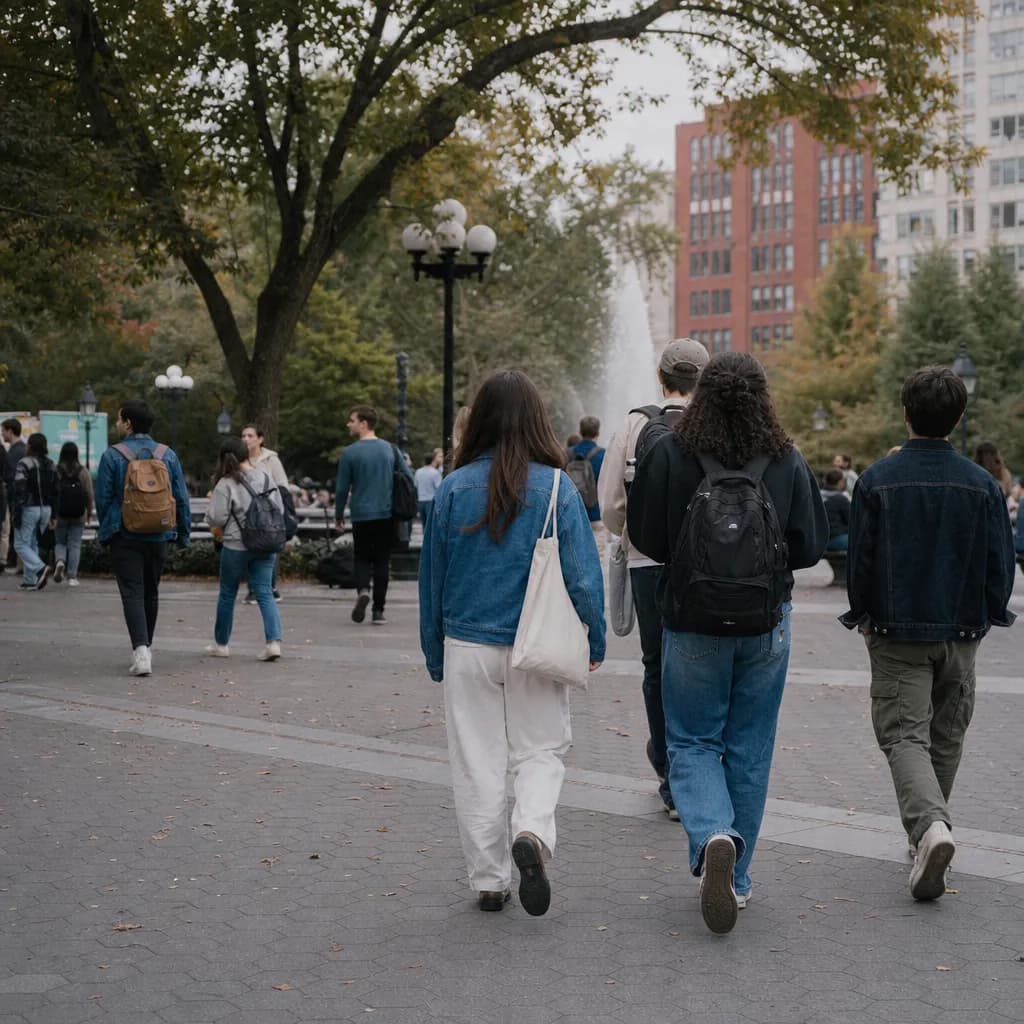
Begin at Washington Square Park. The official NYU map shows how many university buildings sit around the park and nearby Village blocks, but the park itself remains public. That blur is the point. You are not entering a closed campus; you are stepping into a neighborhood where students share space with chess players, tourists, musicians, dogs, office workers, and people who could not care less that classes just started.
Walk the perimeter before checking any destination off a list. Notice how quickly the campus dissolves into storefronts, subway entrances, apartment doors, and side streets. NYU teaches the first New York lesson fast: your school can be famous and still not protect you from the city. For some students, that is the thrill. For others, it is the thing they need to manage.
Stop two: Columbia and the relief of edges
From downtown, ride uptown to Morningside Heights. Columbia's visitor information emphasizes the historic Morningside campus, and the difference is immediate. Gates, steps, lawns, and long walkways create a visible academic frame. After NYU's blur, Columbia feels edited.
Spend twenty minutes walking without an agenda. Sit near the steps, watch the traffic of backpacks, and notice how much easier it is to understand where student life gathers. Columbia's campus does not make New York disappear, but it gives the first week a container. That can be a serious advantage when every other part of college feels newly unsorted.
Stop three: CUNY and the real commute

The third stop should be a CUNY campus that matches the student life you want to understand. Baruch makes sense for a Manhattan business-school rhythm. Hunter makes sense for an Upper East Side commuter pattern. City College makes sense for a Harlem and Hamilton Heights view of student life. The CUNY colleges page lists the breadth of the system, and that breadth is the lesson.
CUNY is not a single postcard. It is a network. A student might live in Queens, work in Brooklyn, attend class in Manhattan, and study on the train. That reality makes the system less tidy than NYU or Columbia, but often more honest about how New York works. If you want to understand the city's student backbone, you need at least one CUNY stop.
What the route teaches
By the end of the day, the comparison stops being about prestige. NYU shows how fast campus life can become city life. Columbia shows the value of a defined academic place. CUNY shows how a university can function as urban infrastructure.
For a new student, that matters more than a ranking. Your best campus is the one that fits your daily energy. Do you want spillover, containment, or a network? Do you need a park, a quad, or a train that gets you home after work? Back to School is not only choosing classes. It is choosing the geography you can repeat.
Do the route slowly enough to notice the tradeoffs
The route only works if you resist turning it into a checklist. Spend at least forty minutes at each stop. At NYU, watch how quickly student life mixes with public life. At Columbia, notice how much the built environment tells people where to gather. At CUNY, pay attention to the campus you chose and the commute around it, because the system's meaning is in its specificity.
Bring one notebook page and divide it into three columns: energy, ease, and return. Energy means how the place feels when you arrive. Ease means how hard it is to find food, seating, bathrooms, transit, and a quiet corner. Return means whether you can imagine repeating the place on a bad Wednesday in October. That last column is the one that matters.
By the end, the three schools should feel less like brands and more like daily patterns. NYU is for students who can turn city noise into momentum. Columbia is for students who benefit from a strong academic frame. CUNY is for students whose education has to fit the whole city, not just a campus brochure. The route does not rank them. It teaches you what kind of New York student day you are built to repeat.
Practical notes
Do the route in daylight and keep it simple: NYU around Washington Square, Columbia around Morningside Heights, then one CUNY campus that matches your real interest. Use official campus maps, MTA maps, and current service status before leaving. Wear shoes you can actually walk in, carry water, and do not overpack the day with restaurant stops. The point is orientation, not consumption. Take one photo at each campus, but also write one sentence about how each place made you feel. That sentence will be more useful than the photo by midterms.
Tags: #TheLongWayHome #BackToSchool #NYU #ColumbiaUniversity #CUNY #NYCStudents #CampusRoute #MTA #WashingtonSquare #MorningsideHeights #CollegeLife #NYCFall #FreshmanGuide #KarpoFinds
Sources consulted: NYU Campus Map · Columbia Morningside Heights Campus · CUNY Colleges and Schools · MTA Maps · NYC Parks: Washington Square Park
All trademarks are the property of their respective owners.


