 Upper West Side Free Indoor Weekend Plan Finder for Music
Free Things to Do
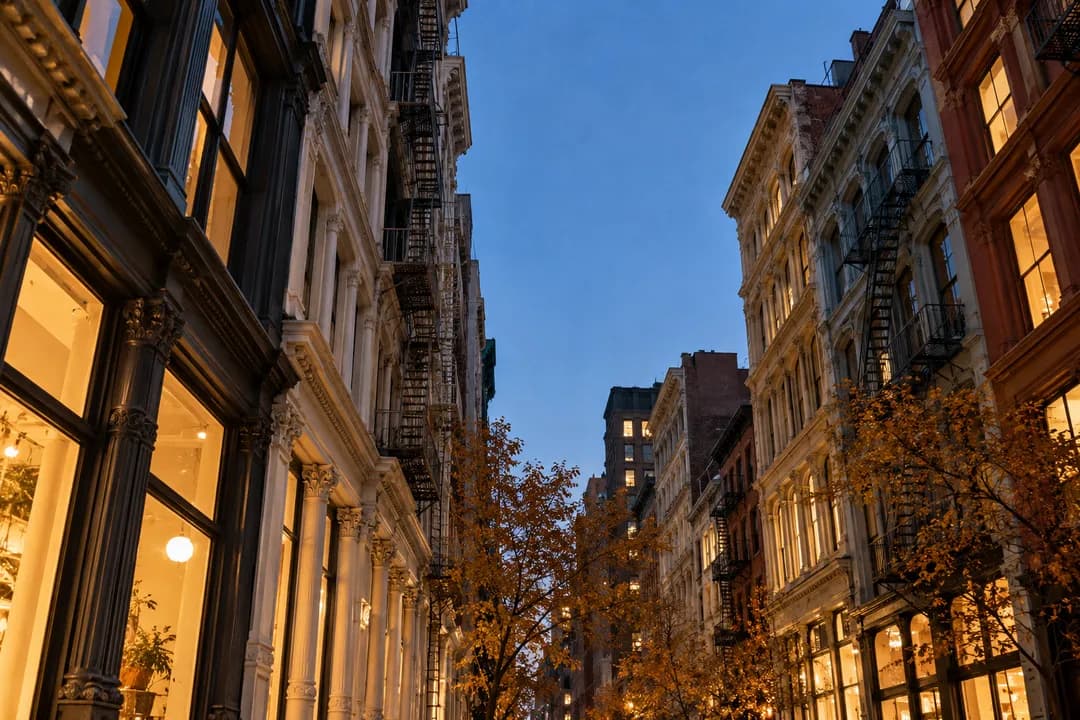
Soho Autumn Stargazing Spot: A Walk Without Detours
Fit a Soho autumn sky pause into your evening walk. Compare building gaps and glare, choose a modest target, and keep the journey home simple for your group.
An autumn stargazing spot around Soho and Tribeca should earn its place in the evening by fitting your walk. The useful question is not how many stops you can collect, but whether one legal, comfortable position offers a view toward the object you want. This plan starts with the person who has already come downtown for something else. Keep the sky break small enough that a hidden Moon or an overcast evening does not turn a pleasant outing into a frustrating expedition.
Decide what the detour is worth
Imagine leaving a meal with a friend who has a train to catch. You have time for a brief look upward, but not a second evening's worth of travel. Set a walking limit while everyone is still comfortable. For example, agree that the observation must fit between the present location and the way home. That is a personal limit, rather than a suggested travel time between named landmarks. It gives the route a clear test: a proposed viewpoint that pulls you away from the return journey needs a compelling reason.
Make the companion's preference part of the decision. Some people want to learn the name of one object. Others want a quiet pause after a busy room. Those aims can share a stop without sharing a long lesson. Ask which version sounds appealing before unpacking anything. A person who has agreed to a short walk has not automatically agreed to spend the next hour standing outside. Keep the astronomy question proportionate to the social plan and leave room for someone to call the outing finished.
Compare facades before following a map pin
The cast-iron streetscape gives this part of Manhattan a distinctive visual rhythm: columns, cornices, repeated windows, and deep vertical edges. For a sky break, those edges become practical obstructions. The prettiest framed view may leave only a thin strip of sky. Look up from a safe place on the sidewalk before choosing a direction of travel. Notice whether the visible space is broad enough to follow your target without repeatedly crossing the street. Architectural interest and astronomical usefulness can pull in opposite directions.
A map pin is a meeting reference, not proof of a usable view. When comparing two positions, keep the question identical at both: where is the target supposed to be relative to the buildings? Do not reward one spot simply for having a bench if the required direction is completely hidden. Equally, do not choose a hard-to-reach corner for a theoretical improvement that nobody can describe. A convenient position with an honest limitation often makes a better short stop than a distant place selected from an attractive photograph.
Choose between a Moon pause and a star search
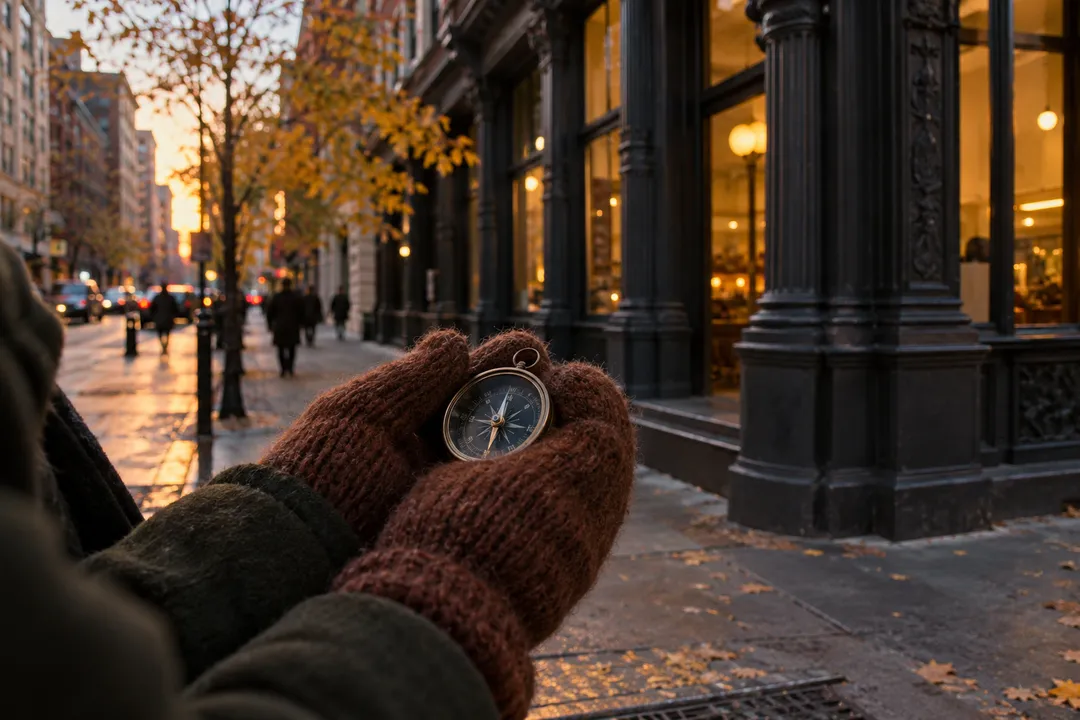
The Moon and faint stars ask different things of the evening. The Natural History Museum's urban stargazing guidance describes how bright local light and Moon conditions affect what city observers can see. Apply that distinction to your own aim. If the Moon is the subject, its brightness is part of the attraction. If you want to notice fainter stars, a bright Moon can work against that aim. Do not use the same definition of a successful sky for both outings.
Use a dated sky chart to establish the intended object's position. Work out the direction before leaving the indoor part of the evening, then compare it with the actual street view. Avoid attaching a planet name to an object on the strength of a friend's recollection of a previous night. A chart set for the relevant place and time is more useful than a general seasonal list. If the object cannot be identified with confidence, looking without naming it is still an acceptable way to spend the pause.
Protect the walking space
A Soho or Tribeca sky stop remains part of a working sidewalk. Doorways, loading activity, curb cuts, and the flow of other walkers matter more than getting an ideal stance for a photograph. Choose a position where your group can remain together without spreading across the pavement. If someone needs to step around you, make room promptly. A telescope is a poor addition when it would turn a spontaneous pause into a fixed installation in a busy passage. Leave equipment-heavy observing for a place suited to it.
The same restraint applies to private spaces that appear visually promising. A roof, setback terrace, or residential forecourt is not a public option merely because its view looks wider. Keep the plan on publicly permitted routes and use the destination operator's information when considering a park or other managed space. Do not make access a negotiation at the door. The purpose is an easy city evening, and an inaccessible viewpoint fails that purpose before the quality of the sky enters the calculation.
Let the street walk carry the cloudy version
Build the architecture portion so that it works without a sighting. Rather than promising a list of named establishments, choose something you can notice along the streets you are already using: the change in building scale, how a corner opens the sky, or how reflections alter the impression of brightness. These are prompts for observation, not claims that a particular block is darker than its neighbours. They allow a cloudy evening to keep its shape without requiring an emergency search for a replacement attraction.
Avoid turning the backup into five more decisions. If the sky is hidden, continue the agreed walk or head home. A detour to another waterfront or a second neighbourhood may be sensible on a different evening, but it changes the contract with your companion. The ability to stop is part of a good plan. You can record which building edge blocked the view and use that detail next time, instead of trying to rescue the evening by adding more distance and a later return.
Use a city assistant for the city question
A useful Karpo APP request would explain the part you need help shaping: an unhurried walk around Soho or Tribeca, a preference for fewer turns, or nearby ideas after dinner. Keep the sky question with astronomical information. A city suggestion does not measure local darkness or establish whether a celestial object will be visible. This separation makes the request clearer. You are looking for a pleasant route that can include an observation, with no assumption that every returned place is an astronomy destination.
If you want a hosted telescope session instead, look for an organiser's published event and its own participation instructions. That is a different evening from this informal walk. Do not describe a general astronomy club listing as a reservation or treat an old event page as an invitation to arrive. Choosing the type of experience first saves effort: an independent pause prioritises flexibility, while an organised session prioritises the chance to learn from someone using equipment. Neither needs to be presented as the universally better option.
Practical Notes
Keep one destination for the return journey and agree on a stopping point for the experiment. Wear something suitable for standing outside, put small items where they are easy to retrieve, and avoid resting belongings in a doorway. Before looking up, move away from the curb and establish where the rest of the group is standing. Afterwards, note whether the obstacle was a building, direct glare, cloud, or simply an unsuitable target. That specific observation is a better result than declaring an entire neighbourhood good or bad for stargazing after one short visit.
Ask Karpo for more information.
Keep reading
- Upper West Side Free Indoor Weekend Plan Finder for Music
 Astoria Free Indoor Weekend Plan Finder for Visiting Parents
 Williamsburg Free Indoor Weekend Plan Finder With Kids