 Flatiron Holiday Window Walk Planner for Remote Teams
Free Things to Do

Village Autumn Stargazing Spot: Learn One Sky Direction
Practise sky orientation on a Greenwich Village walk. Sketch the gaps between roofs, add one visible target, and keep the exercise simple for a first attempt.
Use a Greenwich Village autumn stargazing spot to practise orientation before trying to collect celestial sights. A short walk can teach you how the street around you relates to a patch of sky, even when the object you hoped to see is hidden. This is a beginner's exercise built around one direction and a few observations. It does not designate a particular Village corner as a dark-sky location, promise nighttime access to a park, or require you to buy equipment for the occasion.
Start with a direction you can explain
Choose a familiar starting place in the neighbourhood, then use your map to understand how the street runs. Stand clear of moving traffic while doing this. The aim is to be able to describe a direction in ordinary language before looking for an astronomical target. If a companion asks where to look, you should be able to point without spinning around and consulting the screen again. That small piece of preparation turns a vague suggestion to look up into an instruction another person can follow.
Do not assume that the local street pattern tells you everything you need. A change in street angle can alter the view between buildings, and a turn that feels minor on foot can face you toward a different patch of sky. Treat each corner as a new observation rather than extending an earlier guess. You are learning the relationship between the map and the view. There is no penalty for stopping to reorient, provided you choose a place where the pause leaves the sidewalk usable for everyone else.
Draw a window rather than a constellation
Before identifying stars, describe the visible sky as a shape. Perhaps it is a broad space above a junction, a narrow rectangle between roofs, or an irregular opening behind bare branches. Put that shape into a small sketch after your observation. Include the buildings or branches that form its edges. This is a record of what the position allows you to see. A constellation diagram alone cannot show you which part is missing behind a roof, so beginning with the obstruction gives the exercise a more useful foundation.
Give the sketch a simple label you will understand later, such as the corner you used and the direction you faced. Avoid giving the place an invented observatory name. If you return with a friend, use the sketch to explain the view and ask whether they see the same boundaries. Differences in where people stand can change what they report. Move together to one permitted position before comparing impressions. That step prevents a perfectly ordinary difference in sightline from becoming a confusing argument about what is in the sky.
Add one object after the frame makes sense
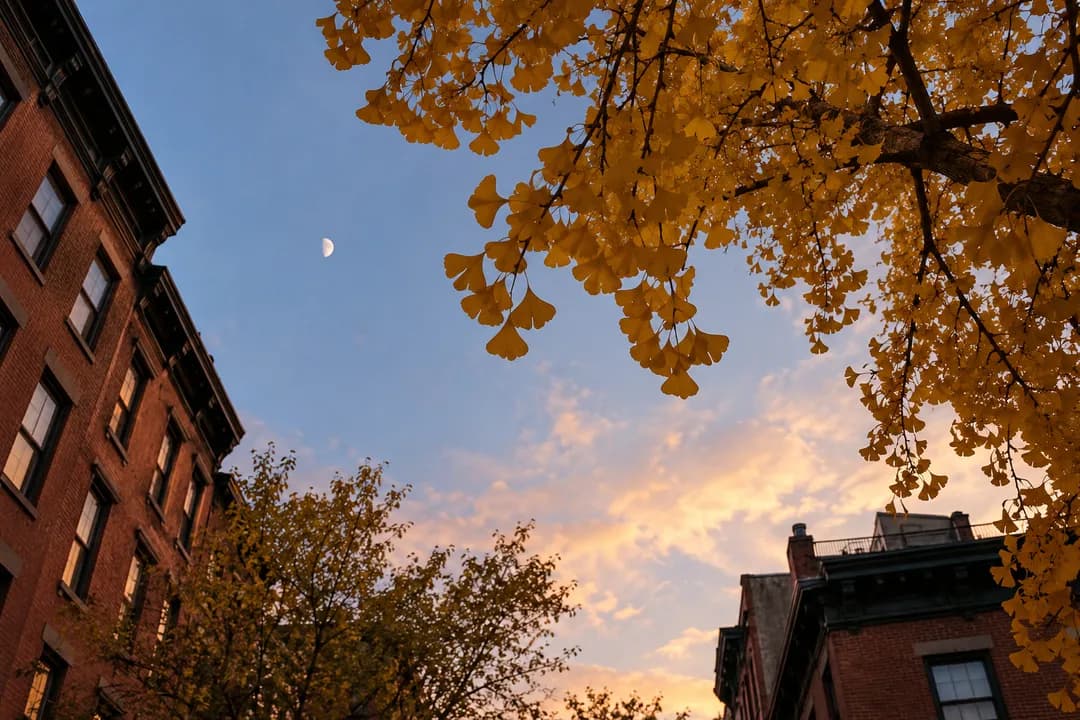
Now choose a target from an astronomy chart set for your location and intended observing time. Bring its direction into the window you have described. If it falls behind a building, the exercise has still worked: you have translated a chart into an actual local limitation. If it falls within the visible area, take time to identify it using the chart rather than memory alone. You do not need to turn every bright point into a named object before moving on to the next part of the walk.
For a Moon-focused attempt, draw the visible outline as you see it instead of immediately trying to assign a technical phase name. Record which side appears illuminated and whether buildings interrupt the view. The Canadian Space Agency's beginner material describes how artificial light can overwhelm fainter objects. That is a useful reason to keep an urban beginner's task modest. Learning to place one visible object within the street's sky window is a concrete outcome, while a long list of faint targets may make the same walk feel unsuccessful.
Keep the Village itself in the exercise
The pleasure of this approach is how it changes an ordinary neighbourhood walk. Rooflines become edges of a viewing window, and a turn in the street becomes a new direction to understand. You can enjoy those changes without inventing stories about who lives behind a doorway or which building once hosted an astronomer. Use the details present in front of you. A brick wall, a tree silhouette, and an opening at a junction are enough material for the exercise. No borrowed anecdote is necessary to make the place interesting.
Choose the next section of the walk for a different kind of looking. After concentrating on the sky, notice a facade at eye level or the way the street opens around a corner. This gives your neck and attention a break. The exercise need not become a continuous hunt for a better viewing position. If each turn triggers a new astronomy task, the walk can lose its easy rhythm. Keep the orientation practice to one or two deliberate pauses and let the rest of the route remain a neighbourhood outing.
A two-person version without a lecture
One person can describe the sky window while the other sketches it. Then swap roles at a second suitable position. Agree that descriptions should use things both people can see, such as a roof edge or branch, rather than unexplained compass shorthand. The game is successful when the second person knows where to look. It is not a test of who already knows the most astronomy. This makes the outing approachable for a companion who likes walking but has never used a sky chart.
Keep guesses provisional. If one of you thinks a bright point is a planet, write down the guess and compare it with astronomical information. Avoid building a lesson around a name that has not been established. If the answer remains unclear, keep the question for later. Curiosity does not require immediate certainty. A walk with one honest unresolved observation can be more memorable than a confident explanation that turns out to describe the wrong object. Give your companion room to notice something different without having to agree with your first interpretation.
When this exercise is the wrong outing
Skip the orientation walk if your real goal is a guided telescope experience. In that case, look for a currently published organiser-led session with instructions for attending. This street exercise offers neither equipment nor a host. It also cannot supply the darkness needed for an ambitious faint-object session. Being clear about the kind of evening you want helps you choose appropriately. There is no reason to force a casual walk to stand in for an astronomy event, or to make a first attempt harder by treating it as one.
For city ideas around the exercise, ask Karpo APP for a relaxed Village walk and describe your preference for a small number of stops. Keep the request about the route and the mood of the outing. Astronomy charts and weather resources answer the sky questions. If you are considering a managed public space, use its operator's access information separately. No part of this plan depends on a promise that the app can track celestial positions, measure light pollution, or find a rooftop you are permitted to enter.
Practical Notes
Take something simple for recording a sketch, dress for a stationary pause, and choose a familiar return point. Remain on permitted public routes and keep entrances clear. Do the map work while standing still instead of studying a screen as you cross. End the exercise by writing one sentence about what changed your view: a turn, a roof edge, branches, or cloud. That sentence preserves the useful discovery. On the next attempt you can repeat the same question from the same position, rather than beginning again with an unstructured search for stars.
Ask Karpo for more information.
Keep reading
- Flatiron Holiday Window Walk Planner for Remote Teams
 SoHo Holiday Window Walk Planner for a Sketchbook Afternoon
 Upper East Side Holiday Window Walk Planner After a Museum