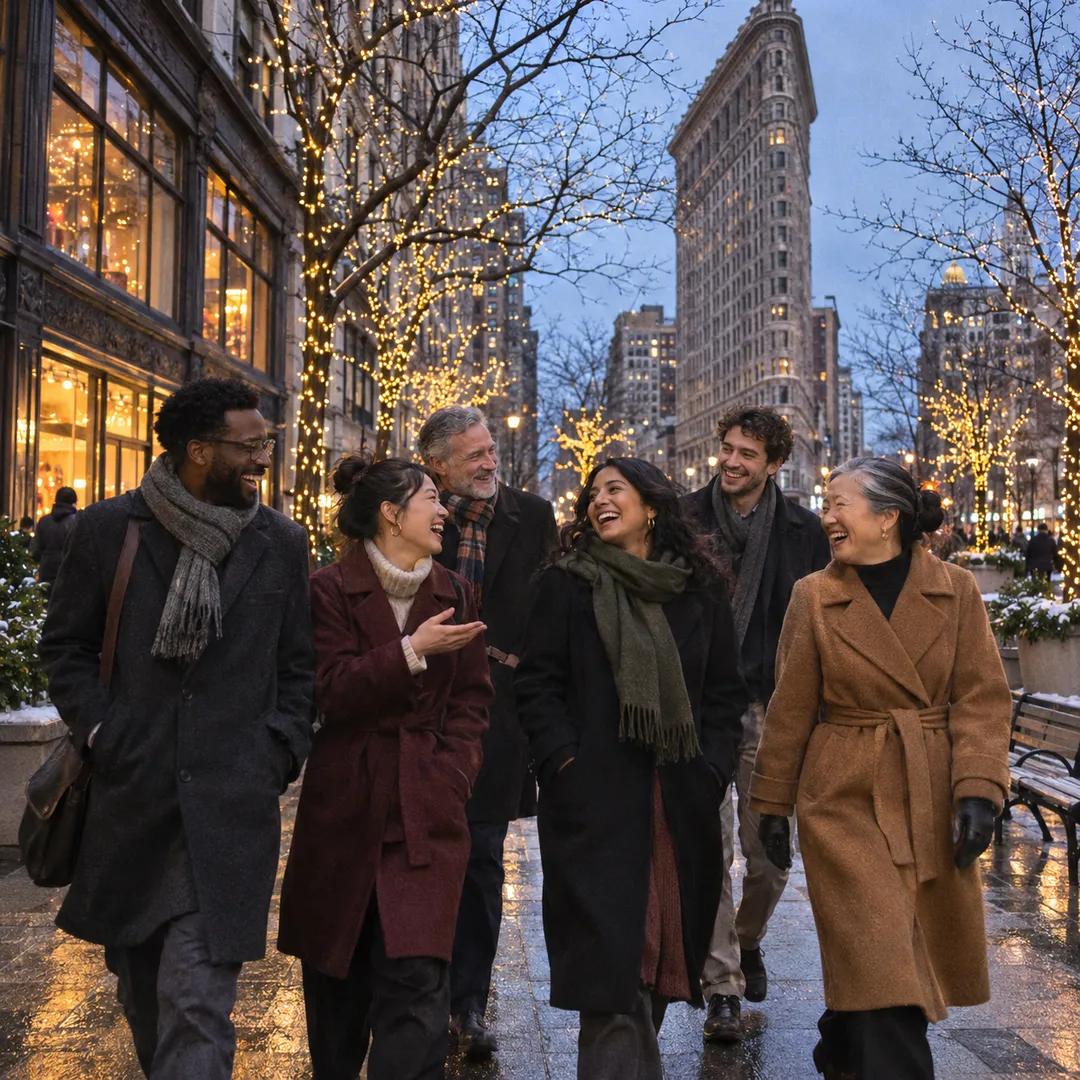
 Flatiron Holiday Window Walk Planner for Remote Teams
Free Things to Do
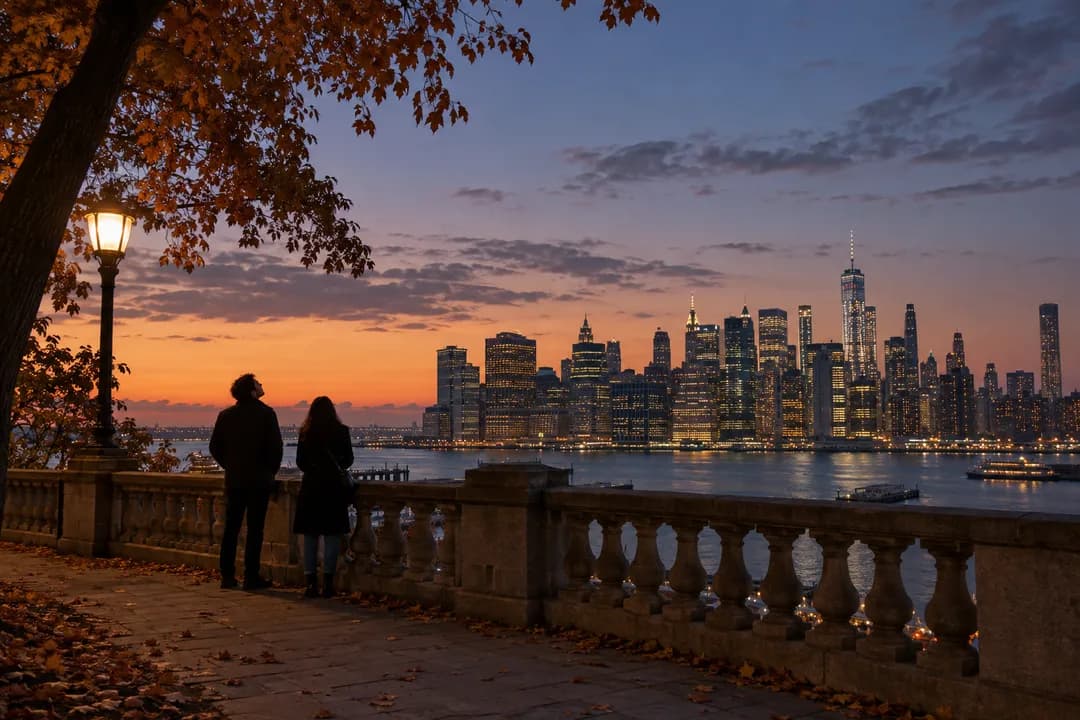
Brooklyn Autumn Stargazing Spot: Separate Sky From Skyline
Use a Brooklyn Heights sky pause to compare skyline obstructions and a chosen target. Plan a comfortable group stop without promising a dark-sky experience.
The skyline is the attraction at Brooklyn Heights, and that creates a useful tension for an autumn stargazing spot. A beautiful view across the water does not automatically provide the right view of the sky. Plan this outing as a comparison between two things you can observe from a permitted public position: the shape of the city and the piece of sky around it. Keep the astronomical target specific, so the evening does not depend on a cinematic field of stars appearing above Manhattan.
Choose which view gets your attention
A skyline walk and an observing session can share an evening while competing for your attention. Buildings encourage you to look horizontally and follow illuminated edges. Astronomy may require looking somewhere else entirely. Before choosing a place to pause, decide whether the skyline is the main event with a possible sky moment, or whether a particular celestial object is the reason for going. The first version can tolerate an unsuccessful sighting. The second needs a viewpoint chosen for its direction and obstructions, even if the skyline photograph is less impressive.
For a first visit with a friend, I would choose the skyline-led version. That is an editorial preference about the shape of the outing, not an assertion that one part of the promenade has superior observing conditions. Set a simple shared aim, such as finding the Moon if it is in view, then continue the walk. If your companion is hoping to learn a constellation, make that request explicit beforehand. A quiet look over the river is a different experience from standing still while someone teaches a pattern.
Build a position from the ground upward
Begin with the space around your feet. You need a lawful place to stand where other walkers can pass, and a way to leave without stepping backward toward the edge. Only then look for the target's direction. A railing can provide a visual boundary, but it is not a shelf for loose equipment or a seat to climb onto. Keep bags close and avoid arranging your group into a line that occupies the full path. Comfort and courtesy are part of the viewpoint, not details to solve after unpacking.
Next consider what fills the lower part of the sky. From a particular position, the city outline may hide an object that is theoretically above the horizon. A dated chart can tell you where to look, but it cannot remove the skyline in front of you. Compare the chart with the actual silhouette. If the object is hidden, record that obstruction and choose another target or finish the attempt. Treating the obstruction as useful information is better than repeatedly shifting a few steps and expecting a wholly different sky.
Use the skyline as a visual reference
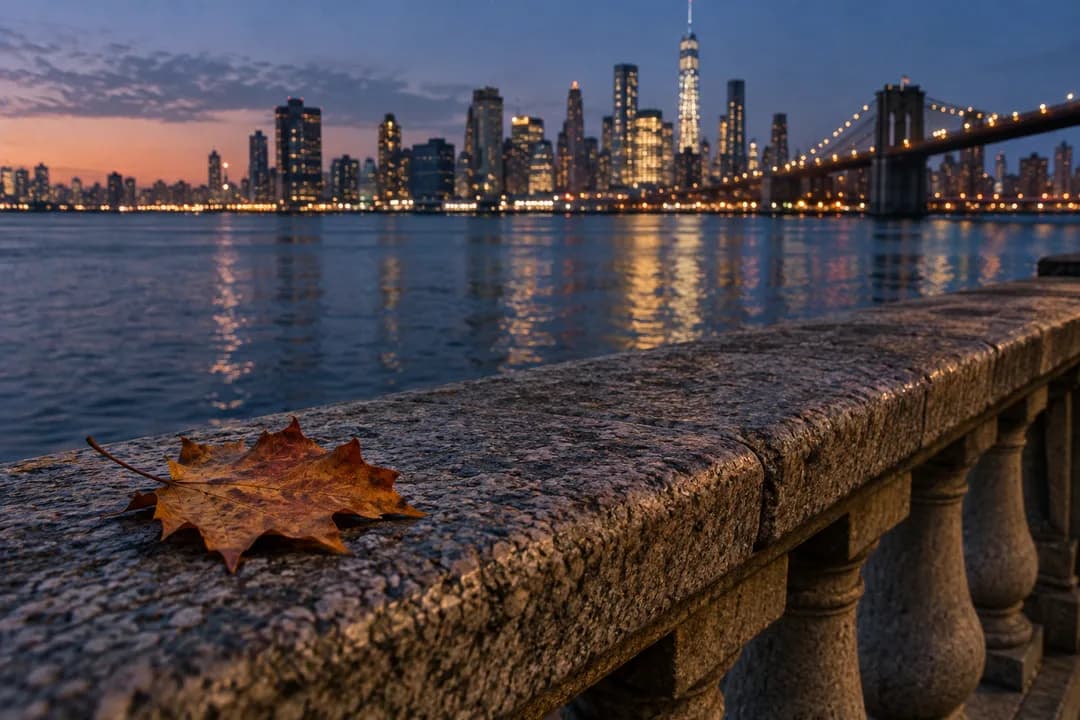
Once you have found a comfortable position, notice one fixed outline and the sky immediately around it. This is an exercise in careful looking rather than a method for measuring celestial motion. Describe what you can actually see: a bright point above a roofline, a patch of clear sky between clouds, or a Moon partly obscured by a building. Avoid giving an object a name before comparing it with astronomy information. A familiar skyline helps you remember where you were looking, but it does not identify the light above it.
You can make a small written sketch afterwards. Put the skyline at the bottom of the page and mark the rough location of the object relative to it. There is no requirement for drawing skill or accurate angular measurements. The point is to capture the observation in your own terms. If you return another evening, that sketch gives you something concrete to compare. Include when and where you were observing in your personal record, because a picture without context is difficult to interpret later.
Know what a photograph is telling you
A camera can make a city sky look different from the view you remember. The Natural History Museum's city stargazing advice emphasises the effect of artificial light on observing, including nearby light sources. Keep that in mind when a bright waterfront image suggests a dramatic sky. Use photographs to remember the outing and the obstruction pattern, rather than as a promise of what a new visitor will see. The actual experience is the view you have from your chosen position on the evening you arrive.
If taking a picture is important, agree on a separate moment for it. Repeatedly moving between screen composition and sky identification can make the whole pause feel fragmented. Let one person finish the photograph, then return attention to the shared target. Avoid leaning equipment over a railing or backing into other walkers to widen the frame. A photo opportunity is optional. It should not become the reason a companion feels they must keep standing outside after the observation has already run its course.
Make room for an ordinary evening
An autumn walk does not need an extraordinary astronomical event to be worthwhile. You might notice how cloud changes the outline of the city, how the colour of the sky alters as the evening develops, or how different the view feels when you stop talking for a moment. These are suggestions for attention, not predictions about a particular night's weather or light. Keep them separate from a promised planet sighting. That distinction lets you enjoy the setting without turning every atmospheric observation into an astronomy claim.
For a group, give the pause a clear beginning and end. Explain what you are looking for, take a moment to find it, and decide together whether to continue. Do not let the most enthusiastic observer silently extend the session for everybody. If the outing includes someone who prefers to keep moving, plan the walk as the default and the observation as an optional interruption. A good group rhythm can matter more than another piece of equipment when the purpose is a relaxed evening together.
Plan access and the return separately
Use official information for the particular public space you intend to enter. This article does not supply an opening-hours promise for the promenade or adjacent parks. On arrival, respect posted restrictions and leave any closed section out of the route. Do not assume that a nearby park shares the access conditions of the walkway you are already using. Treat each managed space on its own terms. If the intended stop is unavailable, the lawful alternative may simply be continuing along your existing route rather than improvising an entry elsewhere.
Karpo APP can be the place to ask for nearby city ideas that fit the group, such as a walk with fewer stops or a short outing around Brooklyn Heights. Describe the social and walking preferences in that request. Use an astronomy chart for the sky target and the destination operator for access details. Keeping the questions distinct helps avoid the mistaken expectation that a route suggestion is also a sky forecast, an astronomical identification, or permission to use a particular viewing position after dark.
Practical Notes
Bring the layer you would want while standing still and set a return plan before beginning. Keep personal belongings on your side of the walking space. Choose a modest target, compare its direction with the actual skyline, and stop if the view is obstructed. For this outing, the honest reason to skip the sky session is wanting a much darker observing environment. Enjoy the waterfront walk on its own terms and save a dedicated dark-sky trip for a separate plan with the travel, access, and weather decisions it requires.
Ask Karpo for more information.
Keep reading
- Flatiron Holiday Window Walk Planner for Remote Teams
 SoHo Holiday Window Walk Planner for a Sketchbook Afternoon
 Upper East Side Holiday Window Walk Planner After a Museum