 Flatiron Holiday Window Walk Planner for Remote Teams
Free Things to Do
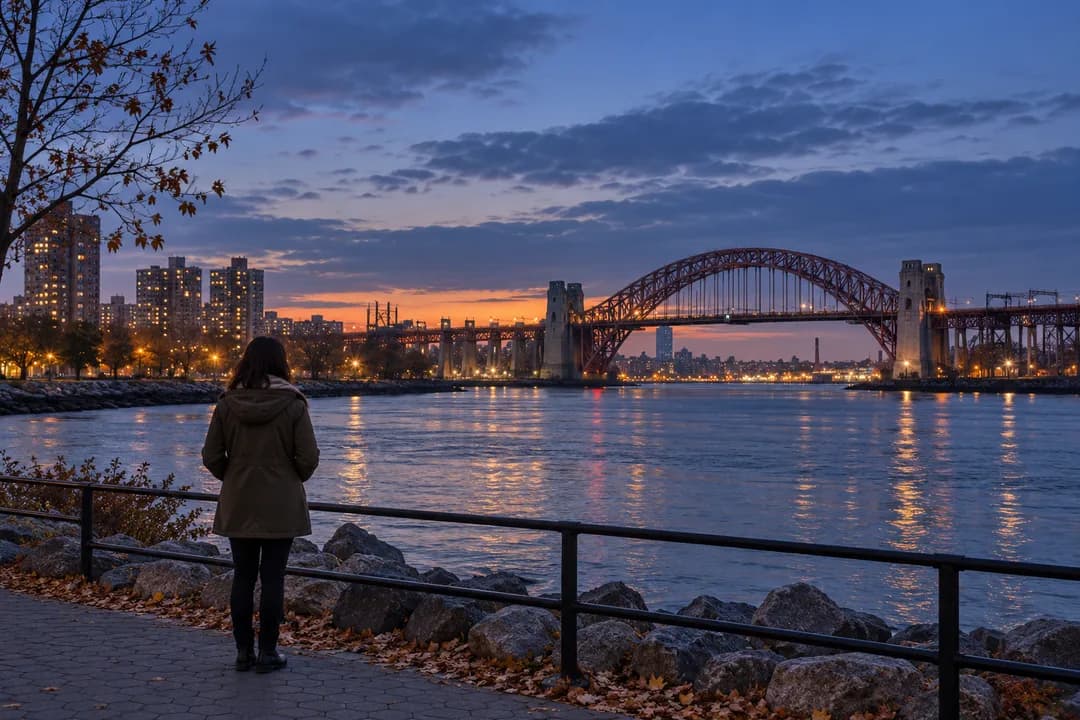
Astoria Autumn Stargazing Spot: Plan The Return First
Build an Astoria waterfront sky break around an easy return. Choose a small loop, one modest target and a comfortable stopping point before adding any detours.
Plan the return journey before choosing an autumn stargazing spot around Astoria's waterfront. The promise of an open-looking sky can make a long riverside detour seem easier than it feels after you have stopped walking. This outing is for someone deciding whether an evening sky pause belongs in a local loop at all. Choose a comfortable public position, a modest observing aim, and an easy way to finish. A route that still works without a sighting is more useful than a distant pin selected only for its photograph.
Put the finish on the map
Start by deciding where you want to be when the outdoor part of the evening ends. That might be home, an agreed meeting point, or a familiar connection for the journey back. Use your own map and transport information for the actual trip. Then consider the waterfront as a branch from that plan. The branch needs to explain how you return, rather than merely how you reach a view. If the way back is unclear, the observing location has not yet earned its place in the outing.
This approach is especially useful when two people are coming from different places. Agree on the finish before either person suggests extending the walk. One companion may be happy to keep strolling while the other is watching the last convenient connection slip away. Make the shorter available evening the limit for the shared part. You can continue independently afterwards, but nobody should discover halfway through a sky session that the group has silently changed its plan. A clear finish gives the pause a relaxed edge instead of a running clock.
Use the loop as a shape, not a distance promise
A loop can be appealing because it brings you back to something familiar. On a map, however, it is easy to draw a satisfying shape that ignores how the walk feels. For this exercise, use the smallest version that includes a plausible public sky pause. Do not add an extra section solely to make the line look complete. An out-and-back can be the better choice when it is simpler to follow or easier to shorten. The shape serves the evening, rather than the evening serving the shape.
Mark a place in the plan where you can decide to stop adding distance. This is a personal decision point, not an asserted park feature. When you reach it, ask whether you still want the observation and whether everybody is comfortable standing outside. If the answer is no, take the agreed return. The ability to end early should be visible from the start. A plan that only works if you complete every segment leaves too little room for ordinary changes in energy, weather, or interest.
A wider view is only one part of the decision

From some waterfront positions, the sky can feel less enclosed than it does between buildings. That feeling should prompt a comparison, not a dark-sky label. Determine which direction the target requires and whether your actual view is interrupted by structures, trees, or direct glare. An attractive river prospect in the wrong direction does not solve that problem. If a nearby permitted position improves the sightline, consider it. If the improvement requires a long detour or an inaccessible space, keep the original walking plan and change the observing aim.
Do not assume that a public-looking path remains available under every condition. Use the relevant operator's published access information for the space you intend to visit and respect signs when you arrive. A closed gate or restricted section is a reason to remove that segment, not an invitation to find a less obvious way in. Keep private grounds and unauthorised roofs outside the plan. An easy outing depends on straightforward access as much as it depends on the patch of sky above the path.
Choose what counts as enough
Before leaving, decide what would make the observation feel complete. For a beginner it might be locating one bright object with a dated chart or describing the Moon's visible shape. For someone who mainly enjoys walking, it might be a deliberate pause to compare the river view and sky. Those are different aims, and both can fit this route. Neither requires announcing that a particular celestial event will happen. Avoid making the evening depend on a sighting that has not been established for the intended place and time.
Use astronomy information for identification and weather information for cloud. Keep a note of the intended target's direction, so you do not spend the pause scrolling through unrelated suggestions. If the object is hidden, decide whether to try one nearby viewpoint or finish. Adding another attempt is reasonable when it is easy and everybody agrees. Turning the rest of the evening into a sequence of hopeful relocations is a different outing. Notice the point where curiosity has become an obligation and give yourself permission to leave it there.
Pack for the stop, not the image
A photograph of a person looking across the water can hide the practical reality of standing still. Choose clothing you would be comfortable in during a pause, and make small belongings easy to put away. There is no requirement to bring a telescope, a tripod, or a bag full of accessories. For a first route test, travelling lightly leaves you more freedom to shorten the walk. If equipment is the real attraction, a published hosted astronomy session may offer a better experience than carrying it on an exploratory waterfront loop.
Keep anything you do bring clear of the path. Do not balance loose items on an edge or leave a bag behind while moving to compare views. If you are walking with someone who wants photographs, agree on a photo moment separately from the observation. The person looking for an object should not have to keep interrupting their attention to pose. Likewise, the person taking the picture should be free to finish and put the camera away. A small agreement can make the shared evening much more comfortable.
Let the neighbourhood be the backup
The cloudy version can simply be an Astoria walk with an early return. It does not need an unresearched list of substitute businesses or an invented late-night attraction. Notice the contrast between the river edge and the streets you use to leave it. Choose the route through places you are comfortable navigating, rather than chasing an unfamiliar darker-looking side street. A sky break is optional within this plan. The outing remains worthwhile if the walk, company, and sense of place are what you remember afterwards.
In Karpo APP, frame the request around that city decision: ideas for a short Astoria evening walk, a waterfront preference, and an easy return. You can explain that the sky pause is optional. That request should not imply the app has measured local darkness, checked the target's position, or authorised access to a park. Use the appropriate astronomical and operator information for those questions. The result you want from the city conversation is a manageable evening shape, with enough flexibility to omit the observation without rebuilding everything.
Practical Notes
Agree on the finish, choose a route you can shorten, and keep one modest target for the pause. Before standing still, move out of the walking line and make sure your companion knows where you are stopping. Save directions for the return where you can retrieve them easily. Afterwards, write down the reason the loop worked or did not work: the detour, the standing comfort, the obstruction, or the return connection. That specific lesson helps the next outing far more than declaring the entire waterfront an ideal stargazing destination from a single evening.
Ask Karpo for more information.
Keep reading
- Flatiron Holiday Window Walk Planner for Remote Teams
 SoHo Holiday Window Walk Planner for a Sketchbook Afternoon
 Upper East Side Holiday Window Walk Planner After a Museum