 Flatiron Holiday Window Walk Planner for Remote Teams
Free Things to Do
Van Cortlandt Autumn Foliage Walk: Free Bronx Woods in Fall
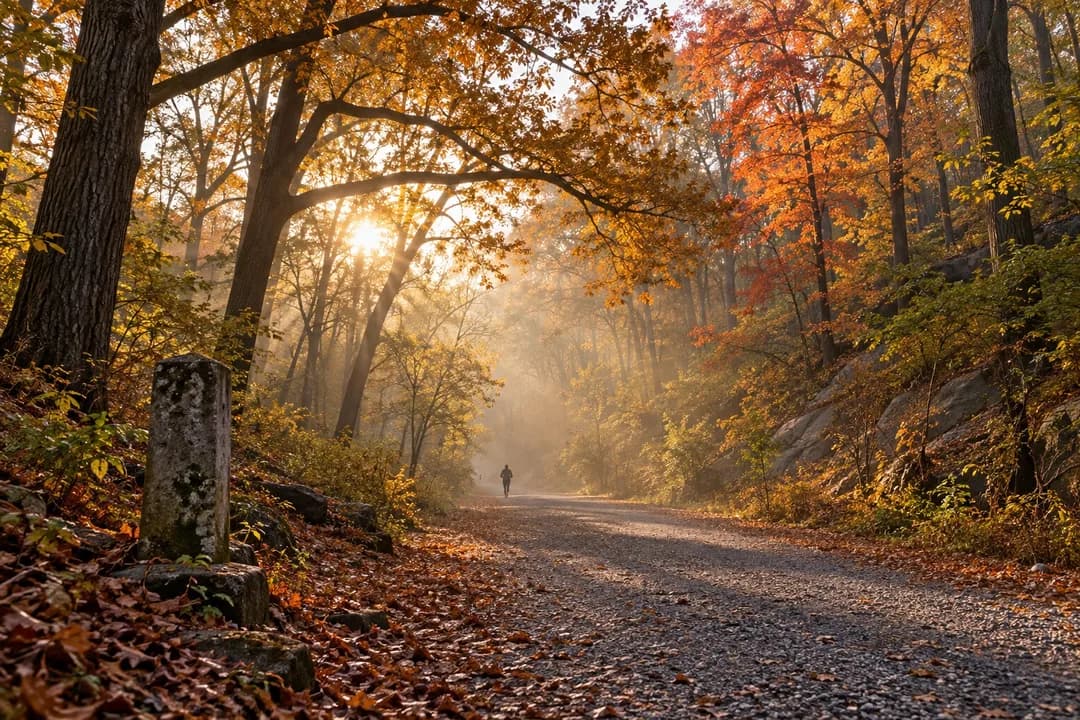
Van Cortlandt Park in the Bronx is free to walk, with no booking needed. Start at 6036 Broadway and take the Aqueduct Trail, lined with tulip trees and maples.
Van Cortlandt Park costs nothing to enter, and its 1,146 acres in the northwest Bronx hold more autumn color than most New Yorkers expect from a city park. Start at Van Cortlandt House Museum, 6036 Broadway, where the park meets West 246th Street. From there the woods rise west and north, with tulip trees, sugar maples, sweetgums and oaks turning in sequence through late October and November.
Why the Northwest Bronx Turns Before Midtown
The Van Cortlandt Park Alliance describes a canopy of large oak, tulip, sweetgum and sugar maples, and the Northwest Forest alone covers 188 acres along a north-south ridge. That ridge is the reason this autumn foliage walk feels different from a stroll in a manicured lawn park. You climb, the trees close in, and the traffic on Broadway disappears within ten minutes. The Northeast Forest is the patch for sweetgum, red maple and pin oak.
The park has a long paper trail. The city bought the land in 1888 but only named it for the Van Cortlandt family in 1913. Frederick Van Cortlandt had the fieldstone house built in 1748, and the Alliance notes it was built by enslaved Africans. The museum calls it the oldest house in the Bronx, which makes it a useful anchor for a walk that mixes leaves with local history.
Three Trails, Three Different Kinds of Color
The Old Croton Aqueduct Trail runs 2.3 miles through the park, and the Alliance singles it out for tulip trees, sugar maples and American sycamores. The aqueduct beneath it carried water 42 miles from the Croton Reservoir to Bryant Park. It opened in 1842 and stayed in service until 1897. Walking the grassy berm on a clear November morning, you get yellow tulip-tree leaves above and stone ventilator towers along the route.
The Putnam Greenway follows the bed of the old Putnam rail line for 1.9 miles. Construction started in 1870 and took ten years, passenger service ended in 1958, and freight trains lingered into the early 1980s. Today the flat gravel path makes the easiest leaf-peeping route in the park, good for strollers and older walkers. The color here is mostly oak bronze rather than maple scarlet, so time it for the second week of November.
For a hillier loop, the Cass Gallagher Nature Trail covers 1.2 miles of ups and downs in the Northwest Woods, starting a short walk from Broadway and Mosholu Avenue near the Riverdale Stables. Add the 1.5-mile John Muir Trail, the only path that crosses the park east to west, and you can cross from the 1 train side to Van Cortlandt Park East. That combination takes about two hours at a steady pace.
The Lake Stop Most Walkers Rush Past
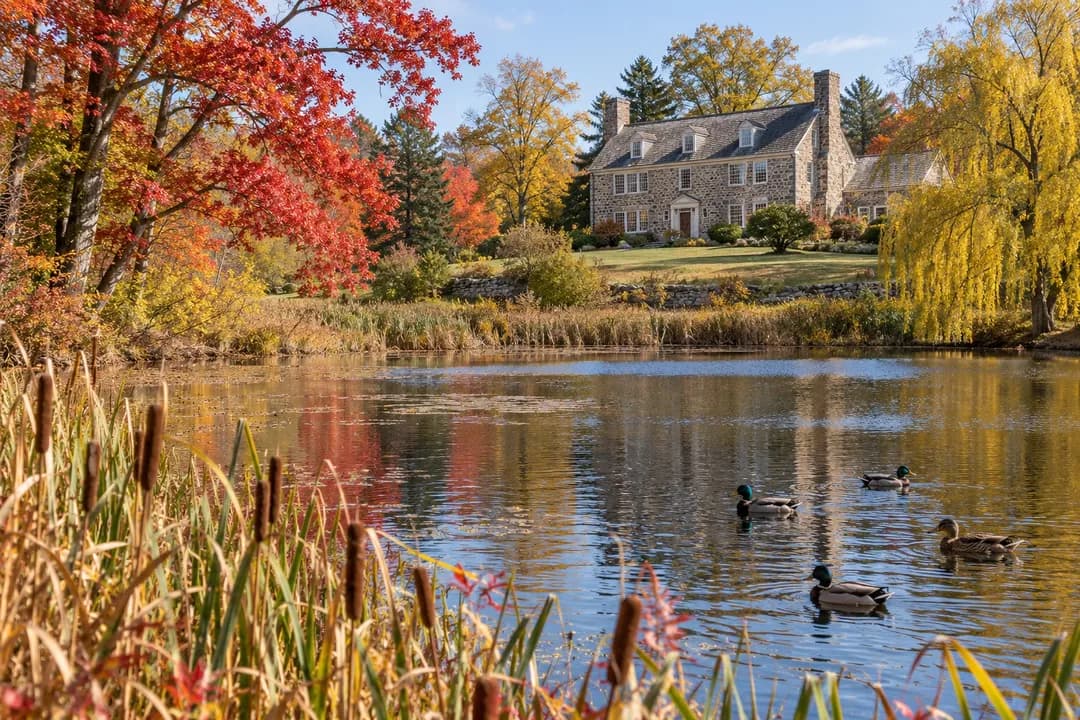
Van Cortlandt Lake is the largest freshwater lake in the Bronx, and it is man-made. Tibbetts Brook was dammed in the 1690s to power a gristmill, and the water still pools at the foot of the parade ground. In autumn the cattails go tan, willows go yellow and red maples flare along the edges. Mallards work the shallows. It is the flattest, most photogenic stretch of the walk, and the best place to sit down with coffee.
Bring that coffee with you. There is no café on the lake loop, and the closest reliable stop is back out on Broadway. Lloyd's Carrot Cake, a Riverdale institution on Broadway just north of the museum, reopened in late 2025 after renovations, according to News 12. A slice there after the walk is the local move, and the line moves quickly on weekday afternoons.
Join a Free Leaf-Peek With Local Naturalists
The Alliance calendar lists a free Van Cortlandt Nature Group Walk on November 11 from 2 to 3:30 pm, billed as a chance to leaf peek at oaks, hickories, sugar maples and tulip trees as they change. The group meets in the parking lot of the Riverdale Stables and heads into the Northwest Woods. RSVP is required. A second walk on November 29, led by naturalist Debbi Dolan, follows the Tibbetts Wetland and the Mill Pond.
Birders get their own session. NYC Bird Alliance runs walks in the park on October 25 and November 21 at 9 am, with advance registration required and no binoculars provided, so pack your own pair. Late fall is when sparrows and kinglets move through the woods, and the leaders know which thickets hold them. If you only want trees, skip the bird walks, because they move slowly and stop often.
Getting There Without a Car
Take the 1 train to 242 Street, the last stop, then walk north on Broadway to the tree-lined pedestrian path into the park. The Bx9 bus stops at West 246th Street and Broadway, right by the museum. Express riders can use the BxM3, and Metro-North riders can get off at Marble Hill. Drivers get a free lot about five minutes on foot from the museum, though it fills early on sunny weekends in November.
The house museum is open for self-guided tours Wednesday through Sunday, 11 am to 4 pm, with last entry advised before 3:30 pm. Admission is $5 for adults, $3 for seniors and students, free for children 12 and under, and always free for Bronx residents. The museum is closed November 26 and 27 for Thanksgiving.
An Honest Plan for a Short Autumn Day
Skip the athletic fields on the south side. They are flat, open and mostly grass, and one baseball complex at East 233rd Street is currently closed for reconstruction. The color is in the woods. With only two hours, walk the aqueduct north from the museum, cut across on the John Muir Trail and finish at the lake. With half a day, add the Cass Gallagher loop and the Putnam Greenway.
If rain moves in, duck into the house museum and look at the period rooms instead of slogging through mud on the nature trail, which turns slick on the downhill sections. On a crowded weekend, aim for the Northwest Woods rather than the lake. Most visitors stay near the parade ground, and the ridge trails stay quiet even on the brightest Saturday in November.
Practical Notes for the Walk
Wear shoes with grip, since oak leaves hide roots and stones on the ridge. Restrooms are limited, so use the facilities at the museum or the Nature Center. Bring water, a layer for the wind on the parade ground, and leave the speaker at home. The best part of this walk is how quiet the Bronx can be under the trees.
Ask Karpo for more information.
Keep reading
- Flatiron Holiday Window Walk Planner for Remote Teams
 SoHo Holiday Window Walk Planner for a Sketchbook Afternoon
 Upper East Side Holiday Window Walk Planner After a Museum