 Lower East Side Hidden Speakeasy Bar Picker for a Solo Night
Bars & Nights Out

NYC Autumn Cider House: 2 Routes for Easier Dates
Choose an NYC autumn cider house date around two starting points, a clear meeting place and a return plan, then compare the drinks experience you want.
An NYC autumn cider house date starts with two journeys, not one photograph of amber drinks. Choose a meeting area that works for both people, decide how long you want to stay and give the trip home as much attention as the arrival. Karpo APP can be a place to turn those preferences into a request for city recommendations. This planning method compares a simple shared meeting point with a more destination-focused tasting, without pretending to know live service, seating or transit conditions.
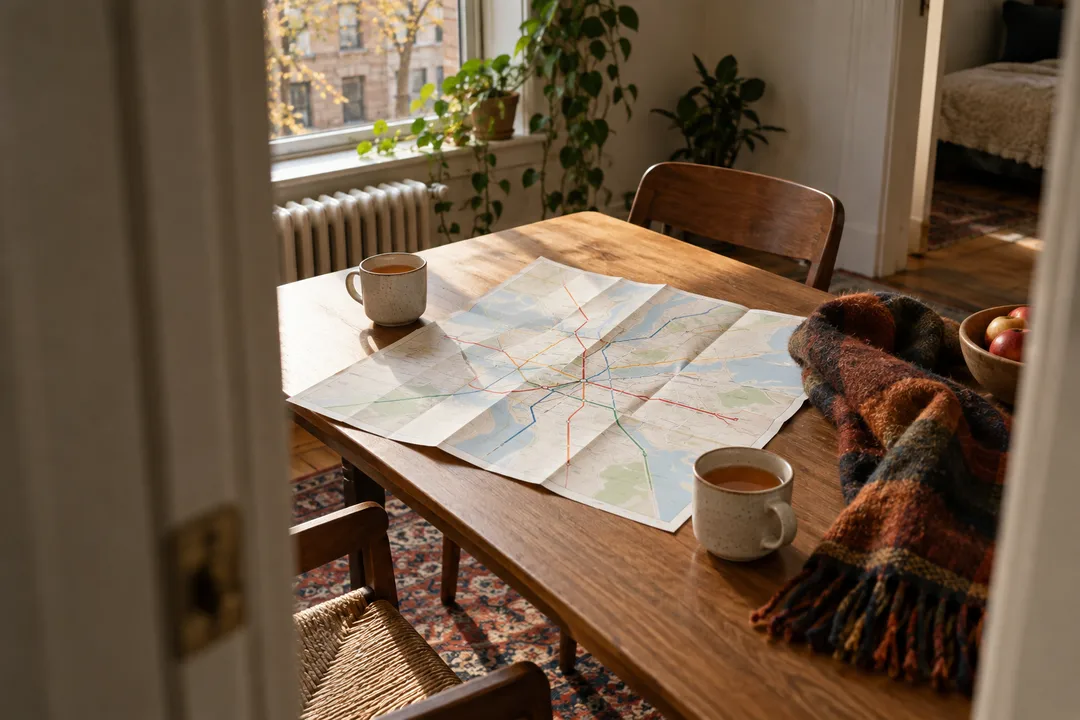
Exchange starting points before naming a bar
A date invitation often begins with a venue someone has saved. That is fine until the other person reveals a starting location that makes the suggestion impractical. Share neighborhoods or convenient meeting areas before settling on the destination. You do not need to disclose a home address. A nearby station area, workplace district or hotel neighborhood can give enough context for the first comparison. The goal is to avoid making one person feel that accepting the invitation also means accepting an unexpectedly complicated journey.
Agree on the shape of the evening as well. Is this a short first meeting, a dinner date or a tasting you have both been looking forward to? A specialist destination deserves more travel only when the experience matters to both people. If one person has an early commitment afterward, that constraint belongs in the first request. A clear end point can make a brief date feel considered. It also gives you a useful test for every extra stop that a recommendation might introduce.
Ask for two route strategies
Try a prompt with a real decision built in: “Help us plan an autumn cider house date in NYC. We are starting in different neighborhoods and want a conversation-friendly evening. Compare meeting somewhere easy for both of us with traveling farther for a cider-focused destination. Explain the tradeoffs.” Add your starting areas, available time and food preferences. The request asks Karpo to organize a choice. It does not imply an automatic route calculator, an active disruption feed or knowledge of how busy any room is right now.
Keep the two strategies separate long enough to understand them. The convenient-meeting strategy gives priority to fewer changes, a clear arrival point and enough time together. The destination strategy gives more weight to the drink experience and accepts additional travel. Neither should win by default. If a suggested place is appealing but the journey is vague, ask for the missing reasoning. You want an explanation you can discuss with your date, rather than a confident venue name detached from the rest of the evening.
Judge the route by the awkward parts
Do not compare journeys only by the distance between two map pins. Consider where each person begins, how many transfers they find comfortable and the walk at the end. Someone carrying work equipment may care more about stairs or walking than about a few extra minutes seated on a train. Another person may prefer a familiar route. These are individual constraints, so state them as such. A recommendation cannot infer them from a city name, and a short-looking route is not proof that it fits your needs.
For a hypothetical comparison, imagine one option that is easy for both people to reach but has a modest cider offering, and another with more promising cider information that gives one person a much longer return trip. The second can still be the right choice for a planned tasting. It is a weaker choice for an introductory chat with a strict finish time. No actual venue is being described here. The example shows why a destination's appeal and the fairness of the journey should appear in the same decision.
Make the meeting point unambiguous
Once you have chosen an area, choose a stationary meeting point. “Somewhere near the station” can be confusing where several exits lead to different streets. Use the actual destination or a specific public landmark agreed between you, and share it in ordinary language. If you intend to walk together before the tasting, establish the starting point first. A wandering pre-date route can be charming after you have met. It is much less charming when the other person is trying to locate a moving target after work.
Build in a simple arrival convention without pretending it is a venue rule. For example, you may agree to send a message if one person is delayed, or to meet directly at the destination rather than wait outside. Those are your arrangements. They do not establish that a business can hold seats or keep a reservation open. Any reservation conditions come from that business. A useful plan distinguishes the social agreement between two people from the service arrangement with the place you hope to visit.
Let the conversation shape the order
When comparing drinks information, consider whether you want to discuss a tasting or simply enjoy a drink while talking. A multi-item tasting can become the main event, which suits a shared interest in cider. It can also distract from a first conversation if only one person is enthusiastic. Ask about each other's preferences before choosing the format. You do not have to make matching orders. An evening can feel cohesive when one person explores a cider and the other chooses something entirely different.
Food should be settled with the same directness. If you both expect dinner, the venue choice needs supporting food information, or the plan needs a separate meal. If you only want a brief drink, say so in the invitation rather than leaving one person to arrive hungry. Do not use a stock photograph of snacks as evidence of a full menu. Ask Karpo to help compare a one-stop evening with a nearby meal followed by a tasting, and keep any unsupported kitchen details out of the final invitation.
Choose an ending before adding another stop
A pleasant date does not require a second venue. Decide whether an extension is optional, and let either person end at the original finish without having to invent an excuse. If you do continue, choose the next step together based on how the evening feels. The return journey still matters. A route that was manageable earlier may feel less appealing when you are tired or carrying an umbrella. You can protect the mood of the evening by keeping its last decision simple.
An autumn walk is an optional transition, not a measure of how successful the date has been. Keep it short enough for the actual weather and each person's comfort. The exact streets should follow from the selected destination. This page does not attach imaginary views, opening times or nearby businesses to a generic route. If the outdoor portion no longer appeals, go directly to the agreed meeting place. Removing a decorative extra is often a better adjustment than rebuilding the entire evening around it.
Practical Notes for the final invitation
Send the selected destination, the meeting arrangement, the expected length and any booking action still required. A conversation with Karpo can support your choice, but it does not buy drinks, secure a table or report live train departures. Use the relevant operator's service information for travel and the venue's process for a reservation. The images on this page are generated editorial scenes of city planning and an autumn street, not depictions of a recommended business. The useful result is a date both people can reach, enjoy and leave comfortably.
Ask Karpo for more information.
Keep reading
- Lower East Side Hidden Speakeasy Bar Picker for a Solo Night
 West Village Hidden Speakeasy Bar Picker for Out-of-Towners
 Carroll Gardens Hidden Speakeasy Bar Picker for a Nightcap