 Lower East Side Hidden Speakeasy Bar Picker for a Solo Night
Bars & Nights Out
NYC Autumn Cider House: 4 Costs for Group Plans
Compare an NYC autumn cider house group plan across drinks, food, transport and shared costs, using personal limits instead of guessing venue prices.
An NYC autumn cider house group budget should include drinks, food, travel and the way shared spending will be divided. Start with what each person is comfortable spending, then use the Karpo APP to help compare outing formats against those limits. Your budget is an input, not a claim about a bar's prices. This page walks through a practical group decision without inventing flight costs, suggesting that a recommendation reserves seats or assuming everyone wants to spend the same amount.

Ask for a ceiling people can state privately
A group chat can make a casual spending question feel surprisingly public. Someone may agree to an expensive plan because nobody else has expressed a limit. Give friends a low-pressure way to state what works for them, and ask about the total outing rather than only the first drink. You do not need to collect personal financial details. A simple preference for a short visit, a meal included or a lower-cost evening is enough to shape a better invitation.
Distinguish the comfortable amount from an absolute maximum. A person might technically be able to spend more but prefer not to use the evening's entire budget on one tasting. Treat that preference as legitimate. The aim is not to persuade the group to stretch. It is to find a format people can enjoy without doing silent arithmetic at the table. If expectations differ substantially, consider a brief shared gathering with an optional extension, so joining the first part does not commit someone to every later purchase.
Cost one: define the drink experience
Decide whether the group wants to compare ciders, have one chosen drink or simply meet somewhere with a seasonal atmosphere. Those activities can lead to different ordering patterns. A flight is not automatically the budget option, and a single glass is not automatically cheaper than every other format. Without a real menu and serving information, the comparison remains incomplete. Do not attach an estimated price to an unnamed business to make the plan look finished. Ask for the format first, then use sourced details when they are available.
A useful Karpo request is: “Help plan an NYC autumn cider house gathering for four adults. We have different spending limits and want a short shared visit. Compare a tasting-focused outing with individual orders, and show which information we still need to make a budget decision.” Add your starting area and food expectations. This gives the conversation a purpose beyond finding attractive places. It asks for a comparison of choices, not a live quotation or an assurance that every candidate offers the same tasting arrangement.
Cost two: account for food honestly
Food often becomes the unplanned part of a drinks budget. Some guests arrive hungry, someone orders a shared plate and the original agreement about a simple tasting becomes a meal by default. Decide beforehand whether the gathering includes dinner. If it does, include food in the amount people are considering. If it does not, make that clear in the invitation so guests can eat earlier or choose their own meal. An honest plan is more useful than a low headline number that excludes what everyone will actually need.
Shared dishes deserve an explicit agreement. One possible arrangement is to discuss shared items before ordering and keep individual drinks separate in the group's own accounting. That is a suggestion for friends, not a statement about how a venue issues bills. If a business has a particular payment policy, it governs the transaction. The planning conversation can identify the question, but it cannot promise split checks. Avoid leaving the person who ordered very little to discover at the end that the group expected an equal share of everything.
Cost three: include the journey
A place with an appealing menu may become a less suitable budget choice when several people need a more expensive journey to reach it. Compare the total outing from each person's starting point. Public transport, walking and a hired ride are personal options whose actual costs depend on the route and service. This page supplies no fare estimate. The useful question is whether the group has overlooked travel entirely while debating a small difference between drink orders. A clearer meeting area may matter more than another page of cider descriptions.
Ask Karpo to help compare areas before narrowing to businesses if the group is scattered. Include how people prefer to travel and whether anyone has a firm return deadline. A central-looking point is not necessarily convenient for the routes involved. Someone may be happy to travel farther for a shorter, simpler connection. The final decision should reflect the people coming, rather than an abstract map midpoint. Keep transport choices separate from alcohol plans, and ensure each person has a way home that does not depend on driving after drinking.
Cost four: agree what is actually shared
Before the outing, distinguish a shared social occasion from a shared spending pot. People can sit together and order differently. A friend buying a more expensive item need not set the pace for everyone else. If the group intends to divide food equally or celebrate someone, say so early enough for people to decide whether that arrangement works. Do not label a plan affordable while leaving the most important part of the bill division unstated. Clear expectations protect the friendship as much as the budget.
Consider an illustrative group of four: one person wants a flight, one wants a single cider, one prefers an alcohol-free drink and one plans to join briefly. An equal division may feel different to each of them. Discussing individual orders and agreed shared food gives the group another option. This example describes no real venue, policy or price. It simply demonstrates why headcount alone cannot tell you what a fair contribution looks like. Fairness comes from an arrangement people accept before the orders arrive.
Compare formats before chasing bargains
Once the spending expectations are clear, compare a short tasting, a dinner-led evening and a casual individual-order gathering. Ask which one best fits the least flexible limit. A smaller plan can be more enjoyable than an elaborate itinerary that puts people under pressure. Do not add a second stop merely because one exists nearby. Every transfer and new order can change the budget the group originally accepted. If an extension is optional, make it possible to leave gracefully at the original finish.
Use published prices only for the specific item and service they describe. A takeaway bottle, an event ticket and a tasting served at a table are different things. Where a source does not make the distinction clear, leave that comparison unresolved rather than borrowing a number. You can ask a focused follow-up about the missing detail. The goal is a defensible choice using the information you have, not a spreadsheet that looks precise because every empty cell contains an unsupported estimate.
Practical Notes for the group invitation
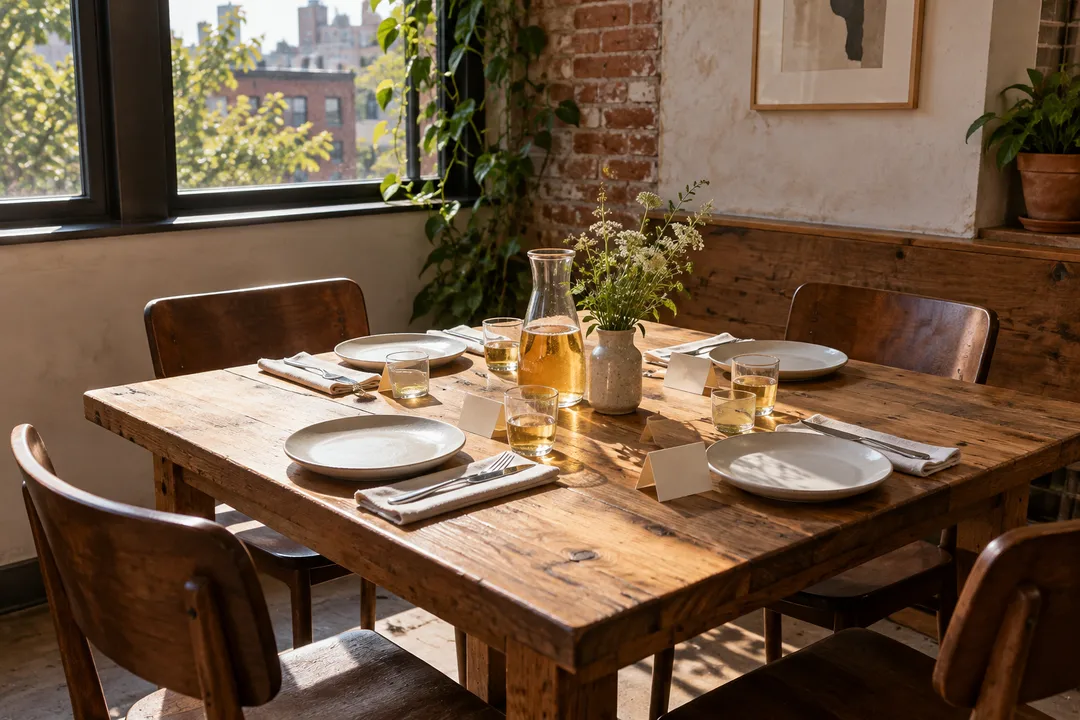
Share the selected format, meeting area, expected length and spending arrangement in plain language. Keep your personal budget labeled as a limit, and attach any actual menu information separately if you use it. The next step after a Karpo comparison is the relevant venue's own reservation or ordering process, where needed. No seat, price or stock is secured by the planning conversation. The generated photographs accompanying this guide are generic editorial illustrations. A successful group plan leaves everyone free to enjoy the gathering without spending beyond what they chose.
Ask Karpo for more information.
Keep reading
- Lower East Side Hidden Speakeasy Bar Picker for a Solo Night
 West Village Hidden Speakeasy Bar Picker for Out-of-Towners
 Carroll Gardens Hidden Speakeasy Bar Picker for a Nightcap