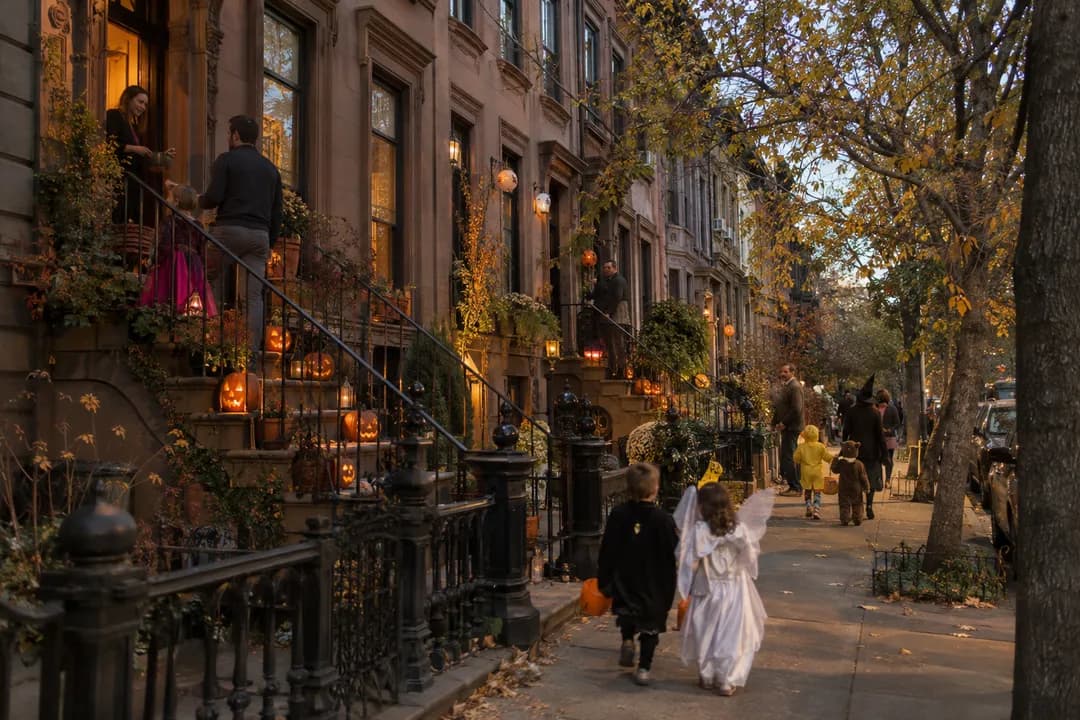
 Best Trick or Treating Neighborhoods Near Me: Park Slope
Neighborhood Guides

Astoria to Long Island City Along the Waterfront: Four Parks in Four Miles
The East River walk from Hell Gate Bridge to LIC Landing threads together four distinct parks, each with its own personality. It's the city's most underrated waterfront route, where industrial bones meet open sky.
Start where the bridges converge
You begin at Astoria Park, directly beneath the Hell Gate Bridge's rust-red arch. The bridge—officially the New York Connecting Railroad Bridge, named for the treacherous Hell Gate strait it crosses—carries Amtrak's Northeast Corridor, and trains rumble overhead periodically with a sound like distant thunder. The park's Olympic-sized pool, built in 1936 as a WPA-era project, sits empty outside summer months, its Art Deco towers standing sentinel. Walk to the southern promenade where the running track curves along the water. From here, you can see the bridges converge: Hell Gate, the RFK/Triborough Bridge nearby, and in the distance, the Queensboro. Early morning, before eight, you'll have the path nearly to yourself. The dog walkers claim the benches with the best viewing spots, positioned where the sight lines align.
The industrial interlude
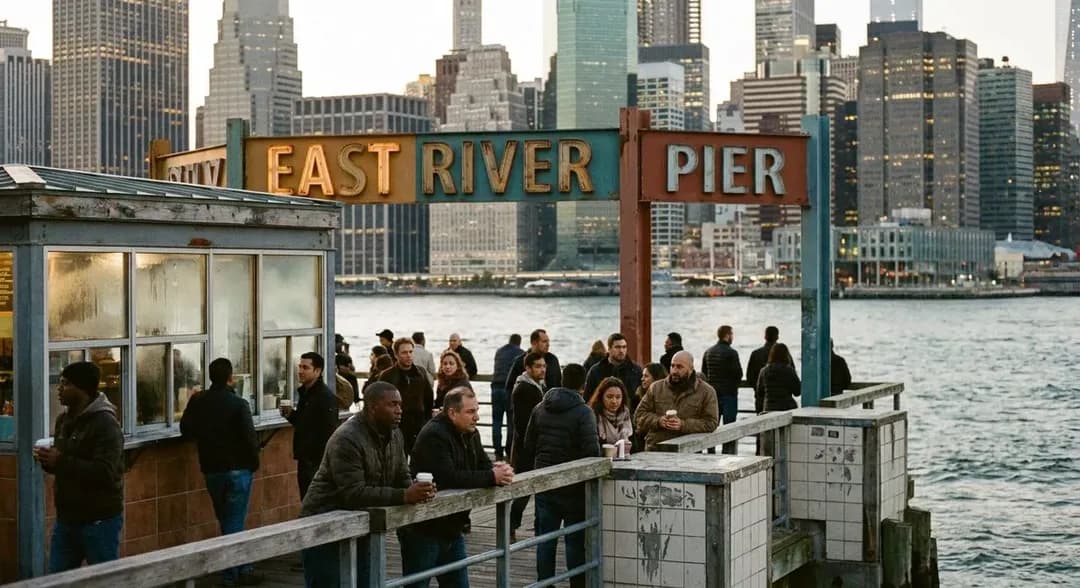
Leaving Astoria Park, you follow Shore Boulevard south. This stretch between parks is where the walk earns its character. You pass the Con Edison plant, its smokestacks a reminder that this waterfront was built for work, not leisure. The path narrows here, sometimes forcing you onto the sidewalk. You'll walk past auto repair shops and corner bodegas where the coffee is better than it has any right to be. This is the part tourists skip, which is precisely why it matters. The gap between parks teaches you something about Queens: beauty arrives in intervals, not continuous streams. Eventually, the East River reappears between buildings, and you remember why you're walking.
Rainey Park's quiet hour
Rainey Park announces itself modestly—a small sign, a break in the fence line. It's a few blocks long, this slip of green along the waterfront, and locals treat it like an extension of their living rooms. The playground equipment is well-maintained, and the real draw is the unobstructed river view: Roosevelt Island so close you can see individual windows, Manhattan's east side rising beyond. Fishermen set up at the southern tip, usually around dawn or late afternoon. They'll tell you the best catches come at slack tide, though they won't tell you their bait secrets. There's a picnic table under a tree where retired men gather to play dominoes on warm afternoons. You can hear the slap of tiles from the path.
Socrates and the art of placement
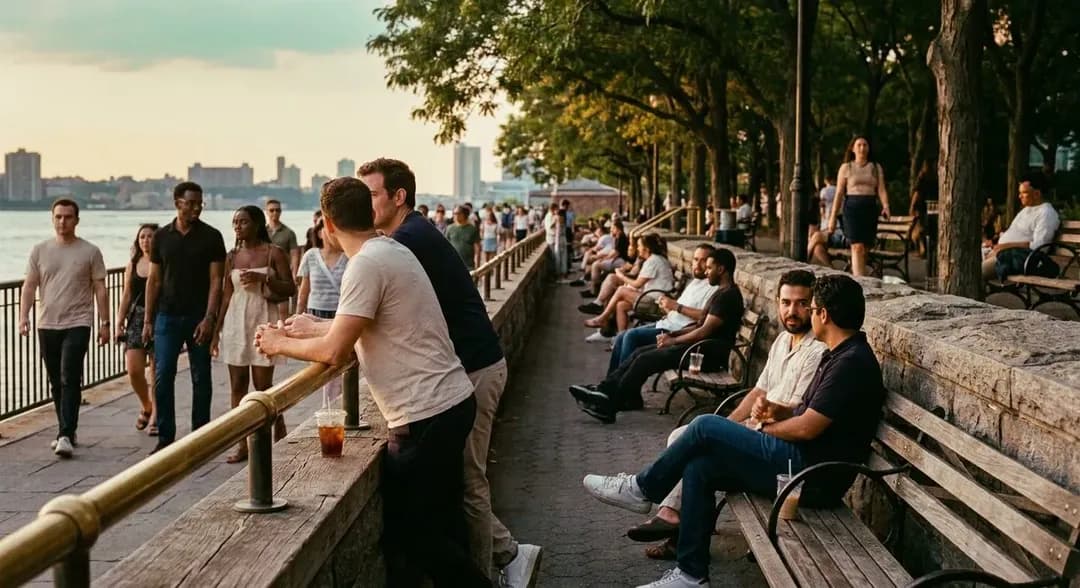
Socrates Sculpture Park appears suddenly along the waterfront—several acres of what was once an illegal dumpsite, transformed in the 1980s by artist Mark di Suvero and volunteers. The sculptures change seasonally, part of the park's rotating exhibition program, but the space itself remains constant: gravel paths, wild grasses, art placed directly on earth without pedestals or pretense. You're allowed to touch everything here. Children climb on pieces their parents photograph for proof. The northwest corner, where the land juts closest to the river, offers an excellent view of the Queensboro Bridge's underside—all rivets and geometric shadows. Visit on Sunday afternoons when the food trucks park along the entrance, or come at sunset when the Manhattan skyline performs its daily light show. The park closes at dusk, and security starts rounds before closing time.
Gantry Plaza's industrial grace
Gantry Plaza State Park is where the walk becomes architectural theater. The restored gantries—massive steel structures that once loaded rail car floats—frame the water like industrial sculpture. The park stretches along the waterfront, meticulously designed with native plantings and sight lines that draw your eye across the river to the United Nations and Chrysler Building. The northern pier extends far enough into the East River that you feel suspended between boroughs. The wooden deck offers views that align with the Empire State Building's spire. Morning joggers complete loops through the park's paths. The café near the playground opens early, and their egg sandwiches come on bread from a nearby bakery.
The final stretch to LIC Landing
From Gantry Plaza, continue south on Center Boulevard. The path becomes more manicured here, lined with new residential towers whose ground floors house coffee shops and yoga studios. You'll see LIC Landing's entrance—a low-slung building with floor-to-ceiling windows facing the water. The bar opens mid-afternoon on weekdays, earlier on weekends. Order a beer and take it to the outdoor deck. You've walked four miles, passed through four distinct parks, and traced a shoreline that most people only see from the subway. Your legs will remind you of the distance, but the view—Manhattan's east side glowing in afternoon light, ferries cutting white lines across dark water—confirms the route's logic. The walk works because it refuses to be precious about itself. It's just parks and pavement, bridges and river, the city showing you its working waterfront without apology.
Practical notes
The full route runs approximately four miles from Astoria Park to the Long Island City waterfront. Astoria Park is accessible via N/W trains to Astoria-Ditmars Boulevard. The LIC waterfront sits near Court Square (E/M/G/7 trains) or Vernon Boulevard-Jackson Avenue (7 train). The walk takes roughly ninety minutes at a steady pace, longer if you linger. The waterfront parks along the route include Rainey Park, Socrates Sculpture Park, and Gantry Plaza State Park—all free and open to the public. Wear comfortable shoes—much of the path is paved, but some sections are uneven. Best walked April through October when weather cooperates and outdoor spaces are fully accessible. Bring water; facilities available at major parks along the route.
Tags: #AstoriaPark #LongIslandCity #EastRiverWalk #QueensWaterfront #SocratesSculpturePark #GantryPlaza #RaineyPark #LICLanding #NYCWalking #TheLongWayHome #QueensNYC #WaterfrontWalk #HiddenQueens #NYCParks #UrbanHiking
Sources consulted: nycgovparks.org · mta.info · amtrak.com
Please drink responsibly. Must be of legal drinking age.
All trademarks are the property of their respective owners.
Ask Karpo for more information.
Keep reading
- Best Trick or Treating Neighborhoods Near Me: Park Slope
 Best Trick or Treating Neighborhoods Near Me: Carroll Gardens
 Best Trick or Treating Neighborhoods Near Me: West Village