Search interest around kaylee hottle can be a useful prompt, but learning ASL in New York should lead to practical communication, not celebrity curiosity alone. As of July 28, 2026, the strongest starting points are not interchangeable: Sign Language Center offers a dedicated Deaf-led ASL school model, BMCC provides a college-credit pathway, NYC’s disability office points to LaGuardia’s Program for Deaf Adults, and Baby Fingers serves caregivers and children through sign-and-song programming. The right choice depends on pace, age, access needs, commute, and whether you need conversation practice, academic credit, or family use. Treat every date, seat, room, and online link as a fact to recheck before paying.
Want a first ASL class that fits your real NYC schedule and learning goal? Text Karpo with your borough, pace, and access needs for a focused shortlist.

Sign Language Center for a Deaf-Led Adult Starter Course
Sign Language Center is the most direct pick for adults who want an ASL-specific school rather than a general enrichment catalog. Its current site lists 2026 sessions including Summer from July 6 to August 15, crash courses from August 31 to September 12, Fall from September 14 to October 24, and Late Fall from November 2 to December 19. Each semester is listed as six classes, once weekly for two hours, with in-person and Zoom options across learning levels.
The audience fit is adults and older teens who can handle visual immersion and regular practice. SLC’s FAQ says adult classes are for ages 14 and older, while younger children can use tutoring or custom groups. It also says all teachers are native Deaf ASL users and that class uses no voicing. That is a strength for serious beginners, but it can be uncomfortable if you expected spoken explanation. Ask about placement, materials, class size, makeup policy, and room access before enrollment.
SLC Makeup Rules for Busy New Yorkers
The common failure mode in ASL is missing one week and losing the visual rhythm. SLC’s FAQ says students may use one makeup class during a semester, either on Zoom or in person, and that in-person makeup is valid only during the same week missed. Additional missed classes may be handled through Zoom recordings. That makes the school workable for a busy schedule, but only if you plan absences before they happen.
Before choosing the in-person studio at 39 East 30th Street, Suite 2R, test the commute at the real class time. A delayed train before a two-hour no-voice class can turn a good course into a poor first experience. Zoom is the backup if attendance reliability matters more than room feedback, but it requires stable internet, good lighting, and a camera angle that shows hands, torso, and facial expression. Confirm pet-allergy considerations, recording access, and the exact makeup process.
BMCC ASL 105 for Credit and Academic Pacing
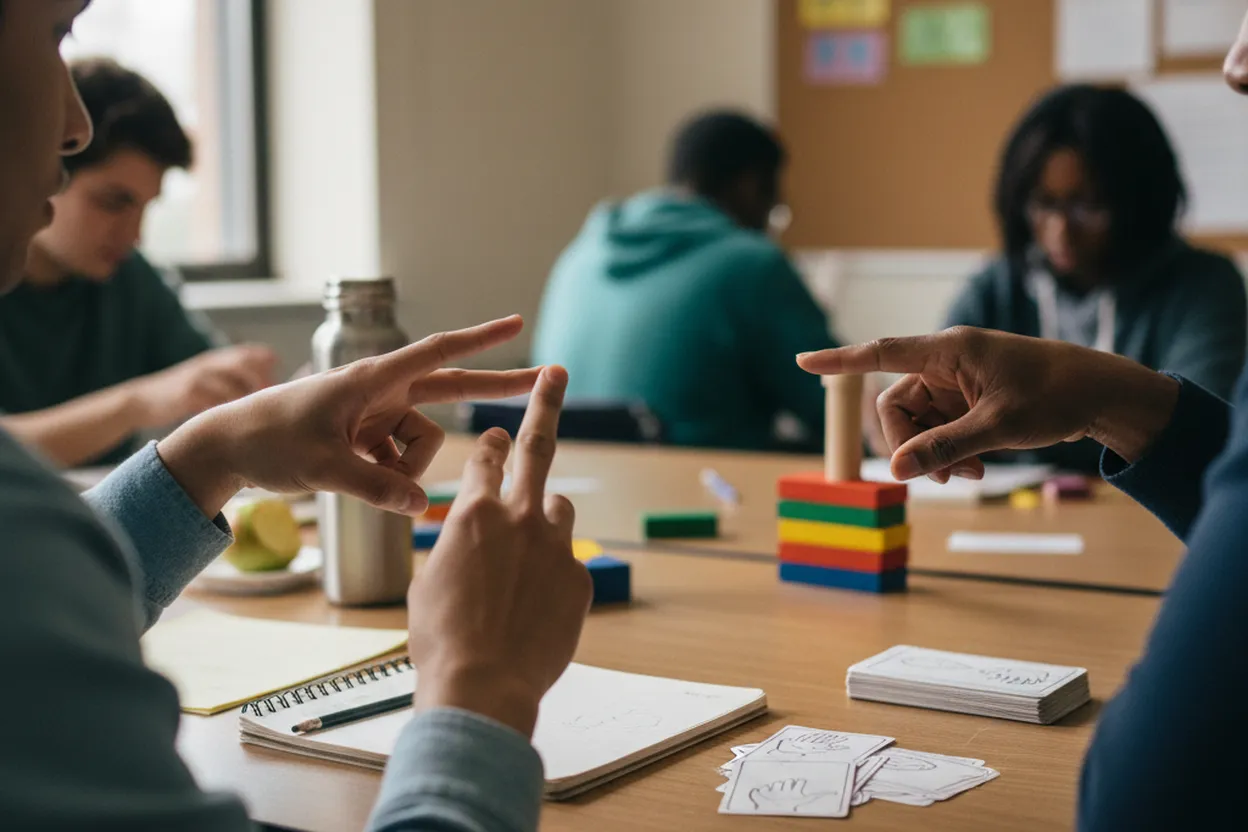
Borough of Manhattan Community College lists American Sign Language through its World Languages, Literatures, and Cultures Department. The page identifies ASL 105 as Elementary American Sign Language I, a beginner course focused on signed communication, comprehension, sign literacy, expressive skills, and awareness of Deaf and hard-of-hearing ASL users’ culture. It also lists ASL 106 as Elementary American Sign Language II, with ASL 105 as the prerequisite.
BMCC is the better fit when you need credits, a transcript, and college-course accountability. The tradeoff is administrative friction: term availability, admission or non-degree status, registration timing, tuition category, and seat limits may decide whether it works. The department page lists 199 Chambers Street, Room S-601, with weekday office hours of 9 a.m. to 5 p.m. Do not assume a course is open in the term you want; verify the schedule directly through BMCC before planning around it.
LaGuardia’s Program for Deaf Adults as an Access Checkpoint
NYC’s Mayor’s Office for People with Disabilities points New Yorkers to LaGuardia Community College’s Program for Deaf Adults. The city page describes it as a major Deaf and Deaf-related postsecondary support program. It says associate-degree students may receive counseling, registration assistance, classroom interpreters, tutors, note takers, testing accommodation, and ASL-taught special sections, while Continuing Education offerings include American Sign Language and other adult education courses.
Use LaGuardia as a decision checkpoint if access services, Deaf education, or a longer learning pathway matter. This is not a casual drop-in listing; it is a place to verify current course availability and support fit. Deaf, hard-of-hearing, DeafBlind, CODA, and Deaf-related career learners should ask who each course is designed for, whether it is taught in ASL, and what services apply. If the current class status cannot be confirmed, pause rather than building a semester around an old listing.
Baby Fingers for Caregivers Learning With Children
Baby Fingers serves a different need from an adult ASL 1 class. Its current schedule describes Signature Sign & Song classes where participants learn signs from ASL through songs and shared language activities. Listed locations include Chelsea/Flatiron at 147 W. 24th Street, the Upper West Side at 141 W. 72nd Street, the Upper East Side at 215 East 81st Street, Harlem at 318 W. 118th Street, and the East Village at 344 East 14th Street.
The upside is immediate family use: caregivers can practice with a child right away instead of waiting for adult fluency. The limitation is scope. If your goal is adult conversation, interpreter preparation, or deeper Deaf community participation, Baby Fingers should be a bridge, not the entire plan. Verify the host site, day, age range, stroller rules, registration status, and whether the class is in person, Zoom, home-hosted, outdoor, or moved because partner venues can change rooms and calendars.
Choosing Zoom or a Room for Visual Language Practice
Format matters more for ASL than for many lecture classes because the language is visual, spatial, and interactive. In person can make body orientation, turn-taking, facial grammar, and peer feedback easier to read. Zoom can reduce commute stress and make attendance more reliable. SLC confirms both in-person and Zoom classes, while Baby Fingers lists live online, outdoor, home-hosted, and Zoom-style options. Pick the format you can attend consistently, not the one that sounds ideal.
Online ASL is not passive video learning. You need a stable camera, enough signing space, and lighting that keeps hands and facial expressions visible. In-person learning has its own risks: elevator access, room crowding, late arrivals, allergies, and transit disruptions. If embodied feedback matters most, choose a room. If your work schedule or caregiving duties make travel fragile, choose Zoom. Either way, confirm makeup rules before the first missed class becomes a real problem.
July 28 Enrollment Check Before You Pay
Before paying for any NYC ASL class, verify five changing facts on the provider’s own page or by direct contact: class dates, location or online format, age eligibility, instructor or teaching model, and refund or makeup policy. Avoid relying on old blog posts, search snippets, or social screenshots when a school has its own registration page. If a provider cannot confirm the next session, treat that uncertainty as part of the decision, not a minor inconvenience.
The smartest first move is modest: one beginner sequence, one caregiver series, or one credited course. After registering, set a final verification step 24 to 48 hours before class. Confirm room, start time, transit route, camera setup, materials, accessibility request, and contact method for delays. ASL learning is cumulative, so the first practical win is not mastery. It is arriving prepared enough to watch carefully, practice, make mistakes respectfully, and return the following week.
Tags: #NYCASL #ASLClasses #AmericanSignLanguage #DeafCulture #LearnASL #NYCEducation #CUNY #BMCC #LaGuardia #SignLanguageCenter #BabyFingers #IndoorNYC #AskKarpo #BeforeYouGo
Sources consulted: Source 1: signlanguagecenter.com · Source 2: signlanguagecenter.com · Source 3: bmcc.cuny.edu · Source 4: nyc.gov · Source 5: mybabyfingers.com
All trademarks are the property of their respective owners.
Ask Karpo first
Tell Karpo your date, group size, budget, and starting neighborhood. We’ll check current access, timing, transit, and the cleanest plan for Community Centers, Colleges, Private Schools before you head out.