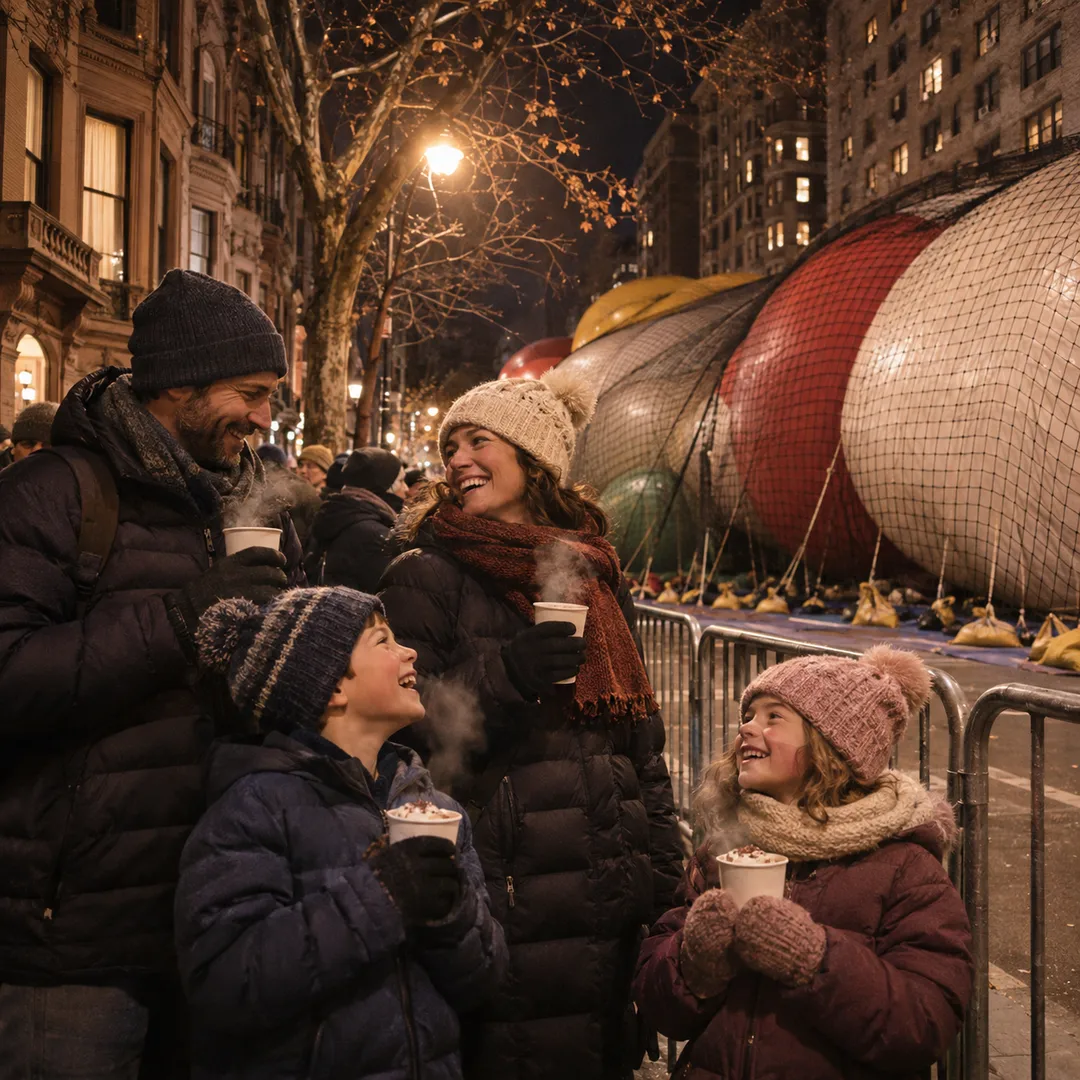
 Upper West Side Hot Chocolate Cafe Crawl on Balloon Eve
Coffee & Dessert

Everyman Espresso: Artisanal Coffee Shop in East Village
Everyman Espresso at 136 E. 13th Street serves careful coffee in the East Village from 7:30am weekdays and 8am weekends, with a calm counter rhythm.
The East Village approach to Everyman Espresso begins with the address itself, 136 E. 13th Street, New York, NY 10003, where the storefront feels embedded in a block rather than staged as a destination. The official schedule is Monday through Friday 7:30am–5:30pm; Saturday and Sunday 8am–5:30pm. That makes an early weekday cup possible without a heroic commute and leaves the weekend room for a slower walk. The cafe works best when you enter with one clear request, watch the bar move, and let the first sip decide whether the next stop is a bench, a bookstore, or another avenue. The storefront keeps the block feeling human.

How The Coffee Tastes And Feels
The room rewards a short reset because its scale keeps the ritual visible. You can see the grinder, the steam wand, the cups, and the handoff without standing in the middle of the line. A guest who knows the regular order can move quickly, while a newcomer can ask one focused question about the coffee without turning the counter into a lecture. That balance is part of the charm: serious preparation, ordinary manners, and no demand that you perform expertise. The East Village rewards this kind of small ritual.
Start with the cleanest drink you actually enjoy. A straight espresso shows temperature and finish; a brewed cup gives the clearest read on the roast; a milk drink is the right move when the morning is cold or conversation matters more than analysis. The useful rule is to order before the queue becomes a conversation circle. Add a pastry only when you want one, because the coffee is the point and the counter is not a full-service brunch room. A warm cup fits the morning better than a complicated plan.
The most considerate seating habit is simple: do not build a full office on a small cafe table during the busiest stretch. A single reader, a pair catching up, and a commuter with a takeaway cup can all coexist if laptops stay compact and bags stay underfoot. When the room fills, take the drink outside rather than hovering beside a seated guest. That choice keeps the cafe pleasant and gives you a better view of the block. The counter makes a quick visit feel complete.
A first visit is easiest before the middle of the morning, when the staff can answer a question and the best seats have not disappeared. If the line looks longer than fifteen minutes, switch to takeaway and begin the walk instead of treating the wait as a challenge. Return later only if the neighborhood is part of your plan. A good artisanal stop should add texture to the day, not consume the entire morning. Keep the first decision simple and the walk open.
The shop’s craft appears in details that do not need a slogan: a clean portafilter, milk with a smooth surface, a cup handed over at the right temperature, and a barista who can describe a coffee in plain language. Notice how the drink changes after two minutes. That small pause tells you more than a photograph does, and it turns a routine coffee into a useful sensory break before the East Village gets louder. The room shows care without demanding a performance.
Timing, Rules, And The Walk Afterward
One honest limitation is that this is not the place for a guaranteed workstation, a large meal, or a long meeting with scattered papers. Choose a library or coworking room when you need infrastructure. Choose {v} when you want a focused cup, a little street movement, and a room that can reset your attention in less time than a full sit-down meal. The distinction makes the visit feel generous rather than demanding. That boundary protects both guests and staff.
After the last sip, Stroll east toward Tompkins Square Park, then cut down St. Marks Place for record shops, bakeries, and the narrow side streets that make the East Village feel local. The route is deliberately flexible: it can be a ten-minute extension or a full afternoon loop. If rain starts, shorten it and use the nearest covered stretch; if the room was crowded, keep moving instead of waiting for a table. The coffee remains the anchor, while the neighborhood supplies the breathing room that a compact counter cannot provide by itself. The side streets are part of the payoff.
Regulars give the cafe its rhythm. There is the person who arrives before work and orders without looking at the board, the parent who pauses at the edge of the room, and the friend who treats one cup as the start of a longer conversation. Their shared rule is quiet rather than written: be decisive at the register and generous with space. Follow that rhythm and the shop feels immediately easier to read. Regulars make the rhythm easy to understand.
For people comparing artisanal coffee shop options, the right question is not which place has the most elaborate menu. It is which address matches the kind of morning you want. Here, the answer is a compact ritual with a neighborhood payoff. The drink can be precise without being precious, and the surrounding streets give you an immediate next move once the cup is finished. The address works for repeat visitors.
Practical notes: save 136 E. 13th Street, New York, NY 10003 in your map, use the official schedule of Monday through Friday 7:30am–5:30pm; Saturday and Sunday 8am–5:30pm as the planning baseline, and carry a payment method that works at a fast counter. Keep the order short when a line forms, avoid placing a bag on a shared chair, and take the drink outside if every seat is occupied. Those small choices protect the room’s pace and improve your own visit. A map and a little patience are enough.
The best reason to return is repetition. A first cup tells you how the shop handles the basics; a second visit lets you compare a different preparation, a different hour, and a different mood on the same block. That is the useful meaning of artisanal here: care is repeated at ordinary speed, without turning every customer into a student or every drink into a ceremony. The ritual becomes more useful with repetition.
Ask Karpo for more information.
Keep reading
- Upper West Side Hot Chocolate Cafe Crawl on Balloon Eve
 Park Slope Hot Chocolate Cafe Crawl After a Snow Day Sled
 Upper East Side Hot Chocolate Cafe Crawl With a Grandparent