 Chelsea Consignment Shop Crawl Planner for Your First Studio
Hidden Gems & Odd Finds
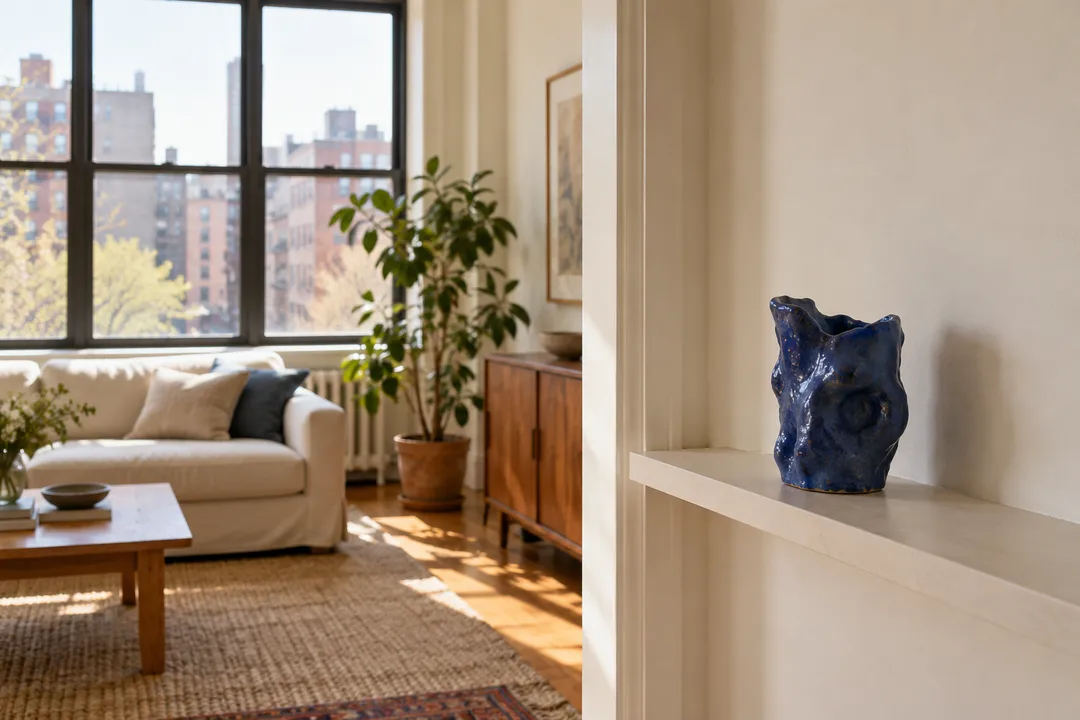
NYC Artisan Pottery Gallery: 5 Ways to Size Sculpture
Choose sculpture at an NYC artisan pottery gallery using five measurements of fit: footprint, height, viewing distance, visual weight, and the route home.
A ceramic sculpture needs room around it as well as room beneath it. Before visiting an NYC artisan pottery gallery to buy for a small home, consider five kinds of fit: footprint, height, viewing distance, visual weight, and the route home. These questions help define a shopping brief without reducing the work to a color match. Begin with the location where you will live with the object, then use the Karpo APP to ask for a ceramic art outing shaped around that purpose.
Start With an Empty Place
Choose one possible display location and temporarily clear it. Notice what the place does during an ordinary day. A console that also catches keys or shopping bags has different demands from an enclosed shelf. A striking object should not depend on everyone changing a useful habit forever. If the location has no stable surface or needs to remain available for another task, look elsewhere before beginning the search. A small home can make space for art without turning every working surface into a display.
Fit One: Draw the Whole Footprint
Measure the depth and width of the available surface, then make a paper outline of the space an object could occupy. Leave a margin rather than taking the entire shelf as your target. The widest part of an irregular sculpture may project beyond its base. Keep both dimensions in your notes. When you encounter a piece, ask for its overall measurements instead of recording only the base. This simple distinction can prevent a form from overhanging a narrow support even when its foot appears to fit.
Fit Two: Look Above the Object
Height includes the space your eye needs to understand the top of a form. A tall sculpture tucked beneath another shelf may physically fit while feeling crowded. Measure the clearance and look at the display from the position you actually use, whether seated across the room or standing near the entry. Do not buy a piece assuming that a shelf can be moved unless moving it is already part of your plan. Let the existing constraints guide the first shortlist instead of treating them as an afterthought.
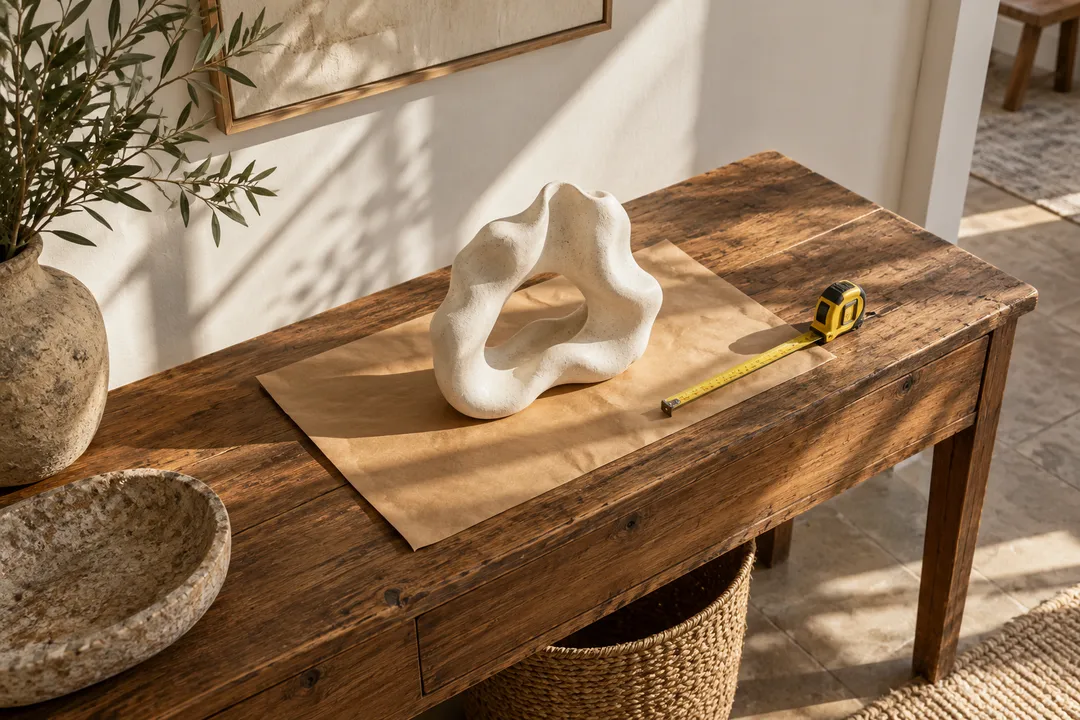
Fit Three: Find the Everyday View
Look toward the empty location from a chair, a doorway, and the place you pass most often. Each distance reveals a different aspect of scale. A small object with delicate marks can reward close attention but disappear from across the room. A broad silhouette may read clearly from farther away. Decide which experience you want. This is a question of your viewing habits, not a rule that a small apartment requires miniature art. A single strong form can have a useful presence when it has breathing space.
Fit Four: Notice Visual Weight
Two objects with similar measurements can feel very different. An open shape lets the background show through, while a solid dark volume may command more attention. Compare the intended piece with the light, colors, and nearby objects in your home. A photograph of the display location can be a memory aid, but a phone image does not reproduce surface or color perfectly. Use it to discuss scale and context rather than demanding a guaranteed match between a glazed surface and a digital image.
Fit Five: Include the Journey Home
The work has to reach its display location before it can become part of the room. Consider carrying, delivery if offered, the route through the building, and the final lift onto the surface. Ask the seller about the exact object's weight, packing, and handling. Keep those answers attached to the piece. A manageable size in a gallery can become awkward once packed. Do not assume a handle-like feature is suitable for lifting, or that an irregular projection can take pressure during transport.
Turn Measurements Into an Outing Brief
An example request is: Help me find a ceramic sculpture browsing outing in New York. I am choosing one object for a shallow shelf and want to see the scale in person. I have time for one stop before dinner. Add your preferred area, travel limit, and personal spending ceiling. Karpo's public site describes suggestions based on your mood and schedule. The measurements help explain your purpose, while the seller provides the dimensions and sale terms for any individual work you consider.
At the Gallery, Compare Without Rearranging
Describe your display location to the person assisting you and ask whether they can show the work from another angle. Follow their handling instructions. There is no need to move several fragile pieces yourself to create a home-like arrangement. Notice the silhouette, the base, and how the surface changes as your viewpoint shifts. If photographs are permitted, include something that records scale only with the gallery's agreement. Keep the identity and dimensions of each candidate clear so details from two objects do not become mixed.
Decide What You Are Willing to Change
Sometimes a piece is compelling enough to inspire a different location at home. That can be a considered choice. Write down the change it would require: removing other objects, buying a suitable support, or choosing a room with more space. Treat the extra work and cost as part of the decision. Skip the purchase if the plan depends on a vague promise to make room later. A clearly chosen location gives the object a better future than a temporary resting place that remains unresolved for months.
Keep Meaning Separate From Decoration
A work can connect with you through form, a particular maker's thinking, or an association you discover while looking. Leave room for that response after the measurements have done their practical job. Ask about the title or the artist's stated intention if it interests you, without expecting the seller to validate a personal interpretation. You are deciding whether you want to live with the piece. The final choice can be emotionally specific while still respecting a shelf's depth and the route through your front door.
Practical Notes for a Decision You Can Keep
Carry a concise note with the five fit questions and the measurements you took. Record only the actual candidate's dimensions, any handling directions provided, and the terms offered for its purchase. This article recommends no particular gallery inventory and supplies no object prices. End the outing with a clear yes, a clear no, or a named question that remains unresolved. For another search, tell the Karpo APP which scale or form held your attention so the next outing reflects what you learned about your space.
Ask Karpo for more information.
Keep reading
- Chelsea Consignment Shop Crawl Planner for Your First Studio
 East Village Consignment Shop Crawl Planner: Leather Jackets
 Harlem Consignment Shop Crawl Planner for a Jazz Night Look