 Chelsea Consignment Shop Crawl Planner for Your First Studio
Hidden Gems & Odd Finds
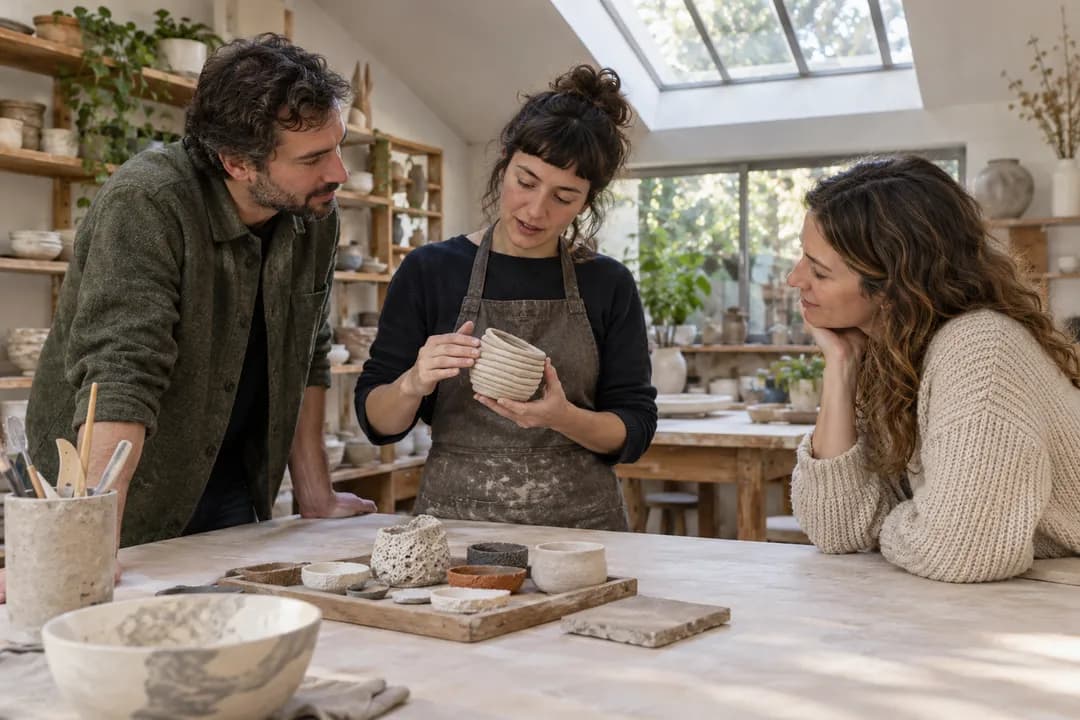
NYC Artisan Pottery Gallery: 4 Questions for Artist Talks
Choose an NYC artisan pottery gallery artist talk by its format and your interests, then prepare four questions about process, choices, meaning, and use.
Choose a conversation format before searching for an NYC artisan pottery gallery artist talk. A public discussion, a making demonstration, and a casual exhibition reception offer different ways to learn. Decide whether you want to hear an artist explain a body of work or ask about a particular object. Then use four questions as your preparation: how it was made, why a choice was made, what it means to the artist, and how it is meant to be used.
Find a Discussion, Not Just an Opening
An exhibition opening can provide a chance to see work without offering a scheduled artist conversation. A demonstration may focus on a technique while leaving little time for the ideas behind an exhibition. Make the distinction explicit in a Karpo APP request. Ask for a ceramics event with a stated talk or question period if that is the experience you want. A promising event description should tell you who is speaking and what kind of participation the audience can expect.
Let One Object Lead Your Preparation
Pick a feature that makes you curious: a rough foot, a repeated mark, a lid that does not quite close the way you expected, or an unusual relationship between several forms. Write the observation plainly. You do not need to identify a firing technique to ask about a surface. Looking carefully gives the artist something specific to respond to and helps you avoid a broad question that would require an entire career story as its answer.
Question One: What Happened During Making?
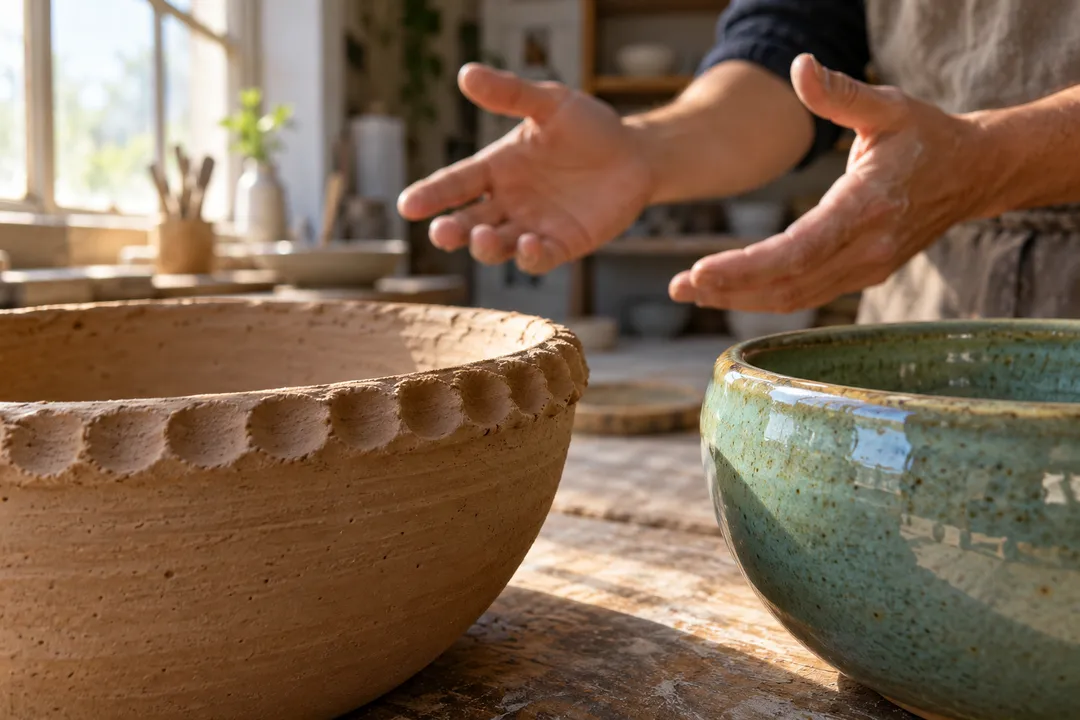
Ask about a visible decision rather than demanding a technical recipe. You could say that you notice ridges continuing around the form and wonder how they emerged. The answer might concern construction, alteration, or something else entirely. Leave space for that possibility. An artist is not obliged to disclose a proprietary process, and a public talk is not private tuition. A good process question connects a detail in front of you to the work of making it, without requiring expertise from either audience or questioner.
Question Two: Why This Choice?
After hearing what happened, ask why the artist kept a particular result. Perhaps an uneven edge is intentional, perhaps it developed unexpectedly, or perhaps your interpretation is wrong. Phrase the question as curiosity, not correction. A useful version is: What interested you about leaving that edge visible? This invites a discussion of judgment. It also reveals a difference between noticing irregularity and deciding that irregularity must be a defect. The artist can explain the choice in the terms that suit the work.
Question Three: What Connects the Pieces?
A group of objects may share a subject, a recurring shape, or a sequence of experiments. Ask what the artist sees as the connection rather than supplying a symbolic meaning and asking for approval. You might point out that two pieces seem related but differ in scale. That allows a conversation about development without assuming one is a study for the other. Titles and wall text can provide starting points, yet an interpretation remains a question until the artist actually supports it.
Question Four: Is Use Part of the Work?
A vessel-shaped sculpture may invite thoughts about holding something without being intended for that purpose. If the distinction matters to you, ask whether everyday use is part of the artist's intention. Keep practical safety or care questions attached to the exact object being discussed. An explanation about one cup does not establish how every piece in the exhibition should be treated. If you are considering a purchase, the sales conversation can happen separately rather than occupying the public question period with transaction details.
A Short Request for the Right Event
For an example brief, write: I would like a New York ceramics talk where beginners can listen and ask a question. I am interested in sculptural vessels rather than a hands-on class, and I can attend on a weekend afternoon. Add your starting area and travel limit. Karpo's public introduction invites users to ask what is worth seeing and describes working around their schedule. Use that conversation to seek options that match your learning goal, then read each event's actual participation description.
Evaluate the Event on Its Own Terms
Before choosing, distinguish the named speaker, the subject, and the audience arrangement. Is the speaker the maker, a curator, or a moderator interviewing several people? Is there an audience question period, a lecture, or an informal tour? These differences affect the experience more than a photograph of a crowded opening. A small amount of clearly described participation can be a stronger fit than a long event with an ambiguous format. Keep registration requirements and any published attendance instructions with the selected event.
Give Other Listeners Room
Prepare four questions but expect to ask only one if time is limited. Listen for the answer before taking your turn, since the speaker may have covered your subject during the talk. Start with the object or remark you mean, then ask a single clear question. Avoid turning an observation into a lengthy speech about your own work. If the conversation raises something personal or detailed, a brief request to speak afterward is more considerate than insisting the entire audience stay with your topic.
Notes That Preserve What Was Actually Said
Record a few words after the discussion while separating your interpretation from the speaker's statement. An unusual firing story, for example, should not become a rule about all ceramics. If you want to quote the artist publicly or record the talk, obtain the permission required by the event and the person speaking. A private sketch or note can help you remember a form without interrupting the discussion. The most useful souvenir may be a more precise way of describing what you see.
Practical Notes: Leave With One Next Question
Build enough time around the event for arrival and the announced discussion, rather than planning another destination immediately after the first question. Skip a making class when your goal is conversation, and choose a talk with a clear subject instead. This page offers a preparation method rather than announcing a particular scheduled event. Your next step is a request in the Karpo APP that names the format, your available time, and the detail you want to understand. Let the next visit extend that curiosity instead of repeating the same broad search.
Ask Karpo for more information.
Keep reading
- Chelsea Consignment Shop Crawl Planner for Your First Studio
 East Village Consignment Shop Crawl Planner: Leather Jackets
 Harlem Consignment Shop Crawl Planner for a Jazz Night Look