 Chelsea Consignment Shop Crawl Planner for Your First Studio
Hidden Gems & Odd Finds
Williamsburg Artisan Leather Goods Shop: 5 Questions to Ask
Williamsburg's newest leather landmark is the two-floor Hermès store on North Sixth Street, opened in 2026. Bring five maker questions and judge any bag fairly.
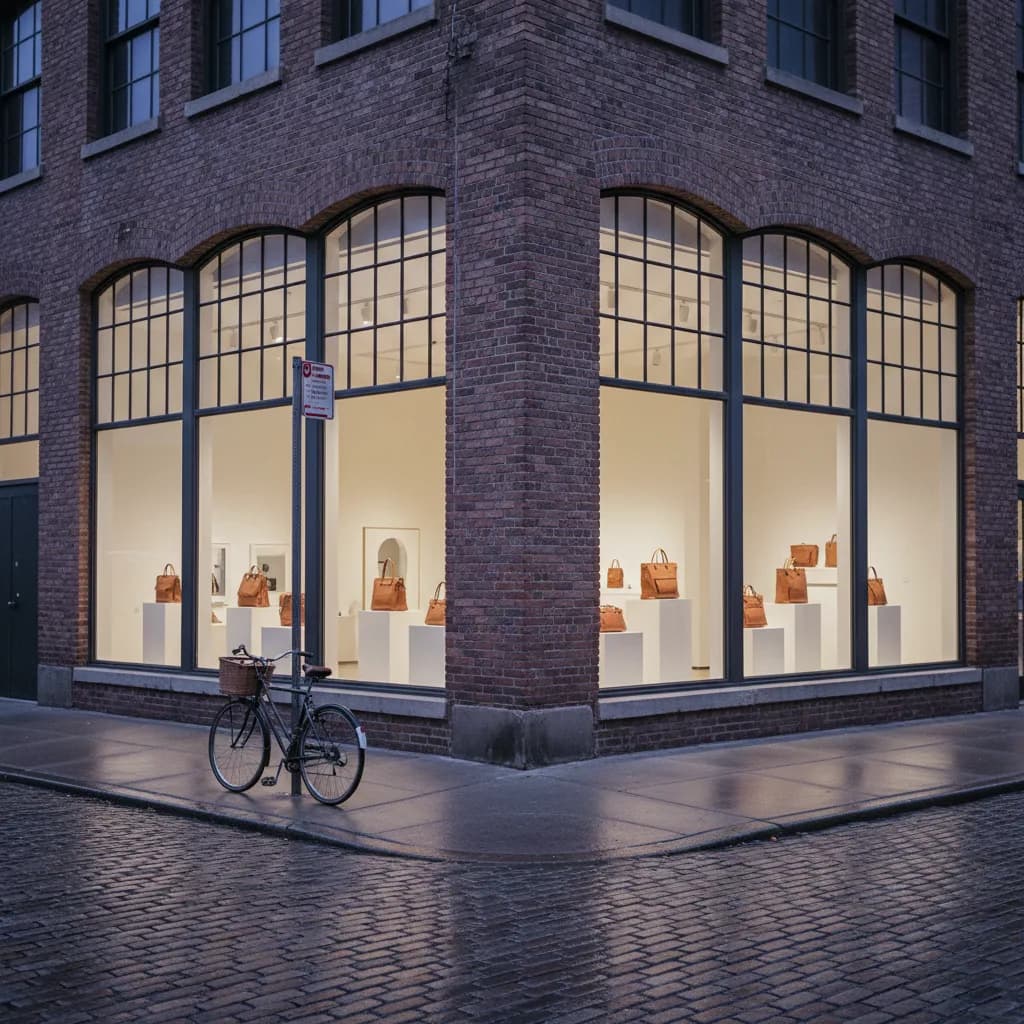
Hermès opened a permanent two-floor store in Williamsburg in 2026, at North Sixth Street and Berry Street, after first testing the neighborhood with a pop-up. It is the house's 44th store in the United States, and the Paris firm RDAI designed it to evoke a traditional Brooklyn workshop, with five different masonry facades that echo the surrounding blocks. For anyone searching for an artisan leather goods shop in Williamsburg, it is now the most visible place to study fine leatherwork up close, and entry is free.
What Is Actually Inside the North Sixth Street Store
Trade coverage of the opening describes the store presenting all sixteen of the house's métiers, its term for its craft divisions, across both floors, with Williamsburg-based artists contributing to the walls and flooring details. Leather is where the company began, as a Paris harness workshop in the nineteenth century, so it is worth heading straight to the small leather goods and belts, where the stitching and edges are easy to see at close range without needing a staff member to unlock anything.
A word on expectations: the house's most famous handbags are hard to find on open shelves in any of its stores, and Williamsburg will not change that. Treat the visit as a lesson in finishing rather than a shopping trip for an icon. A belt, a card holder or a leather bracelet shows the same hand-stitching technique at a scale you can study, and staff are generally happy to explain how a piece was made.
Five Questions That Work in Any Leather Shop
Whether you are standing in a heritage house or at a maker's table in a pop-up, the same questions reveal how a piece was built. First: what tannage is the leather? Vegetable-tanned hide ages and darkens. Chrome-tanned hide stays stable and resists water. Neither is better, but you should know which you are buying. Second: where does the hide come from, and which tannery finished it? A maker who can answer that easily has thought about the material rather than ordering it from a catalogue.
Third: is it hand-stitched or machine-stitched? A true saddle stitch uses two needles on one thread, so if one stitch breaks the seam does not unravel. A machine lockstitch is quicker and perfectly sound on many items but behaves differently when it fails. Look for the slight slant of each stitch, which is the signature of hand work. Fourth: what thread is it? Waxed linen and braided polyester both last. Cotton thread on a bag strap does not.
Fifth, and most important: what happens when it breaks? Ask whether the maker or the shop repairs its own pieces, how long that takes, and whether straps, handles or hardware can be replaced. A confident answer to that question is worth more than any brand story, because a leather bag that can be repaired is one you will still be carrying in twenty years.
Turning the Visit Into a Neighborhood Loop
North Sixth Street sits a few blocks from the East River, so pair the store with the waterfront. Walk south along Kent Avenue to Domino Park, built on the site of the former Domino Sugar refinery, where the restored refinery building and salvaged industrial machinery line the promenade. The view across to Manhattan is the classic Williamsburg backdrop, and the benches give you a place to unwrap whatever you bought and decide whether you love it.
If you are coming from Manhattan, the L train to Bedford Avenue leaves you only a few minutes' walk from the store. Bedford Avenue itself is lined with independent boutiques and cafes, and heading north toward McCarren Park takes you through blocks where small makers have long sold through pop-ups and markets. Treat those encounters as a chance to use the five questions above: the best independent leatherworkers love being asked about their stitching.
Who Comes and When to Go
Weekend afternoons in north Williamsburg are busy with day-trippers, brunch crowds and people walking the waterfront, and a newly opened luxury store draws its own curious stream. A weekday late morning is calmer for looking closely. Expect to share the floor with design-minded locals who have watched the building go up, visitors who came from the city to see the new store, and serious collectors comparing leathers against pieces they already own.
If the store is crowded or you feel rushed, do not stay: walk the waterfront and come back later in the afternoon. The same applies at a pop-up table. If a maker cannot answer where the leather came from or how a seam was sewn, it is fine to thank them and move on. There is no shortage of craft in this part of Brooklyn.
Commissioning a Piece From an Independent Maker
If a conversation at a market table turns into a custom order, agree on the details in writing before any money changes hands. Note the leather type and color, the thread color, the exact dimensions, whether initials are included, and the expected finish date. Ask to see a swatch of the actual hide, because the same leather name can look very different from one batch to the next. Most small leatherworkers ask for a deposit on custom work. That is normal, but keep a record of it. A good maker will also tell you plainly when a design idea will not hold up in leather, and that honesty is a sign you have found the right person to make it.
Letting Karpo APP Do the Planning
Karpo APP is useful for stitching the afternoon together. Tell it you want to see the new store, walk the waterfront and find somewhere quiet to sit afterward, and it can suggest an order that makes sense and keep the places on one list. If you follow makers who show up at weekend markets, it can remind you of a market date you saved. It does not reserve anything or check store inventory. It simply keeps the plan in one place.
Practical Notes
The Hermès Williamsburg store is at North Sixth Street and Berry Street. Bedford Avenue on the L train is the nearest subway stop. Walking in to look around costs nothing. Bring the five questions on your phone notes, and if you want to compare finishing, carry a wallet or belt you already own so you can hold it next to what you are inspecting. Domino Park is a short walk south along Kent Avenue for the river view afterward.
Ask Karpo for more information.
Keep reading
- Chelsea Consignment Shop Crawl Planner for Your First Studio
 East Village Consignment Shop Crawl Planner: Leather Jackets
 Harlem Consignment Shop Crawl Planner for a Jazz Night Look