 SoHo Tailor Alteration Shop Finder for Sample Sale Finds
Neighborhood Guides
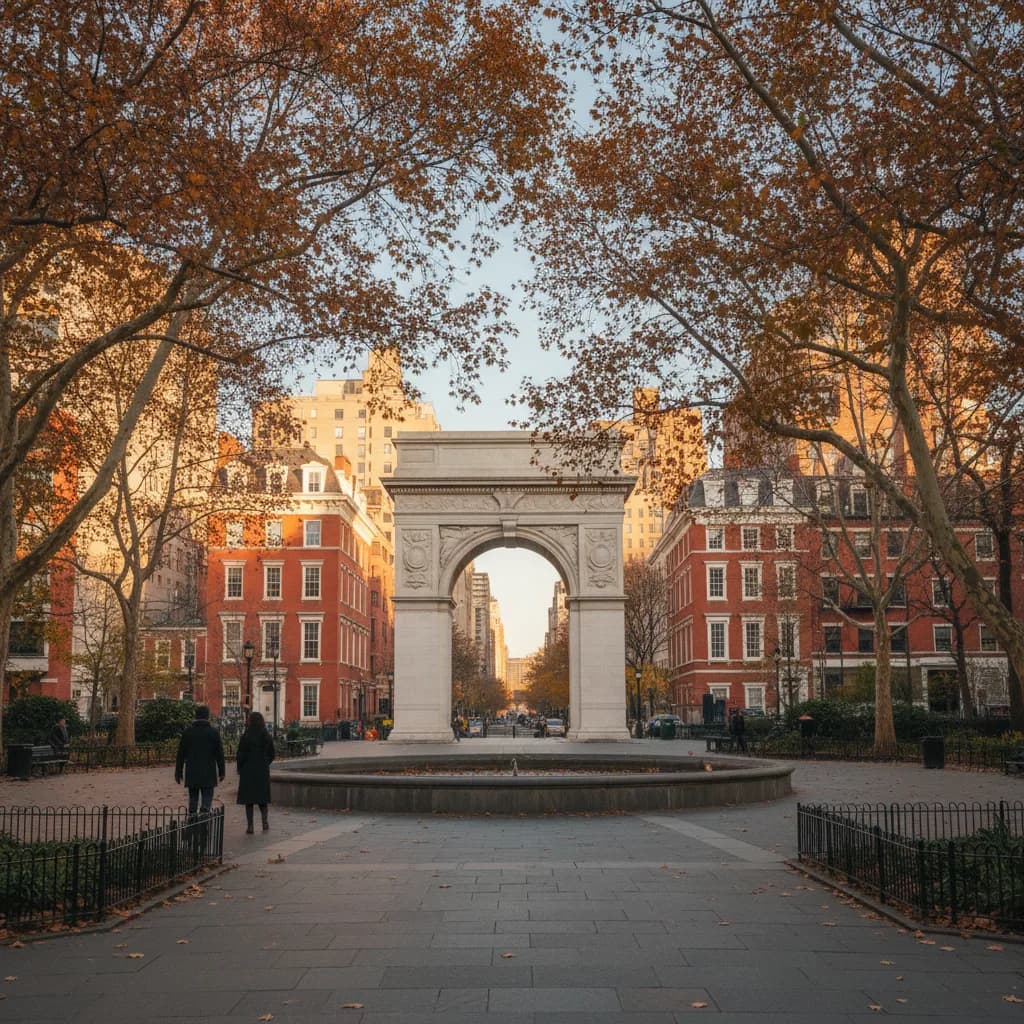
Greenwich Village Art Walk Route Planner: Free Arch Loop
Start beneath Washington Square Arch, visit free 80WSE Gallery at 80 Washington Square East Tuesday to Saturday from 12 PM, and end at Salmagundi.
Standing beneath the Tuckahoe marble span of Washington Square Arch at the foot of Fifth Avenue puts three centuries of New York visual culture within a half-mile radius, making this plaza the natural starting point for a Greenwich Village art walk route planner. Free afternoon exhibitions at 80WSE Gallery on Washington Square East and parlor-level salon shows inside the historic Salmagundi Club brownstone on lower Fifth Avenue let you experience museum-caliber curation without buying a single ticket. Ordering the loop from the park's eastern edge up through nineteenth-century carriage-house alleys keeps every stop calm, shaded, and completely free of tourist bus crowds.
Starting at Stanford White's 1895 Arch and 80 Washington Square East
Arrive via the West 4th Street subway station on the A, C, E, B, D, F, or M lines, or take the R or W train to 8th Street and Broadway for a $3.00 OMNY tap, then walk straight to the northern plaza of Washington Square Park. Dedicated in 1895 from designs by architect Stanford White to commemorate the centennial of George Washington's inauguration, the seventy-seven-foot marble arch anchors two monumental limestone piers carved by Hermon Atkins MacNeil in 1916 and Alexander Stirling Calder in 1918. Morning and early-afternoon sun strikes the southern frieze cleanly before buskers and afternoon chess crowds fill the fountain rim.
Walk ninety seconds east along Waverly Place and turn south to 80 Washington Square East, home to New York University Steinhardt's nonprofit contemporary exhibition space, 80WSE Gallery. Admission is free and open to the public Tuesday through Saturday from 12:00 PM to 6:00 PM, with galleries closed Sunday and Monday. Spanning five interconnected rooms across the ground floor, 80WSE mounts deeply researched solo retrospectives, archival downtown performance exhibitions, and experimental group shows curated alongside working artists and faculty.
Inside 80 Washington Square East, the crowd skews quietly attentive: graduate studio researchers taking penciled notes, downtown book designers studying archival ephemera in glass cases, and longtime Village residents dropping in during midday errands. Even if you pass through early in the morning or after 6:00 PM, walk four blocks northeast to the corner of Broadway and East 10th Street to view 80WSE's Broadway Windows, three street-facing illuminated vitrines that display site-specific installations twenty-four hours a day right from the sidewalk.
Tracing Sculptor Stables Along Washington Mews and MacDougal Alley
Skip heading south of Washington Square Park onto MacDougal and West 3rd Streets during late afternoon or weekend evenings. Narrow sidewalks there bottleneck quickly around neon comedy-club barkers, slice queues, and undergraduate bar crowds, offering almost no daytime visual art. Instead, stay north of Waverly Place and walk back past the classic 1830s red-brick Greek Revival townhouses known as The Row along Washington Square North.
Half a block north of the park between University Place and Fifth Avenue, peer down the Belgian block paving of Washington Mews, a gated private lane of two-story nineteenth-century horse stables originally built to serve the grand residences on Washington Square North. When carriages gave way to automobiles in the early twentieth century, painters and sculptors leased these skylit brick coach houses for their high ceilings and heavy ground-level timber doors.
Cross Fifth Avenue and pause at the western cul-de-sac of MacDougal Alley between West 8th Street and Washington Square North. Sculptor Gertrude Vanderbilt Whitney converted a carriage studio on this exact lane in 1907 and soon linked adjoining townhouses on West 8th Street into the Whitney Studio Club, planting the institutional seed that later grew into the Whitney Museum of American Art. Iron gas-style streetlamps and vine-covered brick walls still preserve the quiet scale of prewar bohemian Greenwich Village.
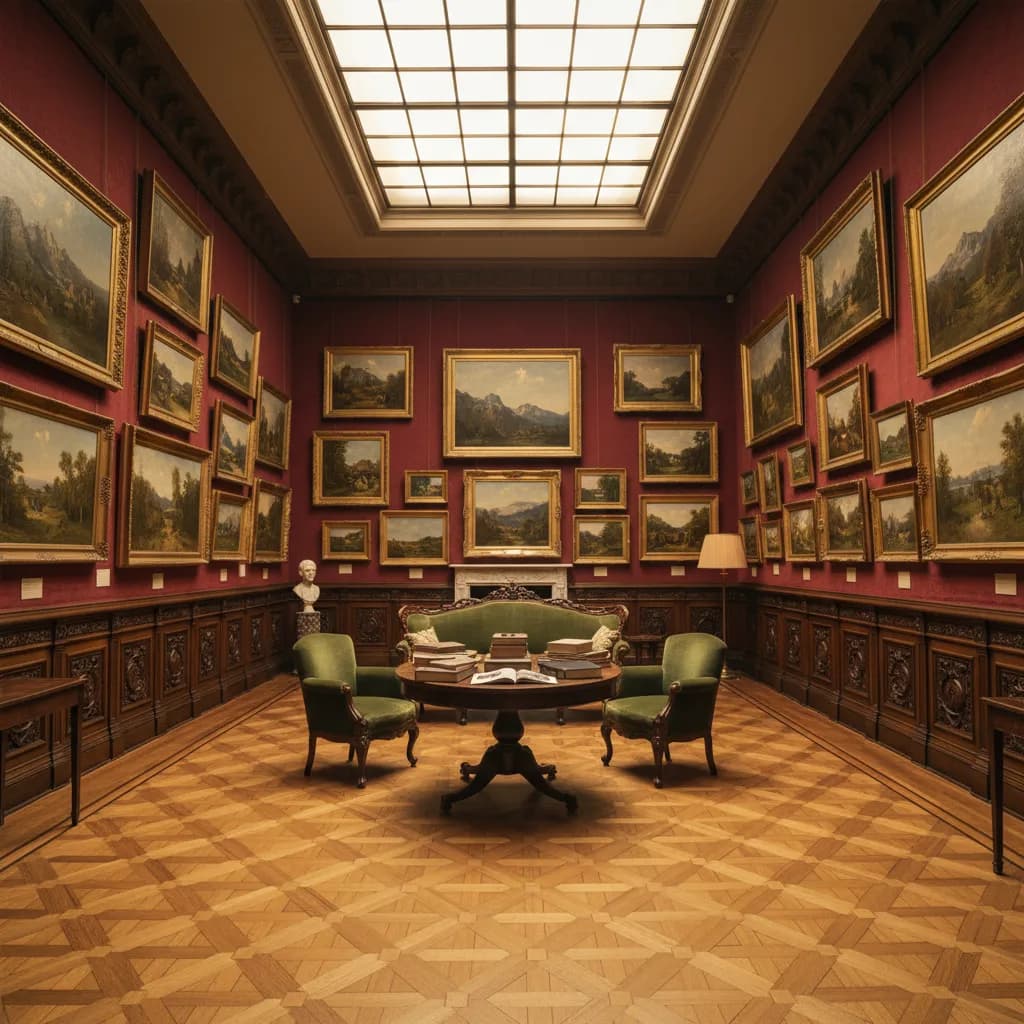
Ascending the 1853 Brownstone Stoop on Lower Fifth Avenue
Turn north up the tree-lined eastern sidewalk of lower Fifth Avenue past the 1841 Gothic Revival brownstone tower of the Church of the Ascension at West 10th Street, then climb the wide stone stoop at 47 Fifth Avenue between 11th and 12th Streets. Built in 1853 for dry-goods merchant Irad Hawley, this stately Italianate residence is the last surviving mid-nineteenth-century brownstone mansion on lower Fifth Avenue and has served since 1917 as the clubhouse of the Salmagundi Club, one of America's oldest artists organizations, founded in 1871.
Many walkers assume those heavy carved oak clubhouse doors are members-only, yet Salmagundi's parlor and skylit upper galleries welcome the general public free of charge Tuesday through Friday from 1:00 PM to 6:00 PM and Saturday through Sunday from 1:00 PM to 5:00 PM, closing Mondays and major holidays. Stepping into the crimson-walled Rockwell Gallery feels worlds apart from stark white loft rooms: oil seascapes, tonalist cityscapes, etching portfolios, and figurative bronzes hang beneath towering nineteenth-century plaster moldings and brass chandeliers.
Take ten extra minutes to inspect the mahogany woodwork, vintage etching presses, and historic wooden artist palettes preserved along the parlor corridor, a tradition stretching back to nineteenth-century club members such as Childe Hassam, William Merritt Chase, and N. C. Wyeth. Conversations in the room move at a library whisper among plein-air painters comparing brushwork, art historians checking exhibition catalogs, and neighborhood walkers warming up from the Fifth Avenue breeze.
On your way back down the stoop, glance two blocks south at the brownstone sanctuary of the Church of the Ascension on Fifth Avenue and West 10th Street, redesigned in the late 1880s by Stanford White alongside muralist John La Farge and sculptor Augustus Saint-Gaudens. Seeing White's marble arch on the square and his collaborative Gilded Age interior blocks apart reveals how tightly Greenwich Village's artistic patrons and architects worked within a five-minute radius.
Weather Pivots Toward Cooper Square and Union Square
Should a cold rainstorm sweep across Washington Square mid-afternoon, this compact corridor gives you instant indoor options within six blocks. From the Salmagundi stoop between 11th and 12th Streets, you sit three minutes south of the massive Union Square subway hub serving the 4, 5, 6, L, N, Q, R, and W lines, or a ten-minute walk east along East 8th Street to Astor Place and Cooper Square. When you step back outside in the late afternoon and want to find a quiet literary cafe, tea room, or early dinner table tucked off University Place, open the Karpo APP and ask for neighborhood spots around West 11th Street or Fifth Avenue.
Covering barely nine-tenths of a mile from Stanford White's marble arch through 80WSE Gallery, Washington Mews, MacDougal Alley, and the Salmagundi Club stoop, this Tuesday-through-Saturday afternoon walk pairs radical university curation with Gilded Age salon history without spending a cent on entry.
Ask Karpo for more information.
Keep reading
- SoHo Tailor Alteration Shop Finder for Sample Sale Finds
 Williamsburg Tailor Alteration Shop Finder for Bike Riders
 Upper West Side Tailor Alteration Shop Finder for Kids