There's a quiet revolution happening in the art supply shops below Canal Street. Instead of simply selling tubes of paint and sketchbooks, these storefronts have cleared floor space for easels, scheduled figure models, and invited strangers to draw together on Tuesday nights. By late May 2026, six shops across Tribeca and SoHo have doubled as community art rooms—part retail, part atelier, with the kind of ink-stained camaraderie that makes you want to finally learn watercolor or try your hand at gesture drawing. The classes are unpretentious, the instructors working artists themselves, and the barrier to entry refreshingly low.
Figure drawing under warehouse skylights
A long-running art supply shop on the western edge of Tribeca—one of those high-ceilinged spaces that once warehoused textiles—now hosts drop-in figure drawing on Thursday evenings. The light through the skylights goes amber around seven, and by the time the model takes the stand, twenty easels form a loose circle on the scuffed wood floor. Charcoal dust settles into the grooves between planks. No one checks portfolios at the door; you pay fifteen dollars, grab a drawing board, and find a sight line.
The sessions run long poses—twenty minutes, then forty—which means you have time to correct a shoulder, rework a hip, or simply stare and start over. Between poses, participants compare line weight and smudging techniques with the easy shop talk of people united by a shared struggle. By nine-thirty, the model steps down, someone sweeps up the vine charcoal dust, and the space returns to its daytime identity: aisles of gouache and gesso, rolls of canvas leaning against brick.
Watercolor Wednesdays in SoHo
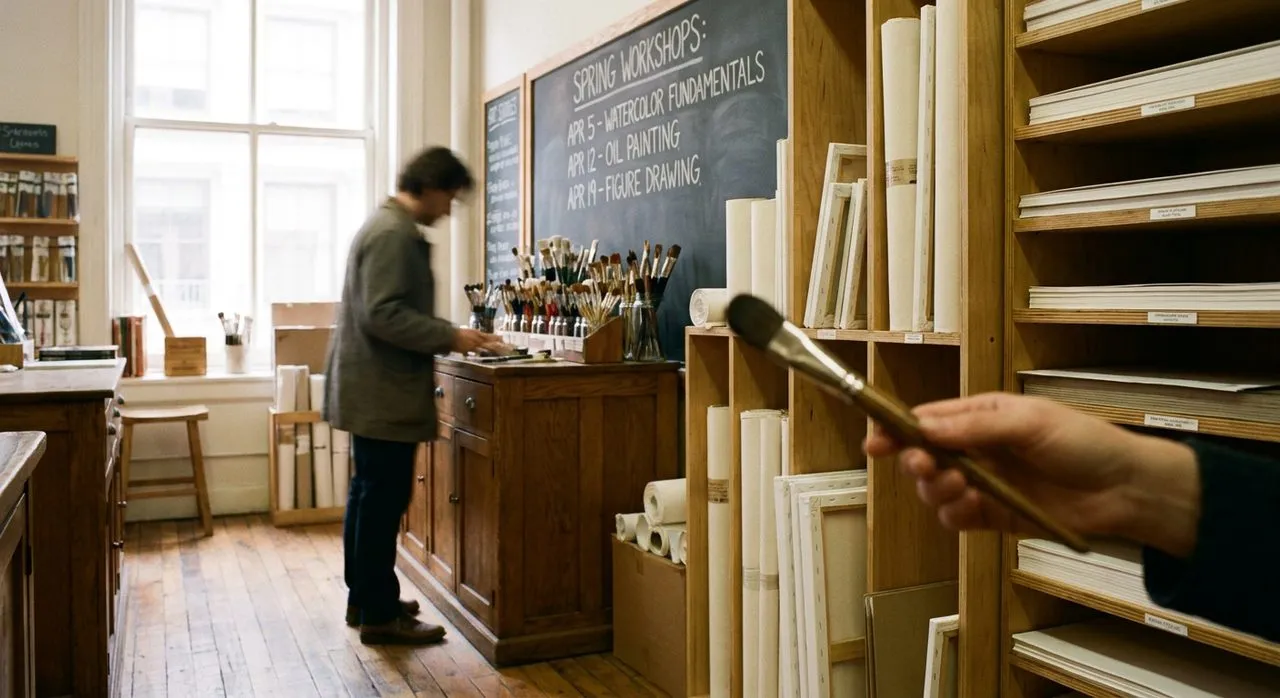
A smaller shop on the SoHo side—tucked between a boutique selling Japanese ceramics and a café that makes very good cortados—has claimed Wednesday evenings for watercolor. The format is structured but forgiving: an instructor demonstrates wet-on-wet technique or lifting color for about twenty minutes, then releases the group to interpret a still life assembled on a central table. Late May brings peonies, lemons, a blue-and-white pitcher. The smell of honey and pigment suspension hangs in the air, mingling with the faint espresso drift from next door.
What makes these sessions work is the instructor's willingness to let accidents become lessons. A bloom that spreads too far, a puddle that dries unevenly—she'll pause at your table, suggest salt or a dry brush, then move on without judgment. Most participants are decades past art school or never attended at all, and there's a palpable relief in being allowed to be middling at something. By the end of the evening, a dozen small paintings dry on a wire rack near the register, each one earnest and slightly flawed.
The urban sketching club in a loft
Every Wednesday at six, a SoHo loft above a shop that sells printmaking supplies transforms into the meeting point for an urban sketching group. The format is loose: gather, discuss the evening's destination—sometimes Washington Square, sometimes the Staten Island Ferry terminal, once the Woolworth Building lobby—then disperse with sketchbooks and portable watercolor kits. The group reconvenes ninety minutes later to share work over wine and store-bought cookies.
The loft itself is a narrow space with tall windows facing west, so late spring light pours in gold and horizontal, catching the dust motes above a long table crowded with ink bottles and brush pens. The organizer, a freelance illustrator who rents the loft as studio space, keeps entry free but asks that you buy supplies from the shop below at least occasionally. Fair trade. By late May, the days stretch long enough that the group sometimes reconvenes in near-daylight, comparing sketches of fire escapes and crosswalk shadows with the satisfaction of people who've stolen two hours from the city's relentless pace.
Mixed-media nights in a Tribeca storefront
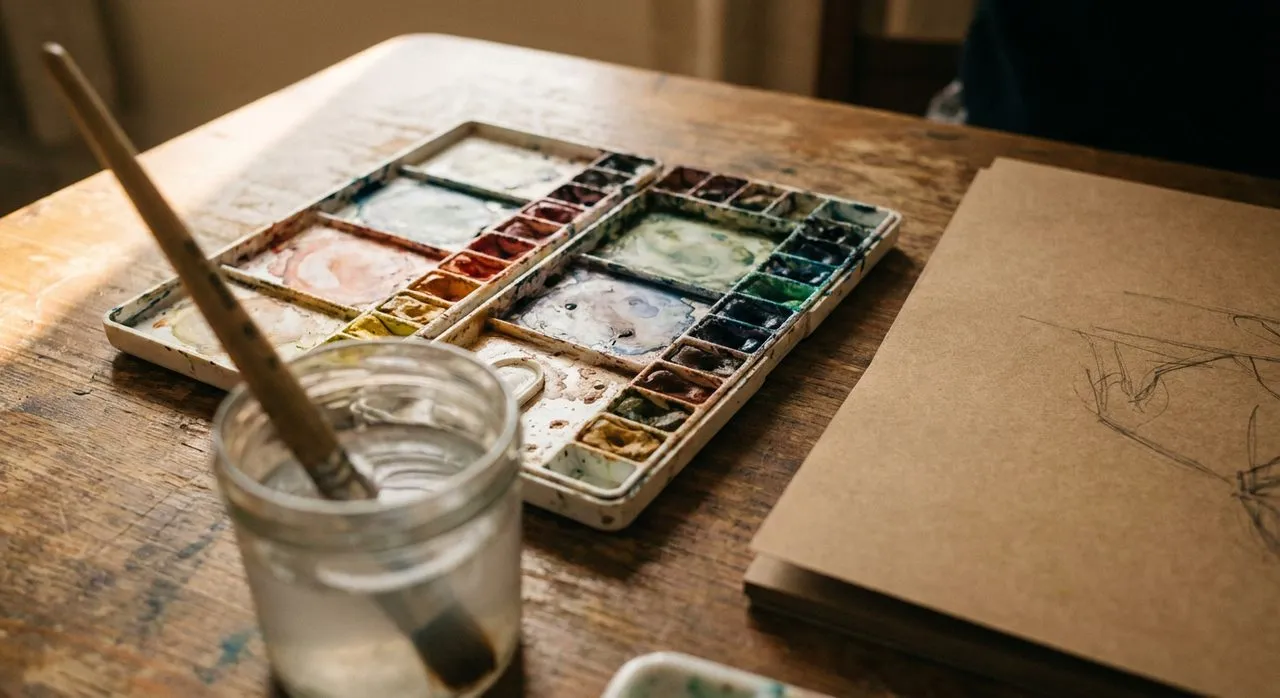
A storefront near the Hudson River Park has embraced a more experimental model: Friday night mixed-media sessions where the only rule is to try something unfamiliar. Collage, mono-printing, ink wash over crayon resist—the techniques rotate weekly, guided by whichever instructor the shop manager has convinced to lead that evening. The crowd skews slightly younger here, and there's often a bottle of wine open on the counter, though no one makes a fuss about it.
The shop itself is narrow and deep, with industrial shelving that climbs to the pressed-tin ceiling. During class, participants spread out along a makeshift table constructed from sawhorses and plywood, elbows nearly touching, passing glue sticks and brayers. The energy is loose, conversational. Someone's phone plays a jazz playlist. By ten, the table is littered with scraps of painted paper, and a few people linger to help stack chairs, reluctant to surrender the night's easy creative momentum. The shop manager locks up around ten-thirty, already planning next week's mono-print demo.
Life drawing and coffee in a back room
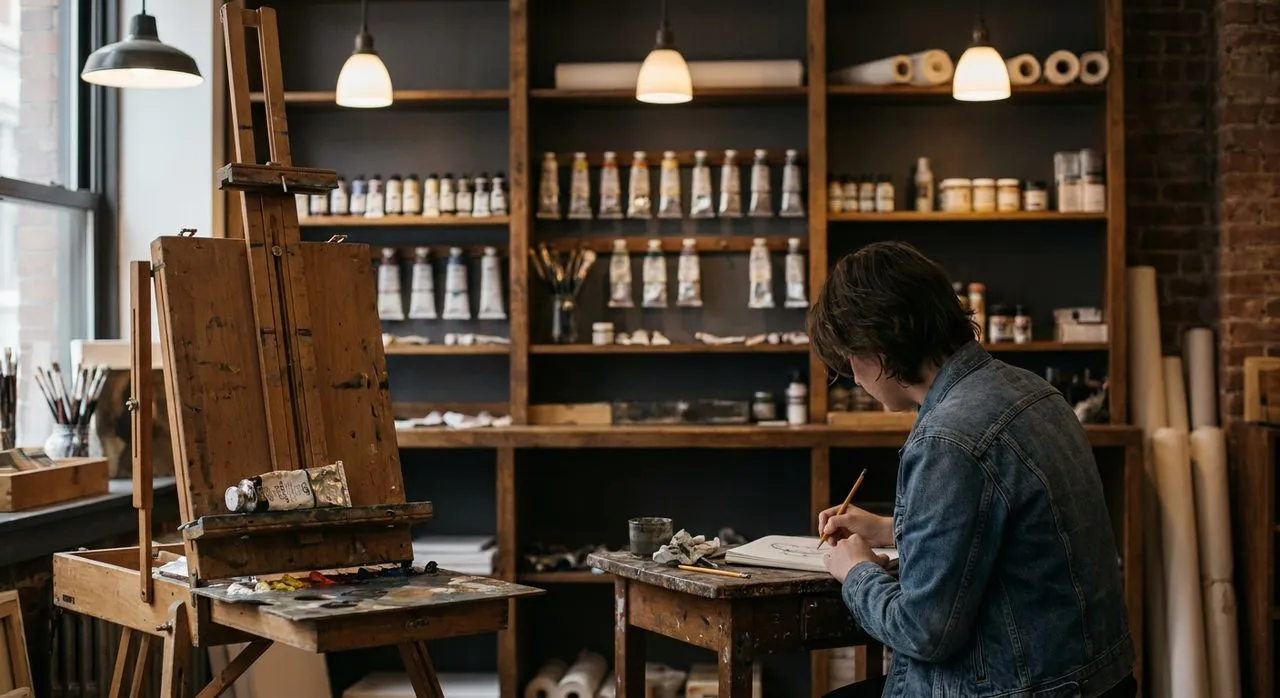
A SoHo shop specializing in drafting supplies and fine pencils has converted its back storage room into a daytime life-drawing studio. Tuesday and Thursday mornings at ten, a small group—rarely more than eight—gathers for two-hour sessions with a model and an instructor who teaches anatomy at a nearby art college. The vibe is quieter than the evening crowds, attracting retirees, freelancers with flexible schedules, and the occasional actor between gigs.
The room smells like coffee and kneaded erasers, and the instructor's critique is exacting but never unkind. She'll crouch beside your easel, trace a corrected line in the air above your paper, then leave you to solve it. Morning light from a single window whitens the model's shoulder, sharpens the shadows. By noon, everyone packs up, buys a new pencil or a kneaded eraser from the front shelves, and heads back into the SoHo foot traffic with graphite under their nails.
Open studio Sundays
One Tribeca shop has carved out Sunday afternoons for open studio hours—no instruction, no scheduled model, just table space and good light for anyone who wants to work in company. It's the most democratic of the offerings: bring your own project, check current open-studio fee before attending, and settle in. Some people arrive with half-finished oil paintings, others with sketchbooks and the vague intention to practice hands.
The shop stocks higher-end supplies—hand-rolled pastels, linen canvas, Italian watercolor paper—and the open-studio format functions as a gentle advertisement. You'll see someone working in a luscious cobalt and find yourself asking which brand, then wandering to the shelf to compare price points. The owner, who works the register on Sundays, is happy to talk pigment lightfastness or recommend a new brush. By four, the light shifts cool, and people begin packing up, but a few regulars linger until closing, unwilling to leave the shared quiet of people absorbed in looking and making.
Practical notes
The shops should be listed with verified street addresses and cross streets Nearest subways should be verified against the specific shop addresses Street parking is scarce; the Hudson River Park garage offers evening rates. Most classes run from 6 to 9 p.m. on weekdays, with Sunday open studios typically 1 to 5 p.m.; verify schedules directly as they shift seasonally. Drop-in fees range from five to twenty dollars. Bring your own sketchbook or plan to purchase supplies on-site—most shops offer class discounts. Spaces are generally ground-level accessible, though the SoHo loft requires a freight elevator. Expect paint-splattered floors and the pleasant disorder of working studios.
Tags: #ArtSupplyShops #TribecaArts #SoHoCreative #FigureDrawing #WatercolorClass #UrbanSketching #CommunityArtStudio #NYCArtClasses #DropInDrawing #LateSpring2026 #TheOddEdit #ArtInTheCity #CreativeNYC #SketchWithUs #TribecaSoHo
Please drink responsibly. Must be of legal drinking age.
Sources consulted: Tribeca · SoHo, Manhattan · NYC Department of Cultural Affairs · Time Out New York - Art · New York Times Arts
All trademarks are the property of their respective owners.