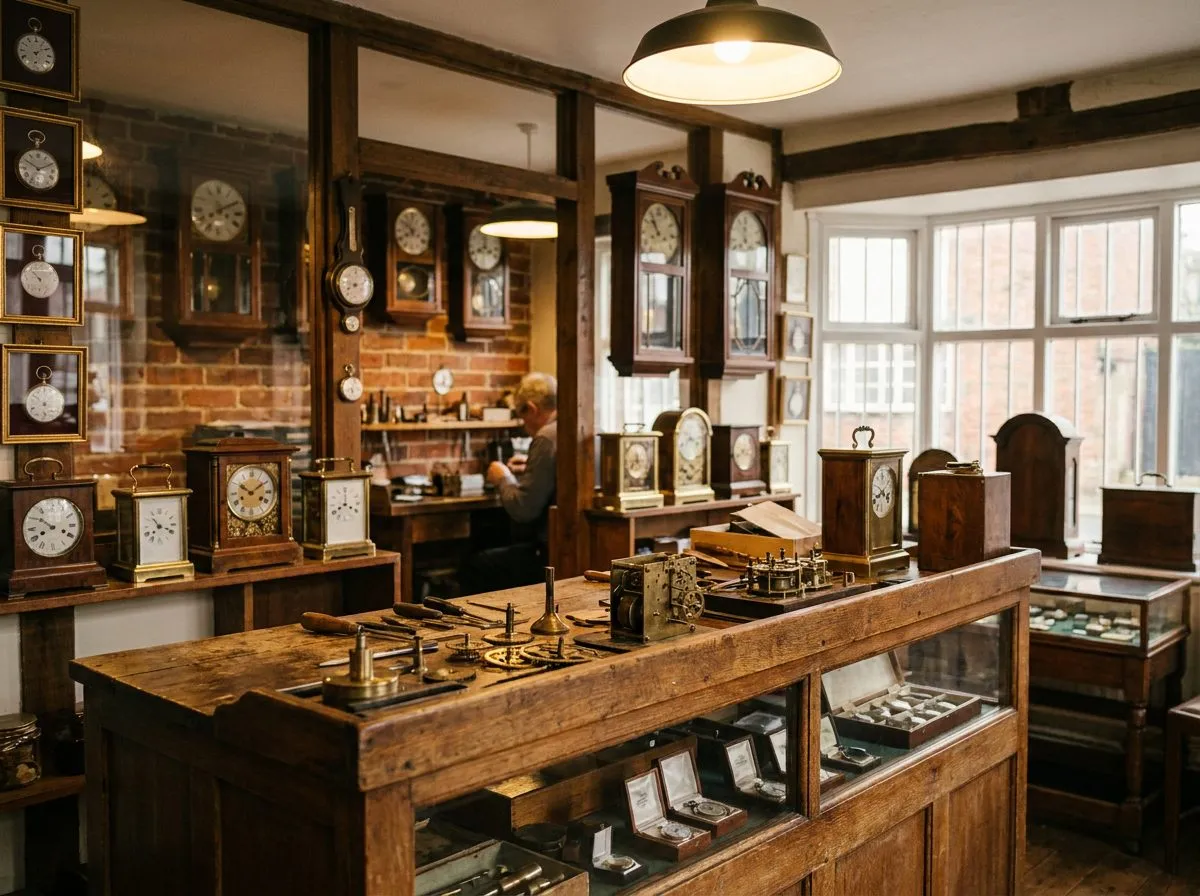
The ticking is what you notice first. Not the digital hum of a computer or the buzz of a phone, but the layered, syncopated rhythm of dozens of mechanical hearts beating in counterpoint. Manhattan's remaining antique clock repair shops occupy a peculiar niche in the city's ecosystem—part museum, part emergency room, part confessional booth where clients arrive clutching heirlooms wrapped in velvet and anxiety. By late May 2026, with summer rent hikes looming and the relentless churn of real estate development, these workshops have become minor miracles of persistence, staffed by men and women who learned their trade before the internet existed and who still believe that some things deserve to be fixed rather than replaced.
The Upper East Side Atelier
The narrow storefronts along Lexington Avenue in the Seventies have always housed specialists—tailors who cut bespoke suits, jewelers who reset estate diamonds, cobblers who resurrect Ferragamos. Tucked among them, you'll find workshops where horologists peer through loupes at mechanisms smaller than a thumbnail. The light in these shops tends to be surgical: bright LEDs over workbenches, magnifying lamps casting pools of white over disassembled movements. One such atelier occupies a second-floor walk-up, its windows overlooking the avenue's perpetual traffic. The air smells faintly of machine oil and metal polish.
The craftspeople here tend to specialize in European movements—Swiss, German, French—though they'll tackle American shelf clocks and English longcase pieces when the work is interesting enough. A typical repair might take three months. Rush jobs are politely discouraged. The waiting list, they'll tell you without apology, reflects the scarcity of people who still know how to fabricate a replacement wheel tooth or true a hairspring by hand. This is not a business optimized for throughput.
Midtown's Timekeeping Relics
In the west Forties, between the theater district's neon and the garment district's remaining fabric wholesalers, a few repair shops occupy spaces that feel suspended in amber. These are often family operations, second or third generation, with display cases full of pocket watches and mantel clocks that serve as both inventory and advertisement. The walls bear framed certificates from Swiss training programs attended decades ago, alongside black-and-white photos of the shop in an era when hatted men filled the sidewalks.
The rhythm of work here is patient to the point of meditative. A 19th-century carriage clock arrives in pieces; over weeks, each component is cleaned in an ultrasonic bath, inspected, sometimes remade. The mainspring might need replacing. The escapement might require adjustment measured in microns. For those hunting antique clock NYC specialists who understand these pieces as historical artifacts rather than mere mechanisms, Midtown's surviving workshops offer a particular kind of expertise—one that accounts for the quirks of pre-standardization manufacturing, when each clockmaker was essentially building a prototype.
Downtown's Watch Whisperers
Below Fourteenth Street, the horological landscape shifts slightly toward wristwatches, though the line between clock and watch repair is less firm than you might expect—both require the same foundational skills, the same tolerance for tiny screws and tinier pivots. The shops here tend to be smaller, more cramped, often sharing space with estate jewelry dealers or vintage dealers. The aesthetic runs to organized chaos: parts drawers stacked to the ceiling, ticking inventory everywhere, tools that look medieval but cost as much as a decent used car.
A veteran watch repair Manhattan specialist once explained that the real challenge isn't the mechanical complexity—it's the detective work. Clients bring in pieces with no provenance, no paperwork, sometimes no maker's mark. You decode the movement style, date it by construction techniques, figure out whether parts are available or must be fabricated. It's archaeology with tweezers and a lathe. By late May, when the humidity starts climbing and metal expands by imperceptible but crucial fractions, these craftspeople adjust their work rhythms accordingly. Precision, they'll tell you, is always contextual.
The Economics of Obsolescence
Why does a carriage-clock overhaul cost what it costs? The question comes up often enough that most shops have developed standard answers, though the real explanation is structural. Parts aren't manufactured anymore; when they're needed, they must be made on a watchmaker's lathe by someone whose hourly rate reflects decades of training. Insurance is expensive. Rent in Manhattan is obscene. And the client base, while loyal and often affluent, is finite—people who value mechanical heritage over digital convenience, who understand that a repair quote of eight hundred dollars for a clock worth perhaps fifteen hundred on the open market is nonetheless worthwhile because the piece belonged to a grandmother or marks a wedding or simply represents a kind of craftsmanship that deserves preservation.
These shops survive on relationships, not walk-in traffic. Interior designers send them clients outfitting prewar co-ops. Estate lawyers call when an apartment full of inherited clocks needs assessment. Museums occasionally knock on the door when a gallery piece stops running. It's a narrow economic ledge, and everyone knows it. Each shop closure—and there have been several in recent years—sends clients scrambling to workshops already stretched thin.
What the Work Entails
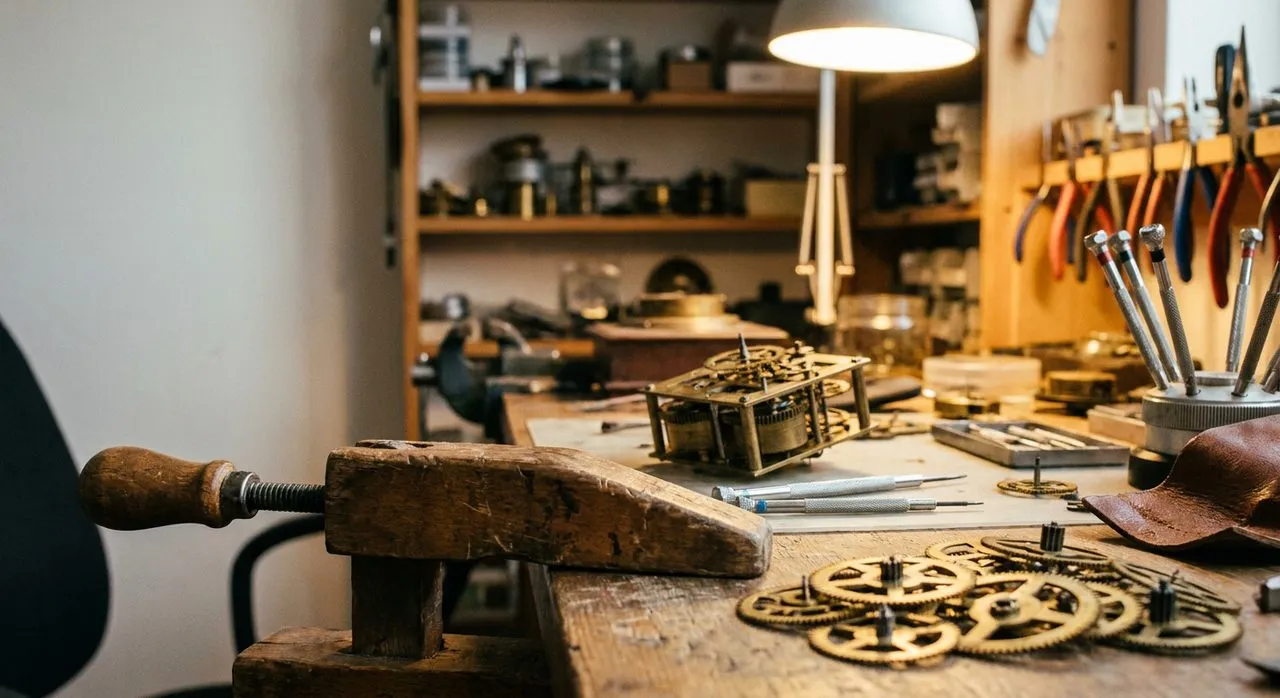
Watching a horologist work is like watching surgery, if surgery involved components the size of rice grains and tolerances measured in thousandths of a millimeter. The process begins with disassembly: every wheel, pinion, spring, and jewel removed, cataloged, placed in sequence. Then cleaning, often in an ultrasonic bath that looks like a tiny dishwasher. Then inspection under magnification. Then, if needed, fabrication of replacement parts—cutting a new wheel tooth, turning a new pivot, reshaping a bent arbor. Finally, reassembly, lubrication with oils applied by needles thinner than human hair, and adjustment until the mechanism runs within acceptable variance.
The sensory texture of this work is specific: the whir of a watchmaker's lathe, the chime of a clock being tested, the slightly acrid smell of brass filings, the particular quality of silence when a craftsperson is fitting a part that must seat just so. It's analog in an aggressively digital age, which is part of its appeal to clients who arrive clutching pieces that their phones could replace a thousand times over.
Why It Matters
There's a case to be made—and these craftspeople make it quietly, through their work rather than manifestos—that a city needs more than efficiency. That mechanical timepieces, with their visible gears and audible ticks, offer a tangible connection to human ingenuity in a way that sealed quartz movements never will. That the act of repair, of choosing restoration over replacement, represents a set of values worth preserving even when inconvenient or expensive. Manhattan's remaining antique clock and watch shops are, in this sense, philosophical statements disguised as service businesses. They argue, simply by continuing to exist, that some things deserve to be maintained rather than upgraded.
By June 2026, with summer light stretching the evenings and tourists flooding the sidewalks, these workshops will continue their patient work, largely invisible to the crowds outside. The clocks on their benches will tick through the season as they've ticked through decades, each mechanism a small monument to the conviction that time, properly cared for, need never run out.
Practical Notes
Most specialist clock and watch repair shops in Manhattan are concentrated on the Upper East Side (Lexington Avenue corridor between East 60th and East 80th Streets, accessible via 6 train or limited street parking), Midtown West (west Forties near 6th and 7th Avenues, served by B/D/F/M trains), and downtown below 14th Street (particularly near Union Square and the West Village, accessible via L/N/Q/R/4/5/6 trains). Hours tend toward weekday-only or limited Saturday schedules; verify directly before visiting. Most workshops are second-floor walk-ups without elevator access. Bring the timepiece in a padded case or wrapped securely, along with any original documentation, keys (for wind-up clocks), or provenance information. Expect an initial consultation to assess condition and feasibility; repairs typically require leaving the piece for weeks or months. Cash or check often preferred. Parking is predictably difficult; public transit strongly recommended.
Tags: #AntiqueClockRepair #ManhattanCraftsmen #WatchRepair #NYCHorologists #TheOddEdit #MechanicalTimepieces #HeritageRestoration #NYCSpecialists #UpperEastSide #MidtownManhattan #VintageWatches #ClockCollectors #NYCHiddenGems #Spring2026 #KarposFinds
Sources consulted: Horology · Clock · Time Out New York · NY Times - New York · NYC.gov
All trademarks are the property of their respective owners.