 Fort Greene Holiday Market Browsing Guide for Young Shoppers
Weekend Plans

NYC After Work Route Planner: Brooklyn Sunset Stops
Build a Brooklyn dinner and optional waterfront evening in Karpo APP, balancing friends arriving from different offices with a comfortable journey home.
Brooklyn after work plans become easier when you pick the side of the borough where the evening should end. For a waterfront finish, tell Karpo APP that the view is optional and the journey home is fixed. A Fort Greene start and a Brooklyn waterfront destination can form a useful planning brief, but they are not interchangeable meeting points. Ask for a casual meal and a manageable route between them, then compare that idea with a shorter neighborhood evening. The aim is to give friends one decision they can make after a long day.
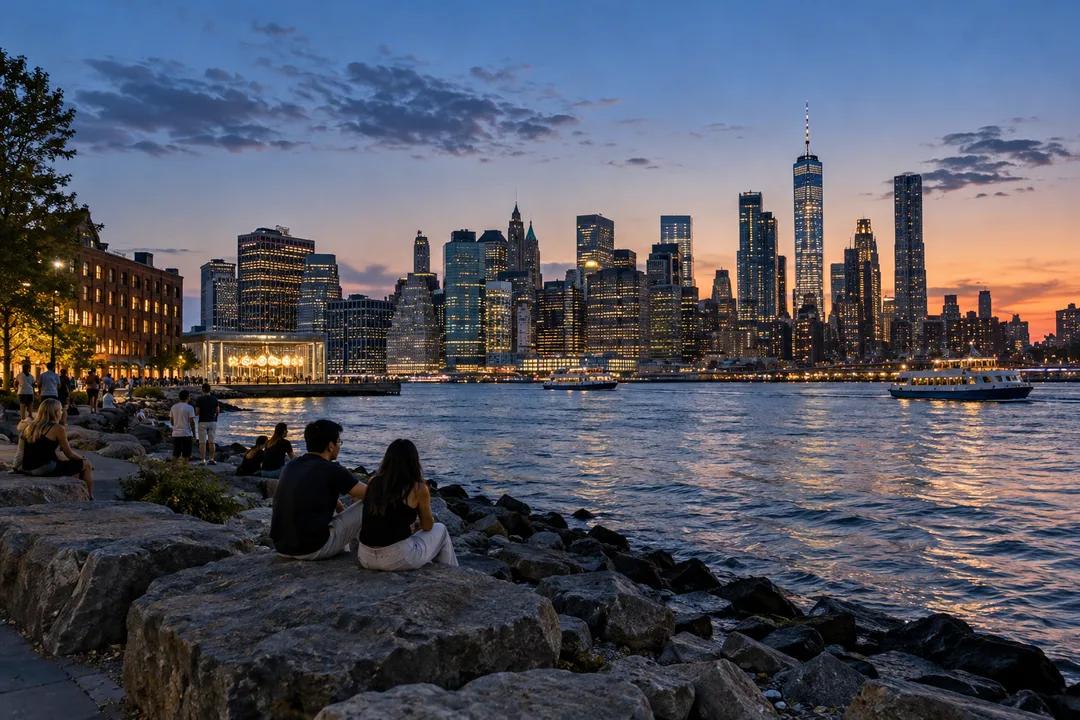
Start with who is actually coming
A friend leaving a Manhattan office and another already in Brooklyn do not need the same approach. Put their approximate departure areas into the request, along with the time each can leave. You do not need to reveal workplace addresses. Describe the evening's priorities in order: perhaps dinner together first, fresh air second, and a photograph of the skyline only if it fits. That order gives Karpo a better basis for suggestions than “somewhere nice in Brooklyn,” which leaves the important tradeoffs for you to discover later.
Make the first destination a place where late arrival is manageable. A conversation can begin over a meal even if one person reaches it later; a moving waterfront walk is harder to join without repeated messages. Ask for recommendations appropriate to the group's food preferences, and identify a meeting point after choosing a business. Avoid turning a station complex into a vague instruction such as “meet outside.” Agree on a visible entrance or corner in your own group conversation so nobody spends the opening part of the outing looking for the others.
Treat sunset as an atmosphere, not an appointment
The title's sunset idea describes the kind of evening you are building. It does not establish a sunset time, weather forecast, or guaranteed view. When you have an actual date, use that date in the planning request and decide how much daylight matters. If someone cannot leave until the light has gone, ask for a waterfront-after-dark alternative or keep the entire evening around dinner. A plan that relies on a precise light effect is fragile when the departure time still depends on the last meeting of the working day.
Resist the urge to add every attractive Brooklyn destination. A brownstone neighborhood, a substantial dinner, a bridge crossing, and several waterfront stops are enough material for a longer day. Choose one anchor and let the route express that choice. If the meal is the highlight, keep the walking section brief. If everyone really wants river views, simplify the food portion. Karpo is useful here as a conversational filter: ask what can be removed while preserving the experience you actually wanted, and judge the result against the group's available time.
You can also make the bridge a viewing subject instead of a crossing. Seeing a structure from the waterfront and walking across it are different commitments, with different endpoints. State which one you mean. If your onward trip is on the Brooklyn side, an extra crossing may create a return journey nobody wanted. Read the proposed stops geographically and use your usual navigation service for the journey between them. An appealing description is the beginning of the choice, not evidence that the route has become shorter.
Write a brief that produces useful options
Try this example request: “Two friends after work in Brooklyn, dinner is the priority, we like a waterfront finish but do not want a long walk, and one of us needs a simple trip toward Atlantic Terminal afterward. Suggest a compact version and a longer one.” The wording asks for a comparison without promising that any particular business has seats. Add cuisine exclusions, accessibility needs, or a spending ceiling as needed. Those are personal constraints; they should not be mistaken for a venue's published prices or physical access arrangements.
When the recommendations arrive, compare what you would do if the first meal choice did not work. A nearby alternative of the same service style is more valuable than an exciting substitute in a different neighborhood. Ask for a second dinner option only if it serves the same route. Then decide in advance whether the group wants to wait for its first choice or switch. The threshold is yours to choose. This page cannot report a live queue, and Karpo's suggestion does not create priority at a restaurant door.
A shared route works better when it leaves room for different energy levels. One friend may want a promenade walk while another wants to sit. Ask for an outline that allows an early finish after dinner and an optional extension for those who stay. Name a separation point before the extension begins. That keeps an early departure from feeling like a group cancellation. It also means the friend with the longest trip home can participate fully in the core evening, rather than watching everyone else chase one more stop.
Let the neighborhood be enough
Skip the waterfront if reaching it would leave you watching the clock throughout dinner. A Fort Greene meal followed by a short local walk can feel more sociable than an overloaded outing with an iconic final image. You are choosing a weeknight, not proving that you explored the whole borough. Tell Karpo that you want to retain the atmosphere of a neighborhood stroll while reducing travel. Ask for reasons attached to recommendations so you can tell whether a suggestion fits your preferred pace or simply sounds attractive in isolation.
For rain, build an indoor version around the meal rather than claiming that an outdoor route is weatherproof. A second seated stop may be welcome if the group wants more conversation, but it is not compulsory. Consider noise tolerance as carefully as cuisine: a lively room may be ideal for a celebration and poor for catching up after several weeks apart. Describe the social task in the request. “We want to hear each other” is a useful preference even when you have not settled on a restaurant category.
Practical Notes for the Brooklyn version
The last step is the trip home. Inspect it from the actual final destination, not from the neighborhood where you started. Give yourself a departure buffer and share the core plan in whichever messaging tool your friends already use. In Karpo APP, ask for recommendations and revisions with the real day, available window, group size, and walking limit. No view, table, service time, or transport connection is guaranteed here. Choose one dinner, one optional waterfront stop, and a finish that makes tomorrow morning feel considered as well as tonight.
Ask Karpo for more information.
Keep reading
- Fort Greene Holiday Market Browsing Guide for Young Shoppers
 DUMBO Holiday Market Browsing Guide for Gifts to Mail Home
 Midtown East Holiday Market Browsing Guide for Commuters