 Lower East Side Hidden Speakeasy Bar Picker for a Solo Night
Bars & Nights Out
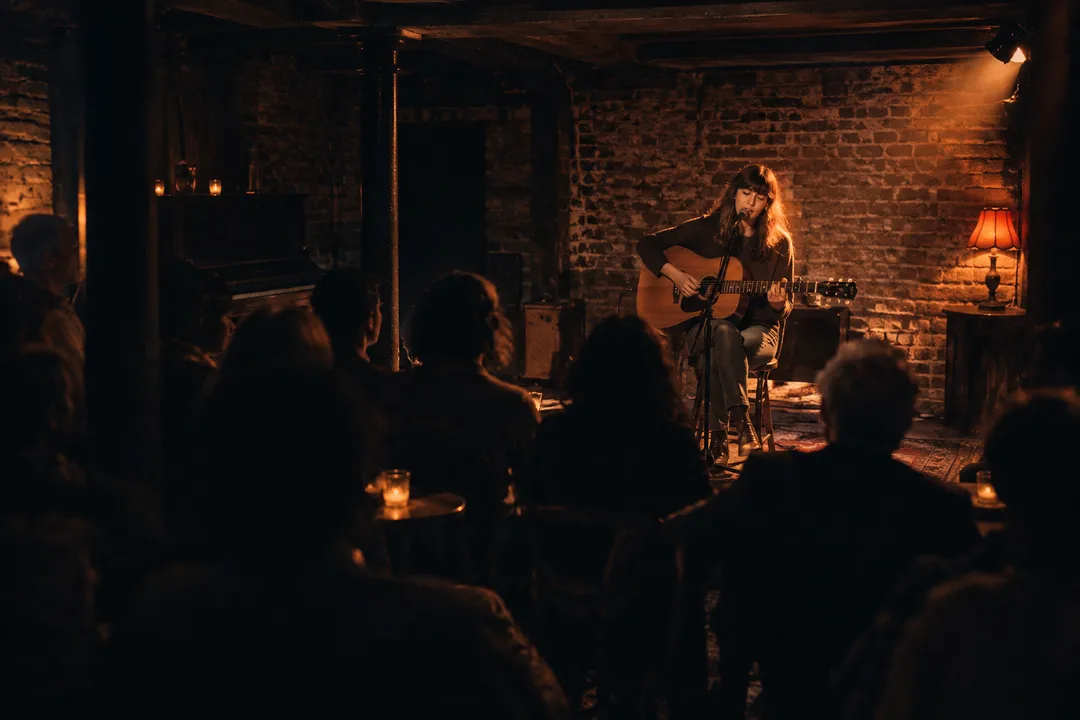
Village Acoustic Live Music Spot: Listen for the Lyrics
Choose a Village acoustic live music spot for attentive songwriting. Read the full bill, sample the artists and leave room to hear the lyrics on your night out.
For a Greenwich Village acoustic live music spot, choose the songwriter or the bill before choosing the romance of the neighbourhood. A familiar street name can start your curiosity, but it does not tell you who is performing, whether the arrangement is acoustic or how the evening is organised. If hearing lyrics is the reason you are going out, make that the organising principle. Look for a programme that puts songs in the foreground and build a Village walk around that confirmed event rather than around a musical stereotype.
Follow a song, not a reputation
The most productive starting point can be a song you already like. Think about what caught your attention: a narrative, an unusual rhyme, a guitar pattern or a voice that leaves space around a line. That observation gives you a more precise search vocabulary than “a legendary place.” You might be interested in an individual songwriter, a duo whose harmonies matter or a showcase where discovering unfamiliar material is part of the appeal. Those interests can lead to different evenings even within the same area.
Use the artist’s official recordings or performance clips to explore the music without treating them as a contract for the live arrangement. A full-band recording might become a solo set, and a spare recording might be performed with other musicians. Read how the particular appearance is described. When the event calls itself an acoustic session, look at the named performers and programme details as well. The label becomes more useful when you can connect it to the music you actually want to hear.
Ask a question with an artistic preference
A request in the Karpo APP can state what you notice in the music: “I want a Greenwich Village acoustic live music spot where songwriting is the focus, and I would rather listen than chat through a set.” Add your available date and whether you require seating. This is a useful brief for shaping a search. It does not assume the app has a live feed of every room’s programme or that a returned suggestion has been checked out on your behalf.

Keep the artistic preference visible as the shortlist develops. A nearby room with an impressive history might have a bill that does not interest you. An unfamiliar performer could be the better match. Write a short reason beside each candidate, referring to the music rather than a promotional adjective. If you cannot say why you want to hear any act on the bill, you may be selecting a backdrop for an evening rather than a concert. That is a different aim and worth recognising.
Decide whether discovery is part of the night
A multi-act showcase can be appealing when you want to encounter new songs. Its value lies partly in not knowing which performer will stay with you. That is a different expectation from buying admission to hear a particular headline artist. Read the entire listing to see which kind of programme is being offered. Do not mistake a host’s name, a tribute subject or a guest credit for the principal act. Names on a poster can have several roles.
If discovery is the goal, let yourself listen without comparing every song with the first artist you recognised. If a specific act is the goal, establish how their appearance is represented in the official programme. Avoid relying on an assumed set order to fit another reservation into the same evening. An unstated running order is not an itinerary. Choosing to attend the full event gives you a clearer commitment and lets the programme reveal its own shape.
What attentive listening requires from your plan
Good attention starts before the first note. Arrange food and conversation so that you are not trying to settle an overdue catch-up in the middle of a quiet passage. If your companion has plenty to tell you, make that part of the walk or meal beforehand. You can then enter the music portion with the same expectation. This is a personal arrangement between you, separate from whatever audience rules the operator publishes for its own room.
Seating also affects attention. Someone who spends the set looking for a place to rest is not getting the experience they intended. Read the admission category and seating explanation together, and choose a supported arrangement if sitting matters to you. Never infer a guaranteed chair from the small size of a venue or a photograph of tables. The question is what your purchase provides at the event you selected, not what a different show in the same room once looked like.
Let the Village walk add context
A walk can make the evening feel connected to Greenwich Village without requiring you to invent a historical account for every doorway. Streets, small open spaces and the contrast between busy corridors and quieter residential blocks can be worth noticing in their own right. Decide the direction after you know the venue’s actual entrance. A route assembled around an imagined centre of the neighbourhood can send you back across ground you have already covered.
If music history is a separate interest, give it a separate research trail. Use a museum, archive or venue’s own documented history for specific claims, rather than attaching a famous musician’s name to an arbitrary building. You do not need a historical anecdote to justify a pleasant walk. Keeping the two activities distinct also helps you avoid expecting a contemporary performance to recreate an earlier era. The evening belongs to the musicians on the present bill.
A small etiquette agreement helps
Before the set, read any guidance concerning photography, recording and conversation. Follow the performer’s requests as well. An acoustic instrument is not an invitation to document every moment, and recording a song can distract you from the detail you came to hear. Put the phone away when it is no longer needed for admission or practical arrangements. A brief note after the show can preserve a song title or impression without competing with the performance itself.
Choose your conversation afterwards with the same care as the programme. Instead of ranking every song, try describing one detail you noticed: a change in phrasing, the space before a chorus or how two instruments answered one another. Your companion may have attended to something entirely different. That exchange can make the evening richer and help define the next search. It is also more honest than treating the venue’s reputation as proof that every part of the bill was extraordinary.
Practical Notes
Keep an identifiable source for the event, an understood ticket category and a route home. Read arrival conditions directly in the purchase information and distinguish the time doors open from the performance’s advertised start. If you are attending with someone, decide who holds the tickets and how you will meet. These simple decisions protect the musical focus by reducing the practical questions that otherwise follow you into the room.
Pass on a programme when it depends on a name or style you have not actually found in the event description. You can choose another date, another performer or a different kind of night entirely. Ask the Karpo APP for help reframing the search around the musical quality you still want. The best result for this Village plan is not a claim to have found the city’s definitive stage. It is a bill you are curious about and enough freedom in the evening to hear it attentively.
Ask Karpo for more information.
Keep reading
- Lower East Side Hidden Speakeasy Bar Picker for a Solo Night
 West Village Hidden Speakeasy Bar Picker for Out-of-Towners
 Carroll Gardens Hidden Speakeasy Bar Picker for a Nightcap